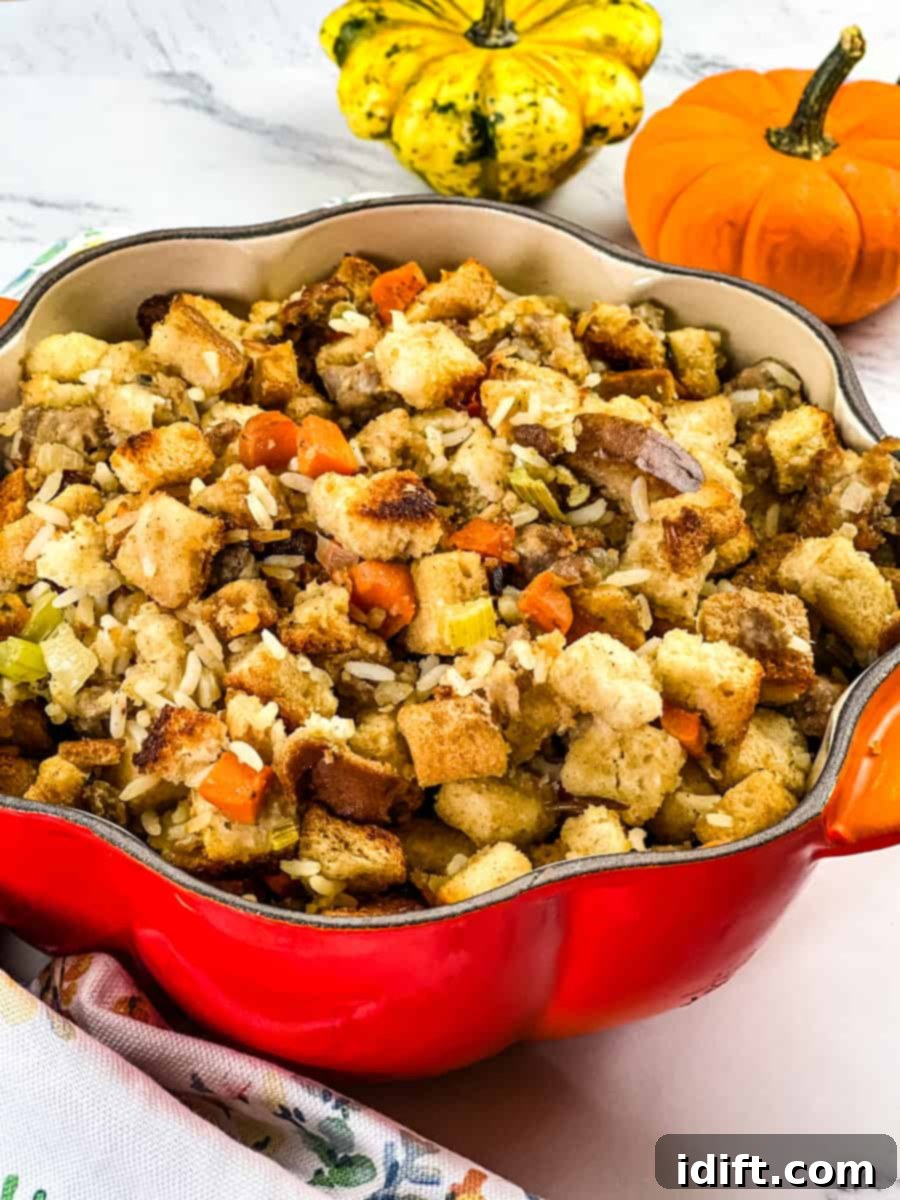
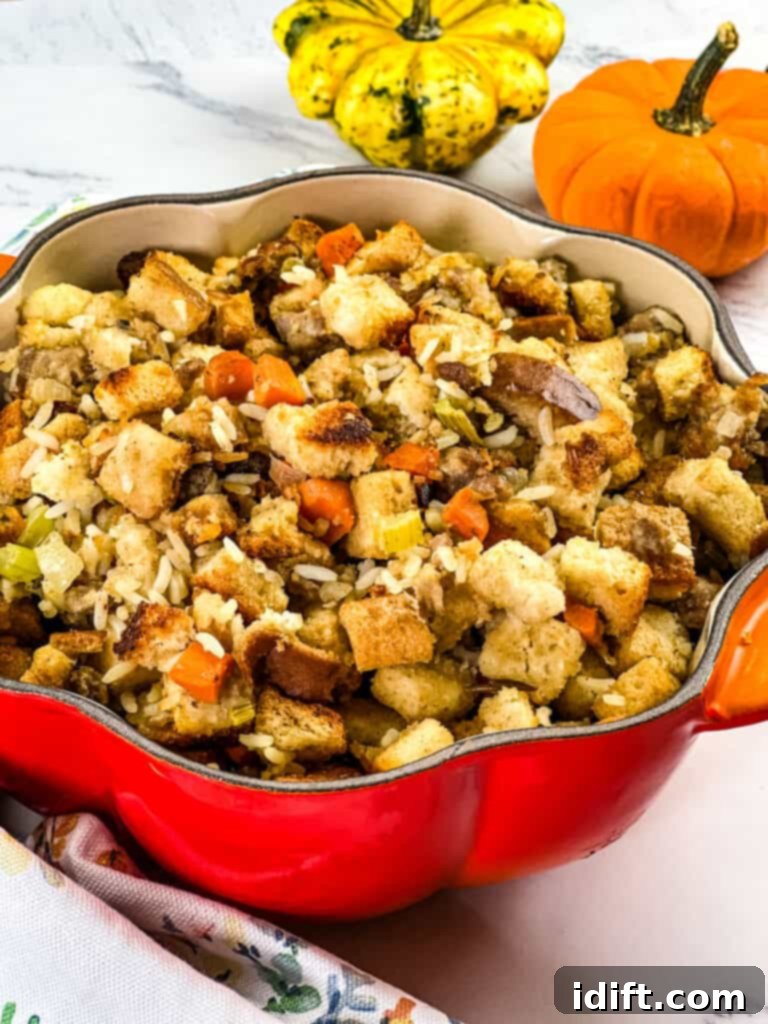
This is hands-down my family’s favorite Sausage Stuffing recipe. It’s easy to make and is packed with flavor. And, regardless if you stuff it into the bird or just serve it on the side, it’s a tasty side to round out any holiday feast.
This post may contain affiliate link(s). As an Amazon Associate, I earn from qualifying purchases. See Disclosure.
Prepare to elevate your holiday table with the ultimate Sausage Stuffing recipe that promises to be a cherished family tradition. This dish is much more than a mere side; it’s a symphony of savory flavors and delightful textures, bringing together plump, juicy sausage, tender rice, and a medley of aromatic vegetables. Infused with just the right blend of classic spices, this easy-to-follow recipe guarantees a truly memorable addition to any festive meal. Whether you prefer it baked inside your Thanksgiving turkey for an extra depth of flavor or served as a freestanding dressing, its irresistible taste will have everyone asking for seconds. Get ready to discover your new favorite holiday classic!
The origins of this beloved sausage dressing recipe trace back to my days running a bustling deli and catering business. Every autumn, as the holiday season approached, we would churn out countless batches of this very recipe. Our specialty was crafting entire holiday meals, which meant roasting dozens of turkeys and assembling comprehensive feasts for our loyal customers. This particular sausage dressing quickly became our most sought-after non-vegetarian option, enchanting palates year after year. It’s a recipe born from extensive experience and countless satisfied customers, perfected to bring that authentic, homemade taste directly to your kitchen. The joy and anticipation it brought to our customers during the holidays is something I’m thrilled to share with you now.
Essential Ingredients for Your Delicious Sausage Stuffing
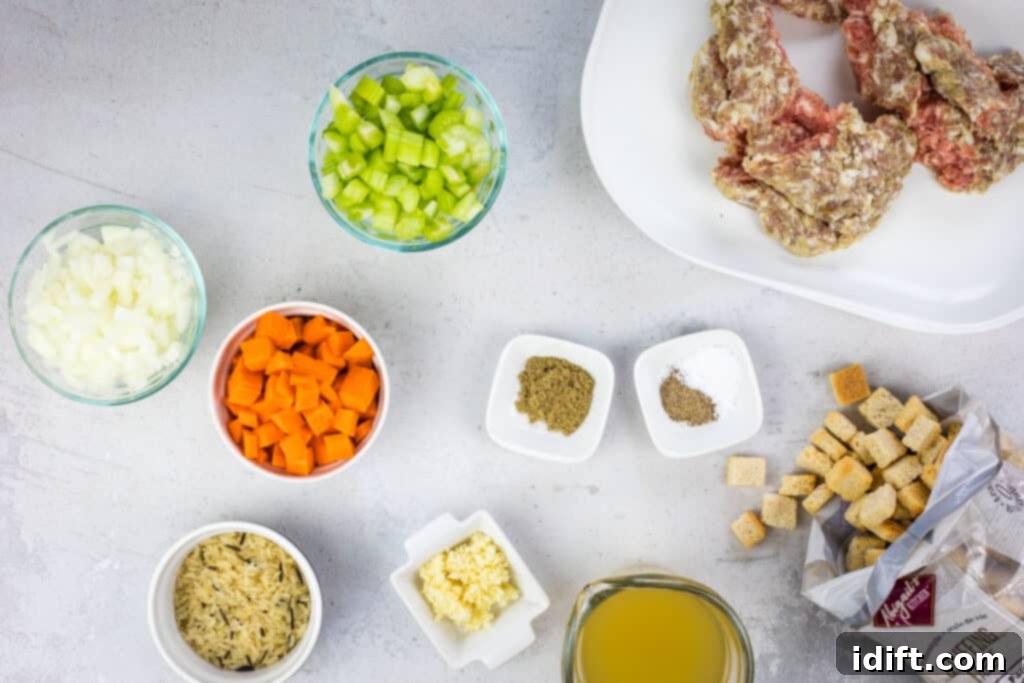
Crafting this flavorful sausage stuffing requires a harmonious blend of fresh ingredients and pantry staples. Each component plays a vital role in building the robust taste and appealing texture that makes this dish so special. Here’s a detailed look at what you’ll need:
- Sausage: The heart of this recipe. Choose a high-quality sausage; details on various options are provided below. Ensure casings are removed if present.
- Butter: Adds richness and helps sauté the vegetables to perfection, enhancing their natural sweetness.
- Onions: Diced small, they provide a foundational aromatic sweetness that complements the savory sausage.
- Celery: Diced, it contributes a subtle, earthy flavor and a satisfying crunch.
- Carrots: Finely diced, carrots add a touch of sweetness and vibrant color.
- Garlic: Minced fresh garlic is crucial for a pungent, aromatic kick that ties all the flavors together.
- Thyme: Dried thyme infuses the stuffing with its classic, earthy, and slightly minty aroma, a staple in holiday cooking.
- Sage: Dried sage is the quintessential herb for poultry and stuffing, offering a warm, peppery, and slightly bitter note.
- Dried Bread Cubes: These form the bulk and texture of the stuffing. Whether homemade or store-bought, seasoned cubes are recommended for optimal flavor and structure. See notes below for more options.
- Rice: I particularly love a white and wild rice blend. The wild rice adds a delightful chewiness and nutty flavor that elevates the overall dish, while the white rice provides softness.
- Chicken Broth: Opt for low or no sodium added chicken broth. This allows you to control the seasoning precisely, ensuring your stuffing is perfectly balanced in flavor.
Stuffing vs. Dressing: Understanding the Delicious Distinction
While the terms “stuffing” and “dressing” are often used interchangeably, traditionally, there’s a key difference that dictates not only how the dish is prepared but also its flavor and texture. Stuffing refers specifically to the mixture that is cooked inside the cavity of the turkey or other poultry. Dressing, on the other hand, is cooked separately in a baking dish, typically in the oven, and served on the side.
Cooking stuffing inside a large turkey can present a few challenges, primarily concerning food safety and ensuring both the turkey and the stuffing cook thoroughly and safely. One common pitfall is that the turkey can become overly dry by the time the stuffing reaches its safe internal temperature of 165°F (74°C). This is crucial because stuffing cooked inside a bird absorbs raw turkey juices and *must* reach this temperature to eliminate any potential bacteria. To help ensure your turkey remains moist and your sausage stuffing cooks perfectly all the way through, consider these expert tips:
- Room Temperature Turkey: Always bring your turkey to room temperature before roasting. This promotes more even cooking of the bird and the stuffing within.
- Pre-warm the Stuffing: Give your stuffing a head start by heating it slightly in the microwave for a few minutes before you pack it into the bird. It should be warm to the touch, but not so hot that you can’t handle it.
- Low and Slow Roasting: Cook your turkey at a lower temperature for a longer duration. This method allows the heat to penetrate more thoroughly, helping the stuffing reach the desired temperature without drying out the turkey.
- Cover for Moisture: For the initial portion of the cooking time, cover your turkey with foil. This traps heat and moisture, aiding in the thorough cooking of the stuffing while keeping the turkey succulent.
- Don’t Over-Pack: Resist the urge to jam as much sausage stuffing as possible into the turkey cavity. A loosely filled cavity allows heat to circulate more effectively, meaning the stuffing will cook through faster and more evenly. Over-packing can create dense, undercooked areas.

Selecting the Perfect Sausage for Your Stuffing
The type of sausage you choose can significantly impact the overall flavor profile of your stuffing, whether you’re making a traditional turkey stuffing or a stand-alone sausage dressing. A high-quality sausage will infuse the entire dish with its unique spices and savory notes, taking it from good to absolutely outstanding. Here are some fantastic options to consider, each offering a distinct character:
- Italian Sausage: A perennial favorite, Italian sausage offers versatility. You can opt for a mild variety for a subtle, fennel-infused sweetness or choose hot Italian sausage if you enjoy a delightful kick of spice. Both pair beautifully with the traditional herbs in this recipe, adding a rustic, hearty dimension.
- Oktoberfest Sausage or Bratwurst: For those who prefer a milder, more delicate flavor, Oktoberfest sausage or bratwurst is an excellent choice. These sausages typically have a less assertive spice profile, allowing the subtle herbal notes of thyme and sage to shine through. They contribute a rich, meaty texture without overpowering the other ingredients.
- Chicken Sausage: If you’re looking for a lighter alternative or specific dietary preferences, uncooked chicken sausage works wonderfully. Be sure to use your favorite brand of uncooked chicken sausage and remove it from its casings before browning. Chicken sausage often comes in various flavor profiles (e.g., apple, spinach and feta, sun-dried tomato), allowing for creative twists on the classic recipe. Just ensure it’s unseasoned or lightly seasoned to avoid conflicting flavors with your herbs.
No matter your choice, ensure the sausage is fresh and of good quality. The fat rendered from the sausage during cooking is a key flavor builder, so don’t discard it – it’s liquid gold for your stuffing!
Bread Cubes or Crumbs? Crafting the Ideal Stuffing Texture
When it comes to the bread component, the backbone of any great stuffing, you have a wealth of options, each contributing a different texture and flavor to your homemade sausage stuffing recipe. The choice between bread cubes and crumbs, and whether they are plain or seasoned, can significantly alter the final experience of your dish. I’ve experimented with various forms over the years, from pre-seasoned stuffing mixes like Pepperidge Farm (both crumb-like and cubed varieties) to plain dried bread cubes from the bakery, and even crafting my own from scratch.
Ultimately, it boils down to personal preference, but if you were to ask for my professional recommendation, I would unequivocally choose pre-seasoned bread cubes. Here’s why:
- Enhanced Flavor: Pre-seasoned cubes often come infused with a balanced blend of traditional stuffing herbs like sage, thyme, and rosemary. This automatically adds an extra layer of savory depth to your stuffing, saving you time and ensuring consistent flavor.
- Superior Texture: This is where cubes truly shine. They absorb the flavorful liquids (broth and sausage drippings) beautifully without becoming mushy. The distinct cube shape holds up well during cooking, resulting in a stuffing that has a pleasant chew and a satisfying, slightly crisp exterior, especially if you’re baking it as a dressing. Crumbs, on the other hand, tend to create a softer, more homogenous, and sometimes “cake-like” texture, which, while not bad, lacks the appealing bite of cubes.
- Homemade Cubes: If you’re feeling ambitious, making your own bread cubes is incredibly rewarding. Stale bread (day-old sourdough, challah, or even a good quality white bread works well) can be cut into 1/2 to 1-inch cubes and dried in a low oven or left out overnight. This allows you to control the type of bread and its seasoning.
So, if you’re standing in the aisle with a choice and no strong preference, reach for the pre-seasoned bread cubes – they often resemble larger, more robust croutons, and they are your secret weapon for the best-textured, most flavorful sausage stuffing.
How To Master This Irresistible Sausage Stuffing Recipe
Scroll down for the comprehensive recipe card, complete with precise ingredient amounts and detailed instructions to guide you through every step of this culinary journey.
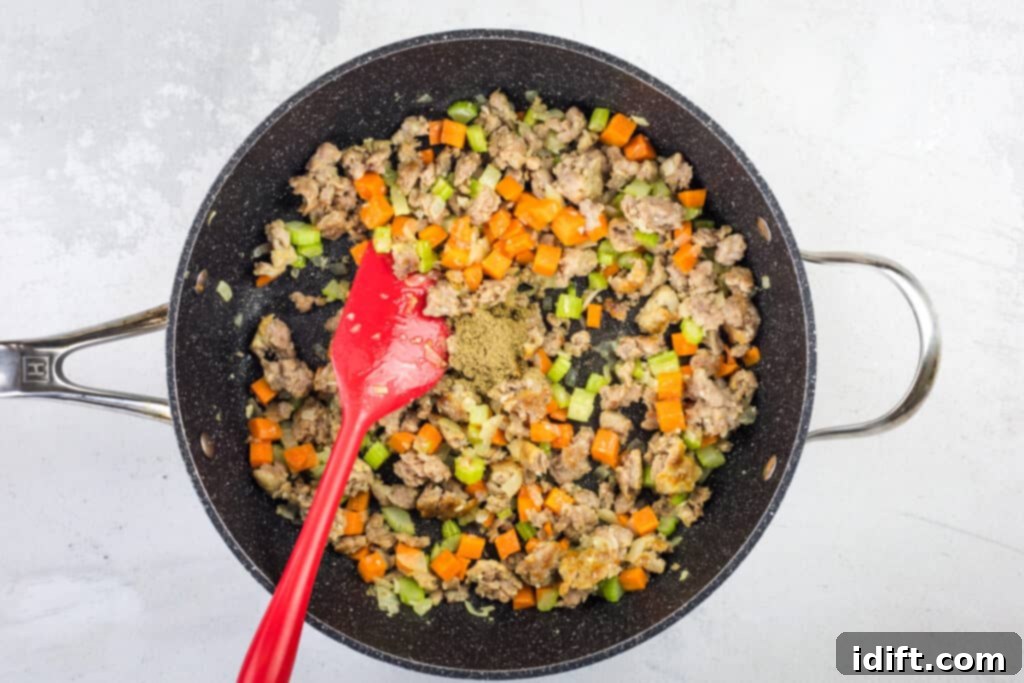
- Brown the Sausage: Begin by placing your chosen sausage (casings removed) into a large, sturdy skillet. Cook it over medium heat, using a spatula to break it into meaty chunks. Don’t over-process it; you want some delightful, irregular pieces for texture and substance in your stuffing. Cook until all the pink is gone and the sausage is beautifully browned.
- Sauté the Vegetables: Once the sausage is cooked, the pan will be infused with its flavorful drippings – don’t drain them! Add the diced onions, celery, and carrots directly to the skillet. Alongside them, add a couple of tablespoons of butter. This extra fat will help the vegetables become wonderfully soft and translucent, absorbing all that fantastic sausage flavor, which usually takes about 5 minutes.
- Infuse with Herbs: When your vegetables are tender and the onions are glistening, stir in the minced garlic, dried thyme, and dried sage. Cook for just one additional minute, stirring constantly, until you can smell their fragrant aromas wafting from the pan. This quick toast awakens their flavors.
- Cook the Rice: While the sausage and vegetables are working their magic, cook the rice blend according to the package directions. This ensures your rice is perfectly tender and ready to be incorporated.
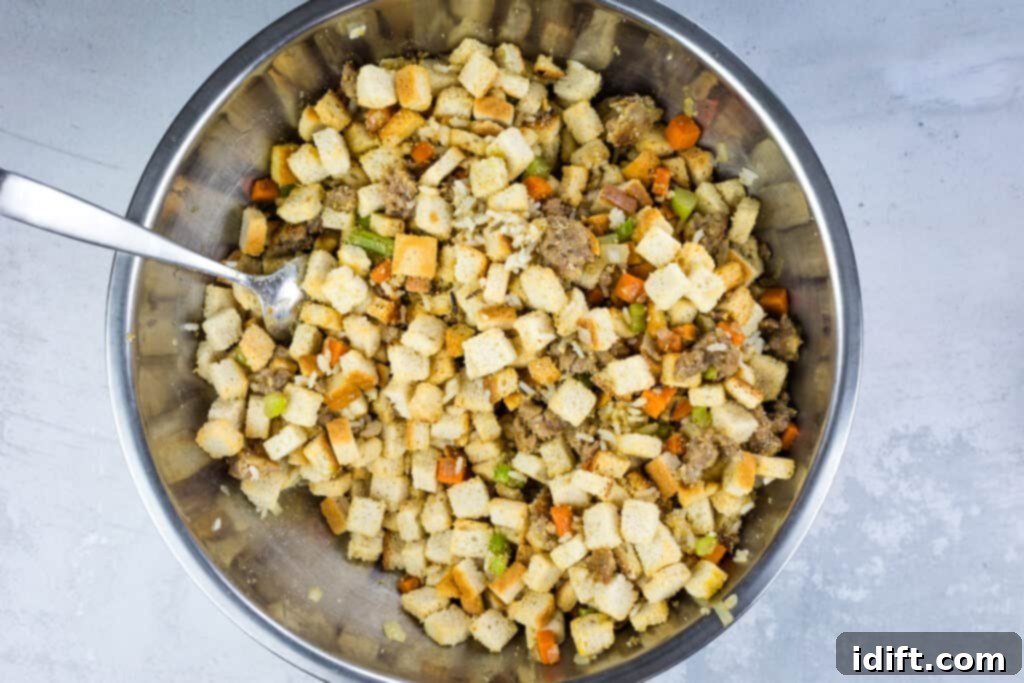
- Combine and Moisten: Transfer the cooked sausage and vegetable mixture into a very large mixing bowl. Add the cooked rice. Stir everything together until well combined. Next, add the bread cubes. Gradually drizzle in the chicken (or turkey) stock, mixing thoroughly as you go. You want the mixture to be moist but not overly wet or soggy. Continue adding broth as needed, stirring well, until all the bread cubes have softened and absorbed the liquids.
- Stuff or Bake:
- For Stuffing a Bird: Gently fill the cavity of your prepared turkey with the mixture. Remember not to pack it too tightly to allow for even cooking. Bake the turkey according to your preferred method until both the turkey and the stuffing reach an internal temperature of 165°F (74°C).
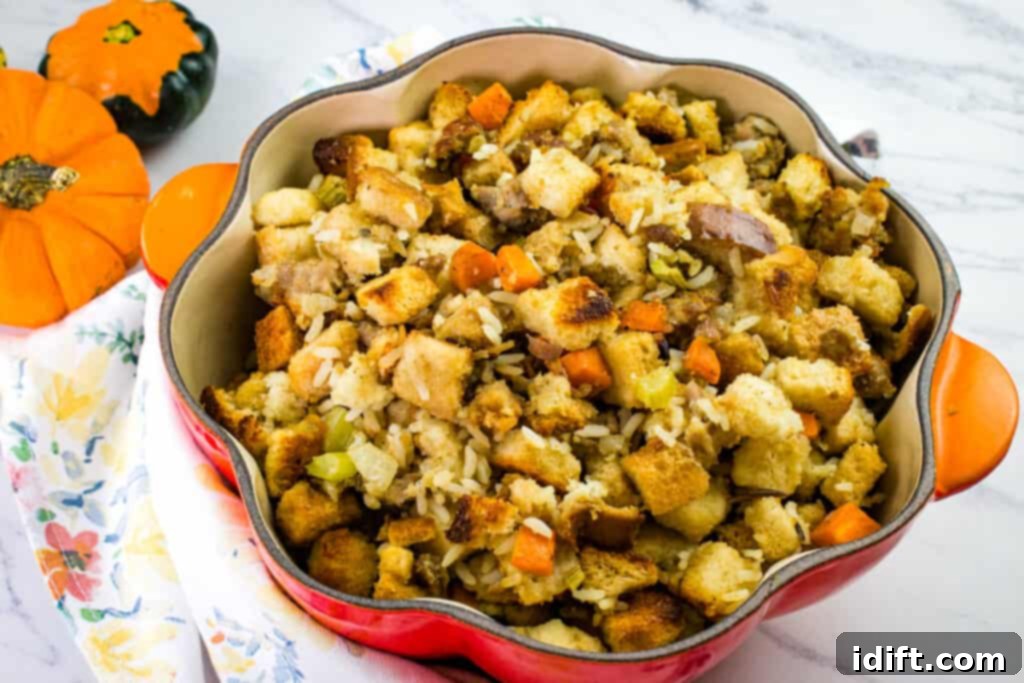
- For Dressing (Baked Separately): If serving as a dressing, add an extra 1/2 cup of chicken stock to ensure it’s adequately moist. Transfer the mixture to a casserole dish, cover it with foil or a lid, and bake in a preheated 375°F (190°C) oven until it’s heated through and lightly golden, typically 25-35 minutes. Uncover for the last 10 minutes for a crispy top.

Chef Jenn’s Expert Tips for Perfect Stuffing
Even with a fantastic recipe, a few insider tips can make all the difference, transforming your sausage stuffing from good to absolutely unforgettable. Here are some of my top recommendations to ensure your holiday side dish is a resounding success:
- Moisture Control for Stuffed Birds: When stuffing the mixture into a turkey, remember that it will absorb flavorful juices from the bird as it cooks. Therefore, the sausage meat stuffing going into the bird should be a bit drier initially. Don’t be concerned if it seems slightly crumbly when you’re ready to pack it in; it will gain moisture and richness from the turkey.
- Achieving Dressing Perfection: If you’re opting to serve this recipe as a dressing, cooked separately in a casserole dish, you’ll want it a bit moister. Add an extra 1/2 cup of chicken broth to the mixture. Bake it covered with foil or a lid to prevent it from drying out, removing the cover for the last 10-15 minutes to allow for a beautiful, golden-brown crust.
- Add a Delightful Crunch: For an exciting textural contrast and an added layer of nutty flavor, consider incorporating some toasted pecans or chopped Brazil nuts into the mixture. Add them during the final mixing step, just before baking or stuffing.
- Customize and Experiment: This recipe is incredibly versatile and serves as a fantastic base. Don’t hesitate to jazz it up with your favorite flavors! Experiment with different types of sausage (spicy chorizo, apple chicken sausage), add extra herbs like rosemary or parsley, or even a touch of dried cranberries or diced apples for a sweet and savory twist.
What To Serve With This Irresistible Sausage Stuffing
This savory sausage stuffing or dressing is the quintessential holiday side dish, perfect for anchoring any festive feast. While it’s robust enough to stand on its own, it truly shines when surrounded by a symphony of complementary flavors and textures. Pair this amazing sausage dressing recipe with all the classic fixings to create an unforgettable spread:
- Roast Turkey or Chicken: The ultimate pairing. The stuffing’s savory notes beautifully complement the richness of a perfectly roasted turkey or chicken.
- Creamy Mashed Potatoes: A holiday staple, providing a smooth, comforting contrast to the stuffing’s texture.
- Tangy Cranberry Sauce: The sweet and tart notes of cranberry sauce cut through the richness of the sausage and butter, brightening the palate.
- Green Bean Casserole: A classic vegetable side that adds a creamy, earthy element.
- Roasted Brussels Sprouts or Glazed Carrots: Offer a fresh, vibrant balance to the meal.
- Gravy: Don’t forget a rich, homemade gravy to generously spoon over everything!
Whether it’s Thanksgiving, Christmas, or any special occasion, this sausage stuffing recipe will be a star. And for a festive dessert to complete your magnificent meal, these Snowman Macarons are a delightful and whimsical addition.
Frequently Asked Questions About Sausage Stuffing
Absolutely! This sausage stuffing freezes exceptionally well, making it a perfect make-ahead option for busy holiday seasons. My top recommendation for freezing is to use a vacuum sealer. This method removes all air, preventing freezer burn and keeping the stuffing fresh and flavorful for months. If you don’t have a vacuum sealer, a heavy-duty freezer bag with as much air pressed out as possible, or an airtight container, will also work. To reheat, thaw in the refrigerator overnight and then bake, covered, at 350°F (175°C) until heated through, about 20-30 minutes, or microwave in portions.
Heck yes! And as you can see, there isn’t a single egg to be found in this recipe. In my extensive experience, eggs are simply unnecessary for creating a delicious and well-bound stuffing. While some dressing recipes might use eggs to achieve a more cake-like or custardy texture, for a classic, hearty stuffing with excellent texture, eggs can often make it too dense or rubbery. This recipe proves that you can achieve perfect moisture and structure without them, allowing the true flavors of the sausage, herbs, and vegetables to shine through.
Indeed, you can! If you prefer the convenience of a pre-blended spice, poultry seasoning is an excellent substitute for the individual amounts of thyme and sage specified in this recipe. Poultry seasoning typically contains a thoughtful blend of these herbs along with others like rosemary, marjoram, and black pepper. When using it, just be mindful of its salt content. Some commercial poultry seasonings can be quite salty, so start with a slightly smaller amount than the combined thyme and sage, taste your mixture, and adjust the overall salt and pepper to your preference.
You bet it is! Despite its incredible depth of flavor and impressive appearance, this sausage stuffing recipe is surprisingly straightforward to prepare. Many of the components can even be prepped a day or two in advance, significantly cutting down on the amount of work required on the main cooking day for your holiday feast. You can cook the sausage and vegetables, prepare the rice, and even cube the bread ahead of time. Simply combine everything and moisten with broth when you’re ready to stuff your bird or bake your dressing. Its ease makes it a perfect choice for both novice and experienced cooks.
Yes, absolutely! This is one of the best features of this recipe, especially during busy holiday preparations. You can prepare the entire stuffing mixture (sausage, vegetables, rice, and bread cubes moistened with broth) up to 1-2 days in advance. Store it covered in the refrigerator. On the day of your feast, simply bring it back to room temperature before stuffing your turkey or transferring it to a casserole dish for baking. This significantly reduces stress and allows you more time to enjoy your guests.
Like This? Also Try These Delicious Recipes:
Step By Step Visual Guide

Print
Pin
Sausage Stuffing Recipe
Ingredients
- 1/4 cup uncooked wild rice blend
- 1/2 pound sausage casings removed
- 2 tablespoons butter
- 1 cup diced onion
- 1 cup diced celery
- 1 cup diced carrot
- 2 cloves garlic minced
- 1 teaspoon dried thyme
- 1 teaspoon dried sage
- 8 cups bread cubes
- 2 cups low or no sodium chicken broth
- salt and pepper to taste
Instructions
- Cook the sausage in a large skillet over medium heat, using a spatula to break up the lumps. Don’t pulverize it, you want some meaty chunks in there.
- Once the pink is cooked out of your sausage, add the diced veggies. Add 2 tablespoons of butter and cook the veg until they’re soft but not brown – about 5 minutes.
- Add the herbs and cook for an additional minute until they’re fragrant.
- Meanwhile, cook the rice according to the directions on the package.
- Add the sausage and veggies into a large bowl with the cooked rice. Mix well. Add the bread cubes and drizzle with the chicken (or turkey) stock until moist but not wet. Stir well, adding broth as needed until the bread cubes are softened.
- Stuff the bird with the mixture and bake until the turkey is cooked. If you’re using this as dressing, add about 1/2 cup more stock. Pop it into a casserole dish, cover it with foil or a lid, and bake in a 375-F oven until heated through.
Notes
Chef Jenn’s Tips
- The sausage meat stuffing that goes into the bird needs to be a bit dryer because it’ll soak up all the juices from the turkey, so don’t be afraid if it’s a bit on the crumbly side when you are ready to stuff it in.
- If you’re using this recipe as a dressing, add an extra 1/2 cup of chicken broth and bake it covered, in the oven until heated through.
- Add some pecans or chopped Brazil nuts to the mixture if you like a bit of crunch.
- This is a really versatile recipe – jazz it up with your favorite herbs, sausage, and flavors!
Nutrition
A Note on Nutritional Information
Nutritional information for this recipe is provided as a courtesy and is calculated based on available online ingredient information. It is only an approximate value. The accuracy of the nutritional information for any recipe on this site cannot be guaranteed.