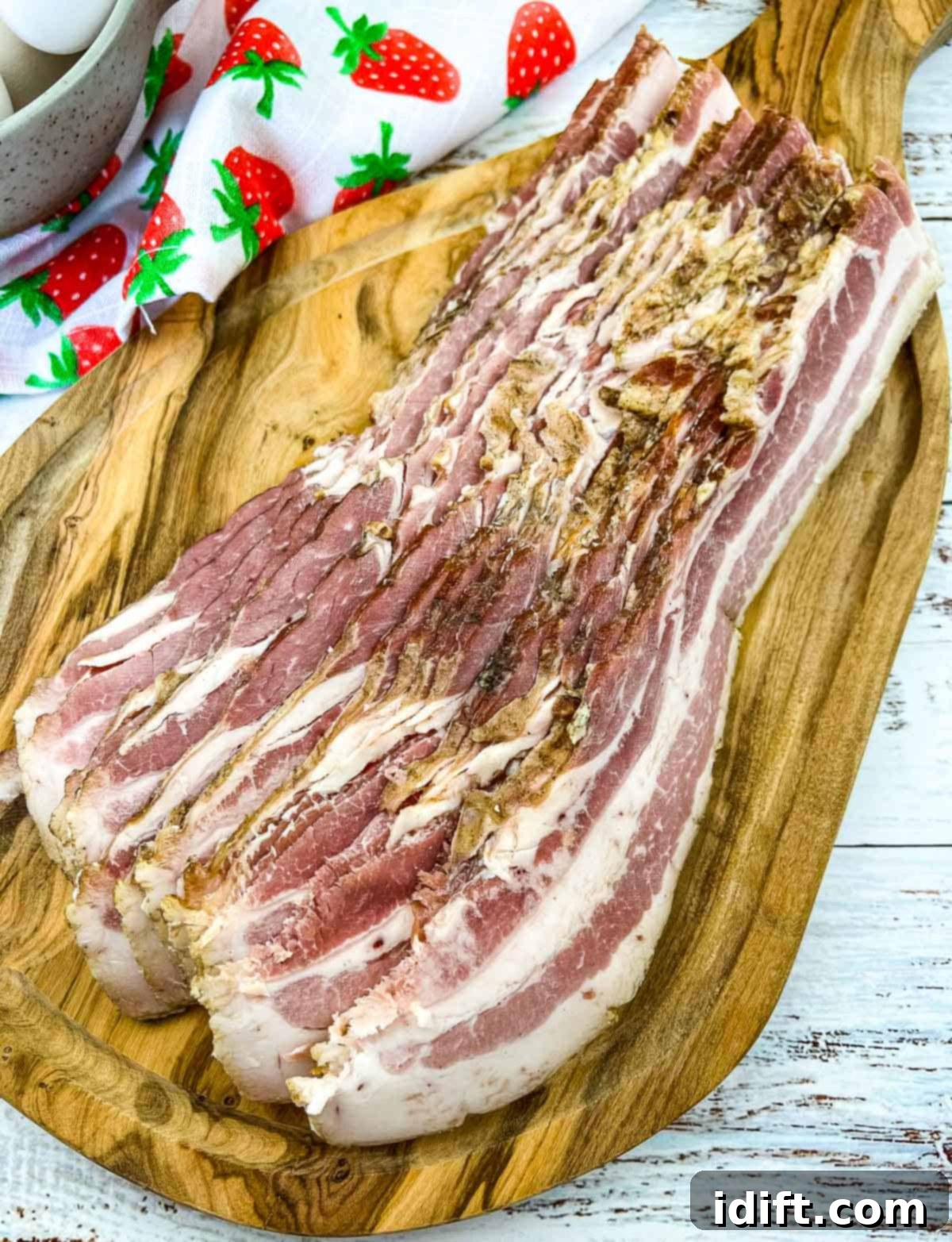
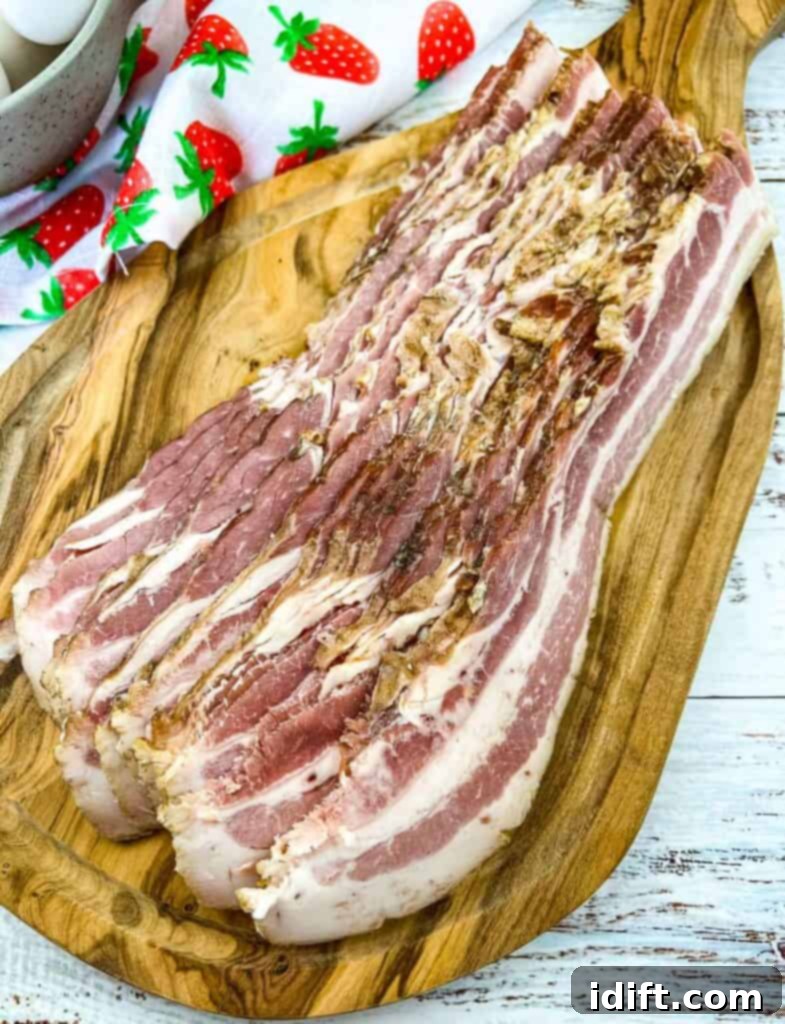
Experience the unparalleled taste of truly homemade bacon. Sweet, savory, and wonderfully smoky, crafting your own bacon from scratch is a rewarding culinary adventure that’s simpler than you might imagine. Forget bland, store-bought slices – with a quality cut of pork belly and a little patience, you’re on your way to creating an extraordinary breakfast staple that will elevate every meal it graces.
This post may contain affiliate link(s). As an Amazon Associate, I earn from qualifying purchases. See Disclosure.
Why Embark on the Homemade Bacon Journey?
There’s a significant difference between commercially produced bacon and the artisanal delight you can create in your own kitchen. While store-bought options are convenient, they often fall short in flavor, texture, and the ability to customize. Homemade bacon, especially using the wet cure method outlined here, offers an unparalleled depth of flavor – a perfect harmony of sweet, salty, and profound smokiness. The process, a true labor of love, yields results that are incredibly tender yet crisp beautifully when cooked, leaving you with a product that’s genuinely mouth-watering and far superior to anything you’ve ever purchased.
You can savor your homemade smoked bacon straight off the smoker, enjoying its robust, fresh flavor. But if you have the patience, chilling it overnight and then slicing it to your preferred thickness (thin for crispy perfection, or thicker for a more substantial chew) and frying it gently transforms it into pure heaven. The fat renders beautifully, becoming delightfully crispy, while the meat remains juicy and tender. This isn’t just a salt bomb; it’s a perfectly balanced, subtly sweet, and intensely smoky experience that redefines what bacon can be.
Unleash the Flavor: What You’ll Love About Making Homemade Bacon
- Superior Taste: It simply tastes miles better than any store-bought alternative, offering a richness and complexity you can’t find elsewhere.
- Customization at Your Fingertips: You have complete control over the saltiness, sweetness, and spice profile, tailoring it precisely to your palate.
- Quality Assurance: Know exactly what goes into your food, free from unwanted additives or preservatives often found in commercial products.
- Batch Cooking & Freezing: Make large batches to enjoy for weeks or months, ensuring a steady supply of gourmet bacon whenever a craving strikes.
- The Satisfaction of Creation: There’s immense pride and joy in serving something so delicious that you’ve made entirely from scratch.
Choosing the Perfect Pork Belly for Your Bacon
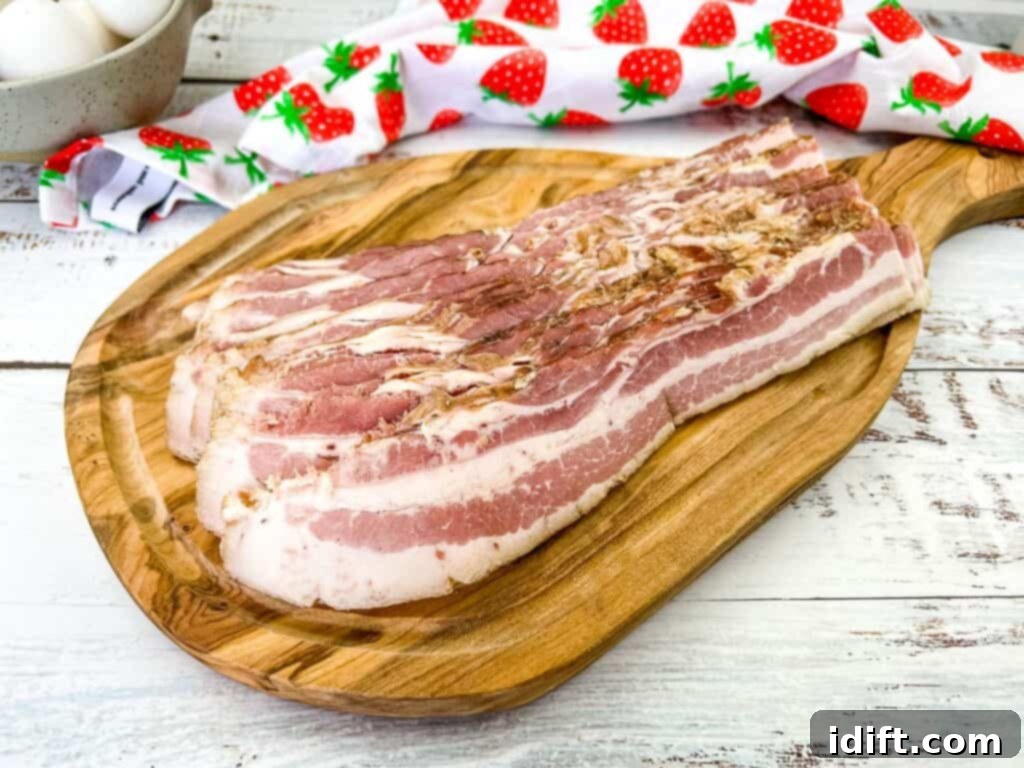
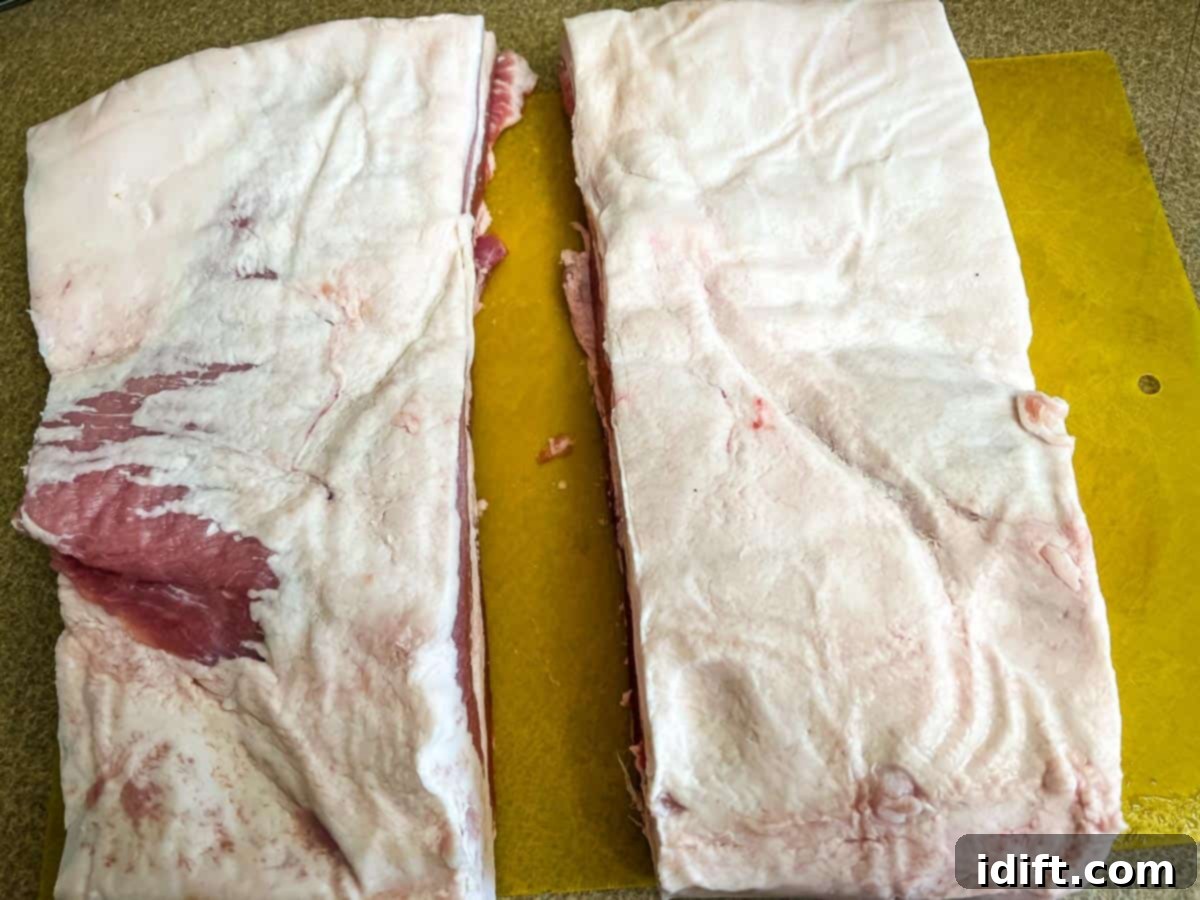
The foundation of exceptional homemade bacon is, of course, the pork belly itself. When selecting your pork belly, aim for a slab that is roughly 3 pounds. Look for a good balance of lean meat and creamy white fat. While some fat is essential for flavor and moisture, an excessively fatty piece might render down too much. Crucially, ensure the pork belly comes with the skin removed. If it has skin, you’ll need to carefully remove it yourself, which can be a bit challenging but necessary for the curing process and desired bacon texture.
Consider sourcing your pork belly from a local butcher. They often have higher quality cuts and can provide skinless options or remove it for you upon request. Avoid pre-sliced pork belly (often sold at bulk retailers) as these thinner cuts are prone to over-curing and won’t yield the best results for a traditional slab of bacon.
Wet Cure vs. Dry Cure: Understanding Your Options
When it comes to curing meat at home, particularly bacon, the two primary methods are wet curing and dry curing. Both involve the use of curing salts, typically Prague Powder #1, along with other flavorings, but they differ significantly in their approach and impact on the final product.
- Wet Curing (Brining): This method, employed in our homemade bacon recipe, involves submerging the pork belly in a liquid brine. The brine is a solution of water, salt, sugar, spices, and Prague Powder #1. The meat absorbs the curing solution, resulting in a consistently moist and flavorful product. Wet curing generally requires slightly less time than dry curing and ensures a very even distribution of the cure throughout the meat. The liquid medium also helps to keep the meat hydrated during the curing process.
- Dry Curing: In this method, the pork belly is directly coated with a dry rub consisting of salt, sugar, spices, and Prague Powder #1. The meat is then left to cure, allowing the salt to draw out moisture and the flavors to penetrate. Dry curing often takes a bit longer than wet curing, sometimes up to two weeks, and requires careful monitoring to ensure proper cure penetration without excessive drying. It can produce a more intensely flavored and slightly firmer bacon.
For most home cooks, the wet cure method offers a more approachable and forgiving process, ensuring a tender, juicy, and uniformly flavored bacon. Regardless of the method, remember that curing meat is not a quick endeavor; it’s a process that demands patience, typically taking around a week to complete, but the results are undeniably worth the wait.
The Science of Curing Meat: A Foundation for Flavor and Safety
Curing meat is an ancient practice, rooted in scientific principles that transform raw pork belly into the beloved delicacy we call bacon. At its core, curing involves a precise combination of salt, sugar, and a special ingredient known as Prague Powder #1, working in synergy to achieve three main goals: preservation, flavor development, and color enhancement.
When meat is submerged in a brine or coated with a dry rub, several key processes occur:
- Moisture Exchange: The salt in the cure acts through osmosis, drawing moisture out of the meat while simultaneously allowing the flavorful brine solution to penetrate deep into the muscle fibers. This reduction in water activity inhibits the growth of spoilage bacteria.
- Flavor Infusion: Beyond preservation, the sugar and spices in the cure impart complex flavors, transforming the pork belly into the distinctive taste of bacon. The sugar balances the saltiness and contributes to the beautiful caramelization during cooking.
- Bacterial Inhibition (Crucial for Safety): This is where Prague Powder #1 plays its most vital role. The sodium nitrite within the curing salt is a powerful antimicrobial agent. It specifically inhibits the growth of harmful bacteria, particularly Clostridium botulinum, which causes botulism – a potentially deadly foodborne illness.
- Color & Texture Transformation: Nitrite also reacts with the myoglobin in the meat, responsible for its red color, to produce a stable pink pigment. This gives cured meats like bacon their characteristic rosy hue and contributes to their unique texture.
Understanding these principles reinforces the importance of following recipes precisely and using the correct ingredients, especially when it comes to curing salts.

Prague Powder #1: The Essential Curing Agent and Safety Guide
Many years ago, attempts to cure meats without the proper curing salts often led to disappointment or, worse, unsafe results. The undisputed “secret ingredient” to a successful and safe cure is Prague Powder #1. Also known as tinted cure or pink curing salt, it is a precisely formulated blend of 6.25% sodium nitrite and 93.75% sodium chloride (table salt).
This specific combination is what allows cured meats to develop their unique flavor, maintain their vibrant color, and achieve a significantly longer shelf life. More importantly, sodium nitrite is a potent inhibitor of bacterial growth, particularly the dangerous Clostridium botulinum bacterium. Without it, the risk of botulism in home-cured meats becomes a serious concern.
Crucial Safety Guidelines for Prague Powder #1:
- Precision is Key: It is absolutely critical to use the correct amount of Prague Powder #1. Too little may not adequately inhibit bacteria, while too much can be toxic and ruin your bacon. A widely accepted guideline is 1 teaspoon of pink curing salts per 5 pounds of meat. For our 3-pound pork belly recipe, this calculates to approximately 3 grams or ¾ teaspoon. Always measure precisely, preferably with a digital scale.
- NOT Table Salt: Prague Powder #1 is NOT table salt, Himalayan pink salt, or any other common salt. Its pink color is a safety measure to prevent it from being mistaken for regular salt. Do NOT substitute it for other salts in recipes that don’t call for a curing agent, and never use it in quantities exceeding recommended guidelines.
- Storage and Labeling: Store Prague Powder #1 securely and clearly labeled, far out of reach of children and pets. Treat it with the respect it deserves as a powerful food additive.
By adhering to these guidelines, you can safely and confidently create delicious, properly cured bacon at home.
Gather Your Ingredients: The Heart of Your Homemade Bacon
The beauty of homemade bacon lies in its simplicity and the quality of its components. Here’s what you’ll need to create your masterpiece:
- Pork Belly: The star of the show! Look for a slab weighing around 3 pounds with a good, balanced distribution of fat and lean meat. Ensure it is skin off. If you get it with the skin, carefully remove it before starting the cure.
- Water: Use distilled water or water that has been boiled and then completely cooled. This ensures no chlorine or impurities from tap water interfere with the curing process or flavor.
- Dark Brown Sugar: Essential for that classic sweet and savory balance. Dark brown sugar provides a deeper, richer molasses flavor compared to light brown sugar. If you only have light brown, it will work, but the depth of flavor might be slightly less intense.
- Salt (Kosher Salt): For all curing projects, I recommend kosher salt due to its pure flavor and lack of additives like iodine, which can sometimes impart off-flavors. If you must use table salt, reduce the amount by about one-third, as table salt is finer and more densely packed.
- Black Pepper: Finely ground black pepper is ideal here. Its subtle heat and earthy notes will infuse nicely into the bacon. Save coarsely cracked pepper for preparations like pastrami where a bolder texture is desired.
- Prague Powder #1: As discussed, this is non-negotiable for safety and proper curing. For a 3-pound piece of pork belly, you’ll need precisely 3 grams, which translates to approximately ¾ teaspoon. Always measure this ingredient carefully using a digital scale for accuracy.
Essential Equipment for a Successful Cure and Smoke
Having the right tools makes the curing and smoking process smooth and enjoyable:
- Digital Scale: Absolutely vital for accurately weighing Prague Powder #1. Precision here is paramount for both safety and flavor consistency.
- Large Plastic Zipper-Top Bag: A sturdy 1-gallon freezer bag is perfect for holding a 3-pound slab of pork belly and its brine. It allows for easy flipping and massaging during the curing period, ensuring even distribution of the cure.
- Smoker (e.g., Traeger Pellet Grill): Any smoker capable of maintaining a consistent, low temperature (180-200°F) will work. A pellet grill like a Traeger makes temperature control easy, which is crucial for even smoking.
- Wood Pellets or Chips: Applewood pellets are highly recommended for bacon due to their mild, slightly sweet, and fruity smoke, which complements pork beautifully. However, feel free to experiment with your favorite wood flavor, such as hickory or cherry, to customize your bacon’s smoky profile.
- Digital Meat Thermometer: An indispensable tool for ensuring your bacon is cooked to a safe internal temperature (145°F) without overcooking, which can lead to dry bacon. A probe thermometer that can stay in the meat during smoking is ideal.
Crafting Your Own Bacon: A Detailed Wet Cure Method
Follow these steps closely to create perfectly cured and smoked bacon at home:
- Prepare the Pork Belly: Begin by washing your slab of pork belly thoroughly under cold running water. Pat it completely dry with paper towels. Any excess moisture on the surface can hinder the brine’s penetration.
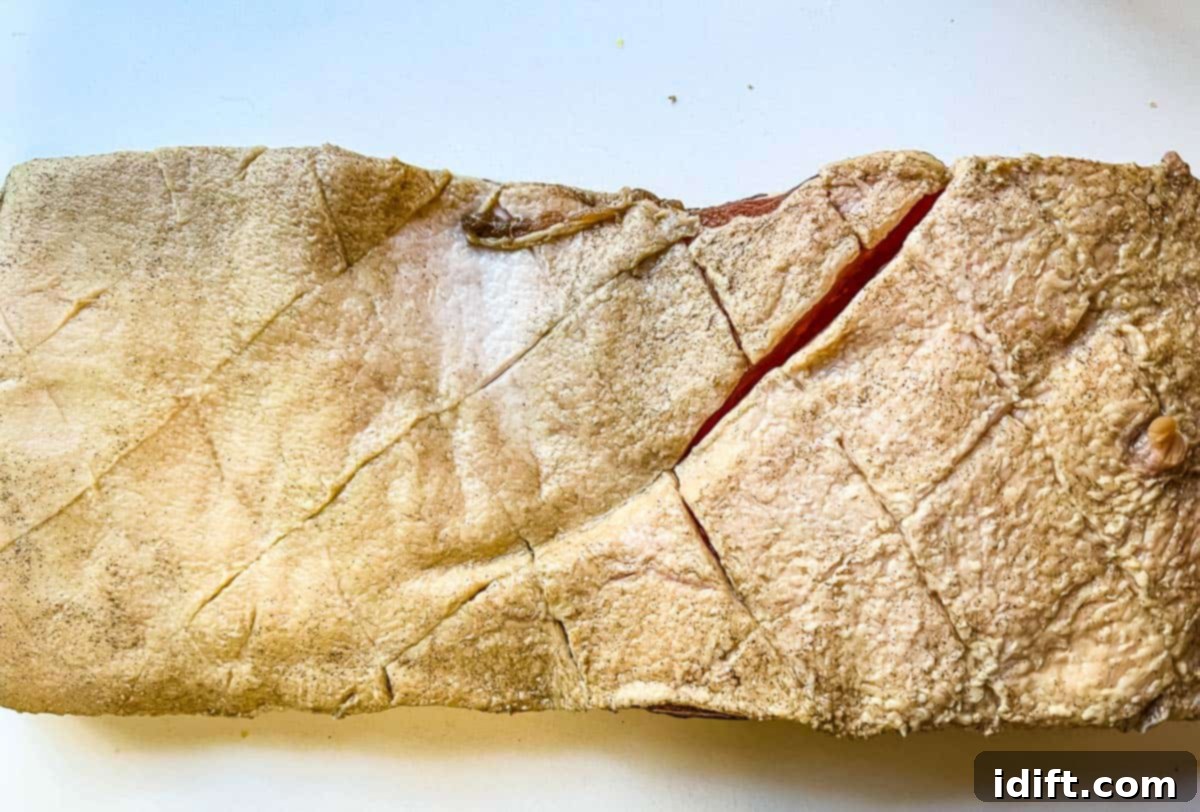
- Score the Fat Cap: Using a sharp knife, carefully score diagonal slits into the fat layer on the top of the pork belly. Be mindful not to cut too deep – you only want to penetrate through the fat, just barely reaching the meat. This scoring helps the brine penetrate more effectively into the meat, ensuring a more even cure and better flavor distribution.
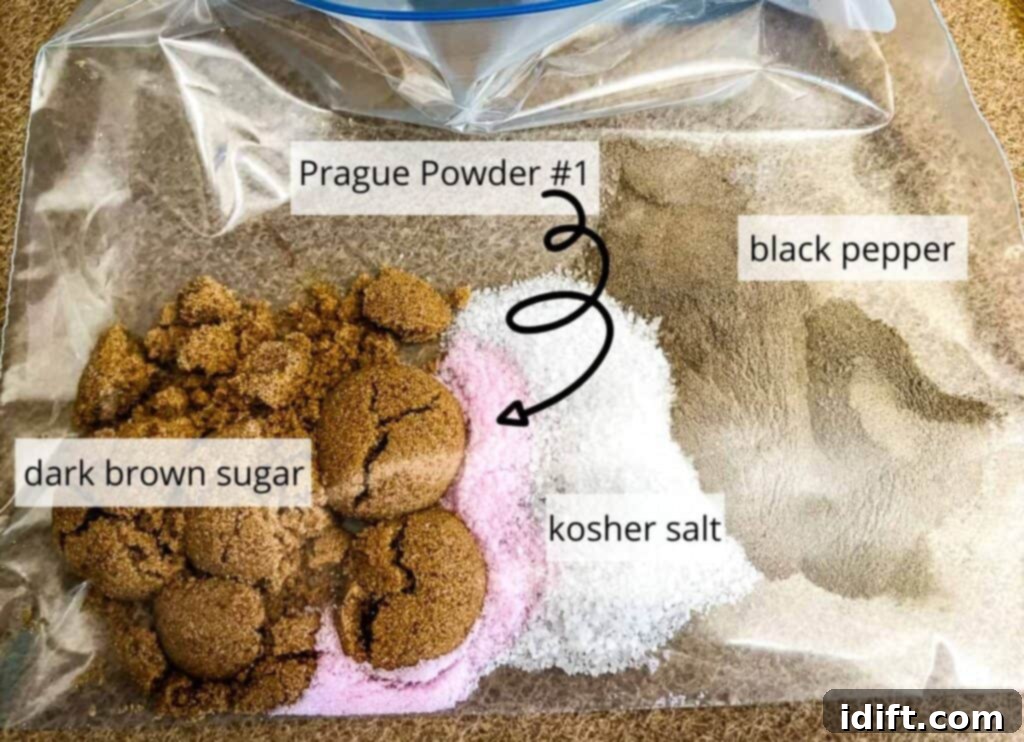
- Combine Dry Brine Ingredients: In your large zipper-top plastic bag, combine the dark brown sugar, kosher salt, finely ground black pepper, and the precisely measured Prague Powder #1. Mix these dry ingredients thoroughly within the bag, ensuring they are evenly distributed.
- Add Water to Form Brine: Pour the distilled or boiled and cooled water into the bag with the dry ingredients. Swish the bag around gently to help dissolve the sugar and salt, creating a uniform brine solution.
- Introduce Pork Belly to Brine: Carefully place the scored pork belly into the bag with the brine. Seal the bag, pressing out as much air as possible. Then, gently massage the pork belly from the outside of the bag, ensuring it is completely coated and submerged in the brine. This helps the brine get into all the scored crevices.
- Cure in the Refrigerator: Place the sealed bag containing the pork belly and brine in the refrigerator. Cure for 5 to 6 days. Critically, flip the bag and massage the pork belly once daily. This ensures all surfaces are consistently exposed to the brine and that the cure penetrates evenly.
- Rinse and Dry Before Smoking: On the final day of curing, remove the pork belly from the brine. Rinse it exceptionally well under cold tap water to remove any excess curing salts and spices from the surface. Pat it thoroughly dry with paper towels.
- Preheat Your Smoker: Fire up your smoker (e.g., Traeger pellet grill) and preheat it to a consistent temperature of 180°F (82°C) according to your manufacturer’s guidelines. Add your chosen wood pellets (applewood is highly recommended).
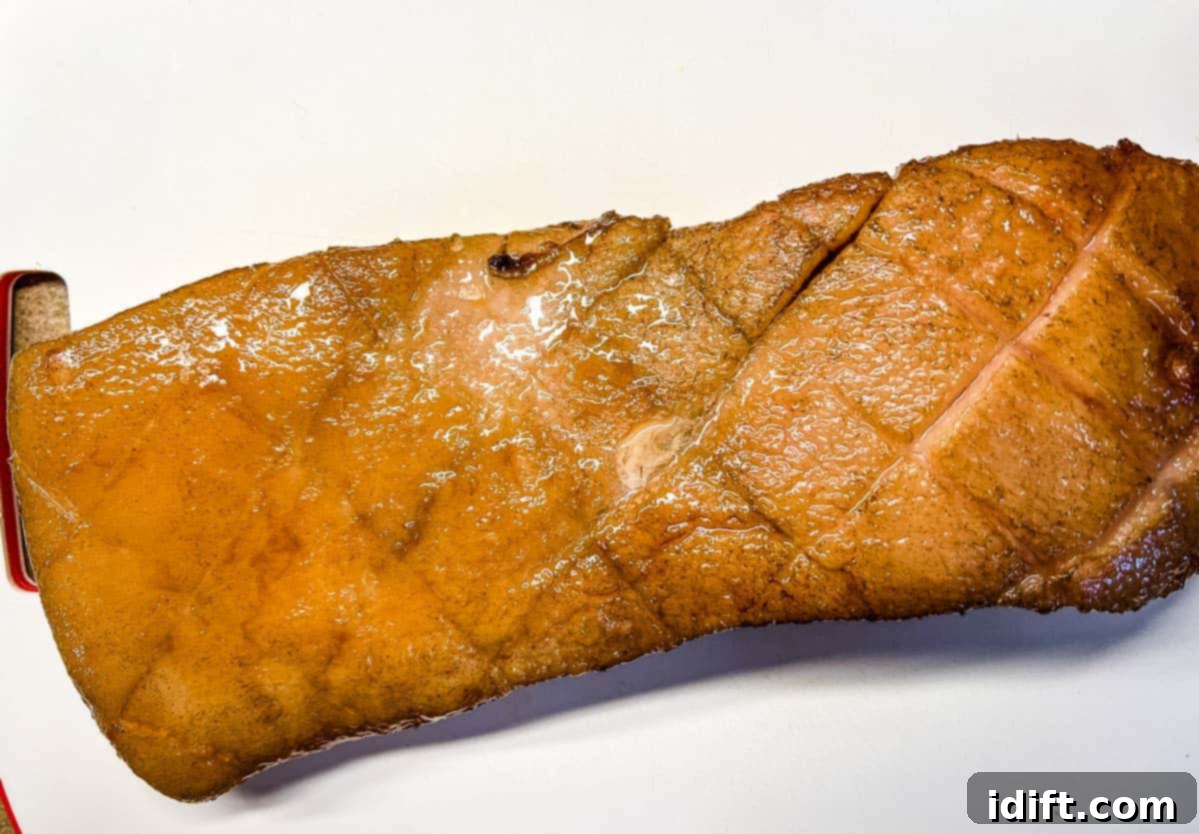
- Initial Smoke for Flavor: Place the rinsed and dried pork belly directly on the smoker grates. Smoke it at 180°F (82°C) for approximately 30 minutes. This initial low-temperature smoke provides a robust smoke flavor without rapidly increasing the internal temperature of the meat.
- Smoke to Final Temperature: After the initial smoke, increase the smoker temperature to 200°F (93°C). Continue to smoke the bacon until its internal temperature reaches 145°F (63°C) when measured with a digital meat thermometer. This typically takes 2-2.5 hours, but always go by internal temperature, not time.
- Rest and Enjoy: Once 145°F (63°C) is reached, remove the smoked pork belly from the smoker. Let it rest for at least 15-20 minutes on a cutting board before slicing or serving. This allows the juices to redistribute, resulting in a more tender and flavorful final product. Enjoy your incredible homemade bacon!
Chef Jenn’s Expert Tips for Bacon-Making Mastery
Making homemade bacon is a truly rewarding experience, and with these expert tips, you can ensure your batches are consistently perfect:
- Embrace Patience: Curing and smoking meats are not fast processes. They require time, and attempting to rush the cure will compromise both safety and flavor. Plan your bacon-making schedule carefully, ensuring you have the necessary 5-6 days for curing and sufficient time for smoking. It’s a hobby that teaches patience, but the delicious reward is well worth it!
- Consider “Fridge Drying” for Enhanced Smoke (Optional): Some enthusiasts advocate for fridge-drying the cured meat for 12-24 hours after rinsing and before smoking. The theory is that this process creates a “pellicle” – a tacky, dry surface – which supposedly attracts and holds more smoke. While I’ve tested this method extensively, my “super-taster” (and my own palate) hasn’t detected a significant enough difference in smoke flavor between dry-aged and wet-rinsed meat to make it a mandatory step. This is purely a personal preference. If you wish to try it, simply pat your rinsed pork belly dry and place it uncovered in the refrigerator overnight or for up to 24 hours before smoking.
- Master the Salt Level: Salt is fundamental for both preservation and flavor in bacon. This recipe is designed to produce a perfectly seasoned bacon that isn’t overly salty. If you prefer a more pronounced saltiness in your bacon, you can increase the kosher salt by one or two tablespoons. Remember, it’s easier to add salt later than to remove it.
- Maximize Your Effort – Make More Than One Slab! If you’re going through the effort of preparing homemade bacon, it’s highly efficient to make more than a single 3-pound slab. I often cure a whole 10-12 pound pork belly, dividing it into 3-pound sections for individual brining bags. This ensures you have a generous supply for future breakfasts, recipes, and gifts. Ask your butcher for a whole pork belly and cut it yourself, or have them do it for you.
- Avoid Pre-Sliced Pork Belly: Resist the temptation to use pre-sliced pork belly (often found in 1-2 inch strips at some grocery stores). These thinner pieces will over-cure very quickly with this recipe and won’t yield the thick, satisfying slabs of bacon you’re aiming for. Stick to a solid 3-pound slab for optimal results.
- Mindful Enjoyment: The entire process, from curing to smoking, is an exercise in slow food. While your bacon is curing, use the time to relax, read, or enjoy other simple pleasures. The anticipation only makes the first bite of your scratch-made bacon even more delightful!
Perfect Slicing Techniques for Homemade Bacon
Achieving perfectly uniform slices of bacon is key to an enjoyable cooking experience. The secret lies in ensuring the meat is thoroughly chilled:
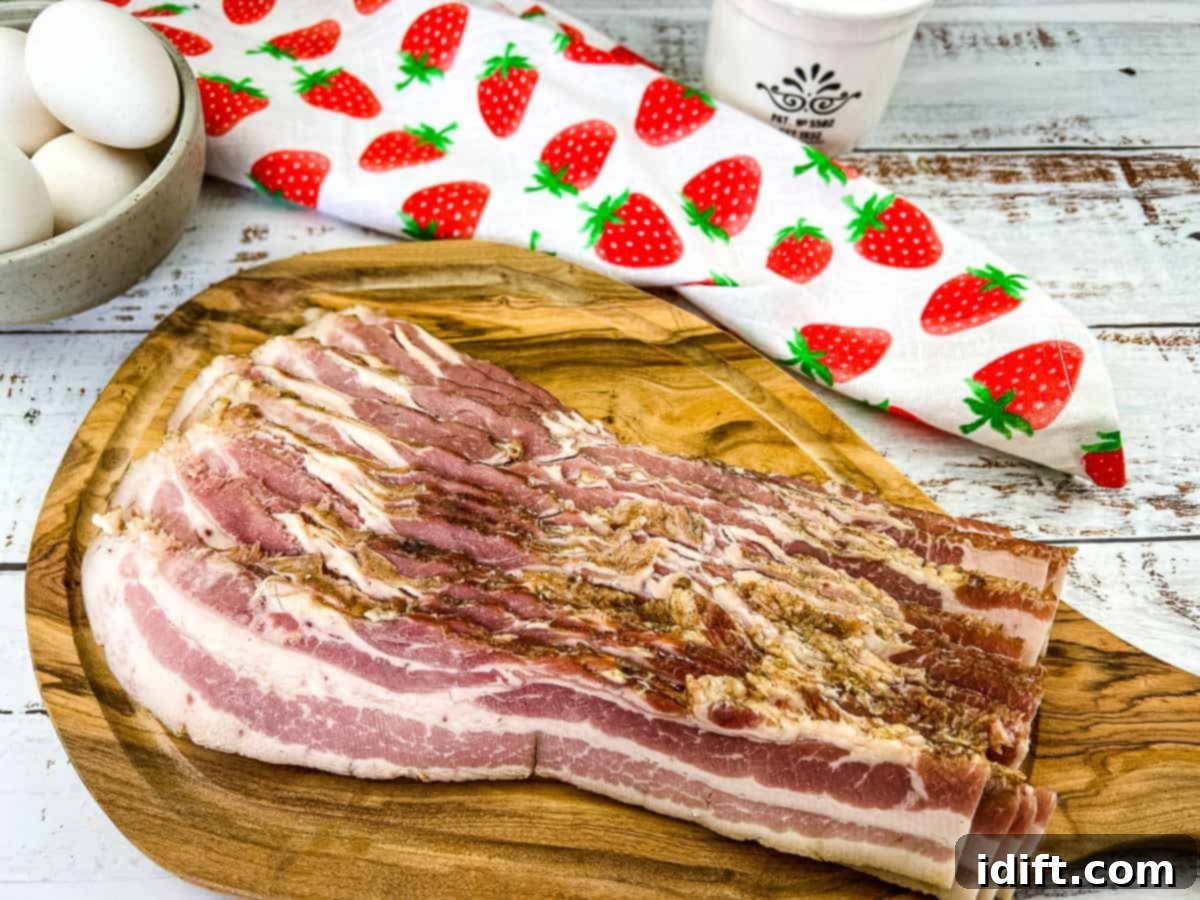
Cold Meat is Your Friend: For the absolute best results, once your homemade smoked bacon has cooled down completely after smoking, place it into the refrigerator for at least 4 hours, or ideally, overnight. Cold meat holds its shape much better and is significantly easier to slice cleanly and evenly than warm or room-temperature meat.
Slicing Options:
- Meat Slicer: If you have access to a meat slicer, this is by far the easiest and most consistent method. You can adjust the thickness precisely, from paper-thin to thick-cut steak-like slices.
- Sharp Chef’s Knife: Without a dedicated slicer, a very sharp chef’s knife is your next best option. Place the chilled slab of bacon on a stable cutting board. Apply even pressure and slice against the grain for tender pieces. Aim for uniform thickness, but don’t worry if they’re not absolutely perfect – the rustic charm of hand-sliced bacon is part of its appeal!
Slice to your desired thickness and prepare for culinary bliss!
Delicious Serving Suggestions for Your Homemade Bacon
The aroma of freshly smoked bacon is irresistible, and often, everyone gathers to snatch delicious bits right off the smoker. Smoked bacon, once it reaches 145°F (63°C) internal temperature and rests for 5 minutes, is perfectly safe to eat as is. And let me tell you, it’s incredibly delicious! While immediate gratification is certainly an option, showing a little restraint allows you to explore these fantastic serving possibilities:
- Classic Breakfast Bacon: Slice and fry it just like conventional breakfast bacon. Be mindful of the heat – this homemade bacon contains natural sugars that can burn easily. Cook over medium heat to achieve a beautiful crispness without charring.
- A Versatile Ingredient: Homemade smoked bacon adds an unparalleled depth of flavor to countless recipes. Incorporate it into hearty soups, vibrant salads, savory pastries, rich entrees, or even comforting homemade pizza pockets. Its smoky sweetness transforms any dish.
- Garnish with Gourmet Lardons: Elevate your dishes with lardons – a fancy term for thick-cut bacon, cut into matchsticks, and then fried until crispy. These are exquisite sprinkled over green beans, roasted Brussels sprouts, creamy pasta dishes, or fresh salads. I often pre-portion and freeze a portion of each bacon batch as lardons (before frying) for quick meal enhancements.
- Enjoy it Whole: Since the smoked bacon is fully cooked, you can simply slice it into thick pieces and serve it as a standalone treat or alongside your favorite side dishes for a satisfying and flavorful meal.
Step-by-Step Visual Process



Print
Pin
How To Make Homemade Bacon (Wet Cure)
Course
Breakfast
Cuisine
American
Keyword
bacon, homemade bacon, pork belly, smoked bacon, smoked pork belly, wet cure bacon, DIY bacon
Prep Time
10 minutes
Cook Time
2 hours
30 minutes
Curing time
5 days
Total Time
5 days
2 hours
40 minutes
Servings
18
servings
Calories
408
kcal
Author
Chef Jenn
Equipment
- 1 Traeger pellet grill
- Applewood pellets
- Digital meat thermometer
- Digital scale
Ingredients
- 3 pounds pork belly skin removed
- 3/4 cup distilled water or boiled and cooled water
- 6 tablespoons dark brown sugar
- 4 teaspoons kosher salt
- 4 teaspoons ground black pepper
- 3 grams Prague Powder #1 about 3/4 teaspoon (measured precisely with a digital scale)
Instructions
- Wash and pat dry the pork belly thoroughly with paper towels.
- Score diagonal slits into the top (fat side) of the pork belly, being careful not to cut too deep – just enough to penetrate the fat layer. This aids brine absorption.
- Combine the dark brown sugar, kosher salt, ground black pepper, and precisely measured Prague Powder #1 in a large zipper-top plastic bag. Mix well.
- Add the distilled or boiled and cooled water to the bag. Swish around to dissolve the dry ingredients, forming the wet cure brine.
- Add the prepared pork belly to the bag. Seal, removing as much air as possible, and massage thoroughly to ensure the pork belly is completely coated with the brine.
- Refrigerate the pork belly for 5-6 days. Flip the bag and massage the pork belly once every day to maintain even curing.
- After curing, remove the pork belly from the brine. Rinse it very well under tap water to wash off excess cure. Pat it completely dry with paper towels.
- Preheat your smoker to 180°F (82°C) according to your manufacturer’s guidelines. Ensure you have your desired wood pellets (e.g., Applewood) loaded.
- Place the dried pork belly on the smoker grates. Smoke at 180°F (82°C) for approximately 30 minutes to infuse it with a good initial smoke flavor.
- Increase the smoker’s heat to 200°F (93°C). Continue smoking the bacon until it reaches an internal temperature of 145°F (63°C), as verified with a digital meat thermometer.
- Remove the smoked bacon and let it rest on a cutting board for at least 15-20 minutes before slicing or serving. This helps retain moisture and flavor. Enjoy your delicious homemade bacon!
Notes
Chef Jenn’s Tips
- Curing and smoking meats takes time! You can’t rush a cure. Plan it out and make sure you have the time to make your homemade bacon properly.
- Drying before smoking – If you want to fridge-dry the meat to potentially attract more smoke (pellicle formation), pop it into the fridge uncovered for 12-24 hours after rinsing and before smoking. This is a personal preference.
- This bacon is not overly salty. If you like your bacon saltier, increase the kosher salt by a tablespoon or two.
- Make more than one slab! Consider doing a whole 10-12 pound pork belly at a time, cutting it into 3-pound hunks for individual cures. This is more efficient for the effort involved.
- Don’t use pre-sliced pork belly. These thinner cuts will over-cure with this recipe. You need a good 3-pound slab.
Nutrition
Serving:
3
slices
|
Calories:
408
kcal
|
Carbohydrates:
4
g
|
Protein:
7
g
|
Fat:
40
g
|
Saturated Fat:
15
g
|
Polyunsaturated Fat:
4
g
|
Monounsaturated Fat:
19
g
|
Cholesterol:
54
mg
|
Sodium:
543
mg
|
Potassium:
151
mg
|
Fiber:
0.1
g
|
Sugar:
4
g
|
Vitamin A:
10
IU
|
Vitamin C:
0.2
mg
|
Calcium:
10
mg
|
Iron:
0.5
mg
A Note on Nutritional Information
Nutritional information for this recipe is provided as a courtesy and is calculated based on available online ingredient information. It is only an approximate value. The accuracy of the nutritional information for any recipe on this site cannot be guaranteed.
Storage and Freezing Your Homemade Bacon
Once you’ve gone to the trouble of making incredible homemade bacon, you’ll want to ensure it stays fresh and delicious for as long as possible. Proper storage is key to enjoying your hard work for weeks or even months.
- Refrigeration: After the bacon has been smoked and cooled, you can store unsliced or sliced portions in an airtight container or tightly wrapped in plastic wrap and then foil in the refrigerator for up to 1-2 weeks. For best results, slice only what you plan to use in the short term.
-
Freezing for Long-Term Storage: Homemade bacon freezes exceptionally well.
- Whole Slabs: For larger portions, wrap the entire smoked and cooled slab tightly in plastic wrap, then a layer of aluminum foil. Place it in a freezer-safe bag.
- Sliced Portions: For convenience, slice the bacon first. You can then stack a few slices between parchment paper squares to prevent them from sticking together, wrap these stacks tightly in plastic wrap, then foil, and finally place them in a freezer-safe bag or container. This allows you to grab just a few slices at a time.
- Lardons (Matchsticks): If you plan to use bacon for cooking, cut it into lardons first. You can then flash freeze them on a baking sheet before transferring them to a freezer-safe bag. This way, they won’t clump together, and you can easily scoop out the desired amount.
Frozen homemade bacon can last for up to 3-6 months without significant loss of quality. Thaw frozen bacon in the refrigerator overnight before cooking.
Troubleshooting Common Homemade Bacon Questions
Even experienced home curers can encounter questions or minor issues. Here are some common troubleshooting points:
- “My bacon is too salty!” This is a common concern. Ensure you measured your salt precisely, especially the kosher salt and Prague Powder #1. If it’s too salty, you can try soaking the rinsed, unsmoked pork belly in fresh cold water for 30 minutes to an hour, changing the water once. Always taste a small cooked piece to check saltiness before smoking the entire batch. In the future, slightly reduce the amount of kosher salt in your brine.
- “My bacon isn’t smoky enough.” The type of wood and the duration of smoking both play a role. Ensure your smoker is producing consistent, clean smoke. Using stronger woods like hickory or mesquite (sparingly) can increase smokiness, or you can extend the initial low-temperature smoke phase by another 30 minutes. Always ensure a good quality, fresh pellet or wood chip supply.
- “Why is my bacon not crisping up?” Several factors can affect crispiness. First, ensure your bacon is sliced to an appropriate thickness – very thick slices will be chewier rather than crispy. Second, the cooking temperature is crucial. Cook bacon over medium to medium-low heat. High heat can burn the sugars before the fat has a chance to fully render and crisp. Patience is key when frying.
- “The color isn’t quite right.” The characteristic pink hue of bacon comes from the nitrite in Prague Powder #1. If your bacon is greyish after curing and smoking, it could indicate insufficient curing time or an incorrect amount of Prague Powder #1. Always ensure proper measurement and curing duration for both safety and aesthetics.
Conclusion: The Ultimate Bacon Experience Awaits
Making homemade bacon is more than just a recipe; it’s a journey into the heart of traditional food preparation, culminating in a product that genuinely surpasses any commercial offering. From the careful selection of pork belly to the precise application of the wet cure and the aromatic bliss of slow smoking, every step contributes to a culinary masterpiece. The control you gain over flavor, saltiness, and texture means you can craft bacon exactly to your liking – a smoky, sweet, and savory delight that will become a cherished staple in your kitchen. Embrace the process, savor the anticipation, and prepare to be amazed by the incredible taste of your very own artisanal bacon. Your breakfast, and indeed many other meals, will never be the same again!
Want More Delicious and Easy Recipes?
- Steaks on the Blackstone
- Smoked Lamb Chops
- Leftover Roast Beef Stroganoff
- Smoked Shotgun Shells