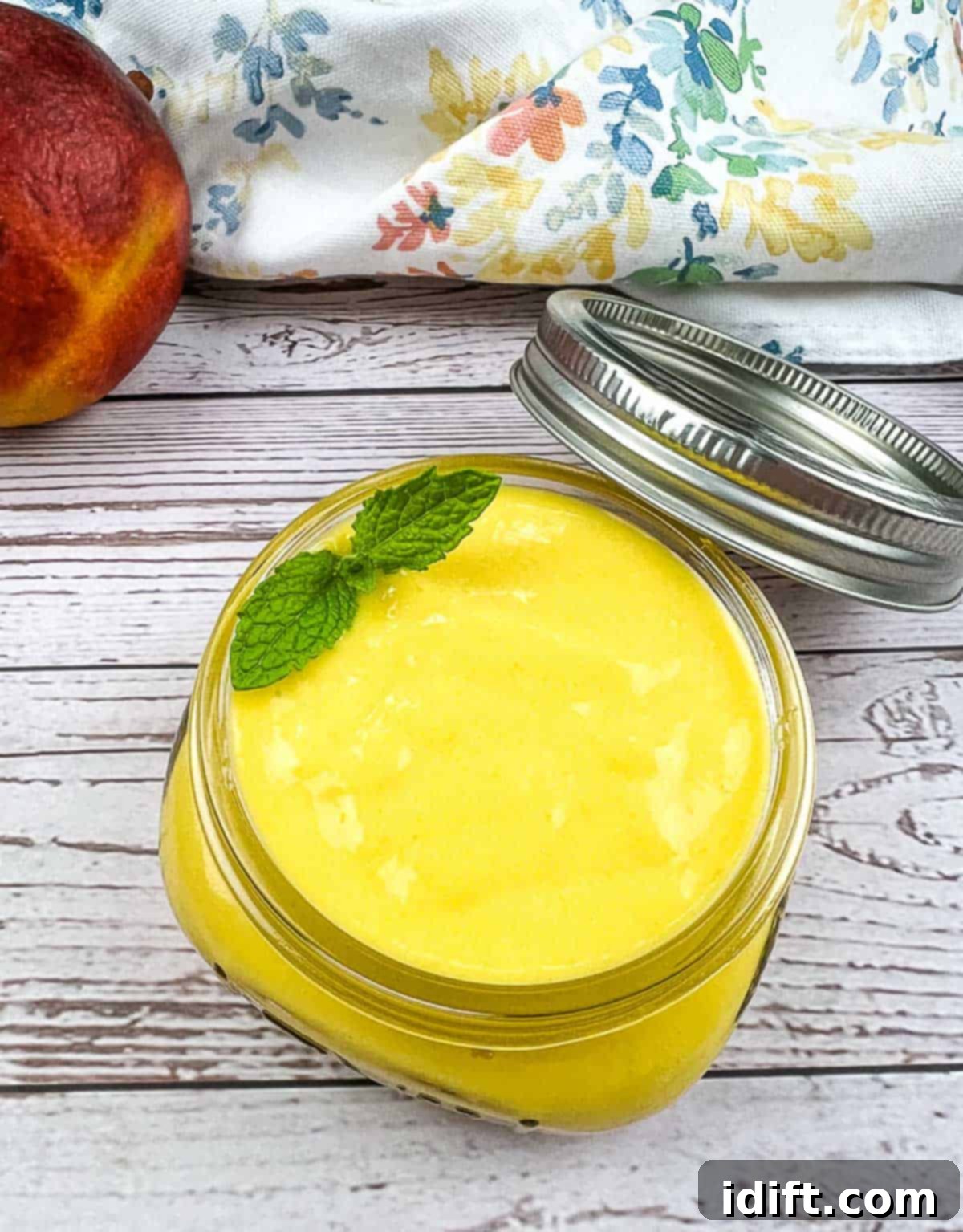
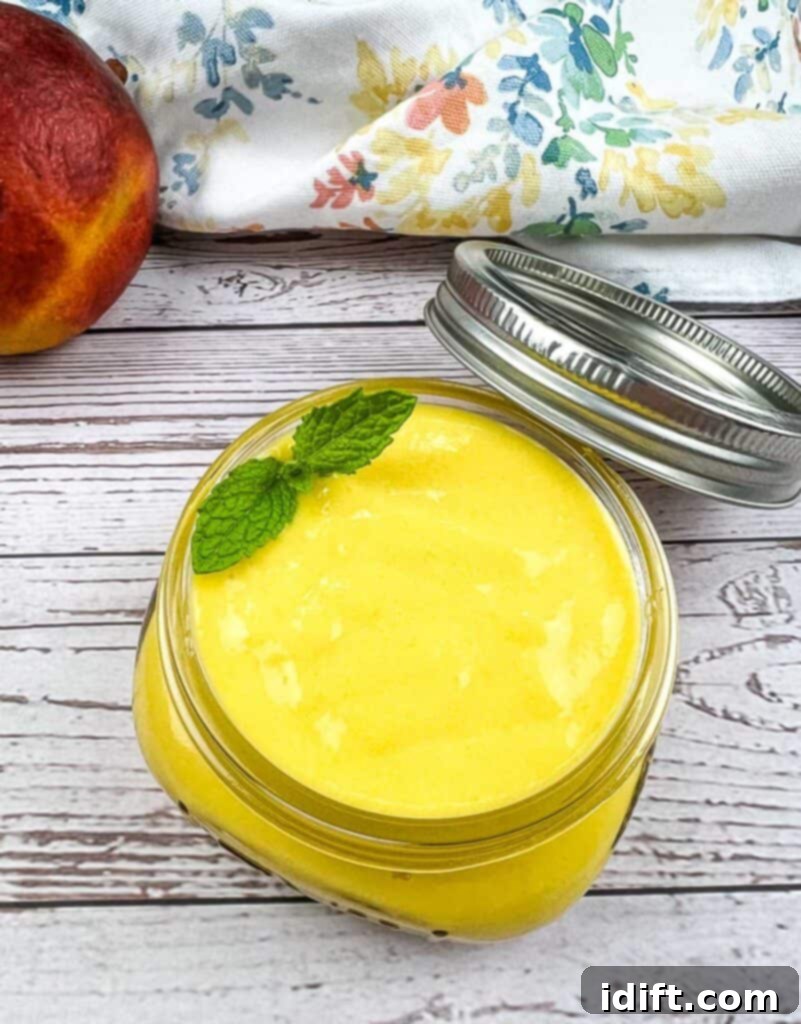
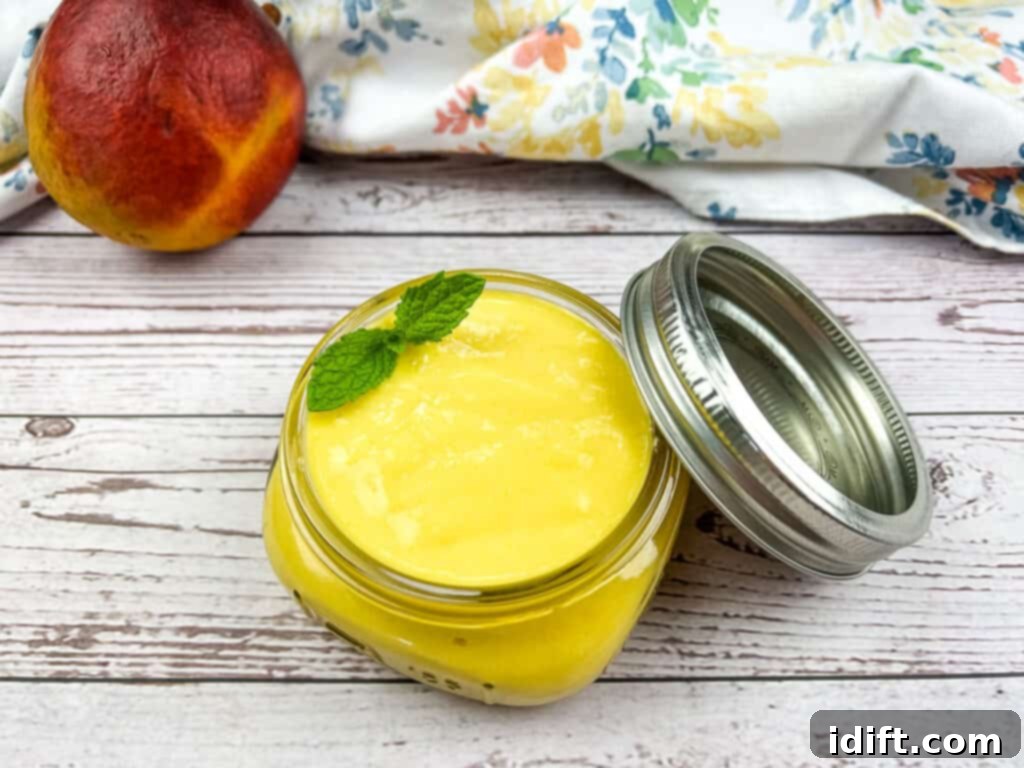
If you adore the luscious sweetness of mangoes, prepare to fall in love with Homemade Mango Curd. This vibrant, exquisitely flavored curd, crafted from either fresh or frozen mangoes, promises to elevate any dessert to extraordinary heights. And the best part? It’s surprisingly simple to master, even for novice home cooks!
This post may contain affiliate link(s). As an Amazon Associate, I earn from qualifying purchases. See Disclosure.
Homemade Mango Curd: Your Ultimate Guide to a Tropical Delight
Have you ever experienced the sheer joy of Mango Curd? Imagine the tangy brightness of classic lemon curd, but infused with the exotic, sun-kissed sweetness of ripe mangoes. This delightful creation is a velvety smooth, intensely flavorful spread that stands on its own as a dessert or transforms everyday dishes into tropical masterpieces. If you’re a fan of vibrant fruit flavors and creamy textures, then this mango curd recipe is an absolute must-try. It’s every bit as delicious as it sounds, and with our simple, step-by-step guide, you’ll be whipping up batches in no time.
Making fruit curd might seem intimidating, but it’s remarkably straightforward. The key lies in understanding a few fundamental techniques, which we’ll walk you through in detail. Our special method ensures an exceptionally smooth and luscious curd every single time, free from any lumps or grainy texture. Get ready to impress your friends and family with this easy-to-make, utterly irresistible tropical treat!
Why You’ll Love This Easy Mango Curd Recipe
- Incredibly Versatile: Use it as a spread, topping, or filling for countless desserts and breakfast items.
- Fresh or Frozen Mango: Enjoy this tropical delight any time of the year, adapting to seasonal availability.
- Long Shelf Life: Stored properly, it keeps well in the fridge for up to four weeks, or even longer in the freezer.
- Simple to Make: Follow our clear instructions for a smooth, perfect curd every time.
- Customizable Sweetness: Easily adjust the sugar content to match your personal preference and the sweetness of your mangoes.
Unleashing the Versatility of Mango Curd
The applications for homemade mango curd are truly endless, limited only by your imagination. Its bright, tropical flavor and silky texture make it a fantastic addition to both sweet and savory dishes, though it truly shines in the realm of desserts and breakfast foods. Here are just a few ways you can incorporate this delightful curd into your culinary repertoire:
- Breakfast Bliss: Swap out your usual jam or marmalade for a generous spread of mango curd on warm toast, fluffy pancakes, golden waffles, or a freshly baked scone. It adds a refreshing, exotic twist to your morning routine.
- Dessert Dynamo: Use it as an exquisite topping for a bowl of creamy vanilla ice cream, plain yogurt, or Greek yogurt for a simple yet elegant treat. A dollop of mango curd can instantly elevate your favorite cheesecake, panna cotta, or crème brûlée.
- Cake & Tart Filling: Spread it between layers of a vanilla or coconut cake for a tropical flavor burst. It’s also an ideal filling for tart shells, turning a simple pastry into a show-stopping dessert.
- Cookie Creations: Fill thumbprint cookies or mini tartlets with this luscious curd for a bite-sized burst of mango flavor.
- Pound Cake Perfection: Drizzle or spread it over a plain pound cake to transform it into a light, summery dessert perfect for gatherings.
- Yogurt & Parfaits: Layer mango curd with granola and fresh fruit in a parfait glass for a beautiful and delicious snack or breakfast.
- Crepes & Blintzes: Fill delicate crepes or blintzes with mango curd for a sophisticated brunch option.
- Trifle Enhancement: Incorporate mango curd into a tropical trifle, layering it with sponge cake, whipped cream, and fresh mango pieces.
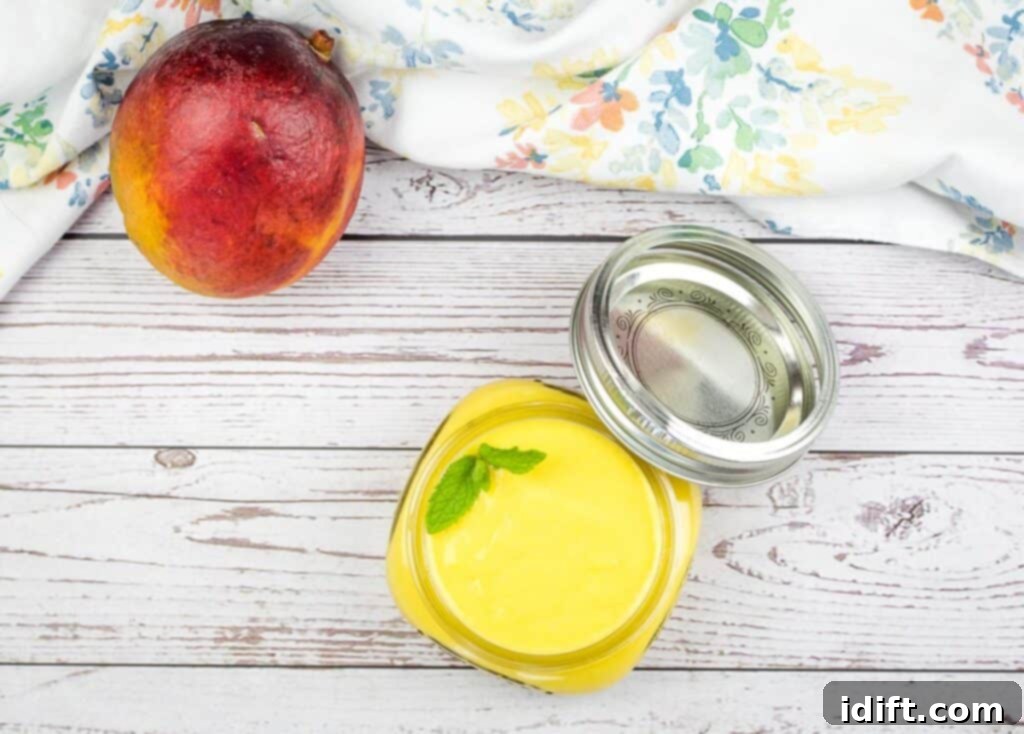
Key Ingredients for the Best Mango Curd
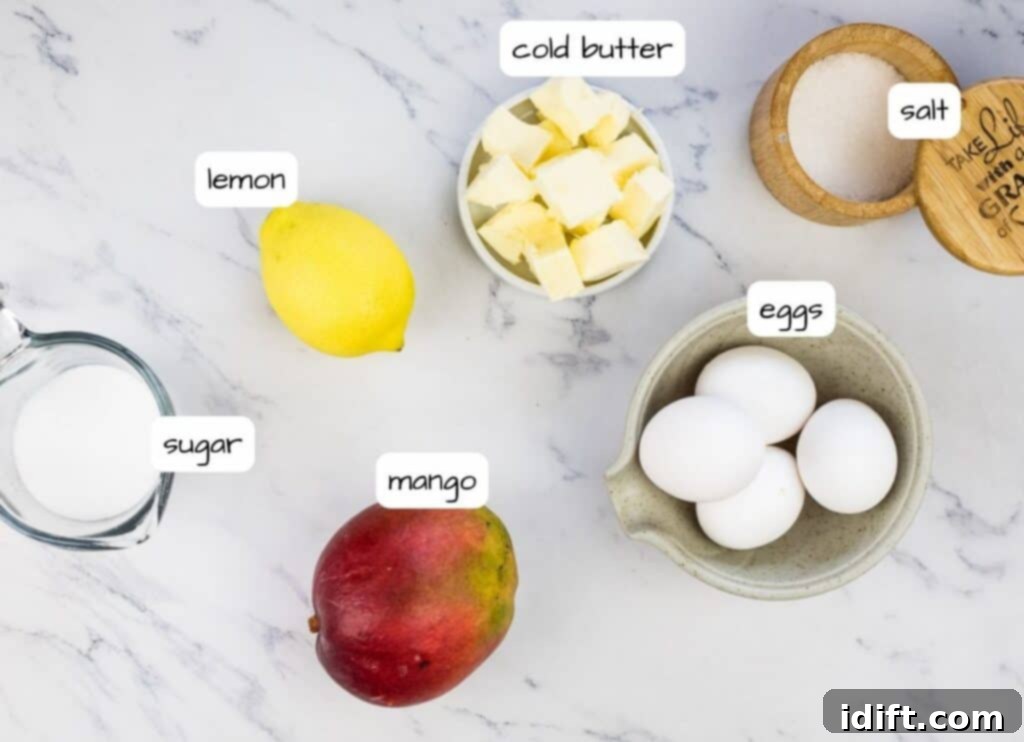
Crafting the perfect mango curd requires just a few basic ingredients, each playing a crucial role in achieving that coveted smooth texture and vibrant flavor. Here’s a closer look at what you’ll need and why:
- Mangos: The star of the show! You can use either fresh or frozen mango. Ripe, fragrant mangoes will yield the best flavor. If using fresh, choose varieties like Ataulfo (honey mango), Alphonso, or Kent for their sweet, less fibrous flesh. Frozen mango is a fantastic alternative, allowing you to enjoy this recipe year-round without compromising on taste. Just be sure to thaw it completely before pureeing.
- Granulated Sugar: Provides sweetness and helps create the curd’s smooth texture. The amount can be adjusted based on the natural sweetness of your mangoes and your personal preference.
- Lemon Juice: Essential for balancing the sweetness of the mango and adding a bright, tangy note that prevents the curd from being cloyingly sweet. Freshly squeezed lemon juice is always recommended for the best flavor. Lime juice can also be used for a slightly different, equally delicious citrus kick.
- Eggs (and Egg Yolks): These are the key thickening agents in any curd. The combination of whole large eggs and extra egg yolks provides richness, emulsification, and the signature creamy, custardy texture. The proteins in the eggs coagulate gently over low heat, transforming the liquid mixture into a thick curd.
- Cold Unsalted Butter: Incorporated at the end, cold unsalted butter adds luxurious richness, silkiness, and a beautiful sheen to the finished curd. Using unsalted butter allows you to control the overall saltiness of the curd, as some mangoes can have varying flavor profiles. Cutting it into cubes and adding it cold helps it melt slowly and integrate smoothly without splitting the curd.
How to Make the Best Silky-Smooth Mango Curd
Creating a perfectly smooth and flavorful mango curd is a rewarding process. Follow these detailed steps to ensure a flawless result every time. Precision and patience are your best friends here!
Step 1: Prepare Your Mango Puree
- Start with quality mangoes: If using fresh mangoes, peel and remove the flesh from one large, very ripe mango. For frozen mangoes, thaw them completely first.
- Puree until smooth: Place the mango flesh into a food processor or a high-speed blender. Pulse until you achieve a completely smooth and lump-free puree. The smoother the puree at this stage, the smoother your final curd will be. Measure out 1 cup of this vibrant mango puree for your recipe.
Step 2: Combine the Wet Ingredients
- Whisk in a saucepan: In a medium-sized, heavy-bottomed saucepan, combine the prepared mango puree, granulated sugar, fresh lemon juice, whole eggs, and additional egg yolks. Use a whisk to thoroughly combine all ingredients until the mixture is uniform and the sugar has largely dissolved. This ensures all components are evenly distributed before cooking.
Step 3: Begin Cooking with Butter
- Low heat is crucial: Place the saucepan over low heat. Add a few cubes of cold unsalted butter to the mixture. Using a heat-resistant spatula, gently and continuously stir the curd. The goal is to melt the butter slowly and incorporate it while the mixture gradually heats up, preventing the eggs from cooking too quickly and scrambling. Continue stirring until these first cubes of butter are nearly melted and integrated.
Step 4: Gradually Thicken the Curd
- Continue adding butter and stirring: Add a few more cubes of cold butter to the saucepan. Maintain the low heat and continue stirring constantly with your spatula. This continuous motion is vital for preventing the eggs from seizing and for encouraging even thickening. As the butter melts and combines, the mixture will gradually thicken and become hot to the touch, developing a glossy appearance. Don’t rush this process; patience will yield a beautifully smooth curd.
Step 5: Achieve Ultra-Smoothness
- Strain for perfection: Once the curd has thickened and is cooked through (see “How Do You Know When Mango Curd Is Cooked?” below), immediately remove it from the heat. Carefully press the hot curd through a fine-mesh sieve set over a clean bowl. This essential step removes any tiny bits of cooked egg or mango fiber, ensuring your mango curd is incredibly smooth and velvety.
Chef’s Expert Tips for Perfect Mango Curd
Achieving a truly exceptional mango curd is all about the details. Here are some invaluable tips from Chef Jenn to ensure your homemade mango curd is nothing short of perfect:
- Mango Choice: You have the flexibility to use either fresh or frozen mango. However, remember that fresh mango typically has less water content than frozen, which can lead to a naturally thicker curd. If using frozen, ensure it’s fully thawed and drain any excess liquid before pureeing to maintain the desired consistency.
- Butter Matters: Always use cold unsalted butter. Adding it cold allows it to melt slowly and emulsify into the curd more effectively, contributing to that desirable smooth texture and preventing the curd from becoming oily. Unsalted butter also gives you complete control over the flavor profile; salted butter can make your curd taste excessively salty.
- The Secret to Smoothness: The most critical step for a silky, lump-free curd is to press it through a fine-mesh sieve immediately after it’s cooked. This removes any small pieces of coagulated egg or fruit pulp, resulting in a perfectly smooth and luxurious finish. Don’t skip this step for that professional-quality texture!
- Sweetness Adjustment: Mangoes vary greatly in sweetness depending on the variety and ripeness. Taste your mango puree before adding sugar. If your mangoes are exceptionally sweet, you might reduce the initial sugar slightly. After the curd is cooked and strained, if you find it’s not sweet enough for your liking, you can whisk in a small amount of powdered sugar until you reach your desired sweetness.
- Low Heat and Constant Stirring: This cannot be stressed enough. Cooking curd over low heat with continuous stirring is crucial. High heat will scramble the eggs, leading to a lumpy, unappealing texture. Patience here will be rewarded with a smooth, beautifully thickened curd.
How to Make Mango Puree (Detailed)
Mango puree is the foundation of your delicious curd, and making it is incredibly simple. For approximately 1 cup of puree, you’ll generally need one large, very ripe mango. Here’s how to do it:
- Choose Ripe Mangoes: Select mangoes that are soft to the touch and have a fragrant, sweet aroma.
- Prepare the Mango: Wash the mango thoroughly. Using a sharp knife, carefully slice off the “cheeks” of the mango, avoiding the large flat pit in the center. Score the flesh of each cheek in a crosshatch pattern, then scoop out the diced mango using a spoon. Alternatively, you can peel the mango entirely and cut the flesh away from the pit.
- Blend until Smooth: Place the mango chunks into a blender or food processor. Pulse and blend until the mango is completely smooth and free of any fibrous strings or lumps. If the puree is too thick, you can add a tiny splash of water or orange juice, but typically, ripe mangoes will blend easily into a smooth consistency.
- Storage (Optional): If you make more puree than needed, you can freeze it in ice cube trays for future uses in smoothies, sauces, or more mango curd!
How Do You Know When Mango Curd Is Cooked?
Determining the perfect doneness for mango curd is essential for its texture and stability. Here are the tell-tale signs to look for:
- Visual Cues: When the curd is fully cooked, it will appear thick, glossy, and noticeably less translucent than when it started. You should see a single, large bubble slowly break the surface of the curd, indicating it’s reached a full simmer. Once you see this, remove it from the heat immediately and continue stirring to cool it down slightly.
- Spoon Test (Nappe Test): Dip a clean spoon into the curd, ensuring the back of the spoon is thoroughly coated. Remove the spoon and run your finger horizontally across the back of it. If the line you drew holds, and the curd doesn’t ooze back into the cleared space, your curd is cooked to perfection. This “nappe” consistency means it’s thick enough to coat the back of a spoon.
Avoid overcooking, as this can lead to a grainy texture due to the eggs curdling. If you undercook it, the curd won’t set properly and will remain too runny.
Storage and Preservation
Proper storage is key to enjoying your delicious homemade mango curd for as long as possible:
- Refrigeration: Once cooled, transfer any leftover Mango Curd to a clean, airtight container or jar. It will keep beautifully in the refrigerator for about 3 to 4 weeks. Always ensure the lid is tightly sealed to prevent absorption of other fridge odors.
- Freezing: For longer preservation, mango curd freezes exceptionally well. Pour the cooled curd into freezer-safe containers, leaving a little headspace as it may expand slightly. It can be frozen for up to 3 months. When you’re ready to use it, simply thaw it overnight in the refrigerator. Stir well before serving, as the texture might change slightly after thawing.
Mango Curd Recipe
If you love mangos, you’re going to love Mango Curd. It’s a vibrant-tasting dessert, sauce, and topping made with fresh or frozen mango. It can be used to make any dessert taste extraordinary.
Print
Pin
Recipe Details
- Course: Dessert
- Cuisine: American, Tropical
- Keyword: curd, dessert, mango, tropical spread
- Prep Time: 5 minutes
- Cook Time: 15 minutes
- Total Time: 20 minutes
- Servings: 8 servings
- Calories: 202 kcal
- Author: Chef Jenn
Ingredients
- 1 cup mango puree (from fresh or frozen mango)
- 1/2 cup granulated sugar
- 2 tablespoons fresh lemon juice (or lime juice)
- 2 large eggs
- 2 egg yolks
- 1 stick cold unsalted butter (4 ounces, or 1/2 cup), cut into cubes
Instructions
- Make the mango puree by pulsing the mango flesh in a food processor or blender until completely smooth.
- In a medium saucepan, whisk together the mango puree, granulated sugar, lemon juice, whole eggs, and egg yolks until well combined.
- Place the saucepan over low heat. Add a few cubes of cold butter. Stir continuously with a spatula until the butter is nearly melted and incorporated.
- Continue adding the remaining butter in small batches, stirring constantly over low heat. Cook until all the butter is combined, and the curd is thick, glossy, and hot. It should coat the back of a spoon.
- Immediately remove from heat and press the hot curd through a fine-mesh sieve into a clean bowl to remove any cooked egg bits or mango fibers, ensuring an exceptionally smooth texture.
Notes
Chef Jenn’s Pro Tips
- You can use fresh or frozen mango. Fresh mango often has lower water content, resulting in a naturally thicker curd.
- Always use cold unsalted butter for best texture and flavor control.
- For the silkiest curd, don’t skip straining it through a fine-mesh sieve after cooking to remove any lumps.
- Mango sweetness varies. Adjust the sugar to your taste by whisking in a little powdered sugar at the end if needed.
- Using unsalted butter is crucial to prevent your curd from becoming too salty.
Nutrition Facts
Serving: 2 tablespoons | Calories: 202kcal | Carbohydrates: 18g | Protein: 3g | Fat: 14g | Saturated Fat: 8g | Polyunsaturated Fat: 1g | Monounsaturated Fat: 4g | Trans Fat: 0.5g | Cholesterol: 125mg | Sodium: 111mg | Potassium: 83mg | Fiber: 1g | Sugar: 17g | Vitamin A: 830IU | Vitamin C: 13mg | Calcium: 20mg | Iron: 0.4mg
A Note on Nutritional Information
Nutritional information for this recipe is provided as a courtesy and is calculated based on available online ingredient information. It is only an approximate value. The accuracy of the nutritional information for any recipe on this site cannot be guaranteed.
Beyond the Recipe: Elevating Your Mango Curd Experience
Now that you’ve mastered the basic recipe for homemade mango curd, let’s explore ways to further enhance your culinary journey with this versatile tropical delight. Whether you’re looking for unique serving suggestions or wish to experiment with different flavor profiles, mango curd offers a fantastic canvas for creativity.
Creative Serving Ideas
- Dessert Cups: Layer mango curd with coconut cream, crushed graham crackers, and fresh berries for elegant, no-bake dessert parfaits.
- Smoothie Boost: Swirl a tablespoon of mango curd into your morning smoothie for an extra burst of tropical flavor and creamy texture.
- Breakfast Toast Bar: Host a breakfast spread with various toast options, and make mango curd a star alongside other spreads, cheeses, and fruits.
- Filling for French Macarons: For the adventurous baker, mango curd makes an exquisite and vibrant filling for delicate French macarons, adding an exotic touch.
- Scone or Muffin Topping: Offer it as a luxurious alternative to clotted cream or butter for freshly baked scones or muffins.
- Tropical Trifle: Create a stunning trifle by layering cubes of sponge cake, whipped cream, fresh mango pieces, and generous dollops of your homemade mango curd.
- As a Glaze: Thin it slightly with a touch of hot water or juice and use it as a light glaze over fruit tarts or plain cakes.
Flavor Variations and Enhancements
While delicious on its own, mango curd can be subtly enhanced with other complementary flavors:
- Spice Infusion: Add a pinch of ground cardamom, a tiny grating of fresh ginger, or even a hint of turmeric (for color and mild earthy notes) to the puree before cooking. These spices beautifully complement mango.
- Coconut Dream: Substitute a small portion of the liquid with coconut milk for a creamier, more intensely tropical flavor. Be mindful of consistency.
- Citrus Zest: Incorporate the zest of a lime or orange along with the lemon juice for a brighter, more complex citrus aroma. Add zest after straining for maximum freshness.
- Vanilla Bean: A scraped vanilla bean or a splash of good quality vanilla extract can add a warm, comforting undertone to the vibrant mango.
Frequently Asked Questions About Mango Curd
Here are answers to some common questions you might have while making or storing your mango curd:
Q: My mango curd is too thin. What went wrong?
A: This usually means it wasn’t cooked long enough. Curd thickens as it cools, but it needs to reach a certain temperature for the eggs to coagulate properly. Ensure you cook it over low heat, stirring constantly, until it visibly thickens and coats the back of a spoon. If it’s still warm and thin, you can gently reheat it over low heat, stirring continuously, until it thickens further. Avoid boiling.
Q: My mango curd is lumpy. How can I fix it?
A: Lumps typically occur if the eggs cooked too quickly or if the curd wasn’t stirred constantly. The best way to fix this is by pressing the curd through a fine-mesh sieve immediately after cooking. This will catch any scrambled egg bits or fruit fibers, leaving you with a smooth product. You can also re-blend it briefly with an immersion blender for extra smoothness before chilling.
Q: Can I use less sugar?
A: Yes, you can adjust the sugar content to your preference and the sweetness of your mangoes. However, remember that sugar also contributes to the curd’s texture and preservation. If you significantly reduce the sugar, the curd might be slightly less thick and its shelf life might be marginally shorter. It’s best to taste and adjust at the end if needed.
Q: What’s the difference between curd and custard?
A: Both use eggs and are thickened by heat, but curds typically contain a higher proportion of fruit juice or puree and butter, giving them a more intense fruit flavor and a lighter, smoother texture. Custards, on the other hand, are often milk or cream-based and can be thicker, sometimes baked, and generally less tart.
Q: Can I double or halve the recipe?
A: Yes, this recipe scales well. If doubling, ensure you use a larger saucepan to prevent overcrowding and allow for even heating. Cooking time might be slightly longer. If halving, cooking time will be shorter, so keep a close eye on it.
Conclusion: Embrace the Tropical Delight of Homemade Mango Curd
Homemade Mango Curd is a truly exceptional treat that brings a burst of tropical sunshine to any dish. Its smooth, creamy texture and vibrant, sweet-tart flavor make it a beloved addition to breakfasts, desserts, and everything in between. By following this comprehensive guide, you now have all the tools and knowledge to create a perfectly silky and delicious mango curd right in your own kitchen. Whether you’re spreading it on toast, filling a tart, or simply enjoying it by the spoonful, this easy mango curd recipe is sure to become a staple in your culinary repertoire. So go ahead, grab some mangoes, and embark on a delightful journey to tropical flavor bliss!