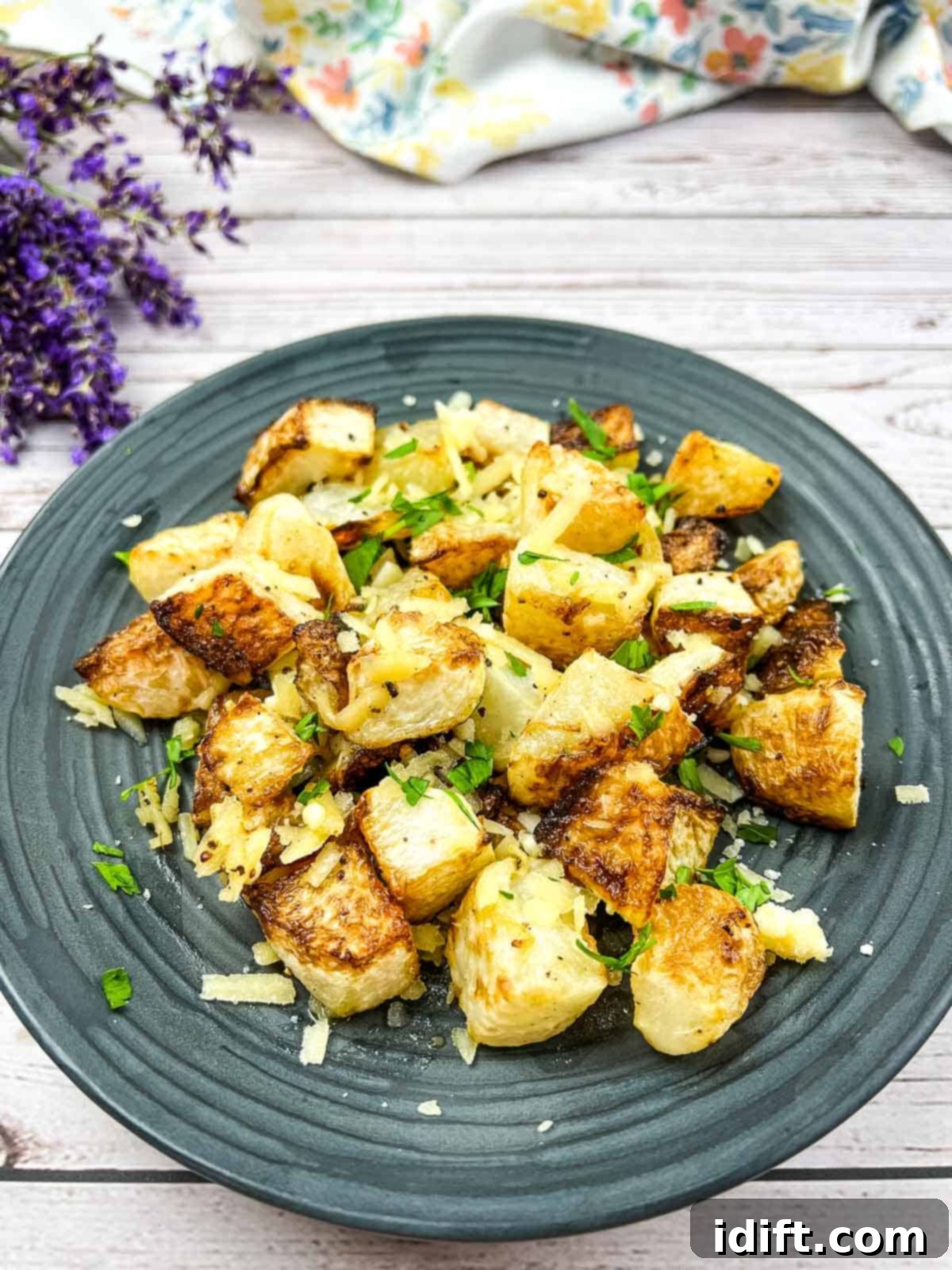
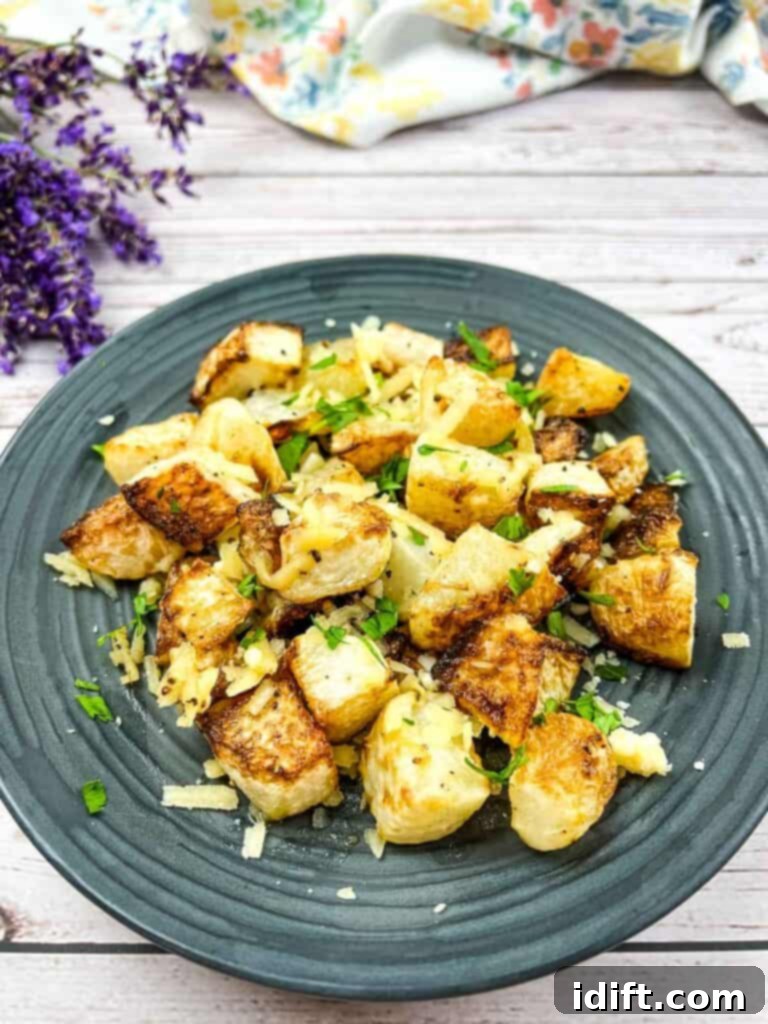
Kohlrabi is an exceptionally versatile and delicious vegetable, surprisingly easy to incorporate into your cooking. Our Roasted Kohlrabi with Parmesan recipe stands out as a personal favorite. It’s not just simple to prepare, but its unique flavor profile makes it a superb accompaniment to a wide array of main courses. If you’re seeking a fresh, exciting twist for your vegetable sides, this recipe is an absolute must-try!
This post may contain affiliate link(s). As an Amazon Associate, I earn from qualifying purchases. See Disclosure.
Discover the Magic of Roasted Kohlrabi with Parmesan
Growing up in a German-influenced household, kohlrabi was a consistent presence in our kitchen. My Oma, a keen gardener, cultivated it every year, and we savored it in various traditional forms, most notably drenched in a rich cream sauce. While those creamy preparations hold a nostalgic charm, my journey as a chef has led me to truly appreciate the simpler, more elegant ways to prepare kohlrabi, allowing its distinctive flavor to shine unmasked. Roasted Kohlrabi with Parmesan is precisely one of those recipes, and it holds a special, cherished spot in my culinary repertoire.
This dish transforms humble kohlrabi into a star, leveraging the power of high-heat roasting to bring out its natural sweetness and tender texture. The addition of nutty Parmesan cheese creates a harmonious blend of flavors that is both comforting and sophisticated. It’s a testament to how straightforward techniques can elevate simple ingredients into something truly extraordinary, making it an ideal choice for both weeknight dinners and special occasions.
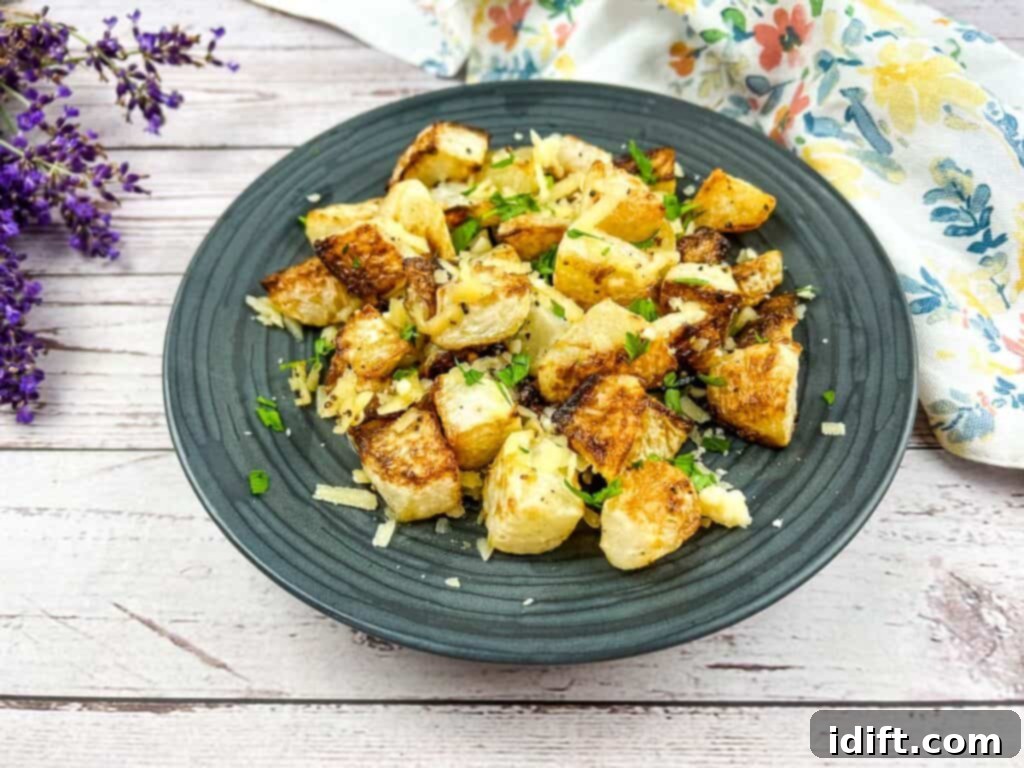
What You’ll Adore About This Easy Roasted Kohlrabi Recipe
- A Refreshing Side Dish: If your usual vegetable rotation feels tired, this roasted kohlrabi offers a vibrant and exciting addition to your meal lineup, guaranteed to impress. It’s a wonderful way to introduce a new vegetable to your family.
- Exquisite Flavor Fusion: Roasting caramelizes kohlrabi’s natural sugars, intensifying its subtle sweetness. This perfectly complements the rich, savory, and slightly salty notes of Parmesan cheese, creating an irresistible flavor combination that’s both comforting and gourmet.
- Incredibly Versatile: This simple yet elegant side dish pairs beautifully with an astonishing variety of main courses, from robust roasted meats to delicate grilled fish, and even lighter vegetarian options. Its adaptability makes it a kitchen staple.
- Nutrient-Rich Goodness: Kohlrabi is packed with essential vitamins (especially Vitamin C), dietary fiber, and powerful antioxidants, making this recipe not just delicious but also wonderfully healthy and beneficial for your well-being.
- Effortlessly Simple: With minimal prep and straightforward roasting steps, even novice cooks can achieve perfectly tender and flavorful roasted kohlrabi every time. It’s a foolproof method for a rewarding dish.
Unveiling Kohlrabi: A Unique Vegetable You Need to Try
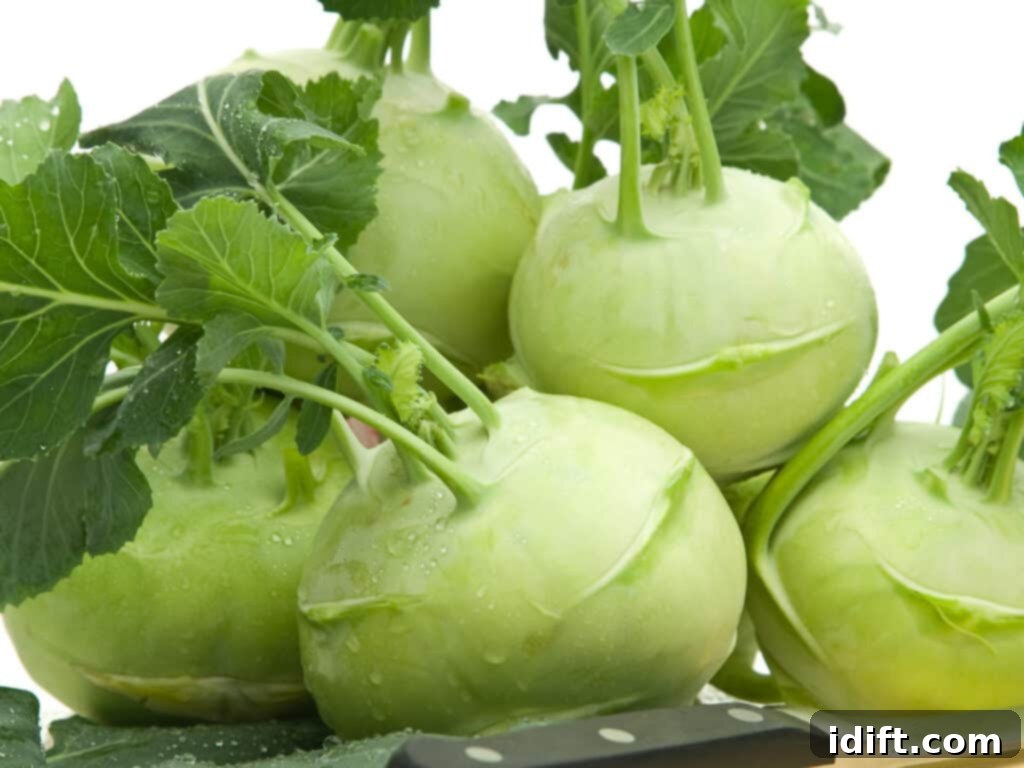
Kohlrabi, often an overlooked gem in the produce aisle, is a truly remarkable vegetable. Belonging to the Brassica family, just like cabbage, broccoli, and kale, it offers a fascinating flavor profile. Imagine a delightful cross between the crispness of a broccoli stem, the mild sweetness of a turnip, and a hint of radish-like peppery freshness – that’s kohlrabi for you. Its unique texture, which remains slightly firm even when cooked, and its subtly sweet flavor make it exceptionally well-suited for roasting, a cooking method that truly unlocks its potential and concentrates its natural deliciousness.
When roasted at a high temperature, kohlrabi undergoes a magical transformation. The natural sugars within caramelize, enhancing its inherent sweetness and developing a wonderfully tender, slightly browned exterior with a creamy, succulent interior. This process softens its texture while intensifying its nuanced flavors. You might encounter kohlrabi in both vibrant green and striking purple varieties; rest assured, their taste and culinary properties are virtually identical, so feel free to choose whichever catches your eye! Both types will yield the same delicious results in this roasted recipe.
The Nutritional Powerhouse: Health Benefits of Kohlrabi
Beyond its delicious taste and versatility in the kitchen, kohlrabi is a nutritional powerhouse, making it an excellent addition to a healthy and balanced diet. It’s exceptionally rich in Vitamin C, a powerful antioxidant that plays a crucial role in immune system support, collagen formation for healthy skin, and protection against cellular damage. It also provides a significant amount of dietary fiber, which is crucial for digestive health, helps regulate blood sugar levels, and promotes a feeling of fullness, aiding in weight management. Furthermore, kohlrabi contains various B vitamins (such as B6), potassium, manganese, and phosphorus, all contributing to overall well-being and bodily functions. Including this cruciferous vegetable in your meals is an easy and delicious way to boost your nutrient intake and support a vibrant lifestyle.
Essential Ingredients for Perfect Roasted Kohlrabi with Parmesan
This recipe shines because of its simplicity, requiring just a handful of fresh, high-quality ingredients to achieve outstanding flavor. Each component plays a vital role in creating a harmonious and utterly delicious side dish. Here’s what you’ll need to create this delectable and easy-to-make roasted kohlrabi:
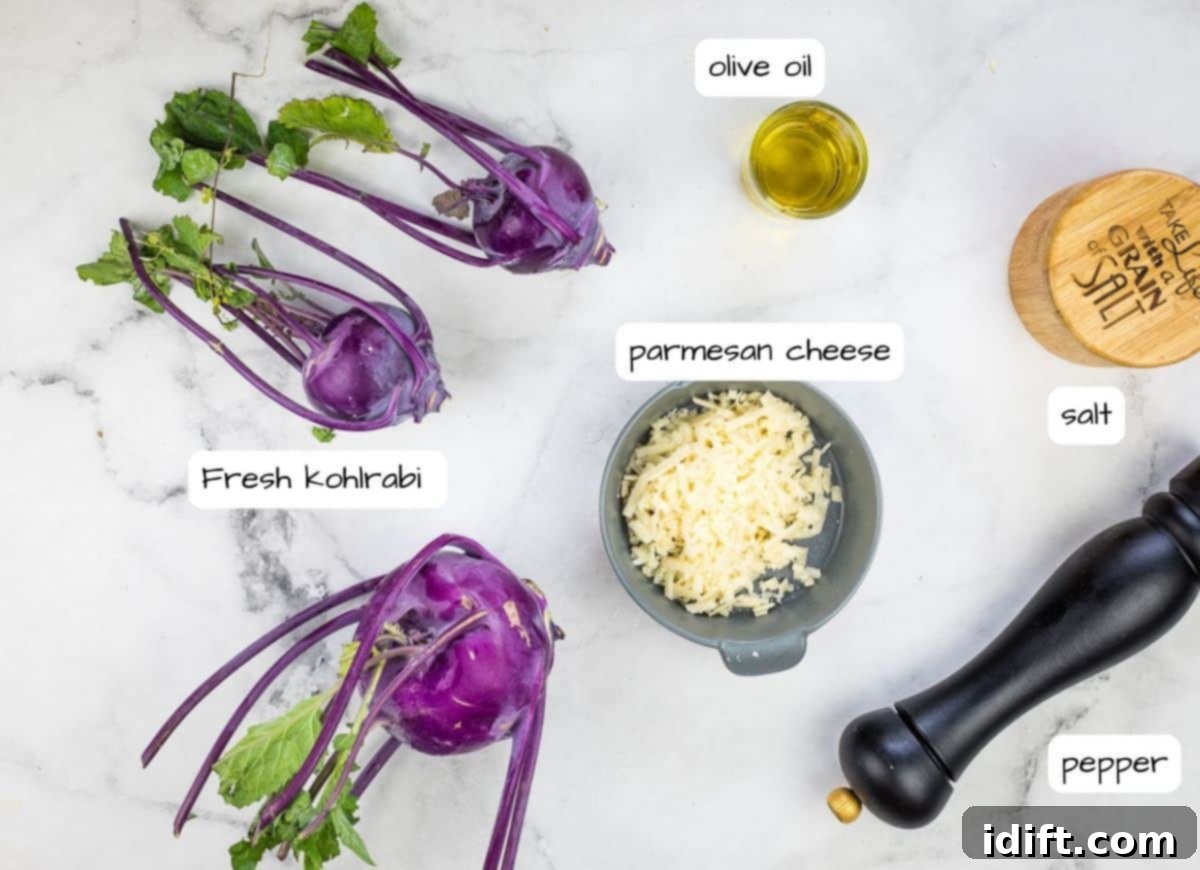
- Kohlrabi: Approximately 2 pounds, which typically equates to 2-3 medium-sized bulbs. Ensure they are trimmed of leaves and stems, and then cubed into uniform 1-inch pieces for even cooking.
- Olive Oil: 2 tablespoons. Using a good quality extra virgin olive oil will impart a lovely, rich flavor and help the kohlrabi achieve a beautiful golden-brown crust.
- Salt: ¼ teaspoon, or adjust to your personal taste. Fine sea salt or kosher salt works best for even seasoning and enhancing the kohlrabi’s natural flavors.
- Fresh Ground Black Pepper: To taste. Freshly cracked black pepper offers a more vibrant aroma and a subtle kick compared to pre-ground pepper.
- Grated Parmesan Cheese: ¼ cup. Freshly grated Parmesan delivers a superior nutty, salty flavor and melts beautifully onto the warm kohlrabi, creating a savory coating.
- Fresh Parsley: 2 tablespoons, finely chopped. This vibrant herb adds a burst of freshness, a peppery note, and a beautiful pop of color to the finished dish. Flat-leaf (Italian) parsley is often preferred for its robust flavor.
Preparing Your Kohlrabi: Trimming Made Easy
While the bulbous, somewhat alien-like appearance of kohlrabi might seem a bit intimidating at first glance, trimming and preparing it is actually quite straightforward. Proper preparation ensures not only that it cooks evenly but also that you get the best possible texture and flavor from this delightful vegetable. Here’s a simple, step-by-step guide to trimming your kohlrabi:
- Remove the Leaves and Stems: First, twist or cut off any attached leaves and the woody stem at the top. Don’t discard the leaves immediately; if they are young and tender, they can be chopped and added to salads, or sautéed lightly like spinach or collard greens for another delicious and nutritious component of your meal.
- Trim the Ends: Using a sharp chef’s knife, carefully slice off the top and bottom ends of the kohlrabi bulb. Aim to remove just enough to create flat surfaces, similar to how you would prepare an onion or potato for cutting.
- Peel the Outer Skin: The outer skin of kohlrabi can be quite fibrous and tough, especially on larger or older bulbs. Using a sharp vegetable peeler (a Y-peeler works wonderfully) or a small paring knife, meticulously peel off this outer layer. Ensure you remove all the pale green or purple skin until you reveal the lighter, tender, and somewhat crisp flesh underneath. For smaller, very young kohlrabi, the skin might be thin enough to leave on, but peeling generally ensures a more pleasant eating experience.
- Cut into Even Cubes: Once peeled, place the kohlrabi on a cutting board and slice it into uniform 1-inch (2.5 cm) cubes. Consistency in size is paramount for even cooking; if pieces are too varied, some will be overcooked and mushy while others remain raw. Aim for uniformity to ensure that every piece becomes perfectly fork-tender at the same time, absorbing the delicious flavors.
With your kohlrabi perfectly prepped, you’re now ready to transform it into a magnificent roasted side dish that will surely impress.
Mastering Oven Roasted Kohlrabi with Parmesan: Step-by-Step Guide
Achieving perfectly roasted kohlrabi is simpler than you might think, primarily relying on high heat and minimal fuss. This method brings out the best in the vegetable, creating a savory and slightly sweet side that’s bursting with flavor. Follow these straightforward steps for a truly delicious result:
- Preheat Your Oven: Begin by preheating your oven to a hot 450°F (230°C). A high temperature is absolutely crucial for achieving that desirable caramelization on the kohlrabi and ensuring a tender-crisp texture, preventing it from becoming soggy.
- Prepare the Kohlrabi: As outlined in the previous section, make sure your kohlrabi is thoroughly trimmed, peeled, and cut into evenly sized 1-inch cubes. This uniformity is key for consistent cooking results across all pieces.
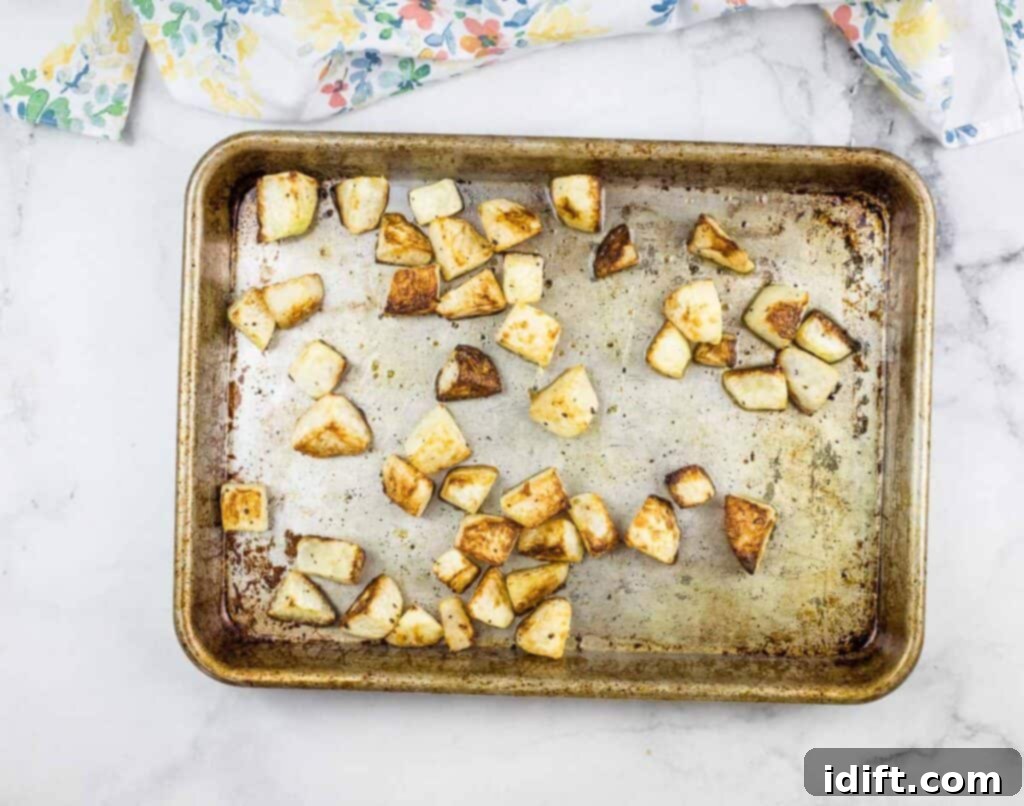
- Season and Roast: In a large mixing bowl, gently toss the kohlrabi cubes with the olive oil, salt, and fresh ground black pepper. Use your hands to ensure that each piece is lightly and evenly coated. Spread the seasoned kohlrabi in a single layer on a large baking sheet. It is vital to avoid overcrowding the pan; if too many pieces are crammed together, they will steam instead of roast, preventing proper browning and caramelization. Use two baking sheets if necessary. Roast for approximately 30 minutes, or until the kohlrabi is beautifully fork-tender and exhibits enticing golden-brown edges. For even browning, you might want to give the pan a gentle shake or stir the kohlrabi halfway through the roasting time.
- Finish with Flavor: Once roasted to perfection and removed from the oven, immediately transfer the hot kohlrabi to a serving bowl. Toss it generously with the grated Parmesan cheese and fresh chopped parsley. The residual heat from the kohlrabi will slightly melt the Parmesan, infusing every bite with its rich, nutty essence. The fresh parsley adds a vibrant color and a burst of fresh, herbaceous flavor that beautifully complements the roasted kohlrabi. Serve hot and enjoy this simple yet sophisticated side dish!
Chef Jenn’s Expert Tips for Perfect Roasted Kohlrabi
To ensure your Roasted Kohlrabi with Parmesan turns out perfectly tender, flavorful, and beautifully caramelized every single time, keep these professional insights and clever tricks in mind. These tips will elevate your dish from good to absolutely unforgettable:
- Select the Best Kohlrabi: The foundation of any great dish is quality ingredients. Always choose kohlrabi bulbs that are firm to the touch, without any soft spots, cracks, or blemishes. Medium-sized bulbs (about the size of an orange) tend to have the best texture and a sweeter, milder flavor profile compared to very large ones, which can sometimes be woody or slightly bitter.
- Avoid Overcrowding the Pan: This is a golden rule for roasting any vegetable, and kohlrabi is no exception. If you cram too many kohlrabi pieces onto one baking sheet, they will release moisture and effectively steam instead of roast. This results in a soggy, pale texture rather than a beautifully caramelized, crisp-tender exterior. Use two baking sheets if necessary, giving each piece ample space to breathe and brown properly.
- High Heat is Key: The 450°F (230°C) oven temperature isn’t arbitrary; it’s a critical element for this recipe’s success. This high heat is specifically chosen to facilitate the Maillard reaction – the chemical process responsible for that wonderful browning and savory flavor development (caramelization). Don’t be tempted to lower the temperature, as it will prevent the kohlrabi from achieving its ideal roasted texture and taste.
- Dietary Adjustments for Everyone: This recipe is wonderfully adaptable. For a vegan or strictly vegetarian version of this delicious side dish, simply omit the Parmesan cheese entirely or opt for a high-quality plant-based Parmesan alternative. The roasted kohlrabi itself is naturally vegan and incredibly flavorful on its own, especially with a sprinkle of fresh herbs.
- The Parsley Finish: More Than Just a Garnish: While sometimes considered a mere decorative element, the fresh parsley in this recipe plays a vital role in balancing the flavors. Its bright, peppery, and slightly herbaceous notes cut through the richness of the Parmesan and the concentrated sweetness of the roasted kohlrabi, adding a necessary fresh element that elevates the entire dish and makes each bite more vibrant. Don’t skip it!
- Experiment with Herbs & Spices: While parsley is fantastic, feel free to unleash your culinary creativity! You can experiment with other fresh herbs like finely chopped thyme or rosemary for an earthier flavor, or even add a pinch of red pepper flakes with the salt and pepper for a subtle, warming kick. A squeeze of fresh lemon juice just before serving can also brighten the flavors beautifully.
Frequently Asked Questions About Kohlrabi
Here are answers to some common questions about this intriguing vegetable, Kohlrabi:
- Can I eat kohlrabi raw?
- Absolutely! Kohlrabi is remarkably delicious raw. When thinly sliced, julienned, or spiralized, it adds a wonderful crisp texture and a mild, slightly sweet and peppery flavor to salads, slaws, or simply eaten as a healthy, refreshing snack with your favorite dip.
- What can I do with kohlrabi leaves?
- Definitely do not throw them away! Kohlrabi leaves are entirely edible and highly nutritious, similar to kale or collard greens. Smaller, tender leaves can be added directly to salads, while larger, more mature leaves can be sautéed with garlic and olive oil, added to soups, stir-fries, or even blended into green smoothies. They have a slightly robust, cabbage-like flavor.
- How do I choose the best kohlrabi at the grocery store or farmer’s market?
- When selecting kohlrabi, look for bulbs that are small to medium in size (typically 2-4 inches in diameter), firm to the touch, and smooth, with no cracks, soft spots, or blemishes. If the leaves are still attached, they should appear fresh, vibrant green, and not wilted. Smaller bulbs tend to be more tender, sweeter, and less fibrous than very large ones.
- Can I prepare kohlrabi ahead of time?
- Yes, you can certainly do some prep in advance to save time. You can peel and cube the kohlrabi up to 2-3 days before you plan to cook it. Store the raw, prepped kohlrabi cubes in an airtight container or a sealed bag in the refrigerator. To keep them extra crisp, you can even submerge them in cold water (changing the water daily), similar to how you’d store prepped potatoes.
- What if I don’t have Parmesan cheese or prefer a dairy-free option?
- While Parmesan adds a unique nutty and salty depth, you can still absolutely enjoy fantastic roasted kohlrabi without it. For a vegan or dairy-free alternative, a generous sprinkle of nutritional yeast after roasting can offer a surprisingly cheesy flavor. Alternatively, a squeeze of fresh lemon juice after roasting can brighten the flavors beautifully, or you can enhance the dish with a sprinkle of your favorite herbs and spices, such as smoked paprika or a dash of garlic powder, to add a different dimension.
Recommended Pairings: More Delicious Side Dishes from Our Kitchen
If you loved this simple and flavorful roasted kohlrabi recipe and are looking for more inspiring vegetable sides to brighten your meals, you might also enjoy these other delightful options from our kitchen:
Make It a Complete Meal: Delicious Pairing Suggestions
The beauty of this roasted kohlrabi recipe lies in its incredible versatility, allowing it to seamlessly complement a diverse range of main courses. Its savory, slightly sweet, and earthy flavor profile makes it a perfect choice for almost any dinner, whether you’re planning a lavish feast or a simple weeknight meal. Here are some inspiring suggestions to help you create a truly complete and satisfying culinary experience:
- With Hearty Meats: The robust flavor of roasted kohlrabi is an ideal partner for rich meat dishes. Imagine it served alongside a succulent German pork loin, a flavorful smoked pork rib roast, tender roasted beef, or even classic roasted chicken. The vegetable’s slight sweetness provides a wonderful counterpoint to savory meats.
- Poultry and Fish: For lighter main courses, roasted kohlrabi offers a grounding and earthy element that complements beautifully. Try pairing it with perfectly baked salmon, flaky cod, pan-seared chicken breast, or even a vibrant Mediterranean Chicken with Feta. Its mild flavor won’t overpower delicate fish or poultry.
- Vegetarian Delight: This dish is inherently vegetarian and can easily be made vegan. To create a satisfying and wholesome vegetarian meal, serve this roasted kohlrabi alongside fluffy quinoa, a robust lentil salad, crispy grilled halloumi, or a hearty bean and vegetable stew. It can also be a wonderful component in a larger vegetable platter, offering texture and flavor variety.
- Breakfast/Brunch Twist: Don’t limit this deliciousness to just dinner! Leftover roasted kohlrabi can be a fantastic addition to your morning routine. Chop it up and add it to breakfast hashes, frittatas, or even omelets for a unique and nutritious morning twist.
Indeed, this versatile side dish truly can go with anything, adapting effortlessly to your culinary cravings and making every meal a little more special!
Storage and Meal Prep Tips for Roasted Kohlrabi
While roasted kohlrabi is undoubtedly at its best when enjoyed immediately after preparation, its delightful flavors can still be appreciated as leftovers with proper storage and reheating. Planning ahead can also make your cooking process smoother. Here’s how to handle any extra portions and streamline your meal prep:
- Refrigeration: If you find yourself with leftovers, ensure they cool completely to room temperature before storing. Then, transfer the roasted kohlrabi to an airtight container and store it in the refrigerator for up to 3 days. Proper cooling and sealing prevent bacterial growth and maintain freshness.
- Reheating for Best Texture: To best preserve its tender-crisp texture and prevent it from becoming soggy, avoid reheating roasted kohlrabi in the microwave if possible. Instead, gently reheat it in a preheated oven (around 350°F / 175°C) for 10-15 minutes, or on the stovetop in a skillet over medium heat until warmed through and slightly crisp again. A quick blast under the broiler for a minute or two can also help restore some crispness.
- Freezing: Not Recommended: Freezing roasted kohlrabi is generally not recommended. The high water content in the vegetable means that freezing and subsequent thawing can significantly alter its texture, typically resulting in a mushy, less appealing consistency. It’s best to enjoy this dish fresh or within a few days of preparation rather than freezing it for later.
- Make-Ahead Preparation: You can save valuable time on busy cooking days by doing some prep in advance. Peel and cube the kohlrabi a day or two before you plan to roast it. Store the raw, prepped kohlrabi cubes in an airtight container or a sealed bag in the refrigerator. You can even submerge the cubes in cold water to keep them extra crisp, changing the water daily, similar to how you’d store prepped potatoes.
Roasted Kohlrabi with Parmesan
So easy, sweet, nutty, and roasted to perfection, Kohlrabi with Parmesan is an effortless and incredibly delicious side dish. This recipe transforms humble kohlrabi into an irresistible treat, making it perfect to pair with roasted meats, delicate fish, anything grilled, and much more for a delightful culinary experience! It’s a wonderful way to enjoy a unique, healthy vegetable.
Ingredients
- 2 pounds kohlrabi (trimmed and cubed into 1-inch pieces)
- 2 tablespoons olive oil
- ¼ teaspoon salt
- fresh ground black pepper (to taste)
- ¼ cup grated Parmesan cheese (freshly grated recommended)
- 2 tablespoons fresh parsley (finely chopped)
Instructions
- Prepare Kohlrabi: Trim, peel, and cube the kohlrabi into uniform 1-inch pieces. This ensures even cooking.
- Preheat Oven: Preheat your oven to 450°F (230°C). High heat is crucial for caramelization.
- Season and Roast: In a large bowl, toss the kohlrabi cubes with olive oil, salt, and fresh ground black pepper until evenly coated. Spread the kohlrabi in a single layer on a large baking sheet, making sure not to overcrowd the pan (use two if needed). Roast for about 30 minutes, or until the kohlrabi is fork-tender and beautifully browned at the edges.
- Finish and Serve: Remove the roasted kohlrabi from the oven. Immediately toss it with the grated Parmesan cheese and fresh chopped parsley. Serve hot, allowing the residual heat to slightly melt the Parmesan.
Notes
Chef Jenn’s Additional Tips for Success
- Always choose firm, medium-sized kohlrabi for the best texture and sweetest flavor.
- Don’t overcrowd your baking sheet; giving each piece ample space allows it to roast properly and achieve beautiful caramelization.
- The high oven temperature of 450°F (230°C) is fundamental to getting a lovely caramelization and a tender interior.
- To make this side dish suitable for vegan or vegetarian diets, you can simply skip the Parmesan or use a high-quality plant-based Parmesan alternative.
- The fresh parsley is more than just a garnish; it adds a crucial bright, herby balance that cuts through the richness and sweetness, elevating the entire dish.
Nutrition Information
Serving: 1 cup | Calories: 150 kcal | Carbohydrates: 15 g | Protein: 6 g | Fat: 9 g | Saturated Fat: 2 g | Polyunsaturated Fat: 1 g | Monounsaturated Fat: 6 g | Cholesterol: 5 mg | Sodium: 301 mg | Potassium: 816 mg | Fiber: 8 g | Sugar: 6 g | Vitamin A: 304 IU | Vitamin C: 143 mg | Calcium: 113 mg | Iron: 1 mg
A Note on Nutritional Information:
Nutritional information for this recipe is provided as a courtesy and is calculated based on available online ingredient information. It is only an approximate value. The accuracy of the nutritional information for any recipe on this site cannot be guaranteed, as factors such as exact ingredient brands, specific preparation methods, and precise portion sizes can significantly impact the final nutritional content.
Conclusion: Embrace the Deliciousness of Kohlrabi
We hope this comprehensive guide has inspired you to try making Roasted Kohlrabi with Parmesan. It’s a truly rewarding recipe that highlights the best qualities of this often-underestimated vegetable, offering a fantastic combination of ease, flavor, and health benefits. Whether you’re a seasoned kohlrabi enthusiast or trying it for the very first time, this simple yet sophisticated dish offers a perfect blend of texture and taste that is sure to impress. Give it a go, and you might just discover your new favorite go-to side dish! We encourage you to experiment, share your creations, and most importantly, enjoy the delightful culinary journey that kohlrabi offers. Happy cooking!