Baked Scotch Eggs: A Lighter Take on the Classic Pub Favorite
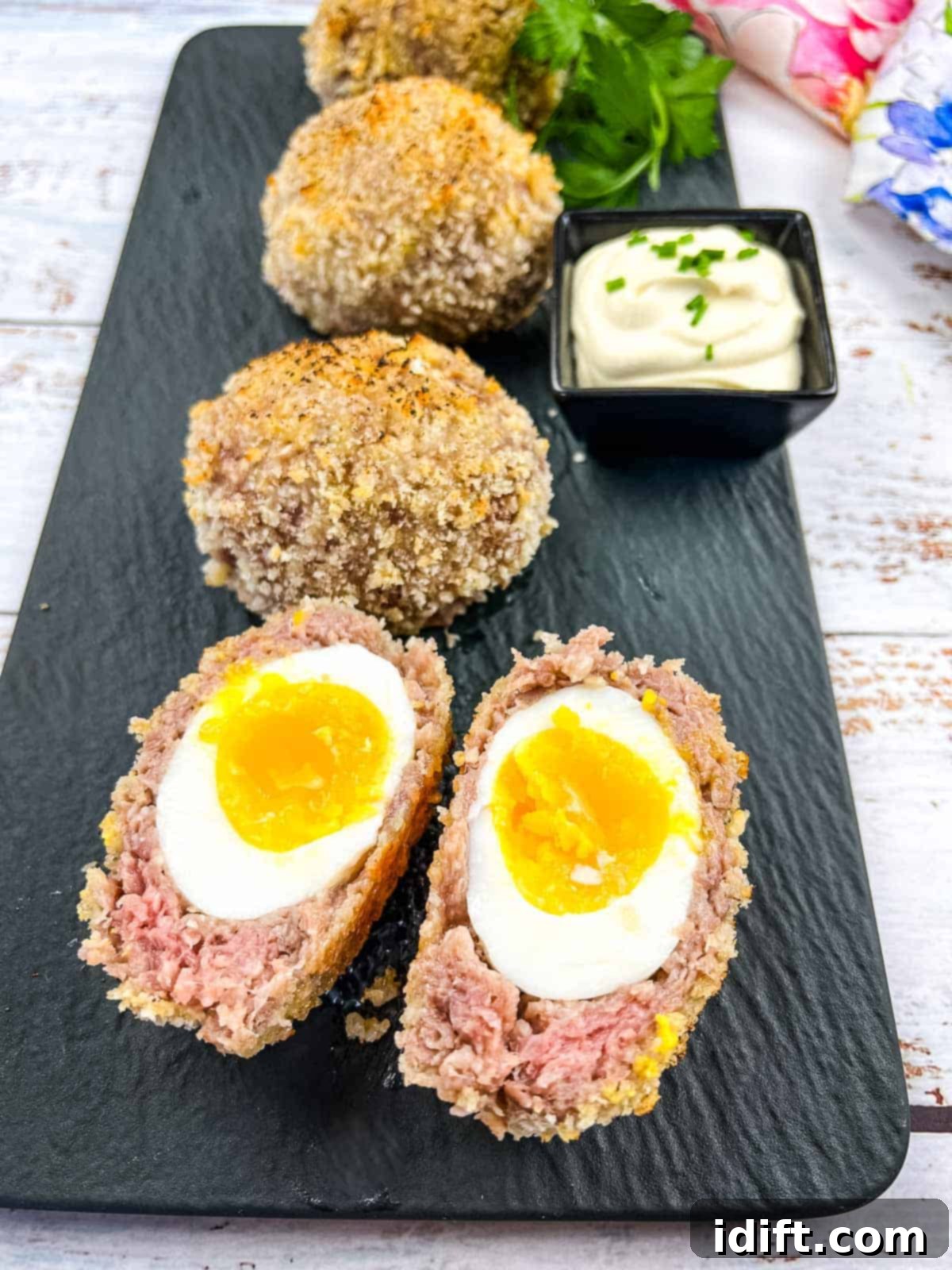
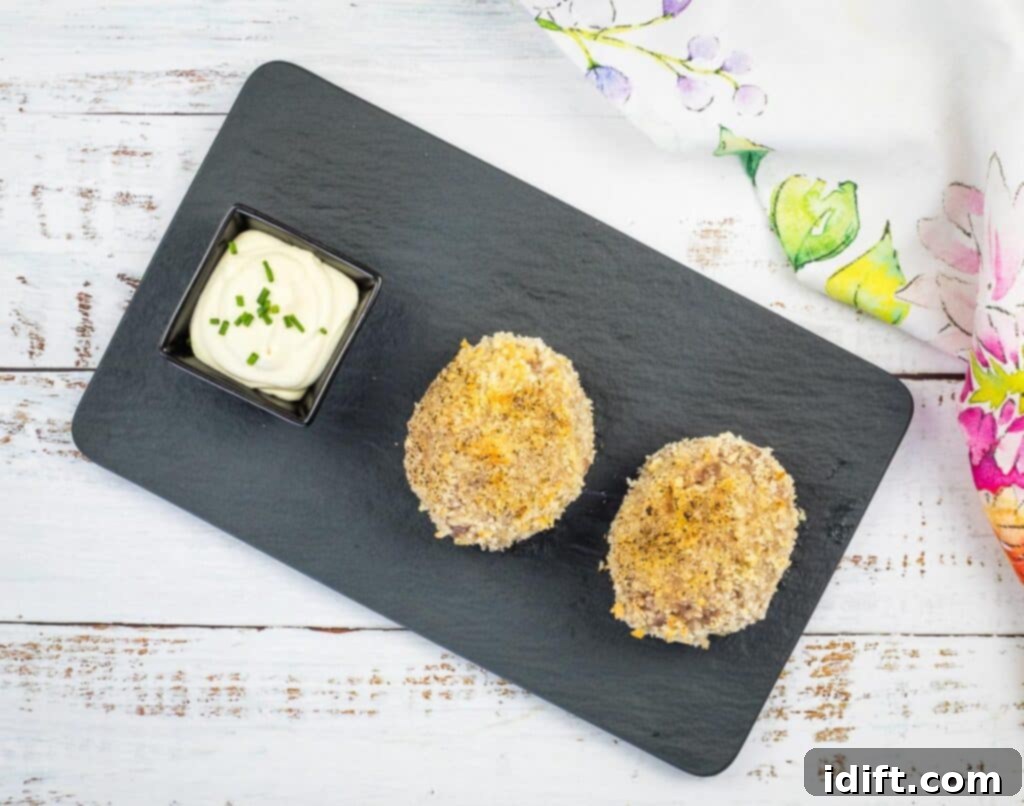
Imagine biting into a perfectly cooked, golden-brown crumb shell, giving way to a savory layer of seasoned sausage, and finally, revealing a perfectly jammy, runny egg yolk. That, my friends, is the magic of a Scotch Egg! While traditionally deep-fried, these Baked Scotch Eggs offer a lighter, less messy, yet equally delicious way to enjoy this beloved British pub classic. Get ready to impress with an appetizer that’s both elegant and utterly comforting.
This post may contain affiliate link(s). As an Amazon Associate, I earn from qualifying purchases. See Disclosure.
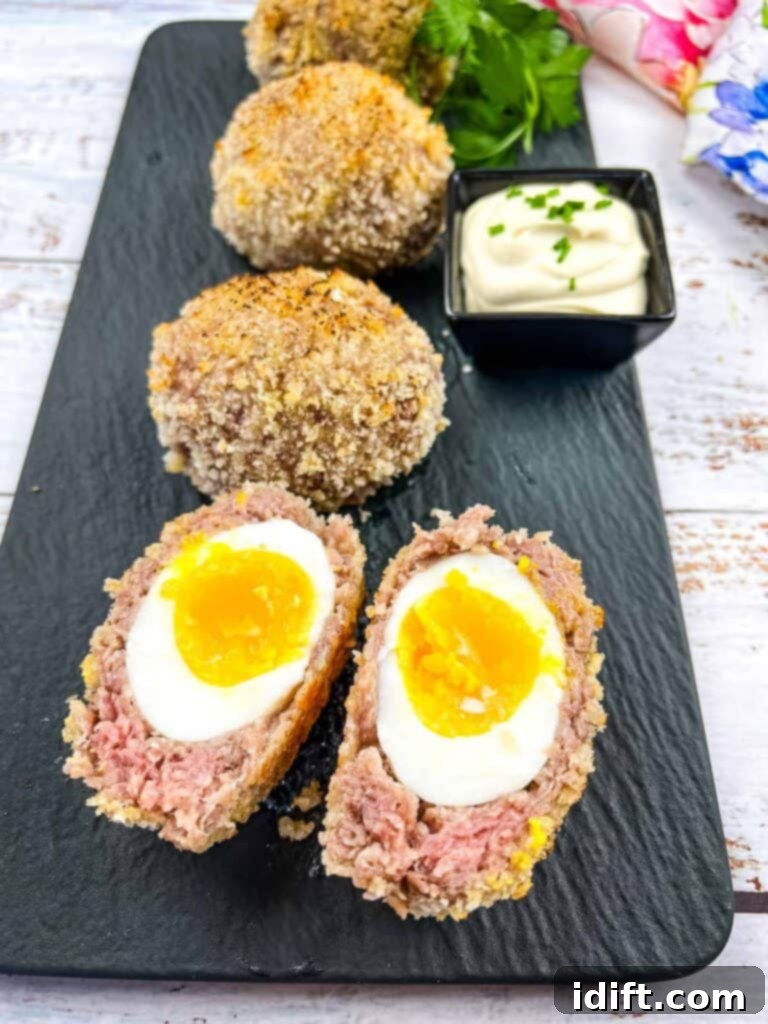
The secret to an exceptional Scotch Egg lies in that gorgeously gooey, jammy egg yolk—a culinary feat that can seem intimidating. But fear not, whether you’re a seasoned chef or a home cook, achieving that picture-perfect oozy center is entirely within your reach. With a few simple “cheffy” tips and tricks, you’ll be crafting restaurant-quality baked Scotch Eggs every time. Forget the deep fryer; we’re bringing all the flavor and crispiness to your oven!
What Exactly Is a Scotch Egg? History and Evolution of a British Classic
A Scotch Egg is more than just an egg wrapped in sausage; it’s a culinary icon, a hearty snack, and a beloved pub staple worldwide. Originating in Yorkshire, England, sometime in the 19th century, the Scotch Egg’s true roots are debated. Some accounts credit the famous London department store Fortnum & Mason with its invention in 1738, while others point to a more humble beginning in rural Britain.
The original versions were quite different from what we know today. Early recipes often featured a hard-boiled egg encased in a fish paste or a mixture of minced meat, then breaded and fried. Thankfully, taste buds evolved! At some point, a culinary genius swapped out the fish paste for flavorful sausage meat, creating the delightful combination we now crave. This savory upgrade transformed the Scotch Egg into a true British favorite, perfect for picnics, pub lunches, or any occasion requiring a satisfying and portable bite.
At its core, a Scotch Egg consists of a soft-boiled egg (ideally with a runny or jammy yolk) enveloped in seasoned sausage meat, coated in crispy breadcrumbs, and then cooked until golden and delicious. Our baked version offers a healthier, easier alternative to the traditional deep-fried method, without sacrificing any of the incredible taste or texture.
Why You’ll Fall in Love with This Easy Baked Scotch Egg Recipe
What You’ll Adore About These Baked Scotch Eggs
- **Effortlessly Delicious:** These Scotch Eggs are deceptively simple to make, yet yield incredibly flavorful results that will have everyone asking for more. Perfect for a quick snack or a show-stopping appetizer.
- **Perfect for Any Occasion:** Whether you’re hosting a party, packing a picnic, or simply looking for a unique and satisfying meal, these baked Scotch Eggs fit the bill. They’re hearty enough to be a light meal and elegant enough for special gatherings.
- **Healthier & Lighter:** By baking instead of deep-frying, we significantly reduce the fat content, making this version a guilt-free indulgence. You get all the crispiness and flavor without the added oil or messy cleanup of deep-frying.
- **Make Ahead Magic:** These eggs are fantastic for meal prep! You can prepare them in advance and simply bake them just before serving, making entertaining a breeze.
- **Customizable Flavors:** From the type of sausage to the spices in the breading, this recipe is incredibly versatile. Experiment with different seasonings to create your signature Scotch Egg.
Essential Ingredients for Your Perfect Baked Scotch Eggs
Crafting these delectable Scotch Eggs requires just a handful of quality ingredients. The beauty of this recipe lies in its simplicity, allowing the fresh flavors to shine through.
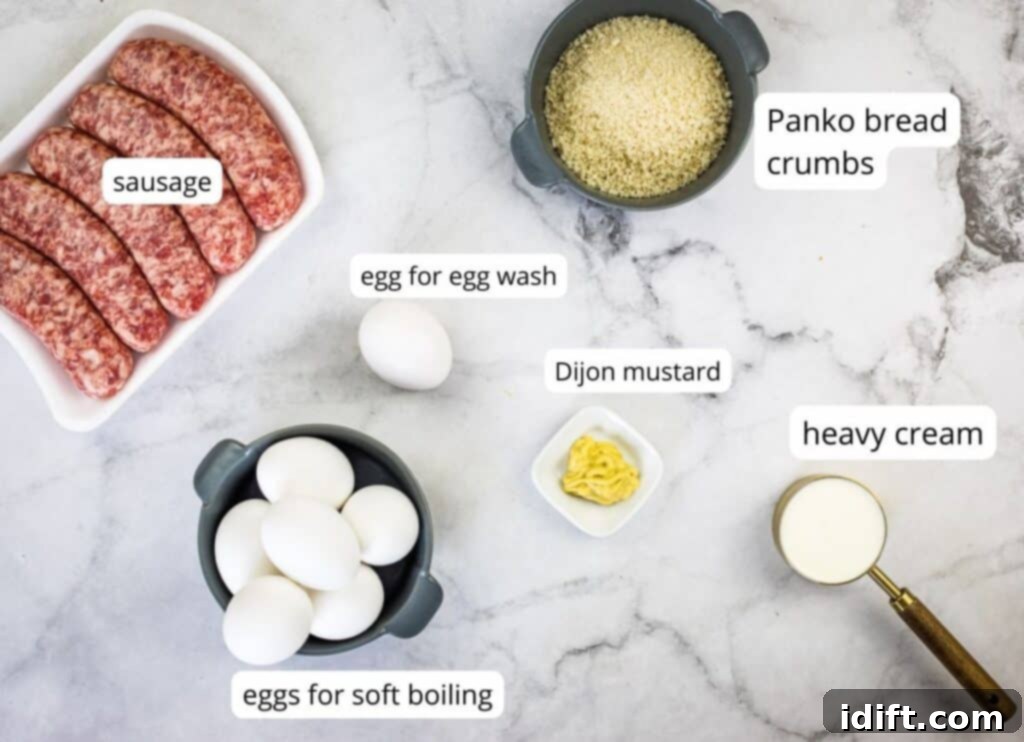
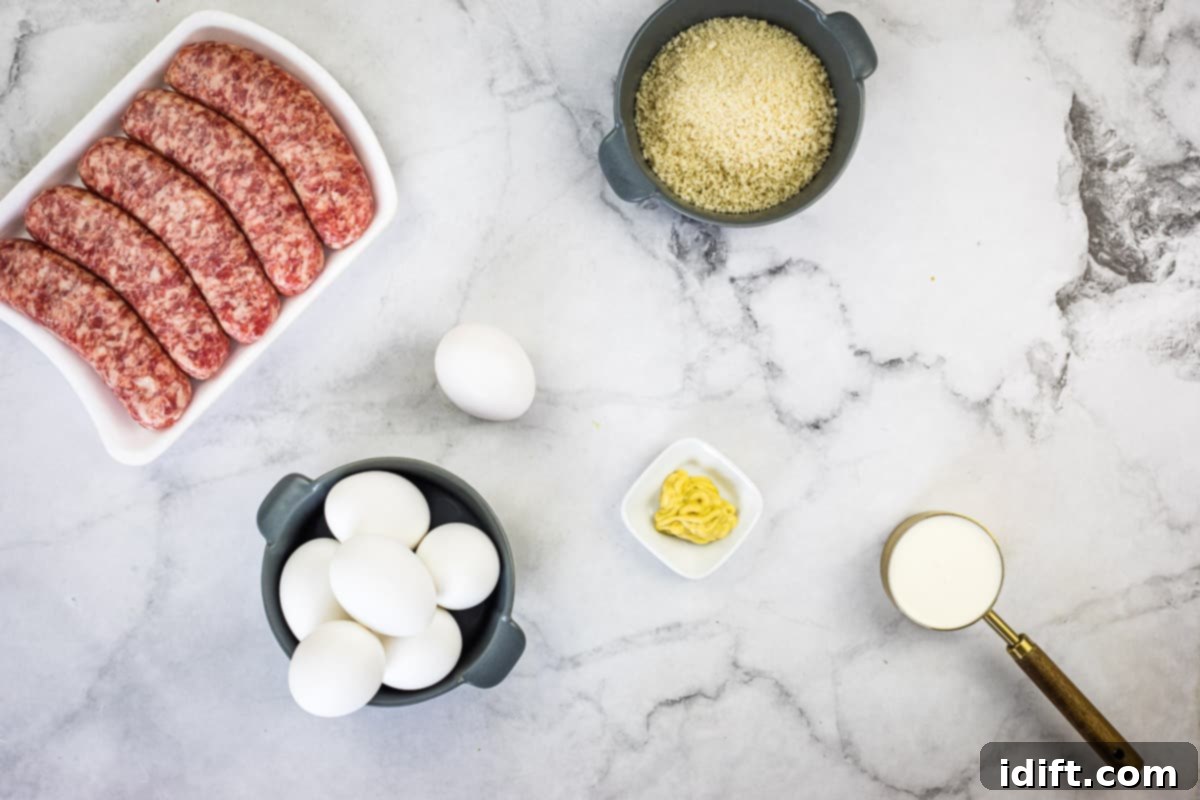
- Eggs: You’ll need six eggs for soft boiling, aiming for that ideal jammy yolk. An additional egg is crucial for creating the perfect egg wash, which helps the breadcrumbs adhere and get beautifully golden.
- Sausage Meat: The heart of your Scotch Egg! Opt for good-quality bulk sausage meat. Breakfast sausage works wonderfully, or you can get creative with Italian sausage (mild or spicy), garlic sausage, or even a sage and onion variety. If you buy sausage in casings, simply remove them before use. The flavor of your sausage will largely dictate the overall taste, so choose one you love!
- Bread Crumbs (Panko Preferred): For that ultimate crisp exterior, Panko bread crumbs are highly recommended. Their larger, flakier texture provides a superior crunch compared to traditional breadcrumbs. You can find Panko in most grocery stores in the international aisle.
- Dijon Mustard: This adds a tangy, slightly spicy kick to our simple yet irresistible dipping sauce. It’s an absolute must-have for complementing the rich flavors of the Scotch Egg.
- Heavy Whipping Cream: Paired with the Dijon, heavy cream creates a luscious, smooth, and perfectly balanced dipping sauce that elevates the entire experience. Don’t skip the sauce; it’s what truly ties the dish together!
Mastering the Art: How To Make The Best Baked Scotch Eggs
Achieving the perfect Scotch Egg is easier than you think, especially with these detailed steps. Follow along to create a stunning appetizer or a satisfying snack.
- Prepare Your Oven & Baking Sheet: Begin by preheating your oven to 425°F (220°C). Line a sturdy baking sheet with parchment paper. This simple step prevents sticking and makes cleanup a breeze.
- Gently Boil the Eggs: Bring a pot of water to a gentle, rolling boil. Carefully lower your six eggs into the boiling water, one at a time, using a spoon to prevent cracking. The goal here is a soft-boiled egg with a jammy yolk, not a hard-boiled one.
- Precision Cooking for Jammy Yolks: Boil the eggs for precisely 4-5 minutes. Timing is critical for that perfect jammy consistency. Immediately after boiling, drain the hot water and run the eggs under cool water or transfer them to an ice bath to stop the cooking process. This chilling step is vital to ensure the yolk doesn’t overcook when baked.
- Peel and Chill Thoroughly: Once the eggs are cool enough to handle, carefully peel them. An extra egg can be boiled just in case of any peeling mishaps. Place the peeled eggs into the fridge or even the freezer for a short while to ensure they are thoroughly chilled. This prevents the yolk from cooking further during baking, preserving its delightful jammy texture.
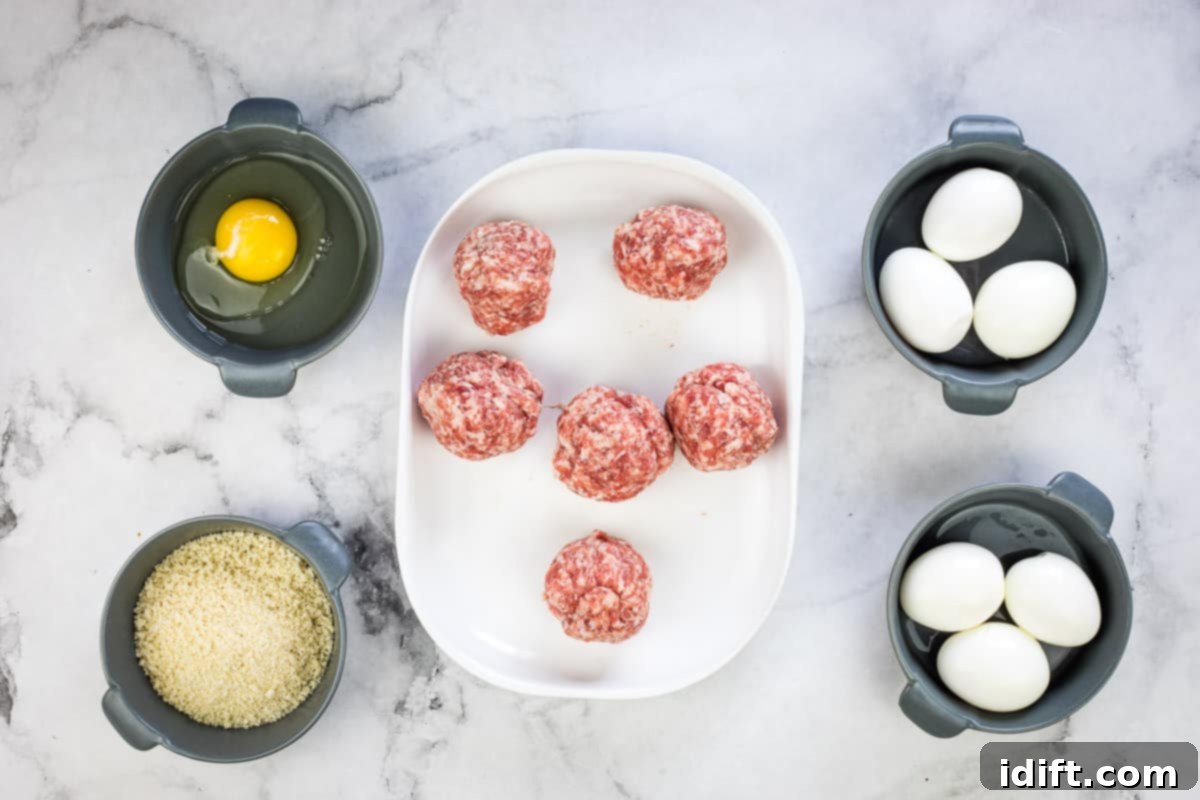
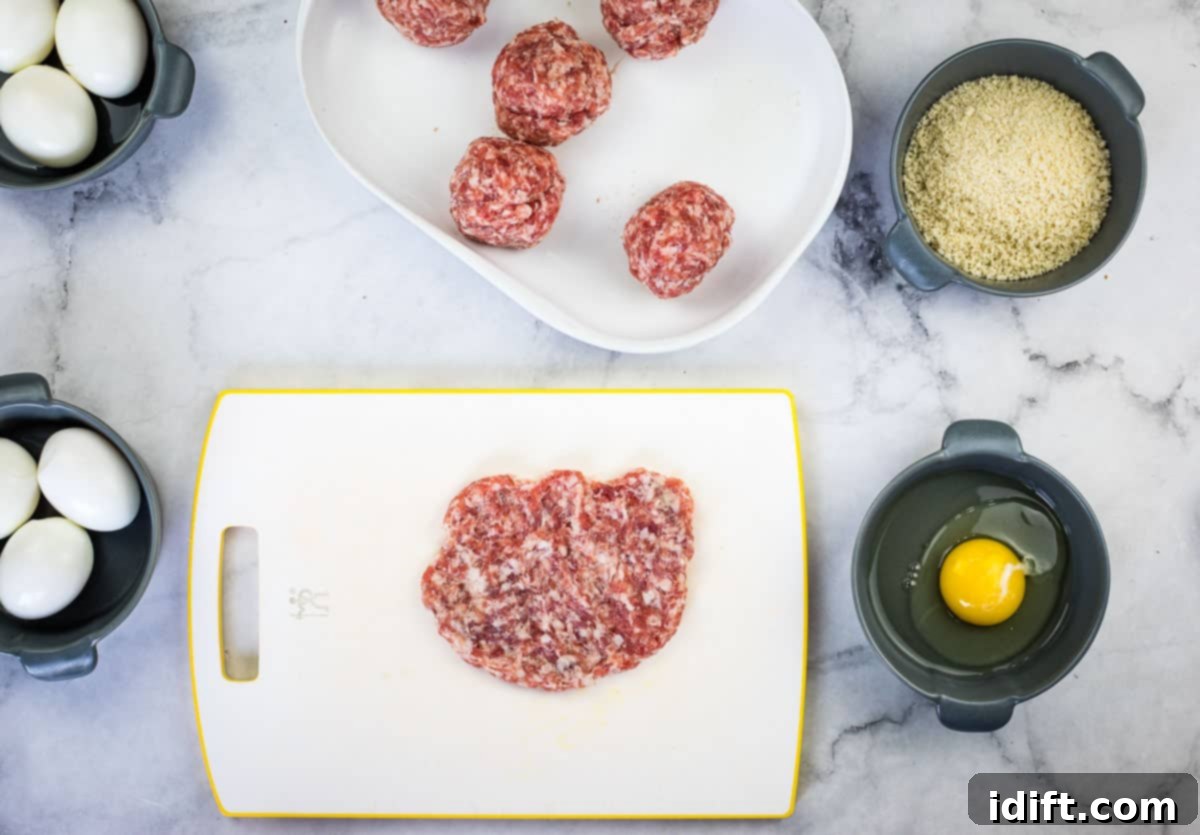
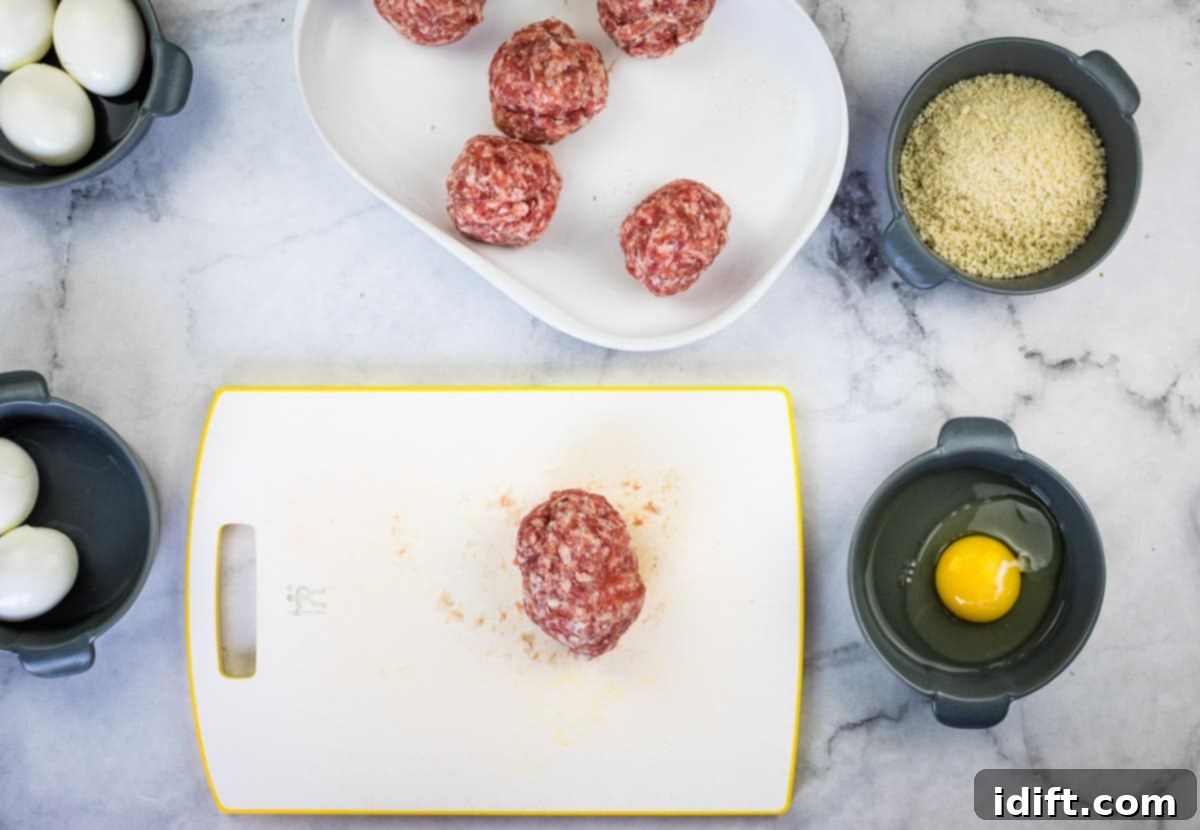
- Form the Sausage Layer: Divide your pound of sausage meat into six equal portions. Flatten each portion into a thin, even “pancake” shape. Carefully wrap each sausage pancake around a chilled, peeled egg, ensuring there are no gaps or exposed egg. Aim for an even layer of sausage around the entire egg. Repeat this process for all six eggs.
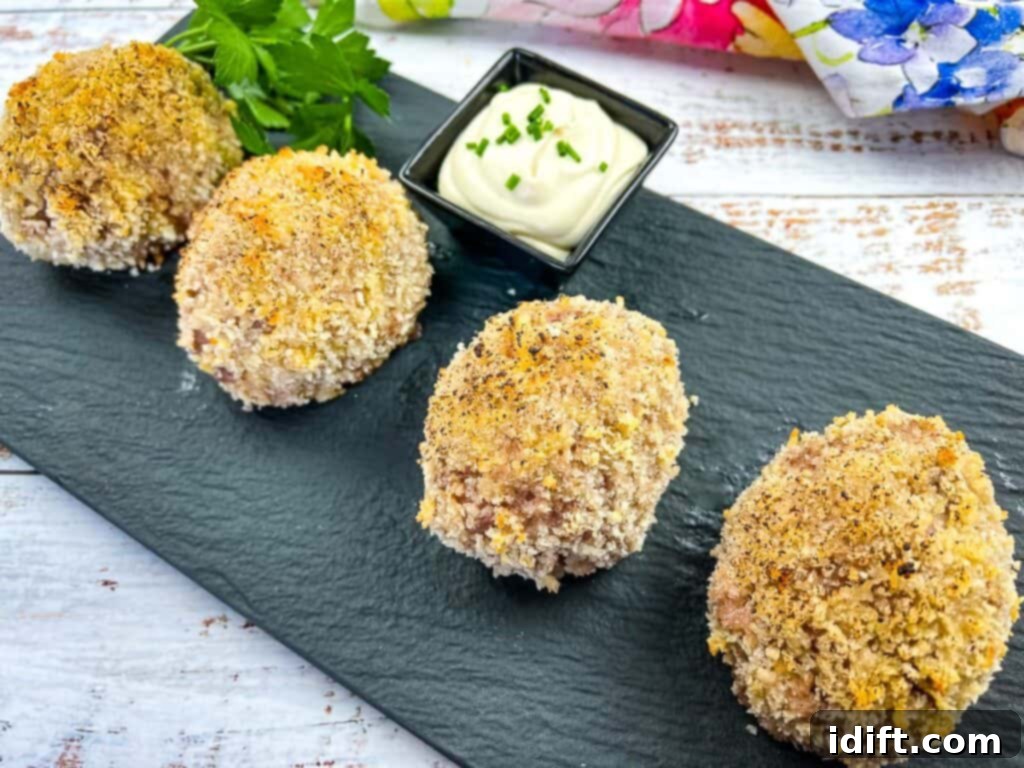
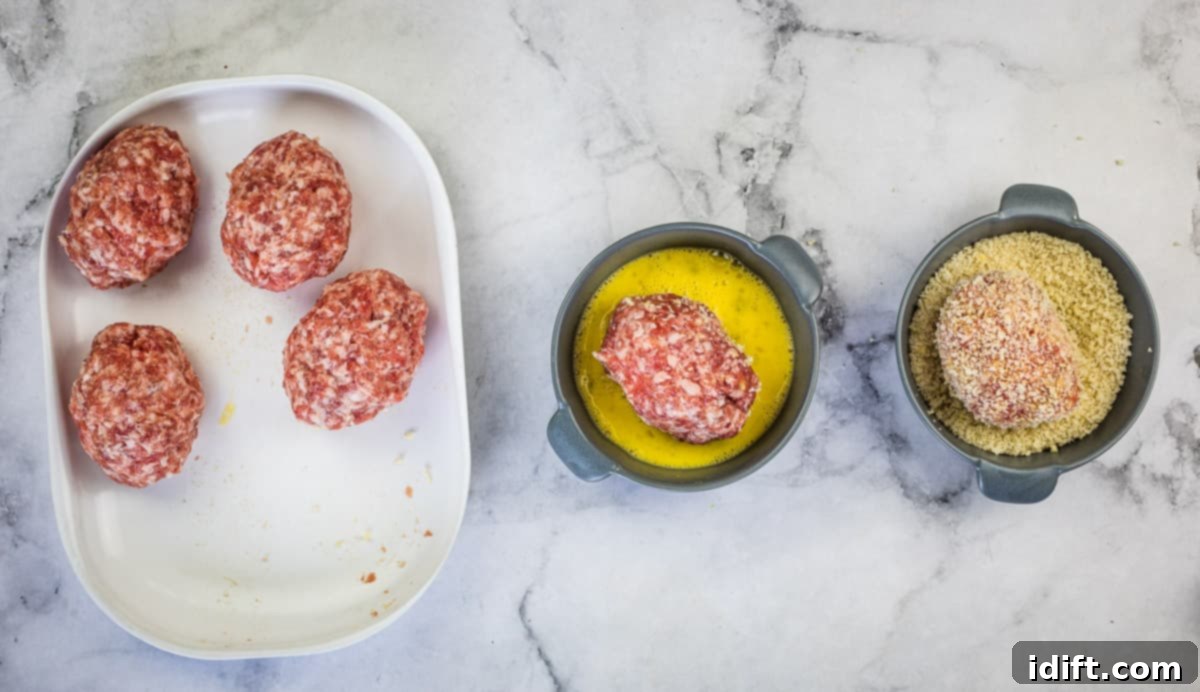
- Breading for Ultimate Crispiness: In one shallow bowl, whisk your remaining egg to create an egg wash. In another shallow bowl, place the Panko bread crumbs. Dredge each sausage-wrapped egg first into the egg wash, ensuring it’s fully coated, then gently press it into the Panko bread crumbs, covering it completely. Place the breaded Scotch Eggs on your prepared parchment-lined baking sheet.
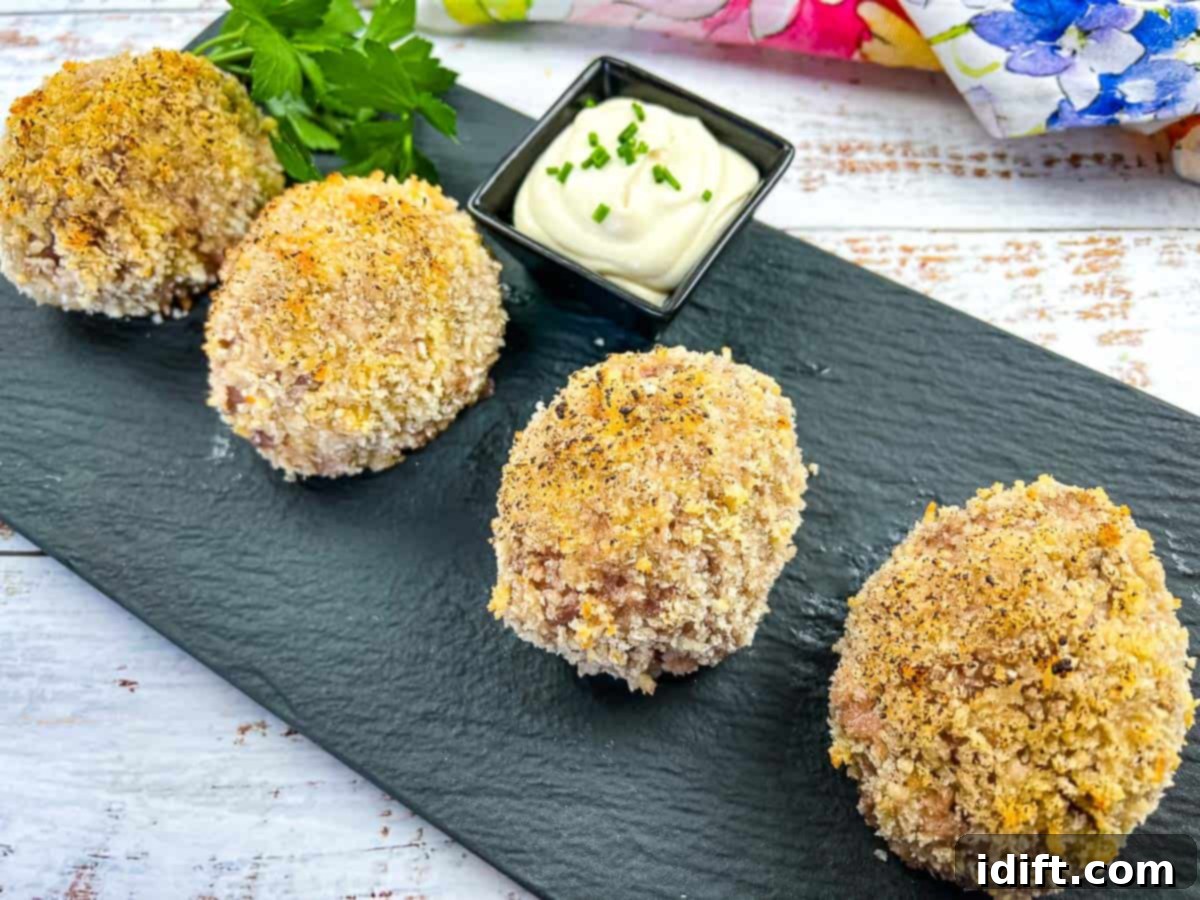
- Bake to Golden Perfection: Bake the Scotch Eggs in your preheated oven at 425°F (220°C) for approximately 10-14 minutes, or until the sausage meat is thoroughly cooked and reaches an internal temperature of 165°F (74°C). Use a digital meat thermometer in the thickest part of the sausage to ensure doneness. The breading should be golden brown and crispy.
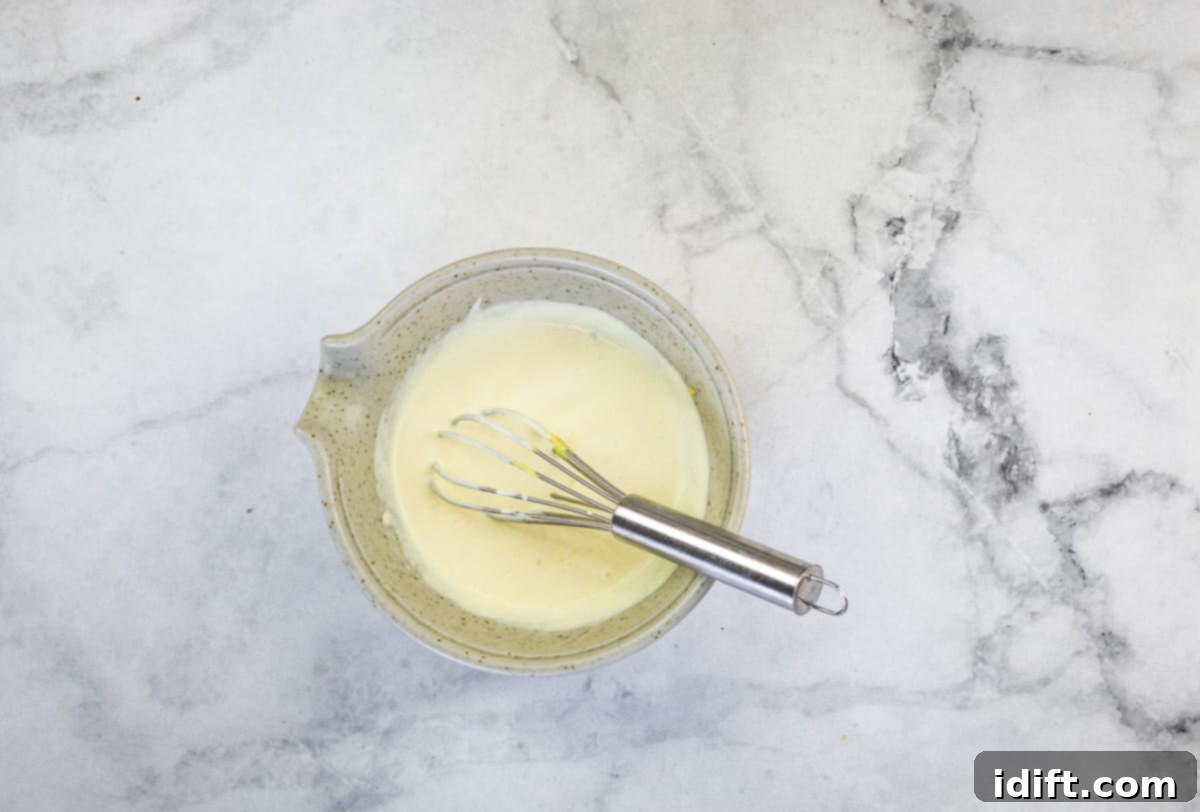
- Whip Up the Creamy Dijon Sauce: While your Scotch Eggs are baking, prepare the accompanying mustard sauce. In a small bowl, combine the Dijon mustard and heavy whipping cream. Whisk until the mixture is smooth and well combined. This creamy, tangy sauce is the perfect complement.
- Serve and Savor: Once baked, remove the Scotch Eggs from the oven. Let them cool slightly, then slice them in half to reveal that beautiful jammy yolk. Serve warm with your homemade creamy Dijon sauce and prepare for a chorus of compliments!
Chef Jenn’s Expert Tips for Flawless Baked Scotch Eggs
Even though this recipe is straightforward, a few expert tips can elevate your Baked Scotch Eggs from good to absolutely extraordinary:
- The Jammy Yolk Secret: The key to a perfectly jammy yolk is precise timing. Boil your eggs for no more than 4-5 minutes, then immediately plunge them into an ice bath. Rapid chilling halts the cooking process, preventing the yolk from hardening in the oven. Trust the clock!
- Always Have a Backup Egg: Peeling soft-boiled eggs can sometimes be tricky. I always recommend boiling an extra egg or two just in case one gets damaged during peeling. It’s better to have too many than not enough!
- Sausage Selection Matters: The type of sausage profoundly impacts the flavor. Breakfast sausage (mild or spicy), Italian sausage (casings removed), or even a savory sage and onion sausage work wonderfully. Don’t be afraid to experiment with your favorite seasoned ground pork.
- Spice Up Your Sausage: If your sausage is plain, or you just want an extra kick, mix in some additional seasonings. A pinch of black pepper, a dash of smoked paprika, a touch of onion powder, or a hint of cayenne pepper can transform the flavor profile.
- Mustard Sauce Variations: While classic Dijon is fantastic, don’t limit yourself! Try a grainy mustard for added texture and a sharper bite, or mix in a touch of honey for a sweet-savory twist. You can also explore other dipping sauces entirely, like a creamy Garlic Dipping Sauce or even a spicy sriracha mayo.
- Chilling is Critical: Ensuring your peeled eggs are thoroughly chilled before wrapping them in sausage is non-negotiable. This prevents the delicate yolk from cooking further once the Scotch Eggs go into the hot oven, preserving that desired runny center.
- Even Sausage Layer: When wrapping the eggs, try to keep the sausage layer as even as possible. This ensures consistent cooking and helps prevent any part of the sausage from drying out or cooking unevenly.
Recommended Pairings & Appetizers
Looking for other delightful dishes to serve alongside your baked Scotch Eggs? Here are some fantastic recipes that complement their savory goodness:
Serving Suggestions: When and How to Enjoy Your Baked Scotch Eggs
The versatility of baked Scotch Eggs is truly impressive! They are much more than just a pub snack and can be served in a multitude of ways to suit any meal or occasion.
- Breakfast or Brunch Delight: My kids absolutely love these for breakfast! They’re a fantastic protein-packed way to start the day. Serve them alongside some fresh fruit or a simple green salad for a complete meal.
- The Ultimate Appetizer: Baked Scotch Eggs shine as a party appetizer. Arrange them on a grand platter with other finger foods. They are particularly popular as St. Patrick’s Day appetizers but are equally perfect for holiday gatherings, game nights, or any festive occasion.
- Charcuterie Board Star: Elevate your charcuterie or cheese board by adding sliced Scotch Eggs. Their rich flavors and vibrant colors make them a standout addition. Pair them with cheeses, cured meats, pickles, and artisanal crackers.
- Light Lunch or Dinner: Enjoy one or two Scotch Eggs as a satisfying light lunch or dinner. Serve them with a crisp green salad tossed in a vinaigrette, or alongside roasted vegetables for a balanced meal.
- Picnic Perfection: Since they are delicious served warm or at room temperature, Scotch Eggs are ideal for picnics, packed lunches, or road trips. They’re hearty, portable, and a delightful alternative to sandwiches.
- Starter to Heartier Meals: Consider serving them as an exciting starter before a more substantial main course. They pair wonderfully with other main dishes, providing a flavorful introduction to your meal.
Don’t be afraid to get creative! The rich, savory sausage and creamy yolk can be complemented by a variety of sides and dips. Experiment to find your favorite combinations.
Storage and Reheating for Optimal Enjoyment
Having leftover Scotch Eggs is a rare treat, but if you do, they store beautifully and can be reheated to maintain their deliciousness.
Store any leftover Baked Scotch Eggs in an airtight container in the fridge for 3-4 days. To reheat them without compromising that coveted jammy yolk, I employ a clever trick: I cut the Scotch Egg in half and carefully scoop out the jammy egg. Then, I gently reheat the sausage and crumb shell in the microwave for a minute or two, or in a preheated oven (around 300°F/150°C) for 5-7 minutes until warmed through. Once the shell is warm, I simply pop the jammy egg back into its place. This method ensures the egg yolk remains perfectly runny and doesn’t overcook, preserving the texture that makes Scotch Eggs so special.
Step-by-Step Visual Guide
Sometimes, seeing is believing! Follow these visual steps to guide you through the process of making perfect baked Scotch Eggs.


Baked Scotch Eggs
Meaty sausage and a crispy bread crumb shell envelop jammy eggs in this easy pub classic recipe. Wow everyone with baked Scotch Eggs today!
- Course:
- Appetizers
- Cuisine:
- American, European
- Keyword:
- appetizers, egg recipes, eggs, scotch eggs
- Prep Time:
- 10 minutes
- Cook Time:
- 12 minutes
- Total Time:
- 22 minutes
- Servings:
- 6 servings
- Calories:
- 434kcal
Ingredients
- 7 eggs (6 for soft boiling, 1 for egg wash)
- 1 pound sausage meat (bulk sausage or casings removed)
- 1 1/2 cups Panko bread crumbs
- 1/2 cup heavy whipping cream
- 3 tablespoons Dijon mustard
Instructions
- Preheat your oven to 425°F (220°C) and line a baking sheet with parchment paper.
- Bring a pot of water to a gentle boil. Carefully lower the eggs into the boiling water on a spoon, one at a time.
- Boil the eggs for 4-5 minutes TOPS, then drain and run under cool water to chill immediately.
- Peel the eggs as soon as they are safe to handle, and pop them into the fridge or even the freezer to chill thoroughly. Chilling the eggs is super important, so the yolk doesn’t cook in the oven.
- Divide the sausage into 6 balls, then flatten each into a pancake. Wrap the sausage pancake around the chilled eggs until there’s no egg exposed. Try to keep the sausage in an even layer. Repeat until all eggs are wrapped.
- Whisk the remaining egg in a bowl for an egg wash. Dredge a sausage-wrapped egg into the whisked egg and then press it lightly into the Panko bread crumbs, ensuring full coverage. Lay it on the parchment paper-lined baking sheet. Repeat for all eggs.
- Bake at 425°F (220°C) until the sausage is cooked through; about 10-14 minutes. Use a digital meat thermometer in the thickest part of the sausage. It should read 165°F (74°C).
- Make the mustard sauce while the eggs are cooking. Mix the Dijon and the heavy cream in a small bowl until combined.
- Remove the eggs from the oven, slice, and dig in with your delicious sauce!
Notes
Chef Jenn’s Tips
- Scotch eggs should be jammy. To do this, boil your egg for 4-5 minutes tops, and chill as quickly as possible.
- I make an extra egg in case I have a peeling disaster.
- I like garlic sausage or even breakfast sausage with this appetizer recipe.
- Mix up the mustard! Grainy mustard is also delish with these eggs.
- Try these eggs with Garlic Dipping Sauce instead.
Nutrition
Serving: 1 egg | Calories: 434kcal | Carbohydrates: 12g | Protein: 21g | Fat: 33g | Saturated Fat: 13g | Polyunsaturated Fat: 4g | Monounsaturated Fat: 13g | Trans Fat: 0.2g | Cholesterol: 268mg | Sodium: 751mg | Potassium: 318mg | Fiber: 1g | Sugar: 2g | Vitamin A: 631IU | Vitamin C: 1mg | Calcium: 81mg | Iron: 3mg
A Note on Nutritional Information
Nutritional information for this recipe is provided as a courtesy and is calculated based on available online ingredient information. It is only an approximate value. The accuracy of the nutritional information for any recipe on this site cannot be guaranteed.
Exploring Variations and Customizations for Your Scotch Eggs
One of the joys of cooking is the ability to adapt and personalize recipes to your taste. Baked Scotch Eggs are incredibly versatile, offering many avenues for customization:
- Sausage Flavor Twists: Beyond breakfast sausage, consider using spicy Italian sausage for a kick, applewood smoked bacon-infused sausage for added depth, or even a vegetarian sausage alternative for a meat-free option. You can also mix in your own herbs and spices to plain ground pork, such as fennel, sage, thyme, or a touch of red pepper flakes.
- Breading Enhancements: While Panko offers superior crunch, you can experiment with different breading. Mix in grated Parmesan cheese with your Panko for a cheesy crust, or add a pinch of garlic powder, onion powder, or smoked paprika for extra flavor. For a gluten-free option, use gluten-free breadcrumbs.
- Internal Surprises: Before wrapping the egg, you could gently press a thin layer of cooked, crumbled bacon or finely chopped chives onto the sausage for an extra layer of flavor and texture.
- Dipping Sauce Adventures: Our creamy Dijon sauce is a classic, but don’t stop there! Try a homemade aioli, a zesty chimichurri, a sweet and tangy chutney, or even a spicy remoulade. The possibilities are endless.
- Mini Scotch Eggs: For bite-sized appetizers, use quail eggs instead of chicken eggs. Adjust cooking times accordingly (you’ll need to soft boil quail eggs for less time, around 1-2 minutes, and bake the smaller Scotch Eggs for a shorter period).
Embrace your inner chef and don’t hesitate to play with these variations to create a Scotch Egg recipe that truly reflects your culinary preferences!
Common Questions About Baked Scotch Eggs (FAQ)
Q: Can I prepare Baked Scotch Eggs ahead of time?
Absolutely! You can prepare the Scotch Eggs up to the point of breading and store them covered in the refrigerator for up to 24 hours. Bake them just before you plan to serve for the freshest, crispiest results. You can also soft-boil and peel the eggs a day or two in advance.
Q: How do I get a perfectly jammy yolk every time?
The key is precise timing and immediate chilling. Boil large eggs for exactly 4-5 minutes, then transfer them directly into an ice bath for at least 5 minutes. This stops the cooking and ensures a beautiful jammy consistency. Make sure the eggs are thoroughly chilled before wrapping them in sausage.
Q: What kind of sausage meat is best for Scotch Eggs?
A good quality bulk sausage meat is ideal. Breakfast sausage (mild or spicy) is a popular choice due to its excellent flavor profile. Italian sausage (casings removed) also works wonderfully. You can also use plain ground pork and season it yourself with salt, pepper, sage, and other herbs.
Q: Can I deep fry these Scotch Eggs instead of baking?
Yes, you can! If you prefer the traditional deep-fried method, heat oil to 350°F (175°C) and fry the breaded Scotch Eggs for 5-7 minutes, turning occasionally, until golden brown and the sausage is cooked through (165°F/74°C internal temperature). However, our baked version offers a healthier and less messy alternative with similar delicious results.
Q: My sausage cracked during baking. What happened?
This can happen if the sausage layer is too thin in places or if the sausage itself is too lean. Ensure your sausage layer is even around the egg. Using a sausage with a slightly higher fat content can also help prevent cracking, keeping the exterior moist and intact during baking.
Want More Delicious and Easy Recipes?
If you loved making these Baked Scotch Eggs, you’ll definitely want to explore more of our easy and flavorful recipes. Here are some hand-picked favorites:
- Smoked Asparagus: A wonderfully tender and flavorful side dish.
- Over the Top Chili: A hearty and comforting chili with a unique smoky twist.
- Smoked Cream Cheese: An incredibly addictive appetizer that’s surprisingly easy to make.
- Lobster Chowder: Rich, creamy, and packed with succulent lobster.
- Smoked Shotgun Shells: A fun, cheesy, and meaty appetizer perfect for any gathering.