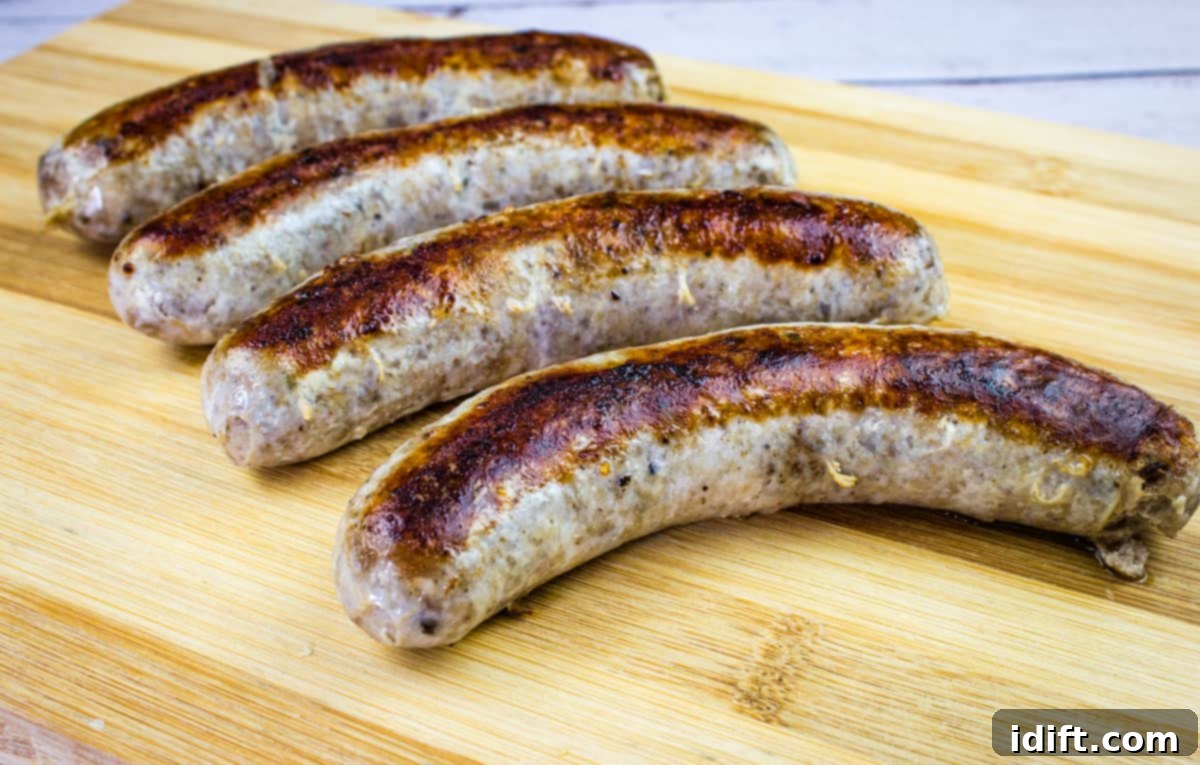
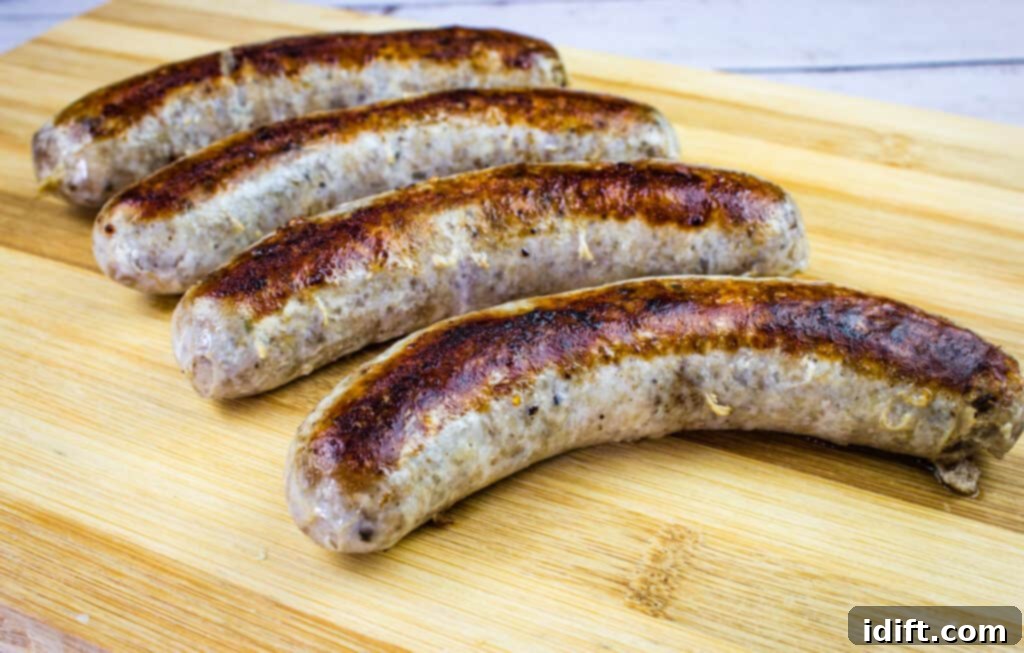
Unlock the secret to perfectly cooked sausage every time with the sous vide method. This technique ensures incredibly juicy, tender, and flavorful sausages, ready whenever you are! Say goodbye to dry, overcooked brats and hello to culinary perfection. Dive in as we reveal all the chef-approved tips and tricks for making flawless sous vide brats or any type of sausage imaginable.
This post may contain affiliate link(s). As an Amazon Associate, I earn from qualifying purchases. See Disclosure.
Discover the Magic of Sous Vide Cooking for Sausage
Once considered an exclusive technique for gourmet restaurants and “frou-frou” chefs, sous vide cooking has democratized culinary excellence. Thanks to a wide array of accessible sous vide immersion circulators and water baths, home cooks can now effortlessly achieve professional-grade results. This revolutionary cooking method, celebrated for its precision and reliability, takes the guesswork out of preparing even the trickiest ingredients, ensuring a fail-proof experience for everyone.
At its core, sous vide is deceptively simple: food, typically proteins like meat, poultry, or fish, is sealed in a vacuum-safe bag and cooked in a precisely controlled water bath at a consistent, low temperature. This gentle, even cooking process prevents overcooking, allowing ingredients to reach their ideal doneness without any risk of drying out. Imagine enjoying chicken that is consistently moist and succulent, or steaks that are always perfectly medium-rare from edge to edge. That’s the consistent magic of sous vide cooking.
Today, we’re focusing on how to master the art of cooking sausage sous vide, transforming a humble staple into an extraordinary culinary delight. Get ready to elevate your sausage game!
Why Sous Vide Sausage is a Game Changer
Traditional methods for cooking sausage, such as frying or grilling, often expose the meat to extremely high, uncontrolled temperatures. While these techniques can deliver a desirable crisp exterior, they frequently lead to undesirable outcomes: split sausage skins, loss of precious moisture and flavorful fats, and an interior that is dry and overcooked. These high-heat environments make it challenging to achieve even cooking, leaving some parts underdone and others tough.
In stark contrast, cooking sausage sous vide offers a superior solution. The gentle, consistent heat of the water bath ensures that sausages cook evenly throughout, from the center to the edge. This method prevents the protein from seizing up and expelling moisture, resulting in sausages that are incredibly moist, supremely tender, and burst with rich, natural flavor. With sous vide, the delicate casings remain intact, preserving all that delicious fatty goodness within, particularly with pork sausages, which retain a wonderfully smooth and appealing texture. This precision cooking guarantees a perfect bite every time, making sous vide the ultimate way to prepare sausage.
Essential Equipment for Sous Vide Sausage Perfection
Getting started with sous vide cooking is easier than you might think. Here’s a breakdown of the key tools you’ll need to achieve perfectly cooked sous vide sausage:
- Sous Vide Immersion Circulator: This is the heart of your sous vide setup. It heats and circulates water to maintain a precise temperature. I highly recommend the Anova Precision Cooker. It’s a brand renowned for its dependability, accuracy, and user-friendly design, consistently delivering excellent results without fail.
- Sous Vide Cooking Container: While a large stock pot or a deep bowl can work in a pinch, a dedicated sous vide container is a worthwhile investment. These containers are specifically designed to fit immersion circulators, often come with form-fitted lids to minimize heat and water evaporation, and are appropriately sized for most sous vide tasks. This setup helps maintain temperature stability and reduces energy consumption.
- Vacuum Sealer & Bags: To properly cook food sous vide, you need to remove air from the cooking bag. A vacuum sealer creates an airtight seal, which is ideal for long cooks and achieving the best texture. Alternatively, for shorter cooks or if you don’t have a vacuum sealer, high-quality zipper-top bags (like Ziploc freezer bags) can be used with the water displacement method (more on this below).
- Sausage: Your choice of sausage is key! (See the next section for recommendations).
- Liquid for Flavor (Optional): Beer or apple juice can infuse additional flavor into your sausages.
- Salt: A small amount of salt can help retain the sausage’s natural flavors when cooking with added liquids.
- Oil: Essential for the final searing step to develop a beautiful, flavorful crust.
Choosing the Best Sausage for Sous Vide
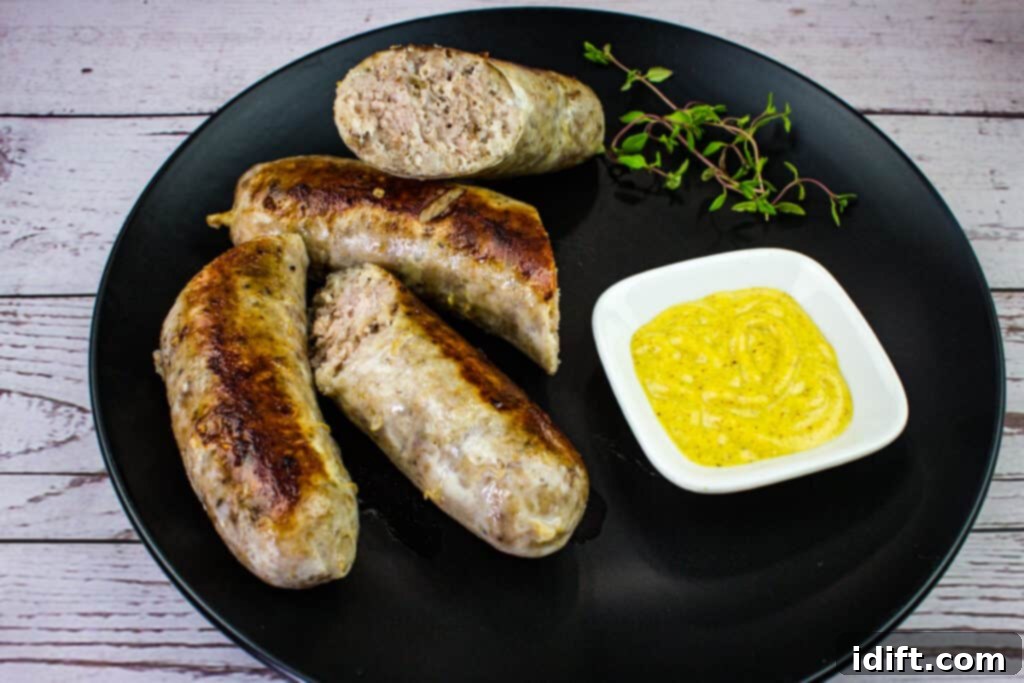
One of the beauties of sous vide cooking is its versatility, especially when it comes to sausages. You can achieve fantastic results with virtually any type of sausage, allowing you to experiment and discover new favorites. Whether you prefer rich and spicy Italian sausage, classic bratwurst, or any variety of savory pork sausage, the sous vide method will ensure they turn out perfectly tender and juicy.
Beyond pork, chicken, turkey, and even plant-based sausages also perform exceptionally well in a sous vide bath. This method is particularly excellent for making perfectly cooked breakfast sausages, delivering a consistent texture that’s often hard to achieve in a skillet. For fresh sausages, the gentle, controlled cooking environment helps them retain their shape and prevents bursting, while pre-cooked sausages benefit from being gently brought to temperature without drying out. Don’t hesitate to explore different flavor profiles and meat types—sous vide will consistently deliver outstanding results.
Step-by-Step Guide to Perfect Sous Vide Sausage
Achieving impeccably cooked sous vide sausage is a straightforward process. Follow these simple steps for delicious results every time:
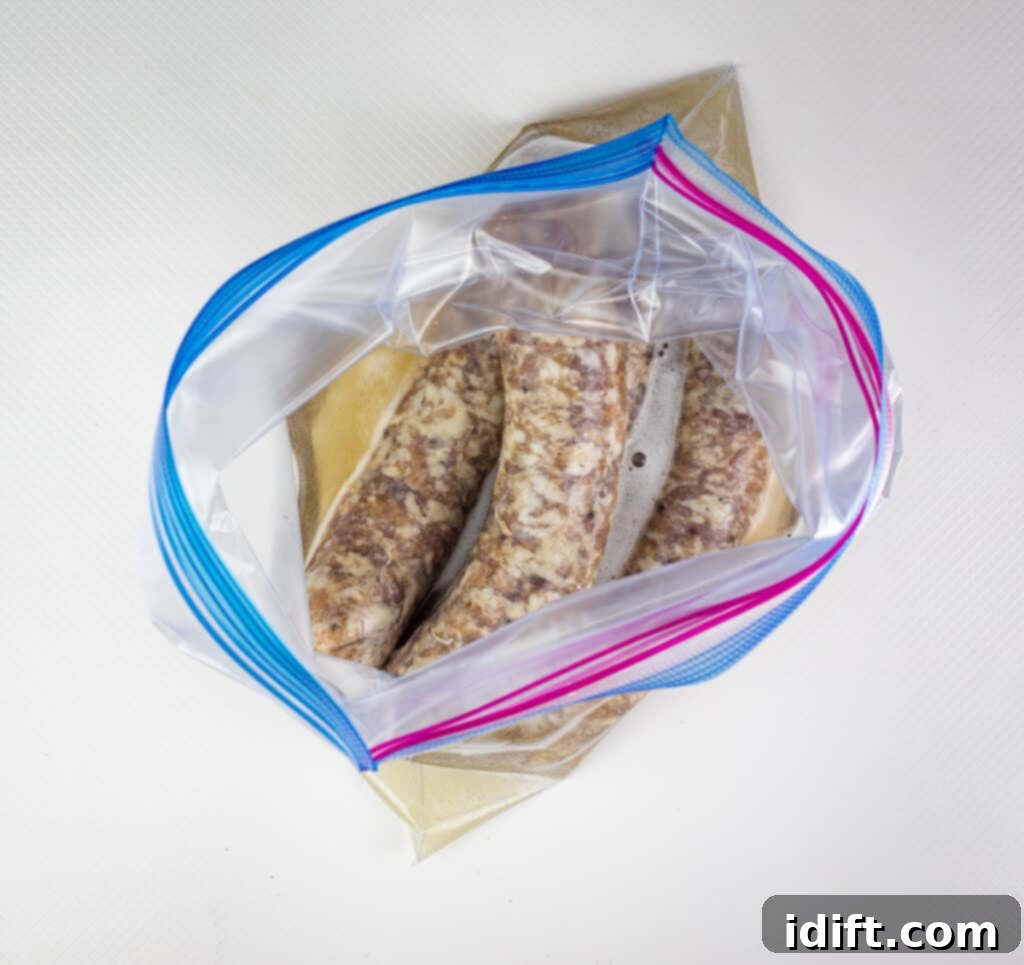
- Prepare the Bag: Carefully place your chosen sausages into a high-quality vacuum-sealable bag or a sturdy, freezer-safe zipper-top bag. If desired, add 1/2 cup of beer or apple juice and 1/2 teaspoon of salt to the bag. These liquids will infuse the sausages with additional flavor during the cooking process.
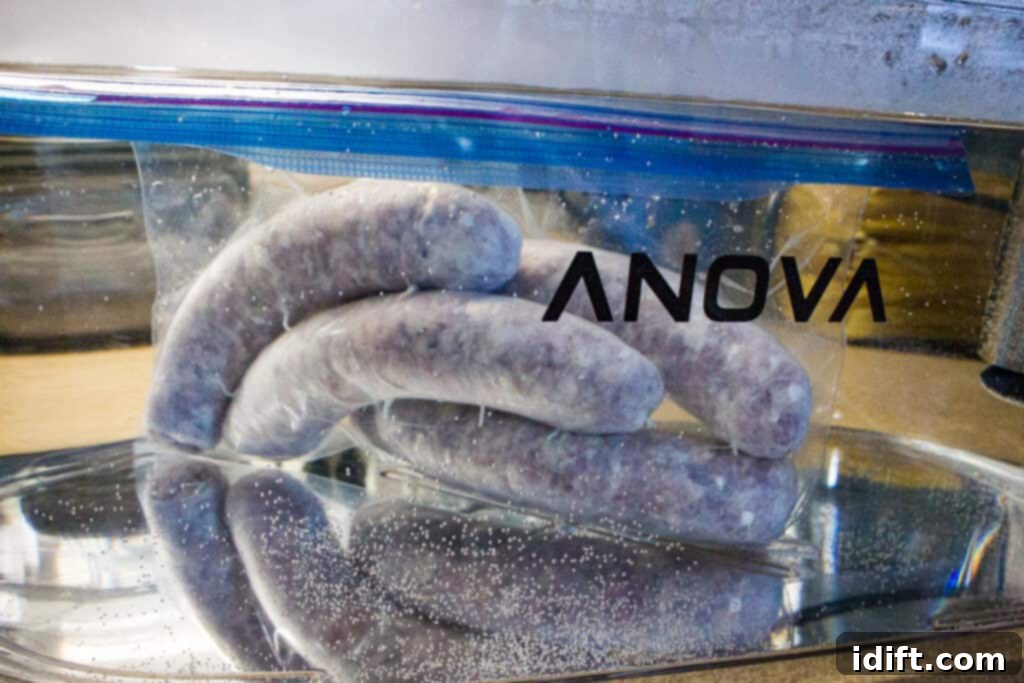
- Seal the Bag: For optimal results, use a vacuum sealer to remove all air and create a tight seal around the sausages. If you don’t have a vacuum sealer, employ the water displacement method: slowly submerge the zipper-top bag into the water bath, allowing the water pressure to push the air out. Once most of the air is expelled, carefully seal the bag just above the waterline.
- Secure the Bag: To prevent the bag from floating and ensure full submersion, you can clip the bag to the side of your sous vide container or use a weighted rack if available. This “double protection” minimizes any risk of water leaking into the bag during the extended cooking period.
- Set the Water Bath Temperature: This is where you customize your sausage’s texture. Choose your preferred temperature based on the desired outcome:
- 140°F (60°C): For sausages that are exceptionally juicy and soft, with a very tender bite. They might still appear slightly pink in the middle, which is perfectly safe due to pasteurization (explained below).
- 150°F (65.5°C): Delivers a firmer texture than 140°F, yet the sausages remain remarkably juicy and will have a subtle pink hue. This is a popular choice for a balance of tenderness and chew.
- 160°F (71°C): Results in a texture most similar to traditionally cooked sausages—firm and fully cooked through—but still retaining all their natural juiciness, unlike conventionally overcooked versions.
I personally prefer setting the temperature to 155°F (68°C). While I understand that sous vide at lower temperatures is safe, the slight pink color at 140°F can sometimes be off-putting for me. Experiment to find your perfect preference!
- Reverse-Sear for Flavor and Color: After the sous vide bath, your sausages will be perfectly cooked but may appear pale. To achieve that appetizing, golden-brown crust and enhance flavor, a reverse-sear is essential. Heat a skillet over medium-high heat and add 1-2 tablespoons of oil. Carefully place the sous vide sausages into the hot skillet and sear for 1-2 minutes per side until beautifully browned and caramelized. Serve immediately and enjoy the exquisite taste and texture!
Understanding Sous Vide Time and Temperature for Safe and Delicious Sausage
One of the most profound advantages of sous vide cooking, especially for ground meats like sausage, lies in its ability to ensure food safety at lower internal temperatures than traditional methods. When frying or grilling sausage, it is generally recommended to cook them to an internal temperature of 160°F (71°C). This high temperature is necessary because the grinding process can distribute surface bacteria throughout the meat, requiring a thorough cook to eliminate pathogens.
However, sous vide operates on a different principle: pasteurization. By cooking food to a specific temperature and then holding it at that temperature for a designated period, the sous vide method effectively kills most bacteria, rendering the meat safe for consumption, often at internal temperatures lower than 160°F. This process ensures safety without sacrificing moisture or tenderness, making it ideal for sausage.
For this sous vide sausage recipe, once you’ve set your preferred water temperature (anywhere from 140°F to 160°F), you can confidently leave the sausages to cook. The beauty of sous vide is that the food cannot overcook, meaning your sausages will remain perfectly tender and juicy even if left in the water bath for longer than the minimum required time—up to four hours without negative impact. The exact cooking time will vary depending on factors such as the initial temperature of the sausage (refrigerated vs. frozen) and its size. For instance, large, cold sausages straight from the fridge might take closer to 2 hours to reach a consistent internal temperature, while thinner breakfast sausages could be ready in about 45 minutes.
Chef Jenn’s Expert Tips for Exceptional Sous Vide Sausage
Elevate your sous vide sausage experience with these professional tips and tricks:
- Quality Matters: Always start with good-quality sausage. The sous vide method truly allows the inherent flavors of the meat and seasonings to shine through, so investing in premium sausages will yield superior results.
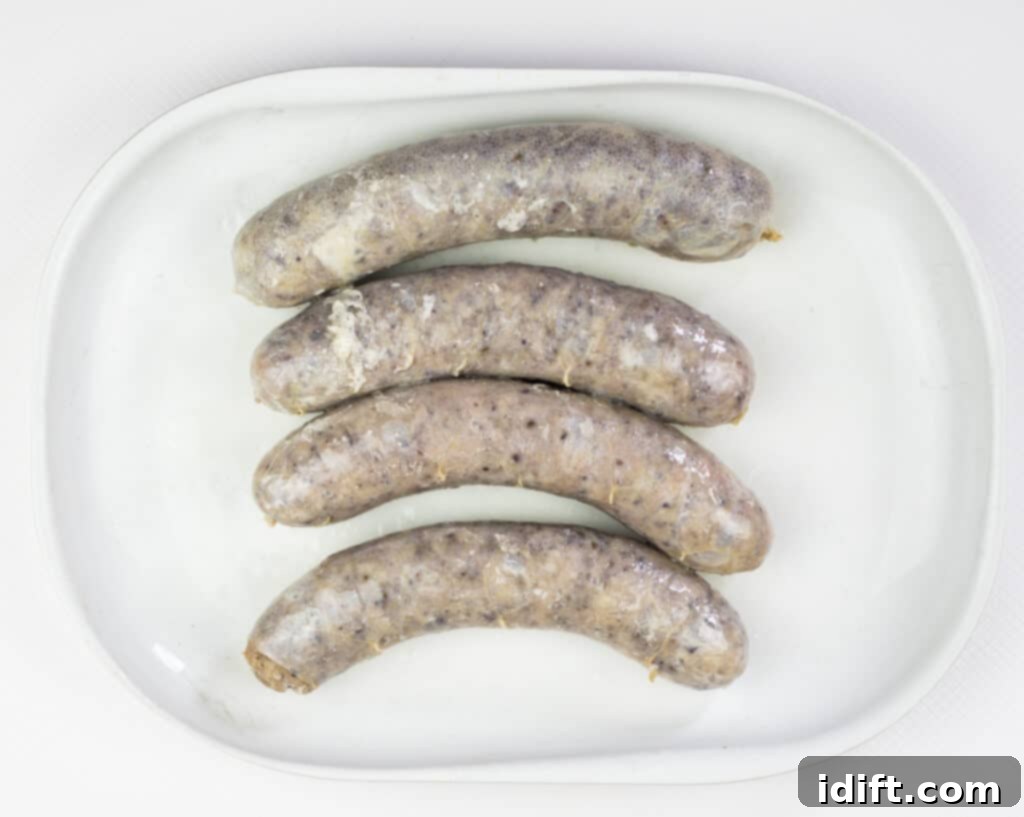
- The Power of the Sear: Sous vide sausages often emerge from the water bath with a somewhat “anemic” or pale appearance. Don’t skip the reverse-sear step (as described in step 5 above). A quick pan-fry or grill after the water bath will develop a beautiful, flavorful, and appealing golden-brown crust, adding a crucial layer of texture and taste.
- Resist Over-Poking: While it might be tempting to frequently check the internal temperature of your sausages, try to resist poking them multiple times. Each puncture creates an opening for those delicious, retained juices to escape, potentially compromising the sausage’s incredible moisture. Once you understand the sous vide process, you’ll gain confidence in its precision.
- Flavor Infusion with Salt: If you’re using liquids like beer or apple juice for braising your sous vide brats or sausages, it’s a good practice to add about 1/2 teaspoon of salt to the bag. While these liquids add wonderful flavor, they can sometimes draw out some of the sausage’s natural seasoning. The small amount of added salt helps to balance this and ensures your sausages remain perfectly seasoned without becoming overly salty.
- Alternative Braising Liquids: Don’t limit yourself to beer! Apple juice offers a lovely sweet and tangy note, while ginger ale can provide a unique subtle spice and sweetness. Experiment with different broths, ciders, or even a splash of wine to discover new flavor profiles.
Perfect Pairings: What to Serve With Sous Vide Sausage
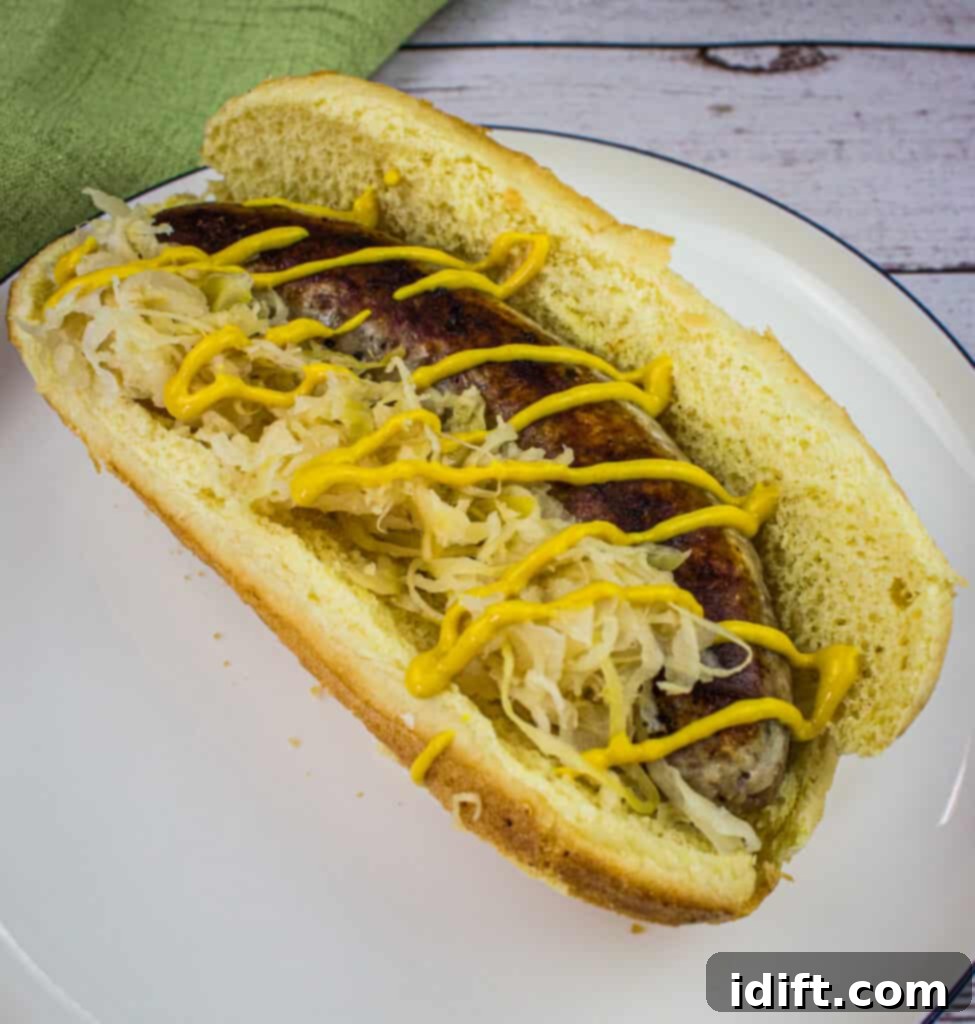
The beauty of the “set-it-and-forget-it” nature of sous vide cooking is that it frees up your time to prepare fantastic side dishes that complement your perfectly cooked sausages. Sous vide bratwurst served on a toasted bun with tangy sauerkraut is a classic and satisfying choice. But don’t stop there! Elevate your favorite sausages with a variety of delicious accompaniments:
- Classic Comfort: Creamy mashed potatoes or a hearty potato salad.
- Flavorful & Fresh: Easy Corn Fritters offer a delightful sweetness and texture contrast.
- Italian Inspired: A simple yet elegant Pasta with Ricotta and Tomatoes.
- Decadent Potatoes: Rich and cheesy Au Gratin Potato Stacks for a truly indulgent meal.
- Green Vegetables: Roasted asparagus, green beans with garlic, or a crisp garden salad.
- Bread & Condiments: Crusty bread to soak up any juices, alongside a selection of gourmet mustards or relishes.
Of course, a perfectly cooked sous vide sausage, especially one infused with beer, is so flavorful it can stand on its own as a delightful meal.
Storage and Reheating Tips for Sous Vide Sausage
Having perfectly cooked sous vide sausages on hand is a fantastic convenience for quick meals. Here’s how to store them to maintain their quality:
- Refrigeration: Cooked sous vide sausages will stay fresh and delicious in the refrigerator for 4-5 days. Ensure they are stored in an airtight container to maintain their flavor and moisture.
- Freezing: For longer storage, you can freeze sous vide sausages. Wrap each sausage tightly in plastic wrap, then an additional layer of aluminum foil, or place them in an airtight freezer-safe container or bag. They will keep well in the freezer for up to one to two months.
- Reheating: When it’s time to enjoy your stored sausages, gentle reheating is key to preserving their amazing sous vide flavor and tender texture. Avoid blasting them with high heat, which can quickly dry them out and undo all the benefits of the sous vide process. Instead, warm them gently in a low oven (around 250-275°F / 120-135°C) until heated through, or use a microwave on half power, checking frequently.
Frequently Asked Questions About Sous Vide Sausage
Absolutely! Sous vide is an excellent method for cooking frozen sausage. Simply place the frozen sausages in a single layer in your vacuum-sealable bag (or use the water displacement method for zipper-top bags). You will need to adjust the cooking time, allowing approximately 1 to 2 hours extra for the sausages to fully come to temperature, so expect a total cook time closer to 3 hours or more, depending on thickness.
Yes, any kind of sausage, including chicken, turkey, beef, or even vegetarian varieties, can be cooked perfectly using the sous vide method. The precise temperature control is particularly beneficial for leaner meats like chicken or turkey, ensuring they remain incredibly moist and never dry out. Don’t hesitate to experiment with different fancy or flavored sausages to discover all your favorites!
The cooking time for sous vide sausage can vary based on several factors: the initial temperature of the sausage (refrigerated vs. frozen), its size and thickness, and your desired final texture. Generally, smaller breakfast sausages might take around 45 minutes to an hour. Larger, cold pork or beef sausages can take anywhere from 1.5 to 3 hours to fully reach the target internal temperature and complete the pasteurization process. Remember, with sous vide, overcooking is nearly impossible once the desired temperature is reached, so a slightly longer cook won’t harm the texture.
While not strictly necessary for doneness (as the sausage is already cooked through in the water bath), searing is highly recommended. Sous vide sausages emerge from the water bath tender and juicy but often lack the appealing color and caramelized flavor of traditional cooking. A quick reverse-sear in a hot skillet or on a grill creates a delicious, crispy crust and enhances the overall sensory experience.
Recipes You’ll Also Love
Visual Guide: Step By Step Sous Vide Sausage Preparation

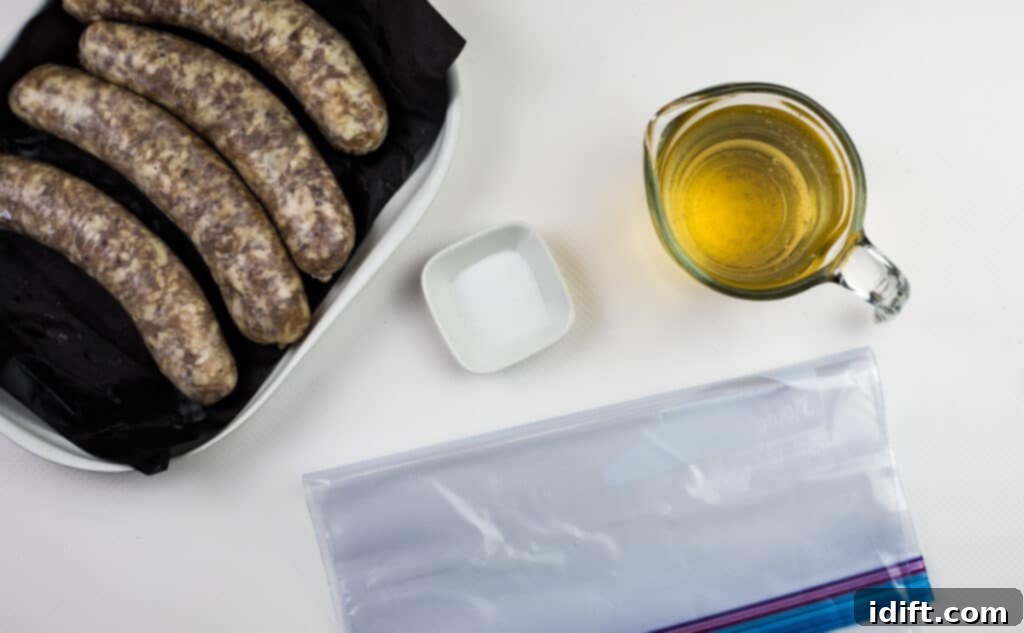
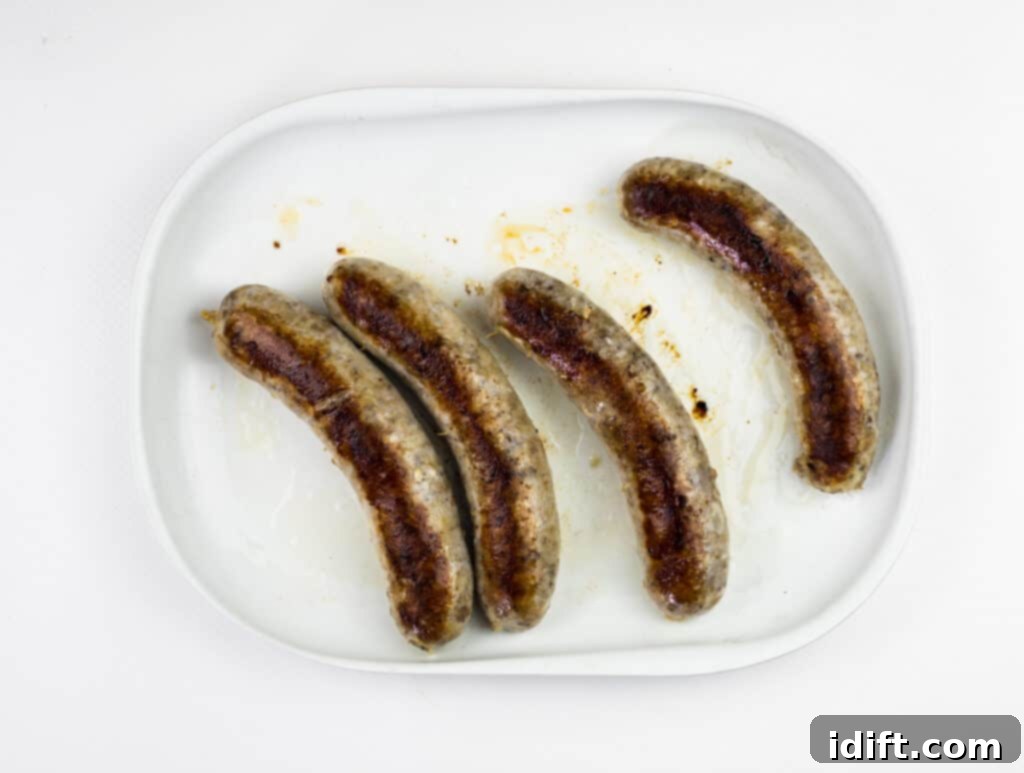
Gather your simple ingredients for sous vide sausage. Combine everything into a sturdy, sealable bag. Cook fully submerged in the temperature-controlled water bath. After cooking, the sausage is ready for browning. Reverse sear the cooked sausage in a skillet with oil for a beautiful crust.
Print Recipe
Pin Recipe
Sous Vide Sausage
Unbelievably juicy and tender, Sous Vide Sausage turns out perfectly every time with no fear of overcooking them! This hands-off method ensures consistent results and locks in all the incredible flavor and moisture.
Course: Main Course
Cuisine: American
Keyword: pork, sausage, sous vide, sous vide sausage, bratwurst
Prep Time: 5 minutes
Cook Time: 2 hours
Total Time: 2 hours 5 minutes
Servings: 4 servings
Calories: 407 kcal
Equipment
- Sous vide immersion circulator
- Sous vide container (or large pot)
- Vacuum sealer (or zipper-top bags)
- Large skillet
Ingredients
- 1 pound sausage (any type: bratwurst, Italian, pork, chicken)
- 1/2 cup beer (or apple juice/ginger ale)
- 1/2 teaspoon salt
- 2 tablespoons oil (for searing)
Instructions
- Place the sausage, beer (or chosen liquid), and salt into a durable zipper-top bag or vacuum sealer bag. If using a vacuum sealer, seal the bag completely. If using a zipper-top bag, use the water displacement method to slowly submerge the bag into the water bath, allowing the water pressure to force the air out before securely sealing the top.
- Set your sous vide immersion circulator to your desired water temperature: 140°F (60°C) for extra juicy and soft, 150°F (65.5°C) for firmer yet still very juicy with a slight pink, or 160°F (71°C) for a texture most similar to traditionally cooked sausage but still moist.
- Carefully place the sealed bag of sausages into the preheated sous vide water bath. Ensure the sausages are fully submerged. Cook for a minimum of 45 minutes for small sausages, or up to 2-4 hours for larger or frozen sausages.
- Once cooked, remove the sausages from the bag and discard any liquid. Heat 2 tablespoons of oil in a large skillet over medium-high heat until shimmering. Place the sausages in the hot skillet and sear for 1-2 minutes per side, turning occasionally, until a beautiful golden-brown crust develops.
- Serve your perfectly cooked sous vide sausages immediately with your favorite sides and enjoy!
Nutrition Information (Approximate Per Serving)
Serving: 1 sausage | Calories: 407kcal | Protein: 17g | Fat: 37g | Saturated Fat: 10g | Polyunsaturated Fat: 6g | Monounsaturated Fat: 18g | Trans Fat: 1g | Cholesterol: 82mg | Sodium: 721mg | Potassium: 281mg | Vitamin A: 85IU | Vitamin C: 1mg | Calcium: 10mg | Iron: 1mg
Nutritional information for this recipe is provided as a courtesy and is calculated based on available online ingredient information. It is only an approximate value. The accuracy of the nutritional information for any recipe on this site cannot be guaranteed.
Want Even More Easy Recipes to Love?
If you enjoyed mastering sous vide sausage, you’ll love these other simple and delicious recipes designed to elevate your home cooking:
- Decadent Smoked Cream Cheese
- Flavorful Smoked Asparagus
- Explore The 50 Best Traeger Recipes for your smoker
- Juicy Smoked Turkey Thighs