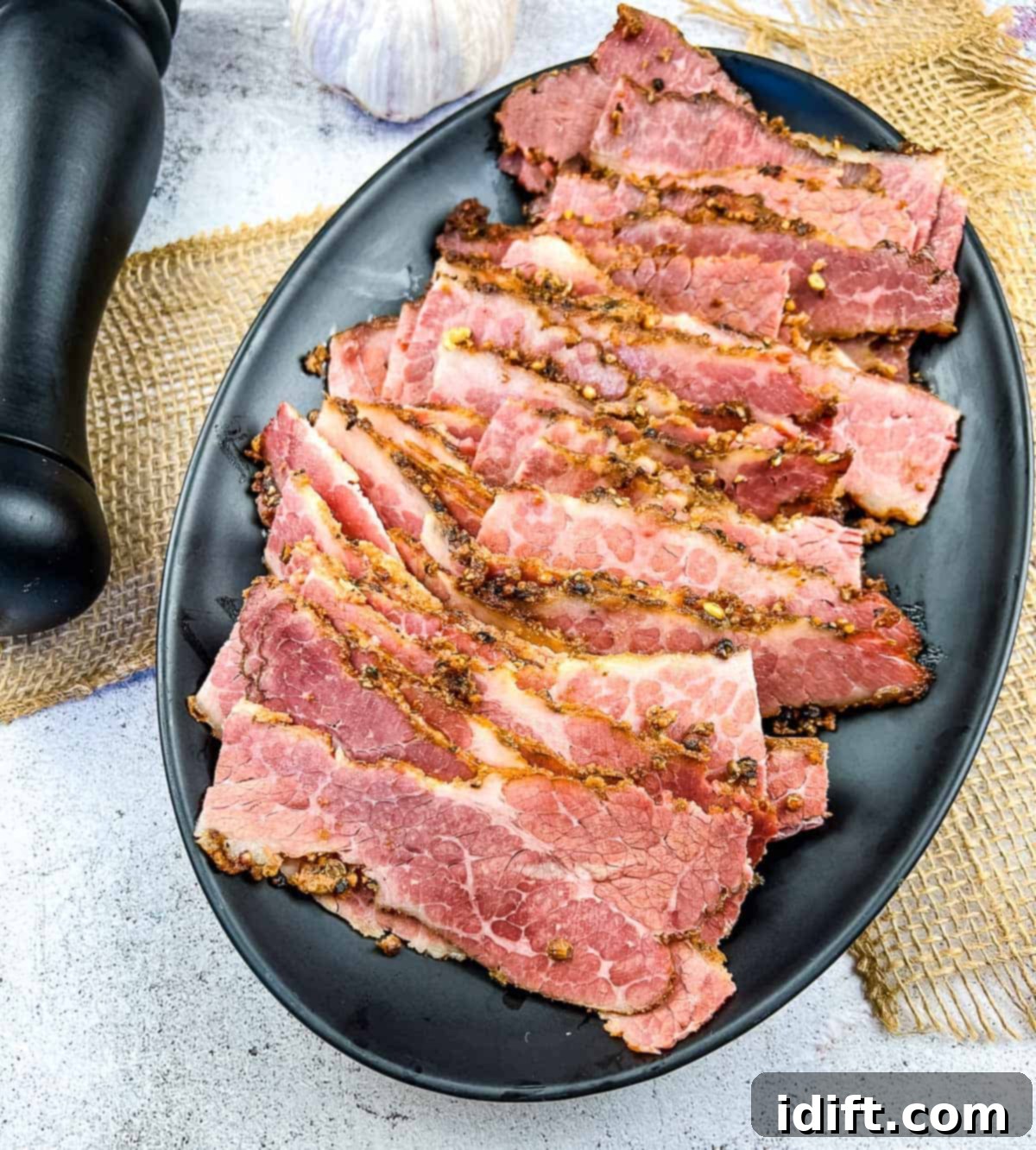
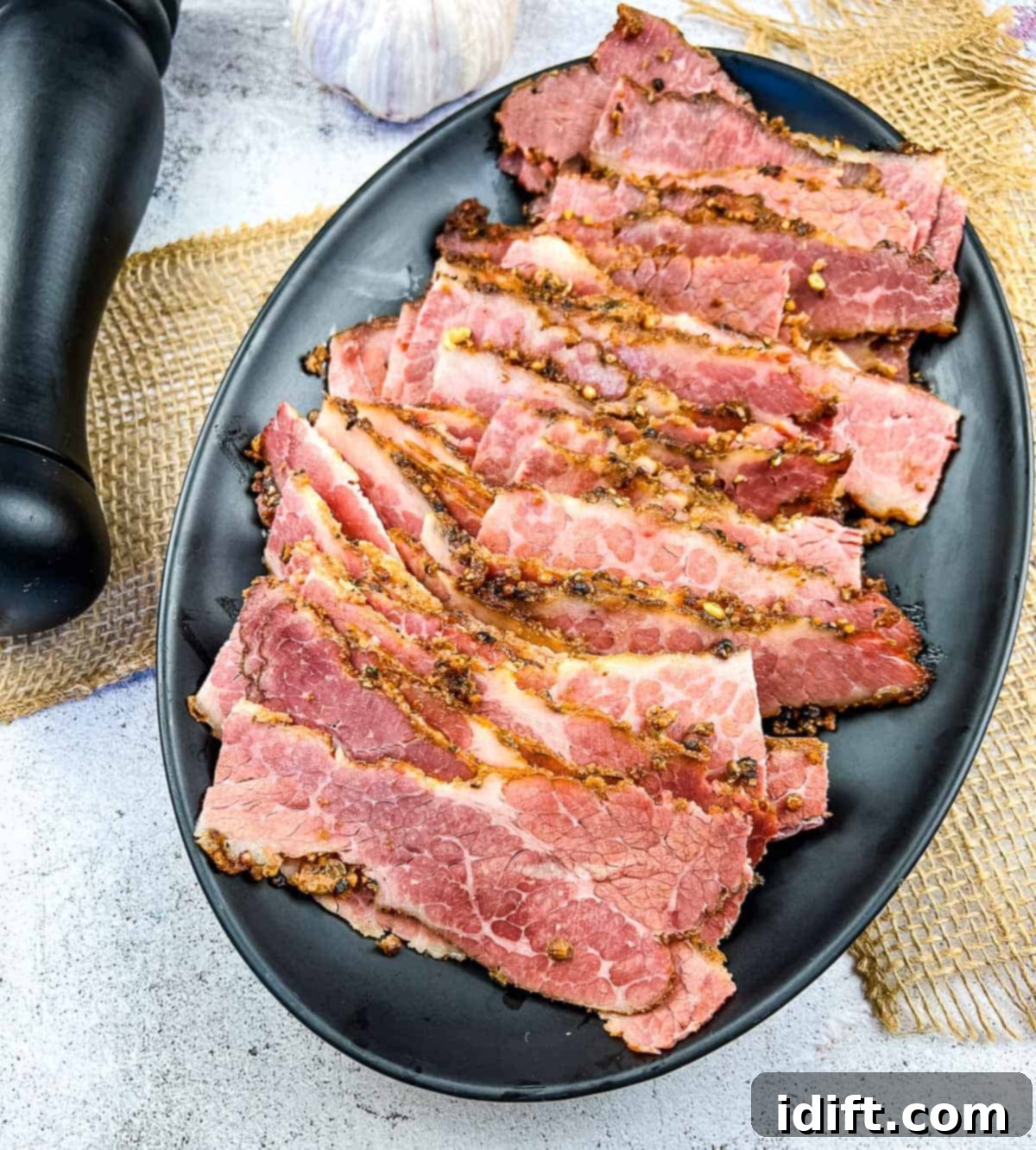
This homemade pastrami isn’t just a recipe; it’s a culinary revelation. Forget everything you thought you knew about pastrami from deli counters or store shelves. This recipe delivers unparalleled depth of flavor, succulent juiciness, and a perfectly smoked tenderness that will forever redefine your expectations. While it is a labor of love, requiring a week-long commitment to curing and smoking, the result is a rich, aromatic, and profoundly satisfying cured meat that is truly worth every moment of effort. Prepare to be amazed and never look back!
This post may contain affiliate link(s). As an Amazon Associate, I earn from qualifying purchases. See Disclosure.
Imagine being asked, “What one food would you bring to a deserted island?” For me, the answer is unequivocally pastrami, specifically this homemade version. Its complex layers of flavor, the bold aromatic spices, and the profound smokiness create an experience that transcends mere sustenance. This isn’t just cured meat; it’s a culinary masterpiece, one of the most delightful creations on the planet.
I could happily savor this pastrami every day, week after week, without ever tiring of it. Each thinly sliced piece melts in your mouth, bursting with such richness and robust flavor that you might even forget the bread! Whether nestled between slices of rye or enjoyed simply with a fork, this glorious smoked beef is a testament to the transformative power of traditional curing and smoking techniques. It’s an indulgence that satisfies on every level, offering a taste experience far superior to any commercially produced alternative.
Crafting pastrami from scratch is indeed a commitment, a true labor of love, but let me assure you, it’s far from complicated. The process involves three main stages: wet curing the brisket in a flavorful brine, generously coating it with a robust spice rub, and finally, slow-smoking it to perfection. While the entire journey spans approximately a week, the hands-on time is minimal, mostly consisting of patient waiting as the flavors develop. The anticipation only adds to the reward!
So, the next time you spot a beautiful beef brisket at your local grocery store or feel a creative spark in the kitchen, consider embarking on this pastrami-making adventure. This recipe promises not only an incredibly delicious result but also the profound satisfaction of creating something truly extraordinary with your own hands. Give this homemade pastrami recipe a try, and prepare to elevate your culinary game!
Why You’ll Adore Making Homemade Pastrami from Scratch
- Superior Flavor Profile: The taste of homemade pastrami is simply in a league of its own. It boasts a depth, complexity, and freshness that store-bought or deli versions can’t match. The robust blend of spices, the meticulous curing process, and the slow smoke infusion create an inimitable flavor experience that is rich, aromatic, and truly unforgettable.
- Complete Ingredient Control: When you make pastrami at home, you have full control over every ingredient. This means no artificial preservatives, unwanted additives, or questionable chemicals. You can select high-quality beef and fresh, organic spices, ensuring a healthier and purer product for your family.
- Significant Cost Savings: Premium pastrami from specialty delis can be quite expensive. By making it yourself, you can enjoy gourmet quality pastrami at a fraction of the cost. While it requires an initial investment in a brisket and curing salts, the yield of delicious pastrami makes it an incredibly economical choice in the long run.
- The Pride of Creation: There’s immense satisfaction in crafting something so delicious from start to finish. The journey from a raw brisket to a perfectly cured and smoked pastrami is a rewarding culinary achievement that builds confidence and deepens your appreciation for the art of charcuterie.
Essential Ingredients for the Perfect Smoked Pastrami
Creating this exceptional smoked pastrami requires a few key components, divided into those for the initial wet cure and those for the aromatic spice rub. The wet cure is where the magic of transformation begins, allowing your beef brisket to absorb incredible flavor and become tender over approximately five days (though thinner briskets may cure faster).
For the Wet Cure (The Pastrami Brine Recipe)
- Beef Brisket: The foundation of your pastrami. While traditional pastrami uses beef plate, brisket is widely available and yields fantastic results. See our detailed notes below on choosing the best cut of brisket for pastrami.
- Prague Powder #1 (Pink Curing Salt): This is a non-negotiable ingredient for safe and effective meat curing. It’s crucial for preventing bacterial growth and giving pastrami its characteristic pink color. Accuracy in measurement is paramount; always use Prague Powder #1, NOT #2, and measure precisely.
- Morton’s Kosher Salt: Opt for kosher salt as its larger crystals and lack of iodine contribute to a purer flavor, free from the metallic notes sometimes found in iodized table salt. Its solubility also makes it ideal for brining.
- Distilled Water: While tap water can be used, distilled water offers a cleaner base for your brine, eliminating any potential chlorine or mineral flavors that could subtly impact the final taste of your pastrami.
For The Robust Pastrami Rub
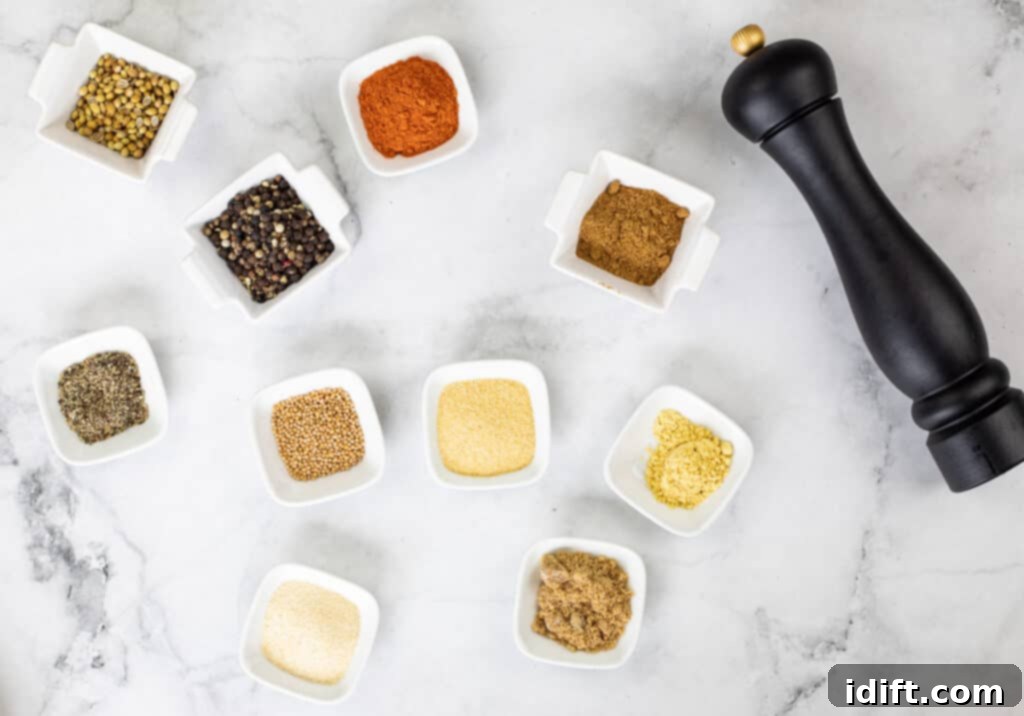
This pastrami rub is inspired by the iconic flavors of Katz’s Deli, renowned for its East Coast-style pastrami. It’s designed to deliver big, bold, and assertive flavors that penetrate the meat during the smoking process, creating an irresistible crust. This particular blend is perfectly proportioned for a 4-5 pound slab of brisket.
- Whole Black Peppercorns: Freshly cracked peppercorns provide a sharp, pungent kick and superior aroma compared to pre-ground pepper.
- Whole Coriander Seeds: These offer a citrusy, slightly sweet, and earthy note when cracked, a signature flavor in classic pastrami.
- Mustard Seeds: Adding a subtle pungency and a complex, warm spice character that complements the beef beautifully.
- Ground Black Pepper: For an additional layer of heat and a finer coating.
- Coriander Powder: Enhances the whole coriander seeds, ensuring the flavor permeates thoroughly.
- Paprika: Contributes a vibrant color and a mild, sweet, peppery flavor, often with smoky undertones depending on the variety.
- Garlic Powder: Provides a savory, aromatic depth without the moisture of fresh garlic.
- Onion Powder: Adds a sweet, savory, and pungent allium flavor that pairs exceptionally well with beef.
- Mustard Powder: Delivers a sharp, tangy zest that cuts through the richness of the beef and activates other spices.
- Brown Sugar: A touch of sweetness helps balance the savory and pungent spices, aids in caramelization, and contributes to a beautiful bark during smoking.
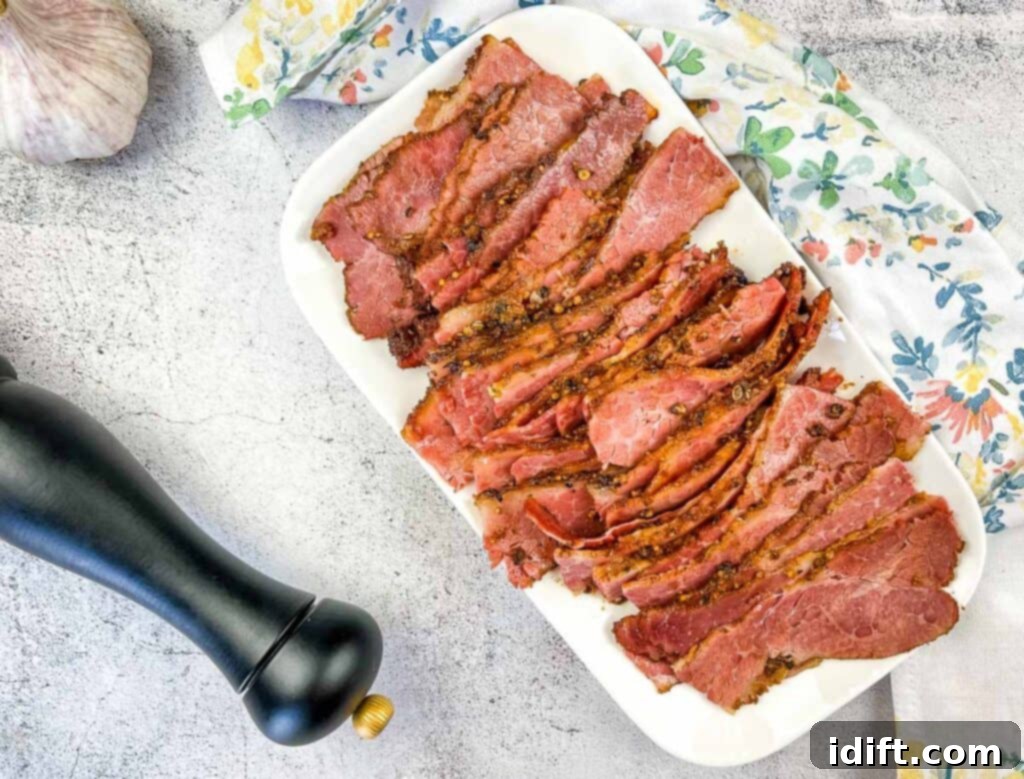
Crafting Homemade Pastrami with Beef Brisket
While traditional pastrami is often made from a cut known as beef plate, which is rarely found in standard grocery stores, beef brisket is an excellent and readily available alternative. It transforms beautifully into succulent pastrami. Understanding the different ways brisket is butchered can help you choose the best cut for your project:
- Whole Brisket (Packer Brisket): These large cuts typically weigh between 10-16 pounds and are usually sold cryovaced. A whole brisket comprises two distinct sections: the “flat” and the “point,” separated by a layer of fat. If you purchase a whole brisket, you’ll want to trim it down and separate these two parts. This allows for more even curing and smoking, and you can make two glorious batches of pastrami!
- Brisket Point: For many pastrami connoisseurs, the point is the preferred cut. It’s the fattier, more marbled, and irregularly shaped portion of the brisket, packed with flavor and tenderness. While it can be a bit more challenging to trim and slice due to its shape and fat content, the rich, melt-in-your-mouth texture it produces is unrivaled. If you’re new to pastrami making, you might find the flat easier to handle, but the point is worth exploring once you’ve gained some experience.
- Brisket Flat: This is the leaner, long, and more uniformly rectangular part of the brisket. It’s ideal for producing consistent, beautiful slices, especially with a meat slicer. The flat is generally easier to work with for beginners, offering a less fatty but still incredibly flavorful pastrami. While it might lack some of the intense marbling of the point, it’s a fantastic choice for elegant, evenly sliced pastrami sandwiches.
Ultimately, the choice between the brisket point and flat for your homemade pastrami comes down to personal preference. I’ve highlighted the pros and cons of each above. My personal preference leans towards the point for its unctuous fat and flavor, but the flat also delivers a truly delicious and satisfying pastrami experience. Don’t hesitate to experiment with both to discover your favorite!
Understanding Prague Powder #1: The Essential Curing Agent
Many years ago, I attempted to wet cure meat without the crucial ingredient of Prague Powder #1, and the results, to put it mildly, were a disaster. This isn’t just an optional seasoning; it’s the secret ingredient that underpins the safety and distinct characteristics of cured meats like pastrami. Prague Powder #1 is a precise blend of 6.25% sodium nitrite and 93.75% sodium chloride (table salt).
Its primary role is multifaceted: it acts as a powerful preservative, effectively inhibiting the growth of harmful bacteria, especially Clostridium botulinum, which causes botulism. Beyond safety, it’s responsible for the vibrant pink color that is synonymous with pastrami and corned beef, preventing the meat from turning an unappetizing grey. It also contributes significantly to the unique cured flavor, enhancing the overall taste and texture of the meat. It’s intentionally dyed pink to ensure it’s never confused with regular salt, highlighting its potency and the need for careful handling.
It is critically important to use the correct type and quantity of Prague Powder. **Do NOT confuse Prague Powder #1 with Prague Powder #2.** Prague Powder #2 contains both sodium nitrite and sodium nitrate, and is typically used for longer cures of dry-cured meats that are not cooked (like salami). For this smoked pastrami recipe, which involves cooking after curing, Prague Powder #1 is the only safe and appropriate choice. The precise ratio of Prague Powder #1 to water and meat is crucial for both safety and optimal flavor, ensuring your pastrami turns out perfectly cured and delicious. Always measure accurately using a digital scale if possible, or precise measuring spoons, as even small deviations can impact the outcome.
A Week-Long Journey: How to Make Homemade Pastrami From Scratch
Making homemade pastrami is a methodical process that, while requiring patience, is straightforward and immensely rewarding. This step-by-step guide is tailored for a 4-5 pound slab of brisket. Remember, a smaller, thinner piece of brisket (e.g., a 3-pound, 1.5-inch thick cut) might only need 3 days to cure, so be prepared to adjust your timeline and ingredient quantities accordingly. Refer to the notes below for specific adjustments to water, salt, and Prague Powder #1 based on your brisket’s size and thickness.
- Day 1 – The Brining Begins: Start by trimming your brisket. Leave about 1/4 inch of fat on the top, especially if using a flat cut; this fat contributes essential moisture and flavor during the smoking process. Prepare your wet cure by thoroughly mixing distilled water with the precise amounts of Prague Powder #1 and kosher salt until fully dissolved. Submerge the brisket completely in the brine. If it floats, weigh it down with a plate or a brine-filled bag to ensure it remains fully immersed. Refrigerate promptly.
- Day 2 – Turn and Stir: To ensure even curing, gently flip the brisket over in the brine. Give the liquid a good stir to redistribute the curing agents. Return to the refrigerator.
- Day 3 – Continue the Rotation: Repeat the process from Day 2: flip the brisket and stir the brine. This consistent rotation is key to a uniformly cured pastrami.
- Day 4 – Another Flip: Flip the brisket and stir the brine one more time, ensuring all surfaces are adequately exposed to the curing solution.
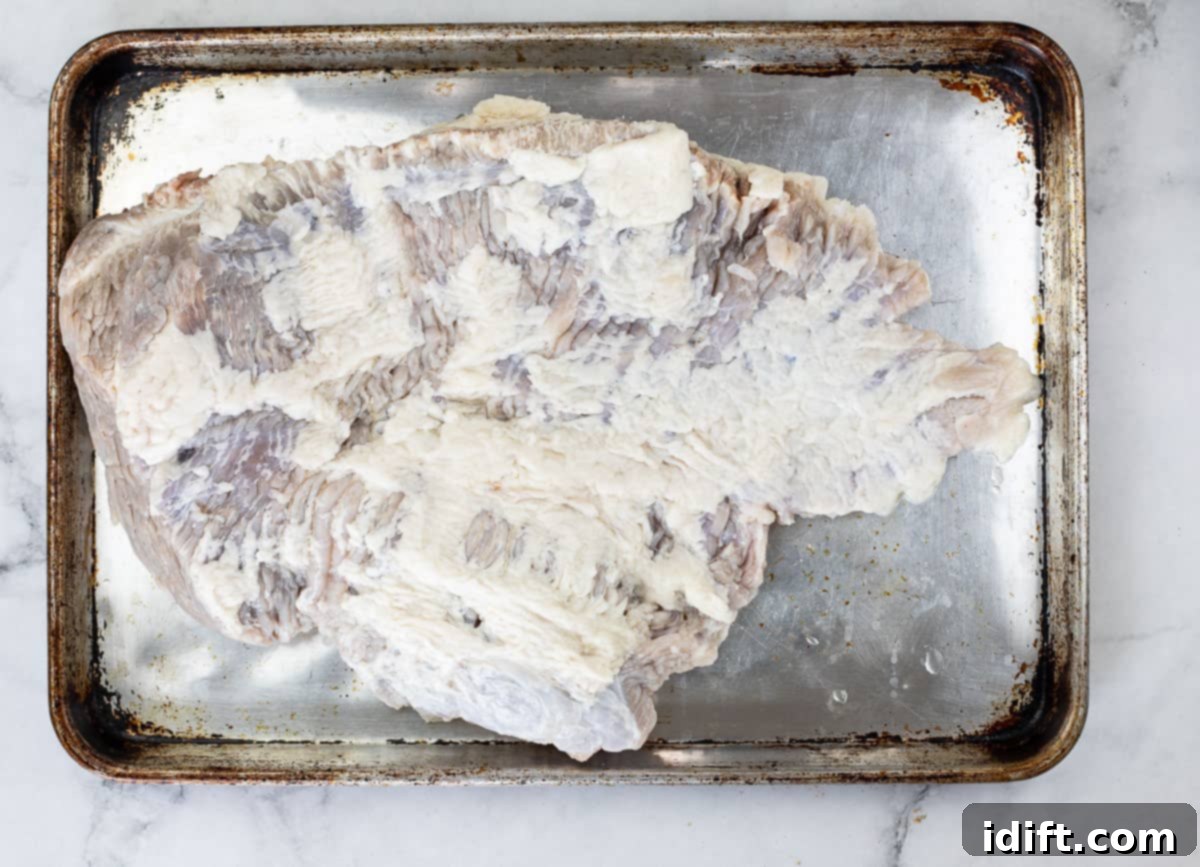
- Day 5 – The Final Flip and Desalination: Perform the last flip and stir. By the end of Day 5 (the evening is often convenient), it’s time for the crucial desalination step. Carefully drain all the brine from the brisket. Rinse the brisket thoroughly under cold tap water to remove any surface salts. Replace the brine with fresh tap water, ensuring the brisket is fully submerged again. Before going to bed (or within the next 8-10 hours), change this water and replenish with fresh tap water. **This desalination step is absolutely critical.** Skipping it will result in an unpalatably salty, inedible pastrami. Do not underestimate its importance!
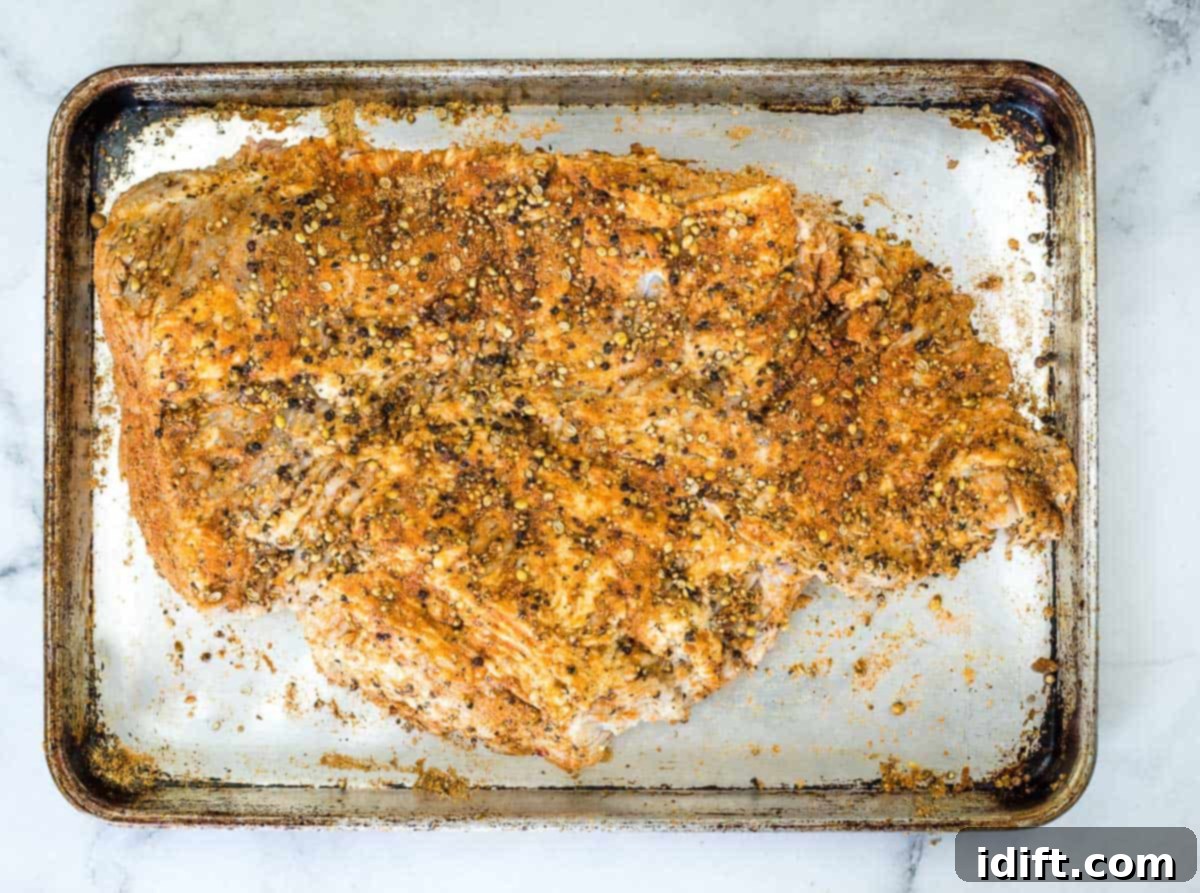
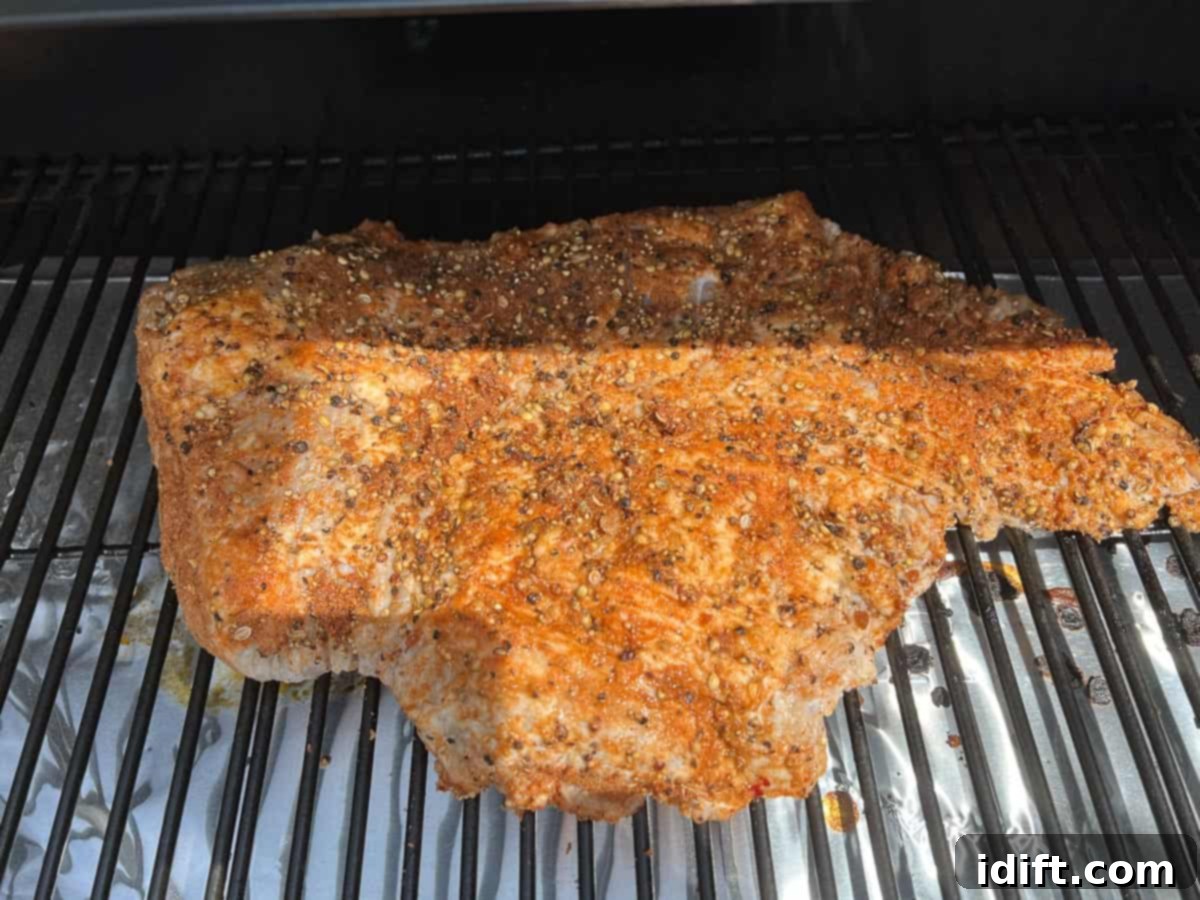
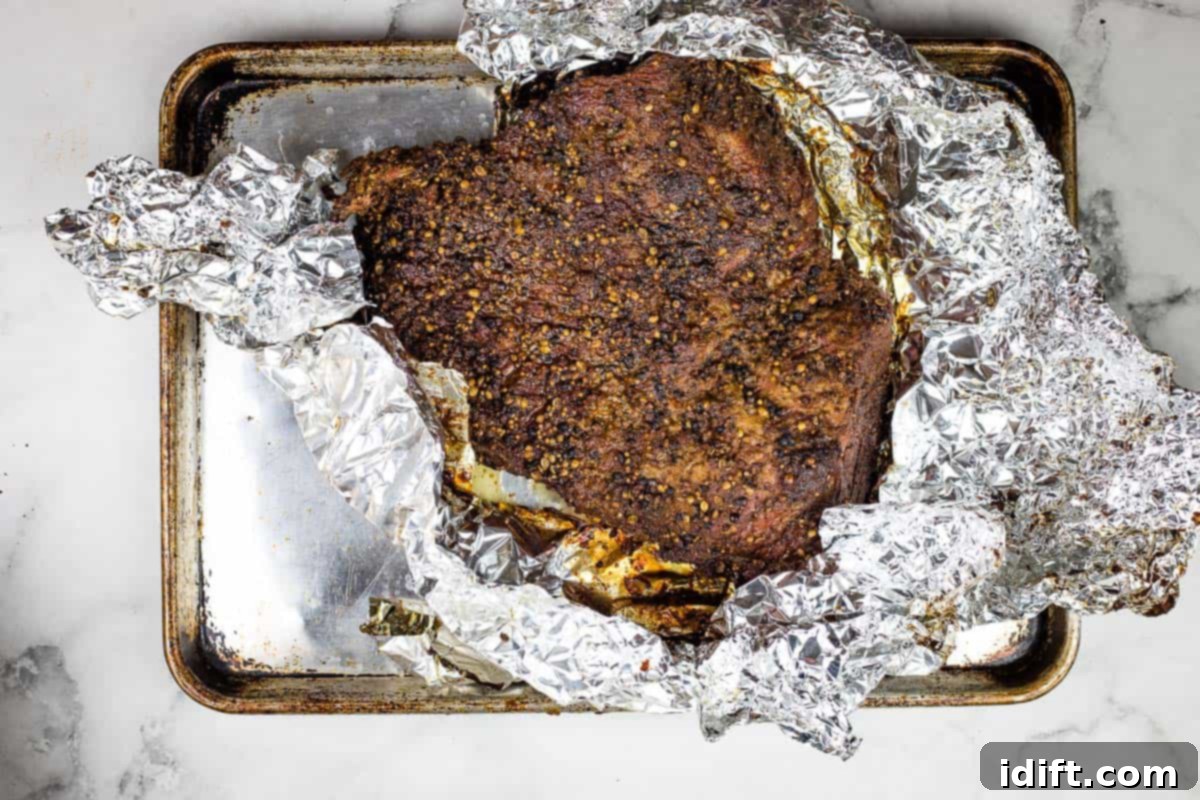
- Day 6 – Rub, Smoke, and Savor: Early in the morning, drain the desalinated brisket and pat it completely dry. Prepare your robust pastrami rub. Generously coat the entire brisket with the spice mixture, pressing it firmly onto the surface. Preheat your smoker to a steady 225-F. Place the rubbed brisket directly on the grates and smoke until its internal temperature reaches 160-F. At this point, wrap the pastrami tightly in heavy-duty foil (this is known as the “Texas Crutch”). Increase your smoker’s temperature to 250-F and continue to smoke/steam the wrapped pastrami until it reaches an internal temperature of 204-F. Once it hits the target temperature, remove the pastrami from the smoker, let it rest, still wrapped, for at least 30 minutes (or up to an hour for larger cuts). This resting period allows the juices to redistribute, ensuring maximum tenderness and flavor. Then, slice it thinly and dig in! You’ve just created magnificent homemade pastrami!
Precise Ratios: Water, Salt, and Prague Powder #1 for Your Pastrami Brine
The success of your homemade pastrami hinges on the accuracy of your wet cure. The amount of Prague Powder #1, kosher salt, and water, as well as the curing time, must be carefully adjusted based on the size and thickness of your beef brisket. A 2-inch thick slab of brisket will require a full 5 days to cure, while a thinner 1.5-inch thick slab typically needs only 3 days. Always measure Prague Powder #1 with precision, preferably using a digital scale for maximum accuracy. Use the following guide to customize your brine for different brisket sizes:
- 4 lb brisket, 1.5 inches thick: 1 gallon water, 1 cup kosher salt, 2 teaspoons Prague Powder #1 — Curing time: 3 days.
- 3 lb brisket, 1.5 inches thick: 12 cups water, 1 cup kosher salt, 1.5 teaspoons Prague Powder #1 — Curing time: 3 days.
- 2.5 lb brisket, 1.5 inches thick: 10 cups water, 3/4 cup + 1 tablespoon kosher salt, 1.3 teaspoons Prague Powder #1 — Curing time: 3 days.
- 3 lb brisket, 2 inches thick: 12 cups water, 1 cup kosher salt, 1.5 teaspoons Prague Powder #1 — Curing time: 5 days.
- 2.5 lb brisket, 2 inches thick: 10 cups water, 3/4 cup + 1 tablespoon kosher salt, 1.3 teaspoons Prague Powder #1 — Curing time: 5 days.
These guidelines ensure that your brisket is cured safely and effectively, providing the perfect foundation for your flavorful homemade pastrami.
The Great Debate: To Wrap Or Not To Wrap Your Brisket (The Texas Crutch)
If you’ve ventured into the world of smoking large cuts of meat like brisket, you’re likely familiar with the infamous “stall.” This frustrating phenomenon occurs when the meat’s internal temperature plateaus, sometimes for hours, despite consistent smoker temperatures. The stall happens because moisture evaporating from the meat’s surface cools it, similar to how sweat cools your skin. This evaporative cooling can significantly extend cooking times, sometimes turning a 12-hour smoke into a grueling 20-hour marathon.
This is where the “Texas Crutch” comes into play: wrapping your brisket tightly in foil (or butcher paper) once it reaches a certain internal temperature, typically around 150-165°F. By wrapping it, you’re achieving two primary objectives:
- **Locking in Moisture and Steaming:** The foil creates a closed environment, trapping moisture and effectively steaming the pastrami as it continues to cook. This prevents the surface from drying out and helps tenderize the meat, contributing to that incredibly juicy texture we all crave in pastrami.
- **Accelerated Cooking Time:** By eliminating evaporative cooling, the internal temperature of the brisket can quickly push past the stall, drastically shortening the overall cooking time. This means you get to enjoy your delicious pastrami sooner!
While some purists argue that wrapping can soften the coveted “bark” (the crispy, flavorful crust on the exterior), I find the benefits of a juicier, quicker cook far outweigh this minor concern. And if you’re worried about a soggy bark, there’s an easy fix: simply unwrap the pastrami for the last 30-60 minutes of cooking. This exposure to the direct smoke and heat will help firm up the crust once again, giving you the best of both worlds – a tender, juicy interior with a beautifully textured exterior. I’m not a patient person, and the Texas Crutch is a reliable ally in achieving perfectly smoked pastrami without the prolonged wait.
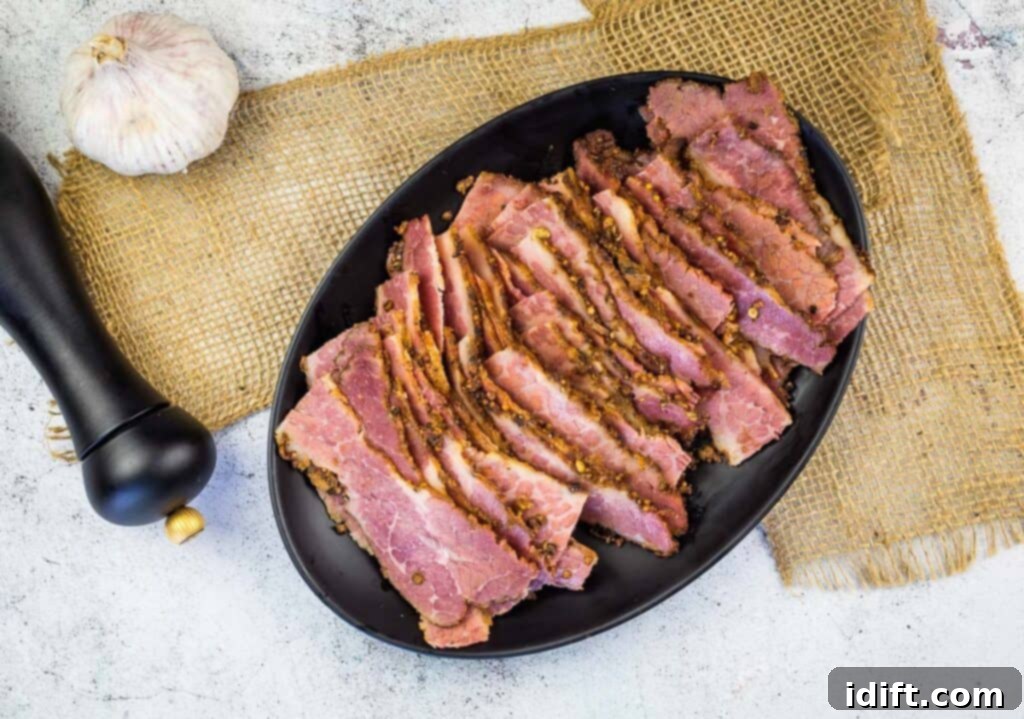
Mastering the Slice: Achieving Perfect Pastrami Thickness
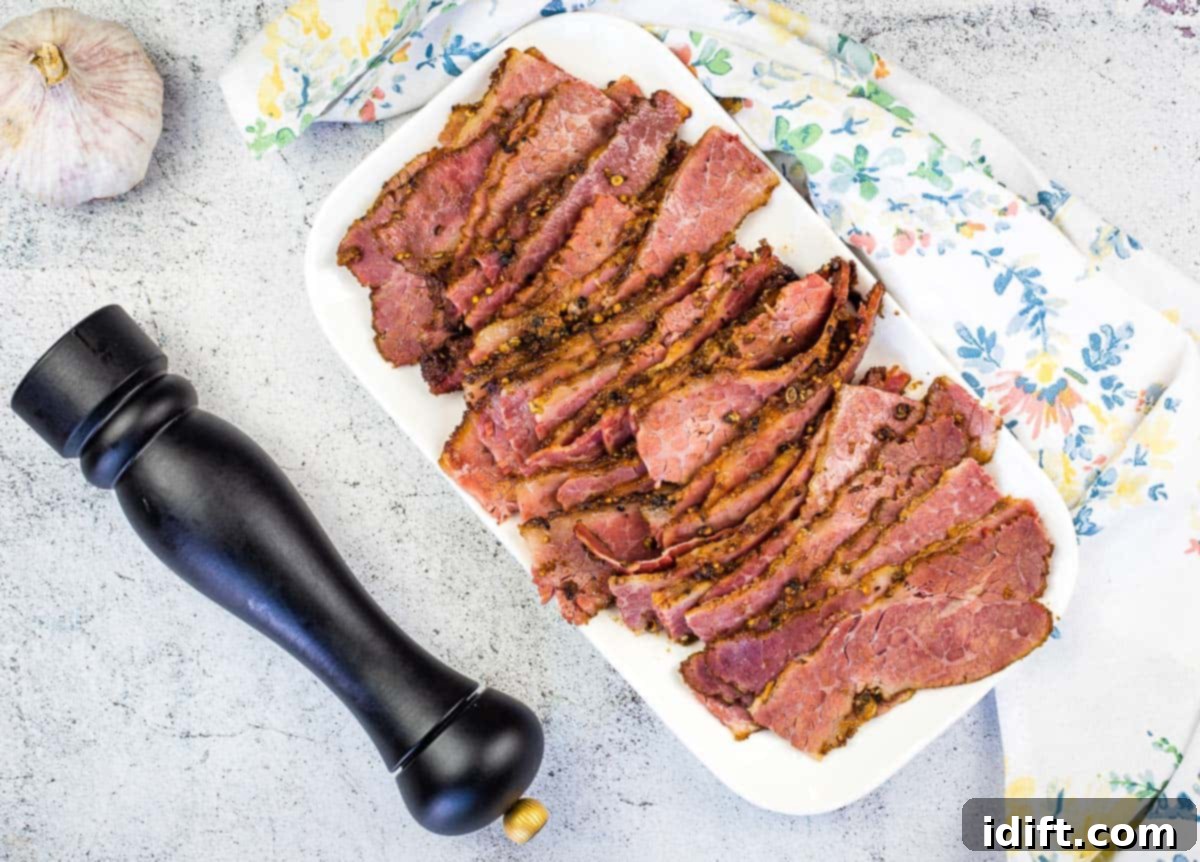
The way you slice your pastrami is almost as important as how you cook it. For that classic, mile-high pastrami sandwich experience, thin, uniform slices are key. While you can certainly attempt to slice it by hand, the best tool for the job is unequivocally a good quality meat slicer. A slicer allows for precise control over thickness, yielding those delicate, almost translucent slices that truly showcase the pastrami’s tenderness and flavor.
Your choice of brisket cut can also influence the ideal slicing technique:
- Brisket Flat: If you made your pastrami using a brisket flat, you’re in luck! Its uniform shape and leaner texture mean it will slice beautifully even when still warm. The muscle fibers run consistently, allowing for straightforward, even cuts directly off the smoker (after a proper rest, of course).
- Brisket Point: The brisket point, with its generous marbling and irregular shape, presents a slightly different challenge. For the best results, I highly recommend refrigerating your pastrami point overnight before slicing. Chilling it causes the abundant fat to congeal, firming up the meat and making it much easier to slice thinly without it falling apart. A cold point will glide through a meat slicer like a dream, producing those luscious, fatty slices that are so highly prized.
Of course, if you prefer a more rustic approach or don’t have a meat slicer, you can still enjoy fantastic homemade pastrami. Simply arm yourself with a very sharp carving knife and slice it “caveman style,” as thick or as thin as your heart desires. Just remember to slice against the grain for maximum tenderness, regardless of your chosen tool. Enjoy the rich rewards of your culinary efforts!
Versatile Serving Suggestions for Your Homemade Pastrami
While the iconic pastrami on rye sandwich is a timeless classic, your delicious homemade pastrami is incredibly versatile and can elevate a wide array of dishes. Don’t limit its potential! Here are some creative and mouth-watering serving suggestions:
- The Classic Sandwich: Pile thinly sliced pastrami high on fresh rye bread with a generous smear of spicy brown mustard and a dill pickle spear. A touch of Swiss cheese and sauerkraut (for a Reuben) is also a fantastic option.
- Breakfast Brilliance: Transform your breakfast plate by griddling thicker slices of pastrami until slightly crispy, then serving them alongside fluffy pancakes with self-rising flour or a stack of golden waffles. It’s a savory, smoky counterpoint to the sweet syrup.
- Hearty Casseroles: Dice pastrami and incorporate it into creamy potato casseroles, mac and cheese, or even a savory bread pudding for an instant flavor boost.
- Elegant Appetizers: Roll thin slices of pastrami around cream cheese and chives for a quick and impressive appetizer. Or, serve it on a charcuterie board with gourmet cheeses, crusty bread, and artisanal mustards.
- Pastrami Hash: Chop leftover pastrami with potatoes and onions, then fry until crispy for a comforting and incredibly flavorful hash, perfect topped with a fried egg.
- Salad Topper: Add thin strips of pastrami to a fresh green salad for a smoky, savory addition that turns a simple side into a satisfying meal.
- Simply on a Plate: For the purists, thicker slices of warm pastrami served on its own with a side of robust mustard or a simple coleslaw make for a truly satisfying dinner experience.
No matter how you choose to enjoy it, your homemade pastrami is guaranteed to be a star on your table.
Storage and Preservation for Long-Lasting Pastrami Enjoyment
Once you’ve gone to the effort of making this incredible homemade pastrami, you’ll want to ensure you can savor it for as long as possible. Proper storage is key to maintaining its freshness, flavor, and texture.
- Refrigeration: Leftover sliced pastrami can be stored in the refrigerator for up to a week. To keep it at its best, place it in an airtight container or wrap it tightly in plastic wrap or foil. This prevents it from drying out and absorbing other odors from your fridge.
- Freezing for Extended Enjoyment: If you’re like me and want to enjoy tender, delicious pastrami beyond a single week, freezing is an excellent option. For optimal preservation, I highly recommend using a vacuum sealer. Vacuum sealing removes air, which is the enemy of frozen food, preventing freezer burn and preserving the pastrami’s taste and texture. Portioned and vacuum-sealed, your homemade pastrami can last beautifully in the freezer for a year or even longer. This means you can always have a quick, gourmet meal or sandwich ingredient on hand, ready to thaw and enjoy whenever the craving strikes.
When you’re ready to enjoy frozen pastrami, simply thaw it in the refrigerator overnight. You can then gently reheat it by steaming or pan-frying, or enjoy it cold on sandwiches. This method ensures that your investment in time and effort translates into many future delicious meals.
Frequently Asked Questions About Homemade Pastrami
Yes, absolutely! Corned beef is essentially brisket that has already undergone a curing process. To turn it into pastrami, you would typically rinse off the corned beef, apply the pastrami spice rub, and then smoke it. This skips the initial brining step. We’ll cover the specific instructions for converting corned beef to pastrami in a separate, dedicated post.
The smoking time for pastrami can vary significantly depending on the size and thickness of your brisket, as well as your smoker’s efficiency and external conditions. For a substantial 4.5-pound cut, like the one in this recipe, it took approximately 10 hours on the smoker. This time was achieved by employing the “Texas Crutch” method (wrapping the brisket in foil midway through) to speed up the cooking process and push through the dreaded “stall.” Without wrapping, smoking times can be considerably longer.
For pastrami, classic choices like oak, hickory, or mesquite provide a robust, traditional smoky flavor that complements the rich beef and bold spice rub. For a slightly milder smoke, apple or cherry wood can also be excellent options, adding a touch of sweetness. Feel free to experiment with blends to find your preferred smoky profile.
When used correctly and measured precisely, Prague Powder #1 is perfectly safe and essential for curing meats like pastrami. It contains sodium nitrite, which prevents the growth of harmful bacteria, particularly those that cause botulism. The key is strict adherence to the recipe’s measurements; never substitute it with regular salt or deviate from the specified quantities.
While the characteristic smoky flavor of pastrami is best achieved with a smoker, you can create a delicious version in your oven. After curing and applying the rub, you would typically steam the pastrami in a roasting pan with a little liquid until tender, or bake it at a low temperature. While it won’t have the deep smoke flavor, it will still be a flavorful cured beef. You could try adding liquid smoke to the rub for a hint of smokiness.
Step-by-Step Visual Guide to Homemade Pastrami


Save this recipe to your favorites! Discover more great recipes every week from Chef Jenn.

Print
Pin
Homemade Pastrami
Equipment
- 1 Traeger Smoker or another smoker that can maintain a steady temperature
Ingredients
For the Wet Cure (Brine)
- 4 pound beef brisket
- 1 gallon distilled water
- 2 teaspoons Prague Powder #1
- 1 cup kosher salt
For the Pastrami Rub
- 3 tablespoons whole black peppercorns
- 1.5 tablespoons whole coriander seeds
- 1.5 teaspoons mustard seeds
- 1.5 tablespoons ground black pepper
- 1.5 tablespoons coriander powder
- 1.5 tablespoons brown sugar
- 1.5 tablespoons paprika
- 1.5 tablespoons garlic powder
- 1.5 tablespoons onion powder
- 1.5 teaspoons mustard powder
Instructions
Part 1: The Wet Cure (Brining)
- This wet cure recipe is formulated for a 4-5 pound slab of beef brisket. If your brisket is smaller or thinner, please consult the adjusted ingredient amounts for water, salt, and Prague Powder #1 provided in the recipe notes section below. Adjusting these ratios is crucial for proper curing.
- In a large, non-reactive container (such as a food-grade bucket or a large pot), combine the distilled water with the Prague Powder #1 and kosher salt. Stir vigorously until all the salt and powder are completely dissolved in the water, forming a clear brine.
- Carefully trim the brisket, ensuring you leave approximately 1/4 inch of fat on the top side. This fat layer is essential for moisture and flavor during the smoking process. Submerge the trimmed brisket entirely into the prepared brine. If the brisket floats, place a plate or a weighted, food-grade bag on top to keep it fully submerged. Cover the container and refrigerate for 5 days.
- Each day for the duration of the 5-day curing period, gently flip the brisket over in the brine and give the liquid a good stir. This ensures all surfaces of the meat are evenly exposed to the curing solution for consistent flavor and safety.
- At the end of the 5th day (typically in the evening), carefully remove the brisket from the wet cure. Discard the brine. Rinse the brisket thoroughly under cold running tap water to remove any surface salts. Place the rinsed brisket back into the clean container and cover it with fresh tap water, ensuring it’s fully submerged. Refrigerate for another 8-10 hours, during which time you must drain and replace the water at least once. This critical desalination step reduces the saltiness, making the pastrami palatable. **DO NOT SKIP THIS PROCESS!**
Part 2: The Pastrami Rub and Smoking Process
- After the desalination period, drain the brisket completely and pat it thoroughly dry with paper towels. Set it aside while you prepare the spice rub.
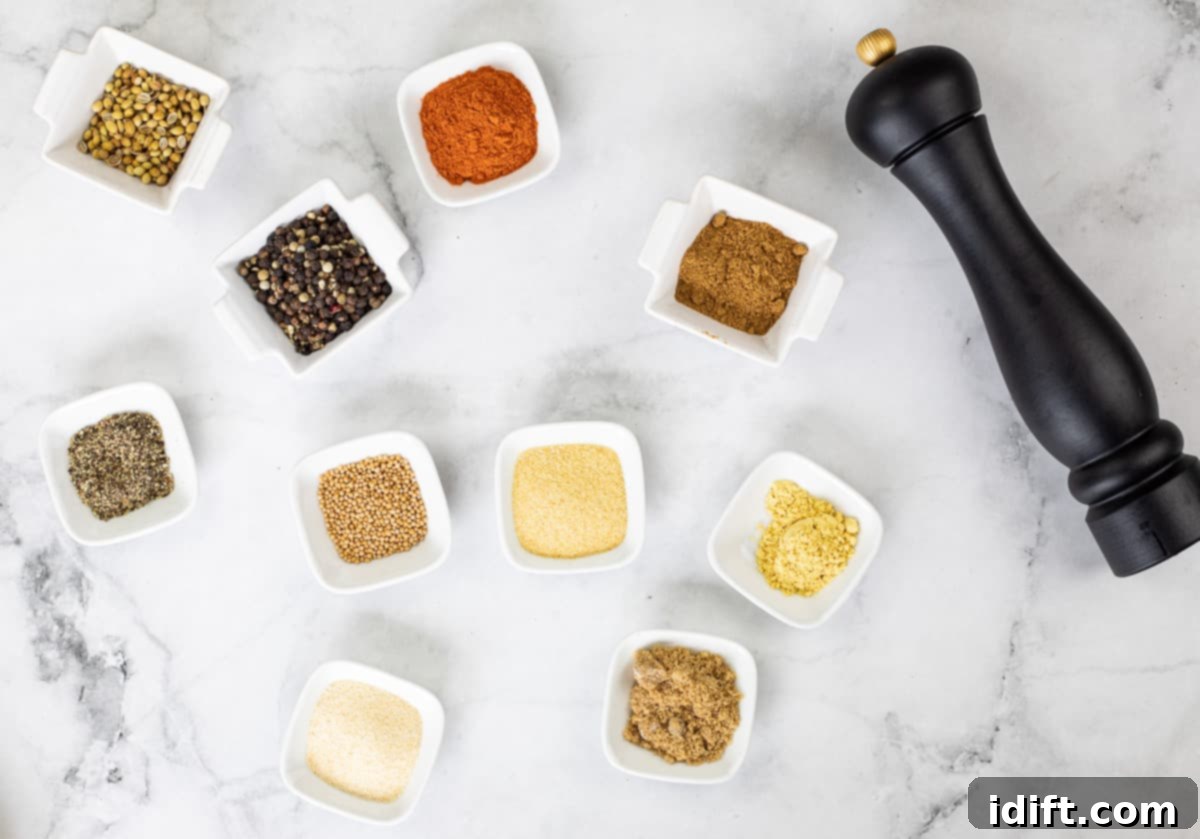
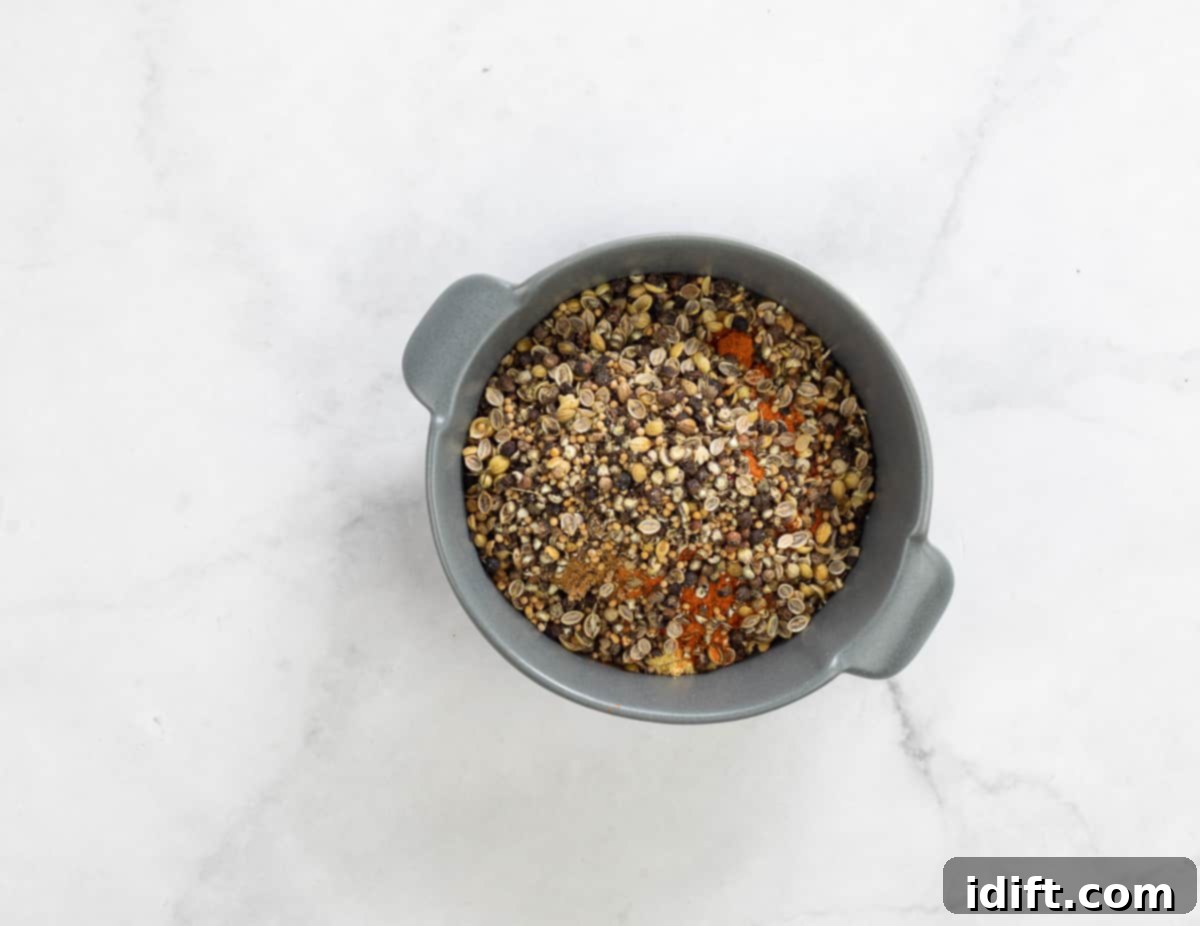
- In a sturdy bag (like a zip-top freezer bag) or a mortar and pestle, combine the whole black peppercorns, whole coriander seeds, and mustard seeds. Use a rolling pin, meat mallet, or the pestle to coarsely crush the spices. You want them cracked and fragrant, not pulverized into a fine powder.
- Transfer the crushed whole spices to a bowl. Add the ground black pepper, coriander powder, brown sugar, paprika, garlic powder, onion powder, and mustard powder. Mix all the spices thoroughly until they are well combined. **DO NOT ADD MORE SALT** to this rub, as the brisket has already absorbed sufficient salt during the curing process.
- Generously apply the pastrami rub over the entire surface of the brisket, pressing it firmly to ensure it adheres well. Make sure every side is thoroughly coated to build that beautiful, flavorful crust.
- Preheat your smoker to a consistent temperature of 225-F (107-C). Once the smoker is stable, place the rubbed brisket directly onto the grates. Smoke the brisket until its internal temperature reaches approximately 160-F (71-C). Use a reliable meat thermometer to monitor the temperature.
- Once the internal temperature reaches 160-F, carefully remove the brisket from the smoker. Tightly wrap the brisket in heavy-duty aluminum foil (this is the “Texas Crutch” method). Increase your smoker’s temperature to 250-F (121-C). Return the wrapped pastrami to the smoker and continue to cook until its internal temperature reaches 204-F (96-C). The foil will help to steam and tenderize the meat while speeding up the cooking time.
- Once the pastrami reaches 204-F, remove it from the smoker and let it rest, still wrapped, for at least 30 minutes. This resting period is crucial for the juices to redistribute throughout the meat, resulting in a more tender and flavorful final product. If you used a brisket point and plan to use a meat slicer for thin slices, consider chilling it overnight in the refrigerator before slicing; the fat will firm up, making it much easier to achieve uniform cuts.
- Unwrap, slice against the grain, and enjoy your phenomenal homemade pastrami!
Notes
It is essential to ADJUST the amount of Prague Powder #1, water, kosher salt, and curing times based on the exact size and thickness of your brisket. Failure to do so can compromise both safety and flavor. The following guide provides specific ratios and curing durations for various brisket dimensions:
For a 4 lb brisket that is 1.5 inches thick: Use 1 gallon of water, 1 cup of kosher salt, and 2 teaspoons of Prague Powder #1. The recommended curing time for this size is 3 days.
For a 3 lb brisket that is 1.5 inches thick: Use 12 cups of water, 1 cup of kosher salt, and 1.5 teaspoons of Prague Powder #1. The recommended curing time for this size is 3 days.
For a 2.5 lb brisket that is 1.5 inches thick: Use 10 cups of water, 3/4 cup + 1 tablespoon of kosher salt, and 1.3 teaspoons of Prague Powder #1. The recommended curing time for this size is 3 days.
For a 3 lb brisket that is 2 inches thick: Use 12 cups of water, 1 cup of kosher salt, and 1.5 teaspoons of Prague Powder #1. The recommended curing time for this size is 5 days.
For a 2.5 lb brisket that is 2 inches thick: Use 10 cups of water, 3/4 cup + 1 tablespoon of kosher salt, and 1.3 teaspoons of Prague Powder #1. The recommended curing time for this size is 5 days.
Nutrition
A Note on Nutritional Information
Nutritional information for this recipe is provided as a courtesy and is calculated based on available online ingredient information. It is only an approximate value. The accuracy of the nutritional information for any recipe on this site cannot be guaranteed.
Want More Delicious and Easy Recipes?
- Smoked Cream Cheese: A surprisingly addictive appetizer!
- Smoked Tri Tip: Master the art of tender and flavorful tri-tip roast.
- The Best Traeger Recipes: Explore a collection of top-rated smoked dishes.
- Smoked Asparagus: Elevate your vegetable side dishes with smoky flavor.