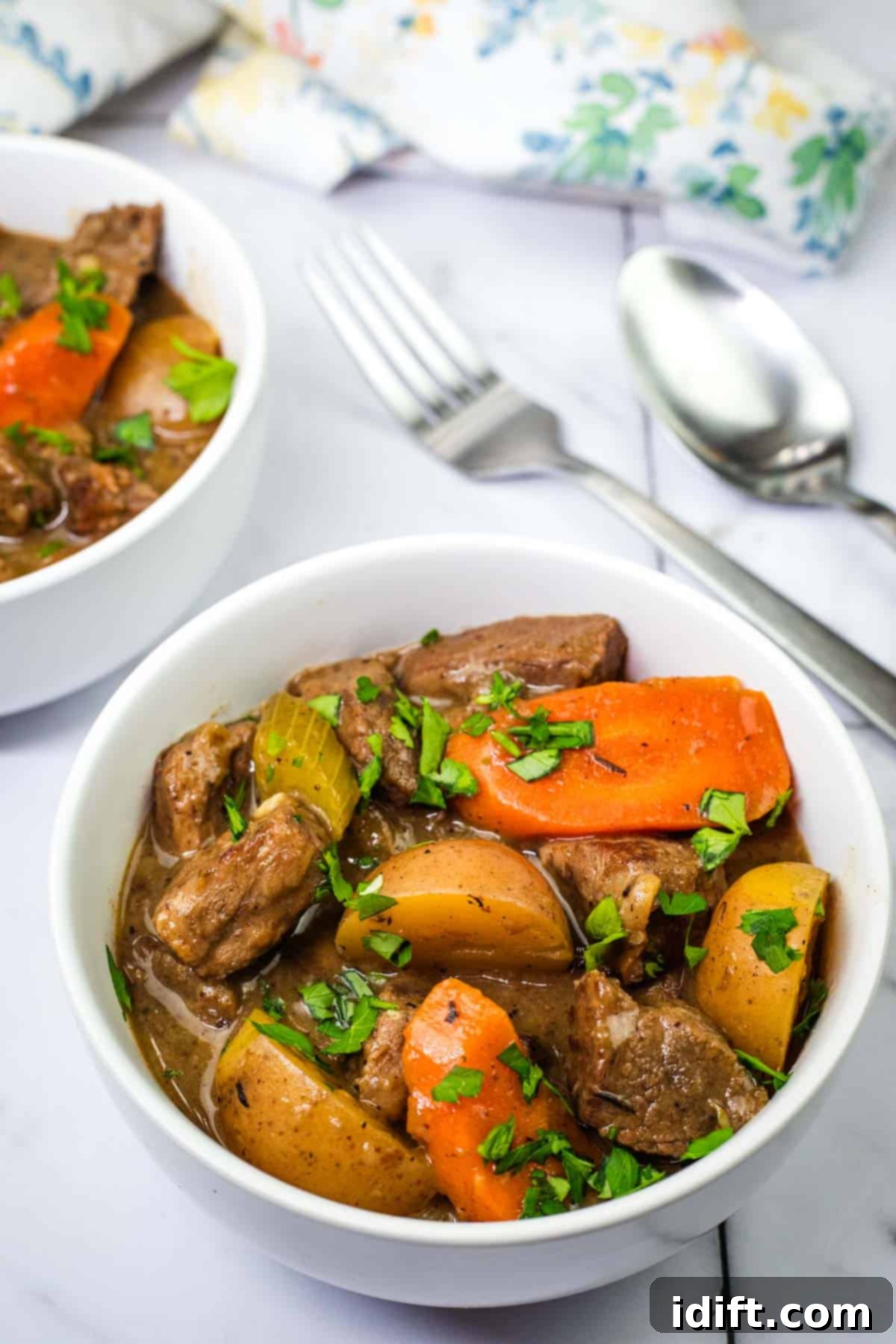
There’s nothing quite like the comforting embrace of a rich, hearty beef stew to warm the soul. This Classic Beef Stew recipe is a testament to timeless culinary tradition, proving that you don’t need exotic ingredients to create something truly spectacular. It’s wonderfully meaty, deeply flavorful, and surprisingly, the vegetables maintain a delightful crispness, thanks to a simple yet genius technique I’ve perfected over years. Prepare to indulge in a bowl of pure comfort that will quickly become a family favorite.

This isn’t just a recipe; it’s a culinary journey back to simpler times, where wholesome ingredients and patient cooking created dishes that filled homes with incredible aromas and bellies with satisfying goodness. My family absolutely adores this classic beef stew, and I have no doubt yours will too. What makes this recipe stand out is its straightforward approach and the way the robust flavors of the beef, vegetables, and aromatic herbs meld together beautifully during a slow, gentle simmer. It’s hearty without being heavy, and every spoonful offers a perfect balance of savory meat and tender, yet vibrant, vegetables.
One of the most common complaints about traditional beef stews is often mushy vegetables. But not here! You’ll notice the carrots and celery in this stew still possess a lovely bite and their bright colors are preserved. (Don’t worry, the potatoes will be perfectly fork-tender – no one wants crunchy potatoes!) This isn’t magic, it’s a tried-and-true trick that ensures your stew is not only delicious but also visually appealing and texturally dynamic. By strategically adding the vegetables towards the end of the cooking process, we avoid overcooking them, allowing them to retain their natural crunch and nutritional value.
The beauty of this classic beef stew also lies in its adaptability when it comes to cooking methods. While I personally love the controlled, gentle simmer atop the stove in a heavy-bottomed Dutch oven, preventing any scorching, it’s equally successful cooked in the oven. For oven cooking, simply cover your heavy pot tightly and bake at approximately 325°F (160°C) for the same duration, or until the beef reaches that melt-in-your-mouth tenderness. Whichever method you choose, the result will be a deeply comforting and flavorful meal that nourishes both body and soul.
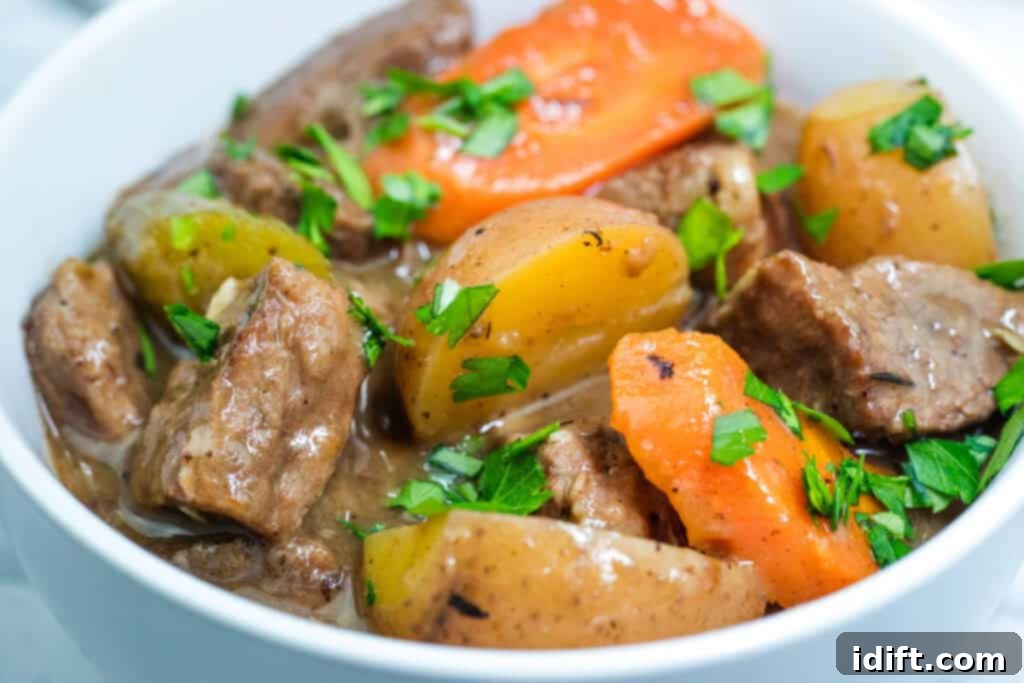
Essential Ingredients for a Perfect Beef Stew
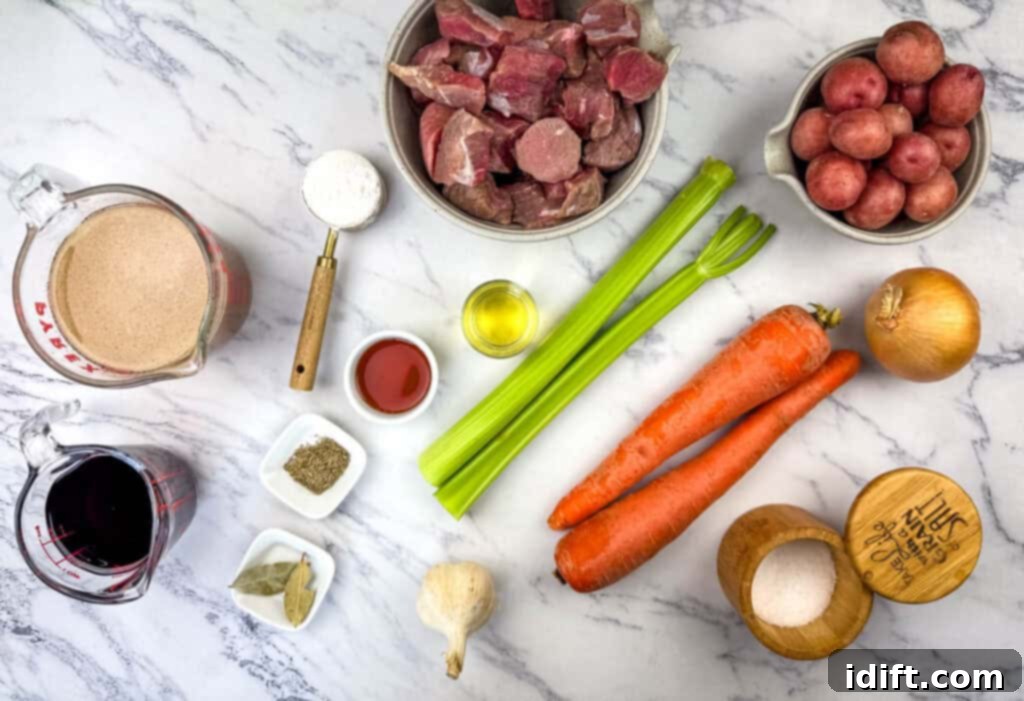
Crafting a truly memorable beef stew begins with selecting quality ingredients that contribute to its rich, layered flavor profile. Each component plays a vital role in achieving that sought-after hearty and comforting taste. Here’s a closer look at what you’ll need and some tips for choosing them:
- All-purpose flour: Used for coating the beef, which helps in browning and later thickens the stew to a luxurious consistency. Ensure it’s fresh for optimal performance.
- Salt: Essential for seasoning the beef and the stew itself. Divided usage ensures flavor is built in layers. I recommend kosher salt for its balanced flavor, but table salt works too – just adjust quantity as table salt is finer and saltier by volume.
- Freshly ground pepper: Always opt for freshly ground black pepper over pre-ground for a more potent aroma and sharper taste that complements the rich beef notes.
- Beef stewing meat: The star of the show! Look for cuts like chuck roast, beef round, or stew beef already cut into cubes. These cuts are known for becoming incredibly tender and flavorful when slow-cooked. Trim off any excess fat and cut into uniform 1-inch cubes to ensure even cooking.
- Vegetable oil: A neutral oil like vegetable, canola, or grapeseed oil is ideal for browning the beef and sautéing vegetables without imparting additional flavors.
- Onion: Diced yellow or white onion forms a foundational aromatic base for the stew, adding a subtle sweetness and depth.
- Celery: Diced celery adds a fresh, slightly bitter note and a textural contrast. It’s part of the classic “mirepoix” that provides fundamental flavor.
- Medium carrots: Peeled and cut into 1/4-inch rounds, carrots contribute natural sweetness, vibrant color, and essential nutrients.
- Garlic: Minced fresh garlic is indispensable for its pungent, savory aroma that elevates the overall flavor of the stew.
- Red wine: A key ingredient for deglazing the pot and adding incredible depth and complexity to the broth. Choose a dry red wine you’d enjoy drinking, such as Cabernet Sauvignon, Merlot, or Pinot Noir. The alcohol cooks off, leaving behind a rich flavor. If you prefer to avoid alcohol, extra beef broth or a touch of balsamic vinegar can be substituted.
- Red wine vinegar: A small amount brightens the stew and balances the richness of the beef and wine, adding a subtle tang.
- Beef broth: The liquid base of your stew. Homemade beef broth offers the best flavor, but a good quality low-sodium store-bought beef broth works perfectly. Low-sodium allows you to control the seasoning precisely.
- Bay leaves: These aromatic leaves infuse the stew with a subtle, earthy, and slightly floral note. Remember to remove them before serving.
- Dried thyme: A classic herb pairing for beef. Dried thyme adds a warm, savory, and slightly minty flavor that complements the other ingredients beautifully.
- Small red potatoes: Cut into halves, these potatoes become wonderfully tender and absorb the rich flavors of the stew. Red potatoes hold their shape well, preventing them from becoming mushy.
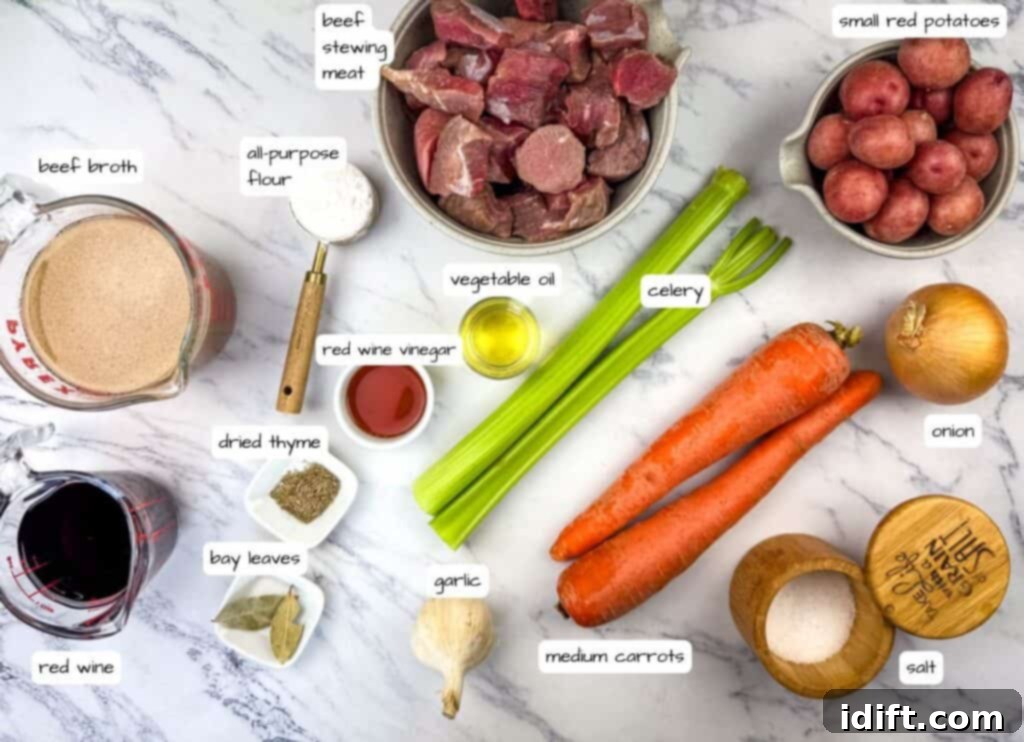
How to Make Old-Fashioned Beef Stew: A Step-by-Step Guide
Creating this classic beef stew is a rewarding experience, transforming simple ingredients into a dish bursting with flavor. Follow these detailed steps to achieve a tender, delicious stew with perfectly cooked vegetables.
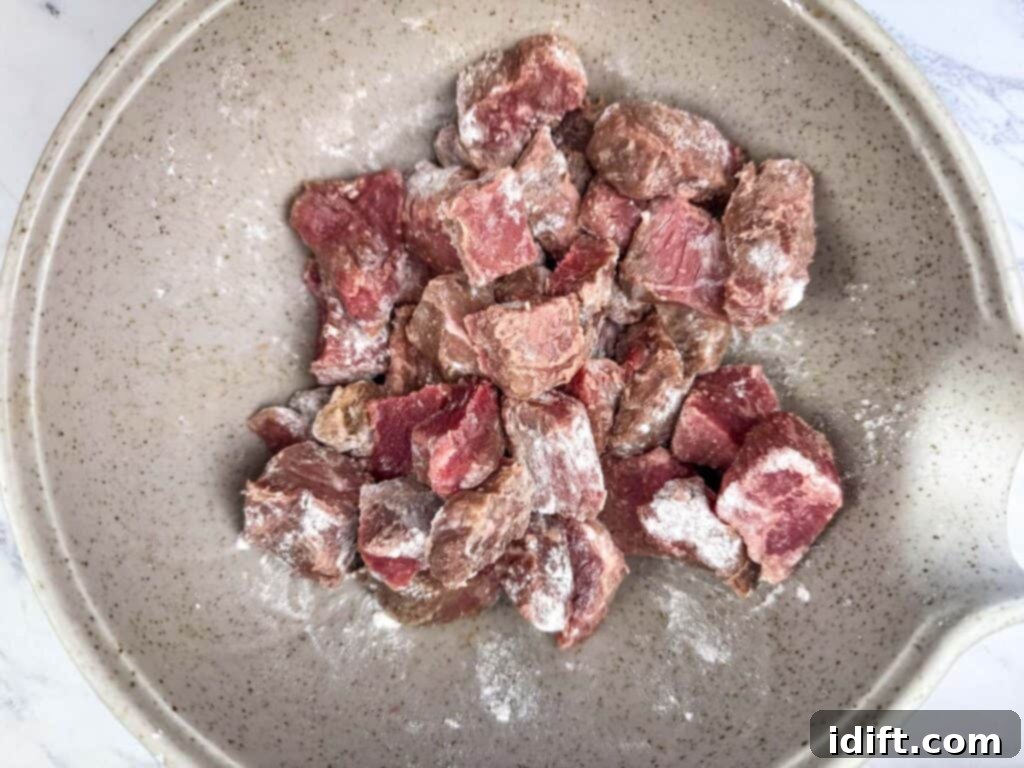
- Prepare the Beef: In a large bowl, thoroughly mix 2 tablespoons of all-purpose flour with 1 teaspoon of salt and the freshly ground pepper. Add the beef cubes to this mixture and toss them until each piece is evenly coated. This flour coating not only aids in browning but also contributes to the stew’s eventual thickness.
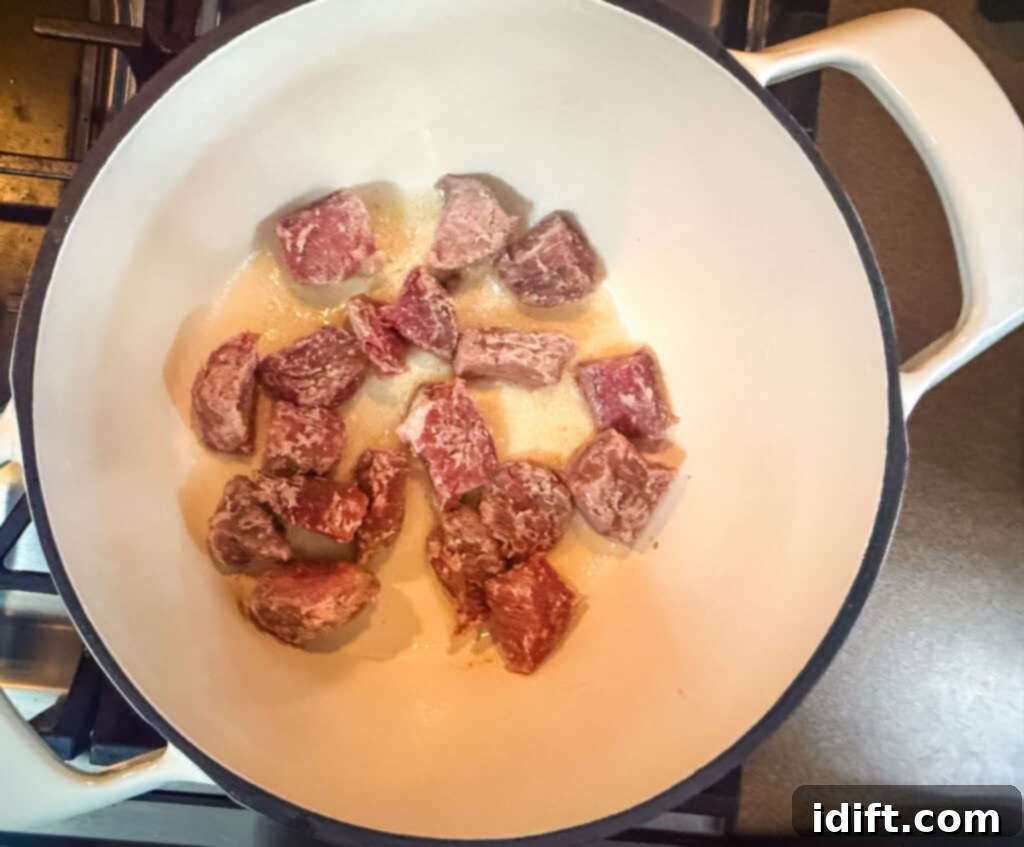
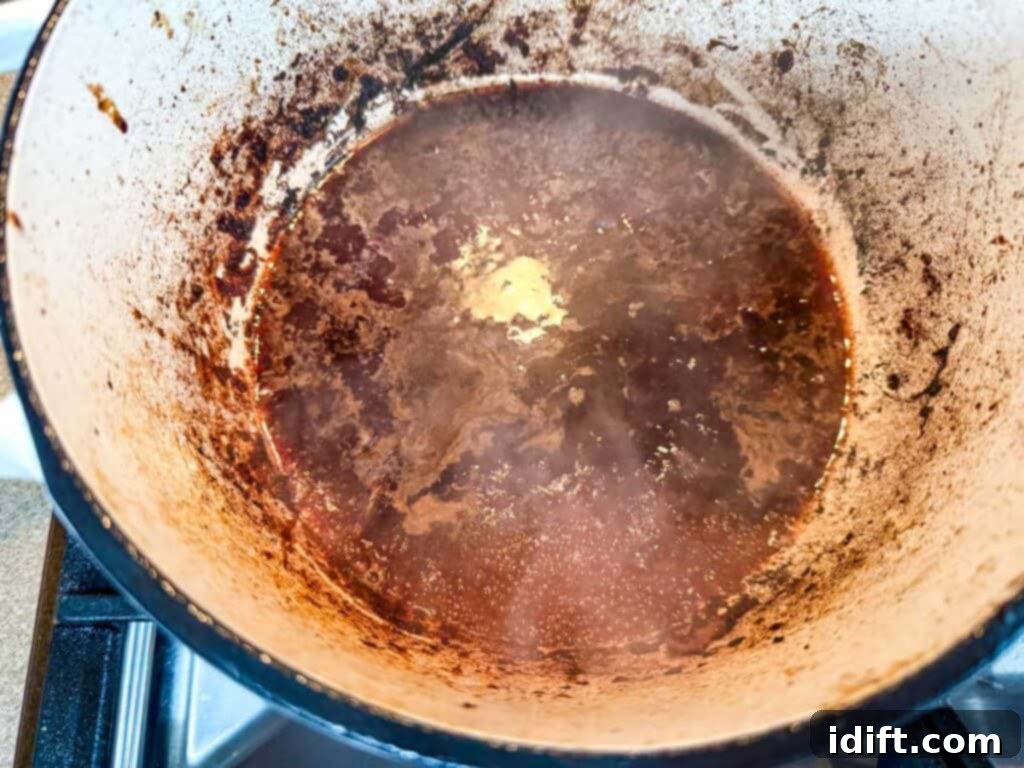
- Sear the Beef to Perfection: Heat 2 tablespoons of vegetable oil in a heavy-bottomed pot or Dutch oven over medium-high heat until shimmering. Brown the beef in batches to avoid overcrowding the pan. Overcrowding lowers the pan’s temperature, steaming the beef instead of searing it, which prevents a good crust from forming. Cook each batch for approximately 5 minutes, turning the cubes to ensure all sides are deeply browned. This crucial step develops a rich, complex flavor (fond) at the bottom of the pot. Once browned, remove the beef and set it aside.
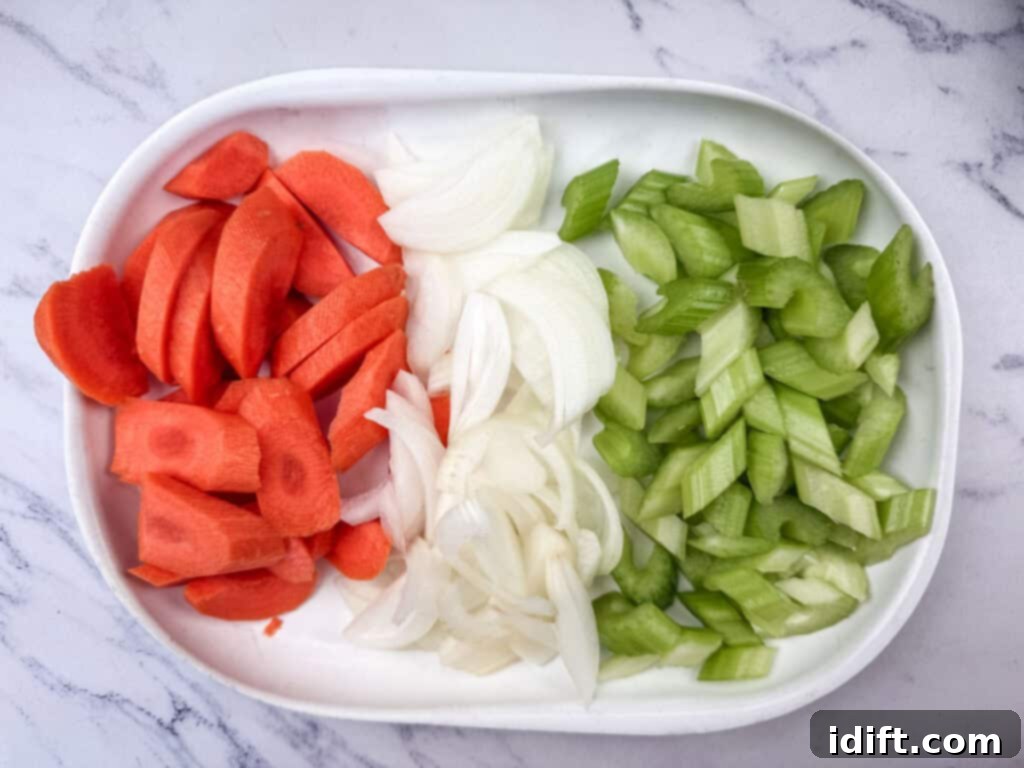
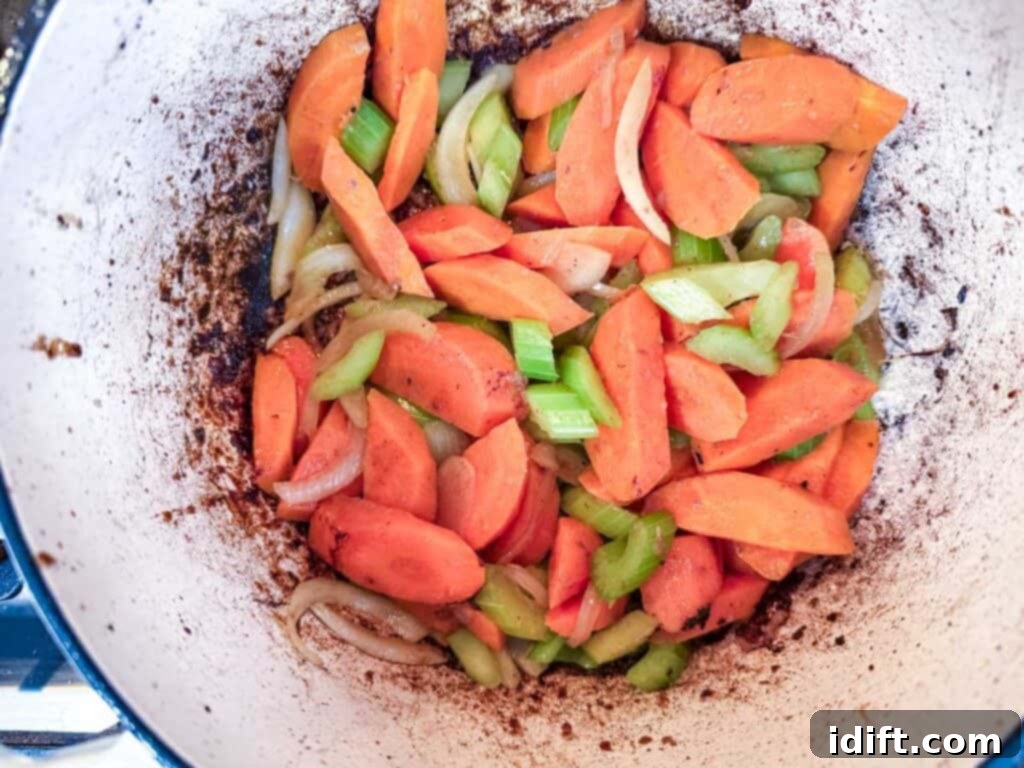
- Sauté the Aromatics: Reduce the heat to medium and add the diced onion, carrots, and celery to the same pot. Sauté these vegetables for 3–4 minutes, stirring occasionally, until the onion begins to soften and become translucent. Next, add the minced garlic and cook for just one more minute until fragrant. Be careful not to burn the garlic, as it can turn bitter. Remove these sautéed vegetables from the pot and set them aside with the beef.
- Deglaze for Flavor Depth: With the heat still on medium, pour in the red wine and red wine vinegar. Use a wooden spoon to vigorously scrape up any browned bits (fond) from the bottom of the pot. These flavorful morsels, left behind from searing the beef, are essential for building the stew’s depth. Allow the liquid to simmer for a few minutes, reducing slightly.
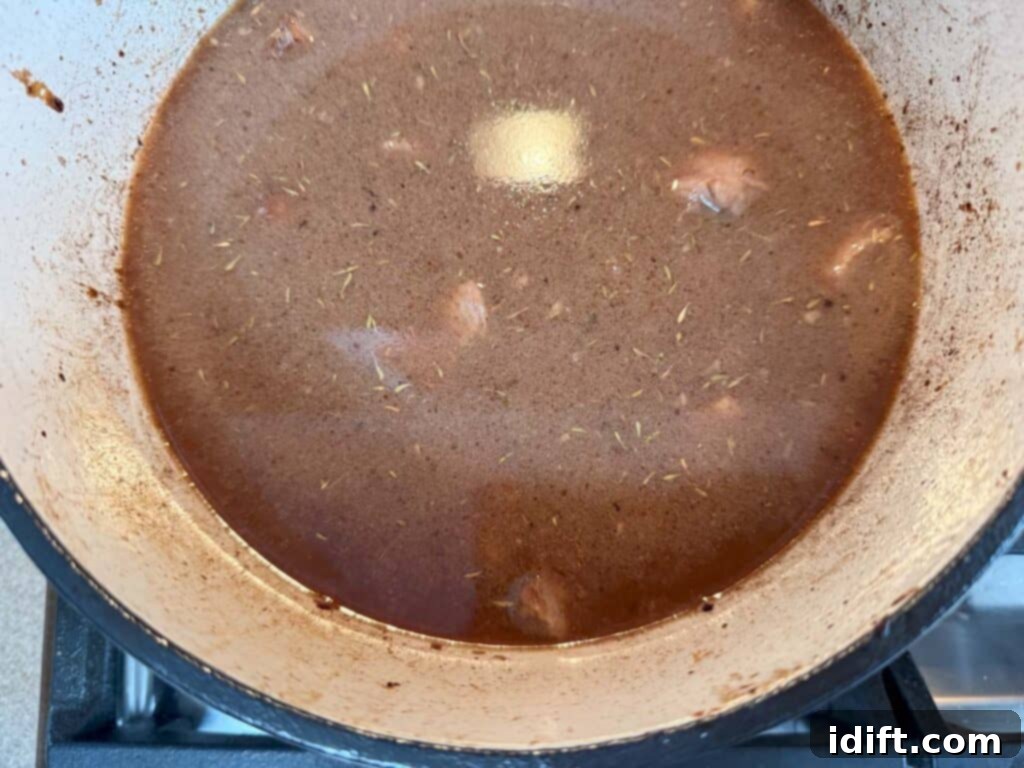
- Simmer the Beef Base: Return the browned beef to the pot. Pour in the beef broth, then add the bay leaves and dried thyme. Bring the entire mixture to a gentle boil, then reduce the heat to low, cover the pot tightly, and let it simmer. This slow cooking process is vital for breaking down the tough connective tissues in the beef, making it incredibly tender. Skim off any foam or excess fat that rises to the surface during the first 1½ hours of simmering to ensure a clear and pure broth.
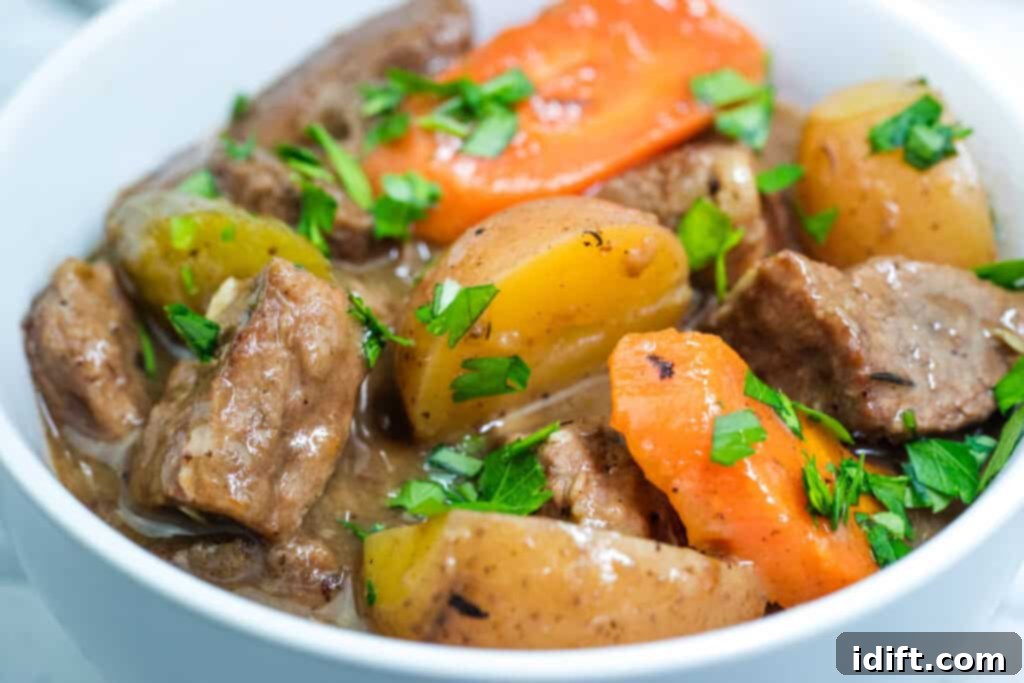
- Add Vegetables for Optimal Texture: After the beef has simmered for 1½ hours, add the reserved sautéed vegetables (onion, carrots, celery) and the halved small red potatoes to the pot. Continue to simmer for an additional 15–20 minutes, or until the potatoes are fork-tender and the carrots and celery are cooked through but still retain a slight bite. This staggered addition is the secret to crisp, brightly colored vegetables.
- Thicken the Stew: In a small bowl, whisk together the remaining 2 tablespoons of all-purpose flour with 3 tablespoons of cold water to create a smooth slurry. Gradually stir this slurry into the simmering stew. Bring the stew back to a gentle boil, allowing it to cook and thicken for 3–4 minutes. The stew should achieve a rich, appealing consistency. Taste the stew and adjust the seasoning with additional salt and pepper as needed.
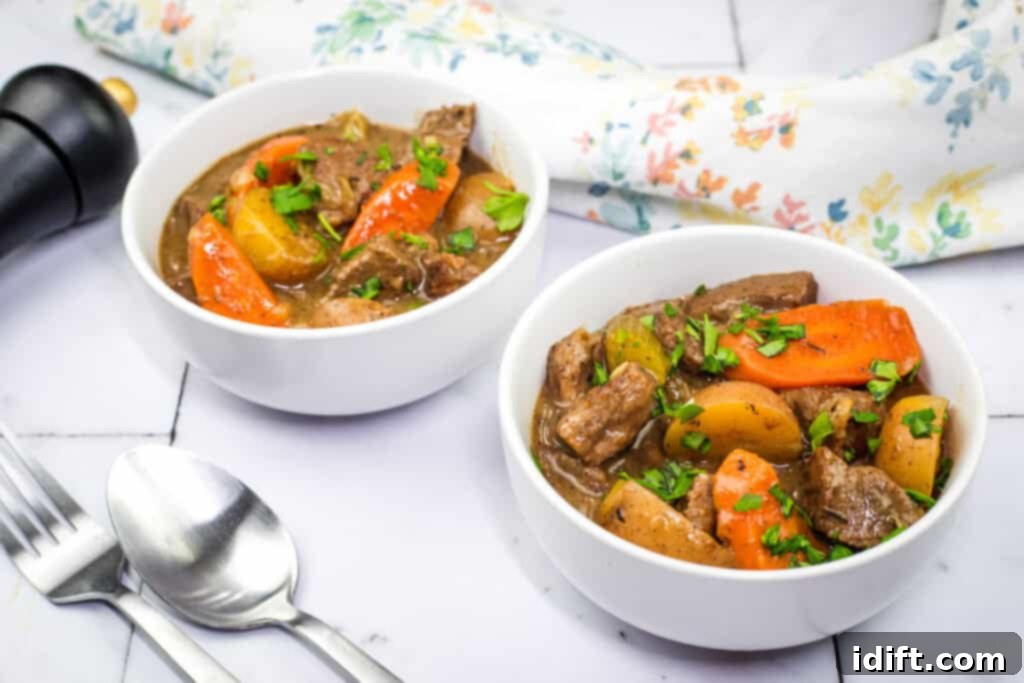
- Serve and Enjoy: Ladle the hot, comforting beef stew into individual bowls. Garnish with fresh parsley if desired, and serve immediately with your favorite accompaniments.
Step-By-Step Process Visual Guide
Chef Jenn’s Tips for a Flawless Stew
Achieving the perfect beef stew isn’t just about following the steps; it’s about understanding the nuances that elevate a good stew to a great one. Here are some of my top tips:
- Choose the Right Pot: A heavy-bottomed pot or Dutch oven is crucial. Its ability to distribute heat evenly and retain it consistently prevents hot spots, ensuring the stew cooks uniformly without scorching the bottom. This even cooking leads to perfectly tender beef and a richer broth.
- Uniform Beef Cubes: When preparing your beef, ensure all cubes are roughly 1-inch in size. This uniformity guarantees that every piece of meat cooks evenly, resulting in consistent tenderness throughout the stew. Plus, it makes them perfectly sized for a spoonful!
- Don’t Skimp on Browning: Searing the beef until it’s deeply browned is perhaps the most critical step for flavor development. This process creates a “fond” – those browned bits on the bottom of the pot – which, when deglazed, adds incredible depth and umami to your stew. Take your time and brown in batches to avoid overcrowding.
- Red Wine’s Role: The red wine isn’t just for deglazing; it infuses the broth with a beautiful complexity and richness. If you prefer to avoid alcohol, you can substitute it with an equal amount of good quality beef broth, or a mix of beef broth and a splash of balsamic vinegar for that acidic brightness.
- The Vegetable Timing Secret: The key to non-mushy vegetables is to add them later in the cooking process. Sauté them briefly at the beginning to build flavor, then set them aside. Introduce them back into the stew only during the last 15-20 minutes of simmering. This ensures they cook through but retain their color, shape, and a pleasant tender-crisp texture.
- Taste and Adjust: Always taste your stew before serving. Seasoning is a personal preference, and flavors can mellow or intensify during cooking. Add more salt, pepper, or herbs as needed to achieve your desired balance. A little extra pinch can make a big difference.
- Slurry for Perfect Thickness: When making the flour slurry, ensure it’s smooth and lump-free before adding it to the stew. Whisking flour with cold water prevents lumps from forming, which can ruin the texture of your broth. Stir it in gradually for even thickening.
Recommended Recipes
Make It a Complete Meal: Serving Suggestions
This hearty beef stew is a complete meal on its own, but it truly shines when paired with the right accompaniments. To soak up every drop of that rich, flavorful broth, consider serving it with:
- Crusty Bread: A warm, crusty baguette or sourdough loaf is perfect for dipping.
- Fluffy Dinner Rolls: Soft, buttery rolls offer a comforting contrast to the stew’s robust flavors.
- Creamy Mashed Potatoes: For an extra layer of richness and a truly decadent experience, a mound of creamy mashed potatoes makes an excellent bed for the stew.
- Rice or Noodles: If you prefer something other than potatoes, steamed white rice or wide egg noodles can also be a wonderful base.
- Green Salad: For a lighter, refreshing counterpoint, a crisp green salad dressed with a tangy vinaigrette complements the richness of the stew beautifully.
To conclude your comforting meal, a classic dessert like apple crumble, bread pudding, or a simple chocolate pudding would provide the perfect sweet ending.
Storage and Meal Prep Tips
One of the best qualities of classic beef stew is that its flavors deepen and meld even further after a day or two in the refrigerator. In fact, I often make this stew a day in advance, allowing the ingredients to truly get to know each other, before gently reheating it for dinner. This makes it an ideal candidate for meal prepping and entertaining.
- Refrigeration: Store any leftover beef stew in an airtight container in the refrigerator for up to four days. Ensure it cools down sufficiently before storing to prevent bacterial growth.
- Freezing: For longer storage, portion the cooled stew into freezer-safe containers or heavy-duty freezer bags. It can be frozen for up to three months. When freezing, be aware that the vegetables, especially the potatoes, may lose some of their original texture and become softer upon reheating. The flavor, however, will remain excellent. Thaw frozen stew overnight in the refrigerator before reheating.
- Reheating: Gently reheat the stew on the stovetop over medium-low heat, stirring occasionally until heated through. If the stew appears too thick after storage, add a splash of beef broth or water to achieve your desired consistency. You can also reheat individual portions in the microwave, stirring halfway through the process.

Print
Pin
Classic Beef Stew
Ingredients
- ¼ cup all-purpose flour divided
- 2 teaspoons salt divided
- ¼ teaspoon freshly ground pepper
- 1 pound beef stewing meat trimmed and cut into 1-inch cubes
- 2 tablespoons vegetable oil
- 1 cup onion diced
- 2 stalks celery diced
- 3 medium carrots peeled and cut into 1/4-inch rounds
- 3 cloves garlic minced
- 1 cup red wine
- 2 tablespoons red wine vinegar
- 3 cups beef broth homemade or low-sodium canned
- 2 bay leaves
- ½ teaspoon dried thyme
- 1 ½ to 2 pounds small red potatoes cut in halves
Instructions
- Mix 2 tablespoons of flour with 1 teaspoon of salt and pepper in a large bowl. Toss the beef cubes in the mixture until evenly coated.
- Heat 2 tablespoons of vegetable oil in a heavy-bottomed pot or Dutch oven over medium-high heat. Brown the beef in batches, ensuring not to overcrowd the pan. Cook each batch for about 5 minutes, turning to brown all sides. Remove the beef and set it aside.
- Add the onion, carrots, and celery to the pot. Sauté for 3–4 minutes until the onion softens slightly. Add the garlic and cook for another minute. Remove the vegetables from the pot and set aside.
- Reduce the heat to medium and pour in the red wine and red wine vinegar. Scrape up any browned bits from the bottom of the pot with a wooden spoon to release their flavor.
- Return the browned beef to the pot. Add the beef broth, bay leaves, and thyme. Bring the mixture to a boil, then reduce the heat to low and cover. Simmer gently for 1½ hours, skimming off any foam or fat that rises to the surface.
- Add the sautéed vegetables and potatoes to the pot. Simmer for an additional 15–20 minutes, or until the potatoes are fork-tender and the vegetables are cooked through.
- Mix the remaining 2 tablespoons of flour with 3 tablespoons of water to create a slurry. Stir it into the stew and bring to a gentle boil, letting it thicken for 3–4 minutes. Adjust the seasoning with additional salt and pepper, as needed.
- Ladle the stew into bowls and serve hot with your favorite sides.
Nutrition
A Note on Nutritional Information
Nutritional information for this recipe is provided as a courtesy and is calculated based on available online ingredient information. It is only an approximate value. The accuracy of the nutritional information for any recipe on this site cannot be guaranteed.