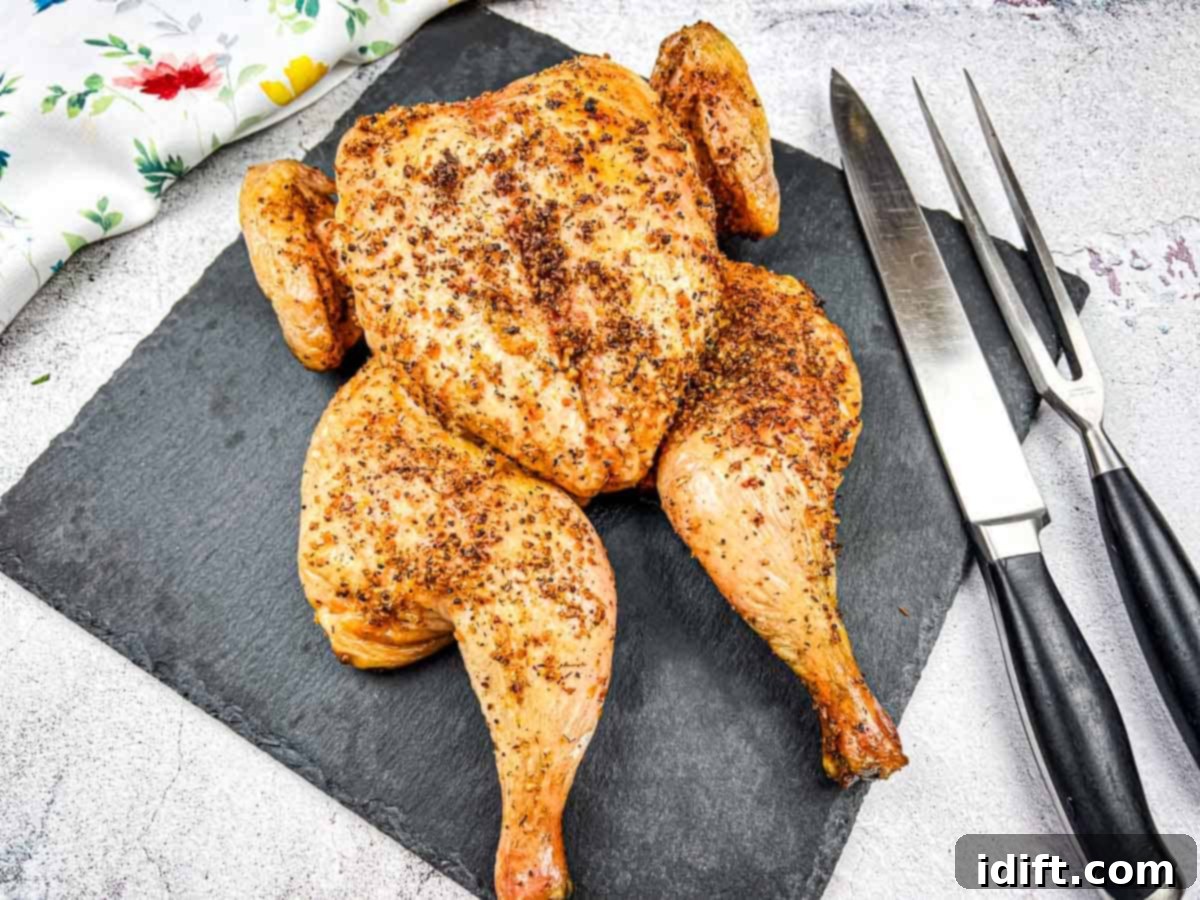
Transform your home cooking with a simple yet incredibly effective culinary technique: spatchcocking a chicken. While its name might sound a bit quirky, this method is a game-changer for anyone looking to achieve perfectly cooked, juicy chicken with deliciously crispy skin in less time. As a professional chef with years of experience, I can confidently say that butterflying a chicken is one of the most valuable kitchen tricks you can learn. It promises a superior roast, grill, or broil every single time. Get ready to unlock the secrets to mastering this technique and elevate your poultry dishes from ordinary to extraordinary!
This post may contain affiliate link(s). As an Amazon Associate, I earn from qualifying purchases. See Disclosure.
What Exactly Is Spatchcocking? Understanding the Technique
The term “spatchcock” might conjure up images of something complex, but it simply refers to a method of preparing poultry—most commonly a chicken—by removing its backbone and flattening it out. This technique is also widely known as “butterflying” the chicken, as the bird is opened up and laid flat, resembling a butterfly with outstretched wings. Historically, the phrase is believed to have originated from “dispatch the cock,” referring to the quick preparation of a bird for cooking. Whatever its origin, the goal is clear: to create a uniform thickness across the entire chicken, from breast to thigh, ensuring every part cooks simultaneously and efficiently.
When you spatchcock a chicken, you essentially take a three-dimensional object and convert it into a two-dimensional one. This modification drastically changes how heat interacts with the bird. Instead of a thick, uneven mass, you get a flat canvas, ready to absorb heat and flavor evenly. This isn’t just a chef’s trick; it’s a fundamental understanding of heat transfer and food science applied to your home kitchen.
Why Spatchcock Your Chicken? Unlocking Culinary Excellence
There are compelling, practical reasons why spatchcocking has become a favorite technique among professional chefs and home cooks alike. Its benefits extend beyond mere novelty, offering significant improvements in cooking time, texture, and flavor. If you’re tired of unevenly cooked chicken or soggy skin, spatchcocking is your answer.
- Achieve Unparalleled Even Cooking: This is arguably the most significant advantage. In a whole chicken, the breast meat (leaner) cooks faster than the legs and thighs (darker, fattier). When flattened, all parts of the chicken are exposed to the same direct heat. This means the delicate breast meat won’t dry out while you wait for the thighs to cook through. The result is consistently juicy meat from wing to drumstick, a truly harmonious cook throughout the entire bird.
- Significantly Quicker Cooking Time: By flattening the chicken, you increase its surface area and reduce its overall thickness. This allows heat to penetrate the meat much more quickly and uniformly. A spatchcocked chicken can cook up to 25-50% faster than a whole, unflattened bird, making it an ideal method for weeknight meals or when you’re short on time but still want a show-stopping main dish.
- Experience Perfectly Crispy Skin: Who doesn’t love crispy chicken skin? Spatchcocking ensures that nearly all of the skin is exposed to direct heat, rather than being tucked underneath or shielded by other parts of the bird. This maximized exposure allows the skin to render its fat and crisp up beautifully, developing that golden-brown, irresistible texture and flavor that is often considered the best part of the chicken.
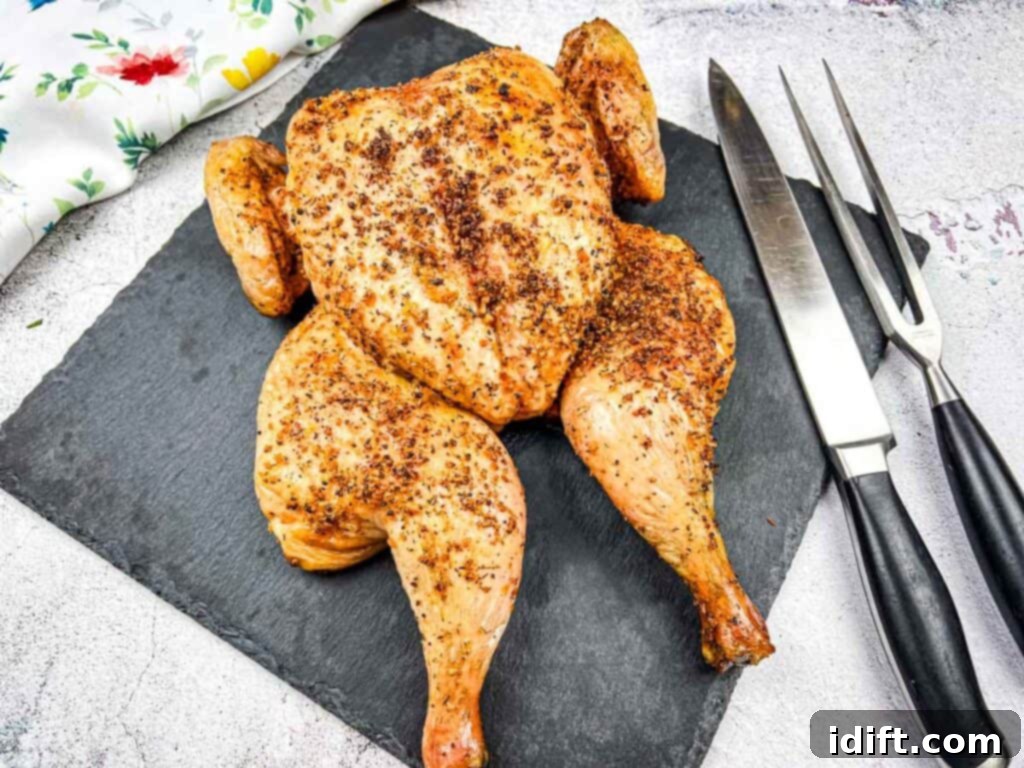
- Effortless Carving and Serving: With the backbone already removed, the structure of the chicken becomes far simpler. Carving a spatchcocked chicken is incredibly straightforward: you can easily separate the legs and thighs from the breast, and then slice the breast meat into even portions. No more wrestling with a slippery bird or trying to navigate around bones; just clean, easy cuts for elegant serving.
- Enhanced Flavor Absorption: When a chicken is flattened, more of its surface area, both skin and meat, is exposed. This provides an excellent canvas for seasonings, rubs, and marinades to penetrate deeply and evenly. Every bite will be packed with the flavors you’ve chosen, making your spatchcocked chicken a truly delicious experience.
Essential Tools for Spatchcocking Success
While the technique of spatchcocking is simple, having the right tools makes the process even easier and safer. You don’t need a professional kitchen setup, but a few key items will ensure a smooth preparation.
- High-Quality Poultry Shears: These are your most crucial tool. Strong, sharp scissors specifically designed for cutting through bone and cartilage are non-negotiable. Regular kitchen scissors are often not robust enough and can make the task frustrating and potentially unsafe. Look for shears with comfortable, non-slip handles and a sturdy pivot point for maximum leverage.
- Sharp Chef’s Knife: While poultry shears handle the backbone, a good chef’s knife is useful for any precise trimming, removing excess fat, or making small adjustments to ensure the chicken lies perfectly flat. A sharp knife is always a safe knife.
- Sturdy Cutting Board: Choose a cutting board that is large enough to comfortably hold a whole chicken. A board with grooves around the edge is ideal, as it will catch any juices and prevent them from spilling onto your countertop, making cleanup much easier and more sanitary. Consider a non-slip mat underneath for added stability.
- Paper Towels: Essential for patting the chicken thoroughly dry, both inside and out. This step is critical for achieving that coveted crispy skin and allowing seasonings to adhere properly.
- Ovenproof Skillet or Roasting Pan: If you plan on roasting or broiling your spatchcocked chicken, a heavy-duty, oven-safe pan is a must. A cast-iron skillet provides excellent heat retention and distribution, contributing to even cooking and great browning. A sturdy roasting pan with a rack can also work wonders, allowing air to circulate around the entire bird.
- Disposable Gloves (Optional but Recommended): For those who prefer to keep their hands clean and minimize direct contact with raw poultry, disposable kitchen gloves can be very helpful during the preparation phase.
Step-by-Step Guide: Mastering the Spatchcock Technique with Ease
Don’t be intimidated by the idea of breaking down a chicken. This step-by-step guide will walk you through the process, ensuring you can confidently spatchcock a chicken like a seasoned pro. Precision and a bit of force are all you need!
- Prepare Your Workspace and Tools: Before you even touch the chicken, ensure your kitchen area is clean and sanitized. Lay out your cutting board, poultry shears, knife, and paper towels. If you’re cooking immediately, preheat your oven or grill. If marinating, have your chosen marinade ready. Hygiene is paramount when working with raw poultry, so clear any unnecessary items from your counter.
- Rinse & Thoroughly Dry The Chicken: Gently rinse the chicken under cool running water, both inside the cavity and over the skin. Then, and this is a crucial step for crispy skin, pat the chicken absolutely dry with paper towels. Remove as much moisture as possible from every surface. Excess moisture creates steam, which prevents the skin from crisping up.
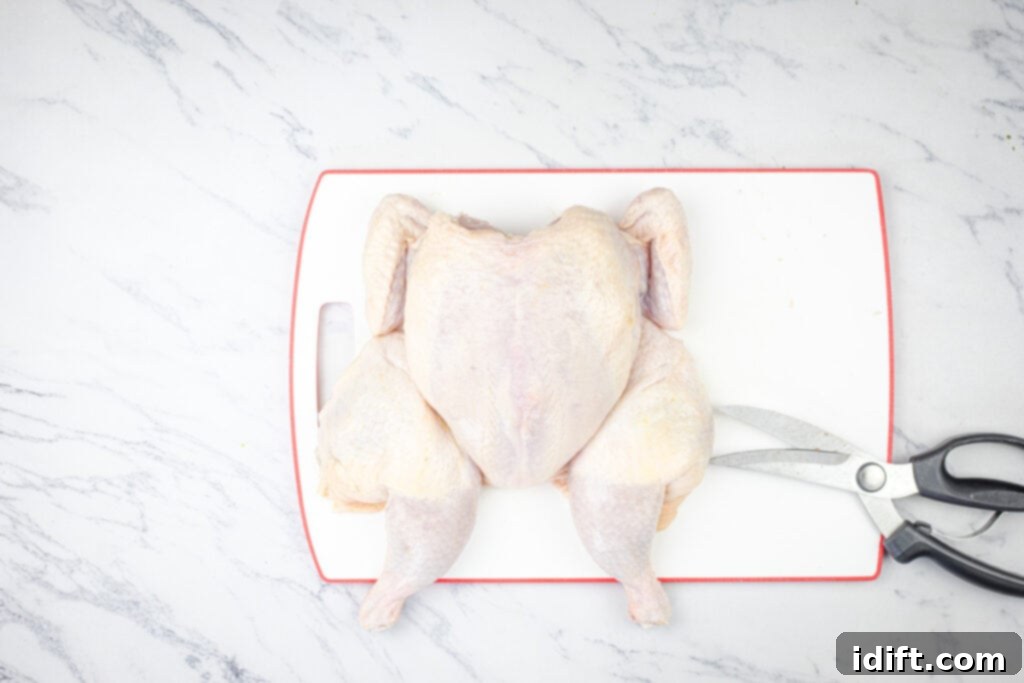
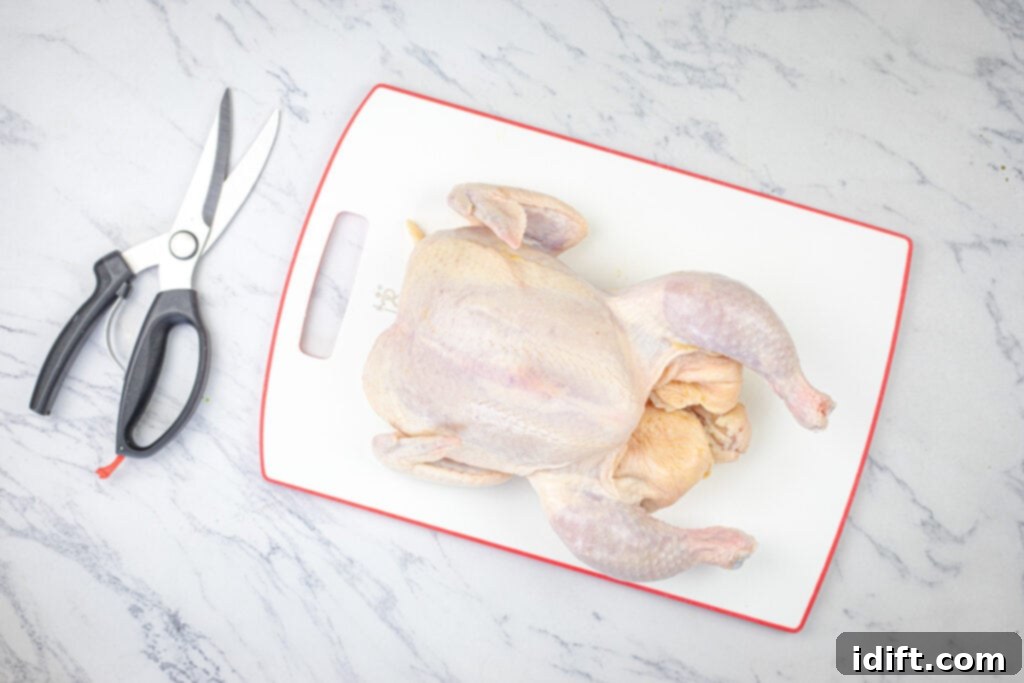
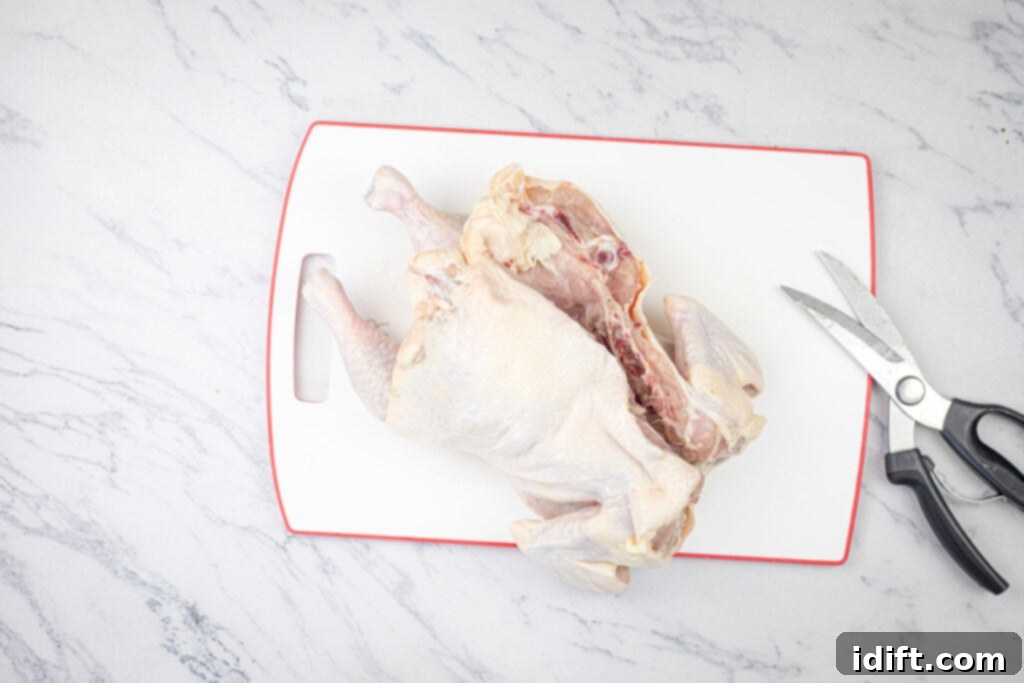
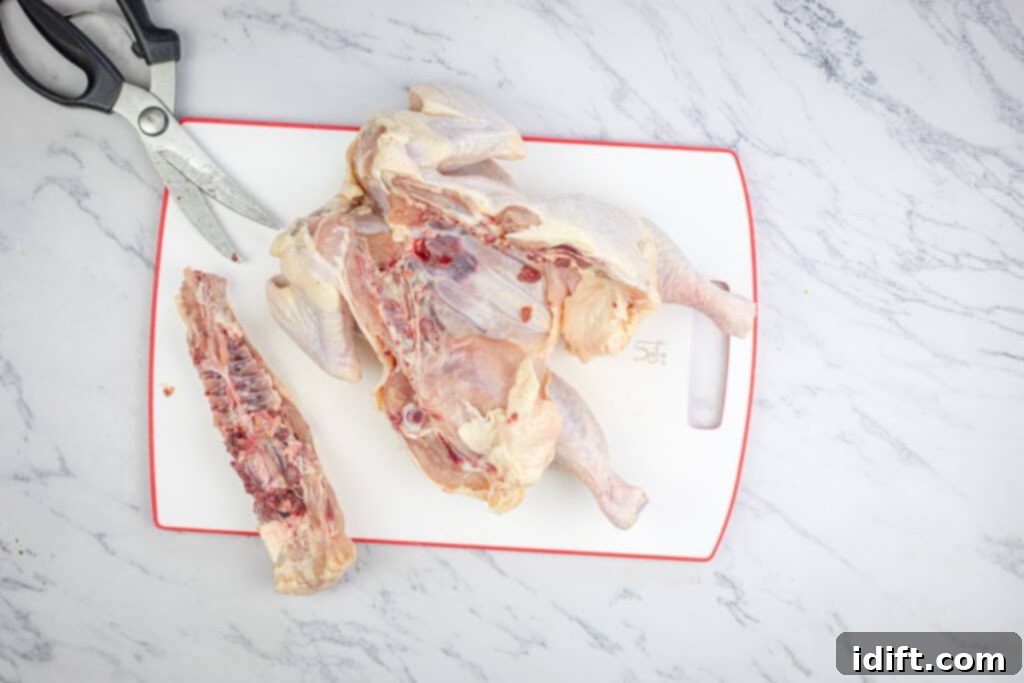
- Locate and Remove the Backbone: Place the chicken breast-side down on your cutting board. Identify the backbone running down the center. Using your robust poultry shears, begin cutting along one side of the backbone, starting from the tail end and working your way up to the neck. You’ll be cutting through ribs and cartilage, so apply firm, steady pressure. Once you’ve cut along one side, repeat the process on the other side of the backbone. Once both cuts are made, the backbone should detach. You can save the backbone for making flavorful chicken stock, or simply discard it. Remember, only poultry shears will make this step manageable and safe; a regular knife or flimsy scissors will struggle.
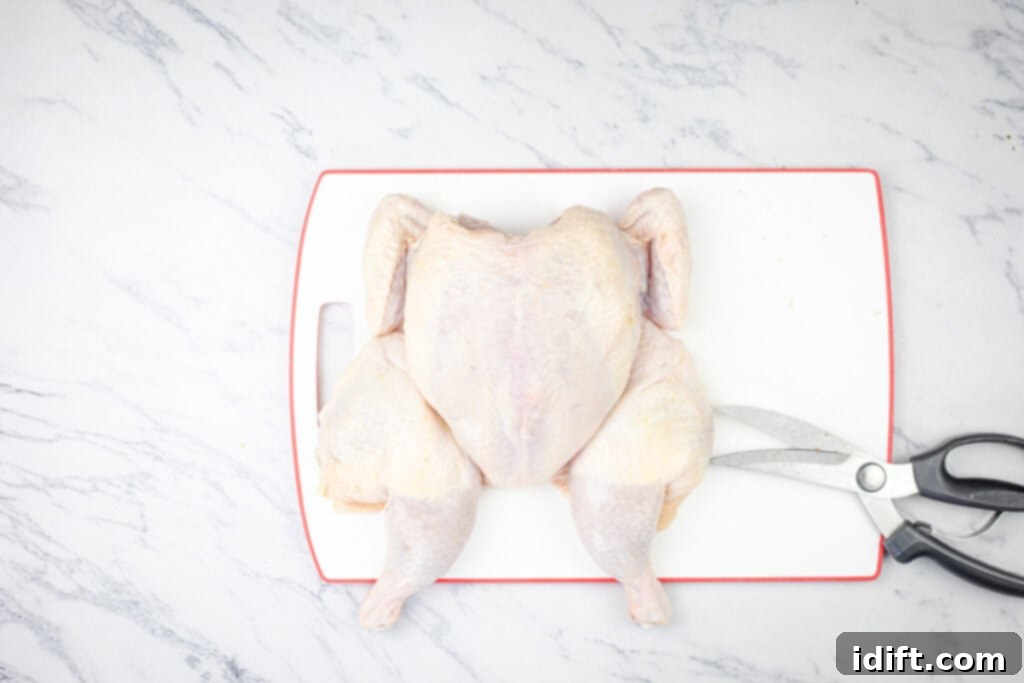
- Open and Flatten the Chicken: With the backbone removed, open the chicken up like a book. Flip it over so it’s breast-side up on the cutting board. Now, place the palms of your hands firmly on either side of the breastbone. Using your body weight, press down forcefully until you hear a distinct crack. This sound indicates that the breastbone has broken or the cartilage connecting the ribs to the breastbone has separated, allowing the chicken to lie completely flat.
- Optional Adjustments for Perfection: To ensure the chicken lies even flatter and cooks perfectly, you can make a small cut in the cartilage at the bottom of the breastbone. This helps release any remaining tension. Additionally, for larger chickens, tuck the wing tips behind the breasts. This prevents the delicate wing tips from burning during cooking, as they tend to cook faster than the rest of the bird.
Flavoring Your Spatchcock Chicken: A Canvas for Creativity
One of the true joys of spatchcocking is the increased surface area it provides for seasoning. This technique allows you to infuse your chicken with incredible flavor from every angle. Don’t be shy – this is where your culinary creativity can shine!
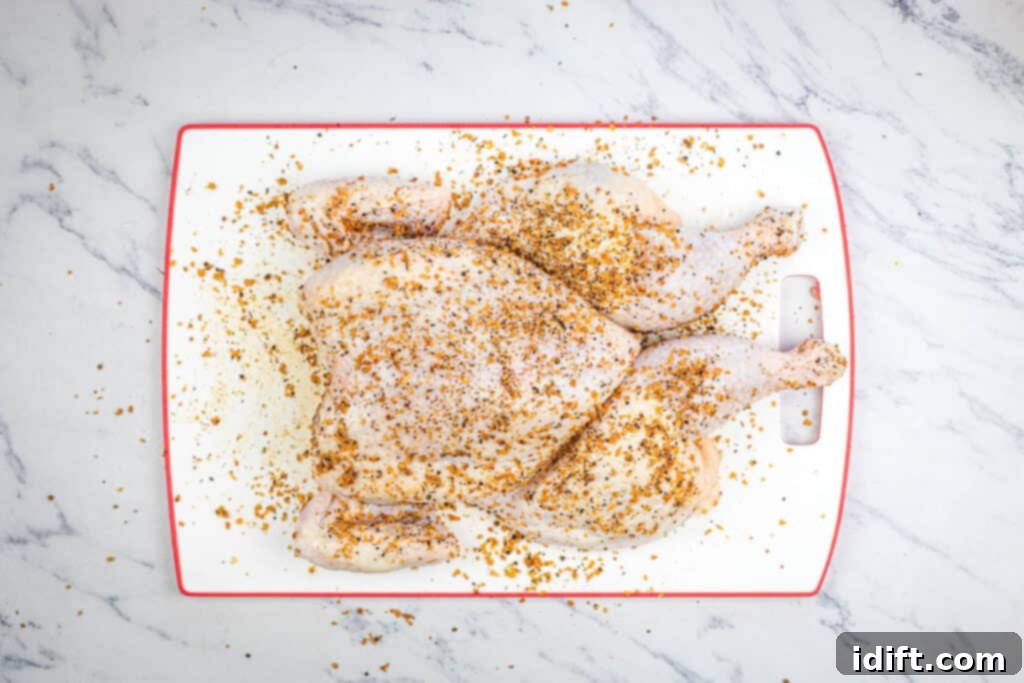
- Basic Seasoning: A generous application of coarse salt and freshly ground black pepper is always a fantastic starting point. Don’t forget to season both sides, and even gently lift the skin to rub some seasoning directly onto the breast meat for deeper flavor.
- Herbaceous Rubs: Fresh or dried herbs work wonders. Rosemary, thyme, sage, and oregano are classic choices that pair beautifully with chicken. Combine them with garlic powder, onion powder, and a touch of paprika for a well-rounded savory profile.
- Marinades and Brines: The flattened form of a spatchcocked chicken is ideal for marinating or brining. Marinades (like lemon-herb, garlic-soy, or buttermilk-based) tenderize the meat and add moisture, while brines enhance juiciness. Allow at least 2-4 hours for marinating, or even overnight for maximum flavor penetration.
- Compound Butters Under the Skin: For an extra layer of moisture and flavor, prepare a compound butter (softened butter mixed with herbs, garlic, citrus zest, etc.) and gently spread it directly under the skin of the breast and thighs. As the chicken cooks, the butter will melt, basting the meat from within.
- Aromatics in the Pan: When roasting, surround the chicken with aromatic vegetables like sliced onions, carrots, celery, and lemon wedges. These will not only infuse the chicken with flavor but also create a delicious foundation for pan drippings and gravy.
Cooking Methods for Your Perfectly Prepared Spatchcock Chicken
The versatility of a spatchcocked chicken is remarkable. Once flattened, it’s ready for a variety of cooking methods, each promising a delectable result. The even thickness ensures consistent doneness, regardless of your preferred cooking style.
- Roasting: The Classic Choice
Roasting is perhaps the most popular and straightforward method. Place your seasoned, spatchcocked chicken on a rack in a roasting pan or directly in a large cast-iron skillet. Roast in a preheated oven at a higher temperature, typically between 400-425°F (200-220°C), for about 45-60 minutes, depending on the size of your chicken. The higher heat promotes crispy skin and fast cooking. Use an instant-read thermometer to check for doneness; the internal temperature should reach 165°F (74°C) in the thickest part of the thigh without touching the bone.
- Grilling or Smoking: For Unforgettable Smoky Flavor
Grilling a spatchcocked chicken is an absolute treat, yielding smoky flavor and beautiful char marks. For grilling, set up a two-zone fire (direct and indirect heat). Start skin-side down over direct medium-high heat for about 5-7 minutes to get a good crisp and char, then flip and move to indirect heat, closing the lid. Cook for another 30-45 minutes, or until the internal temperature reaches 165°F (74°C). For smoking, maintain a consistent temperature of 225-275°F (107-135°C) and add your favorite wood chips (hickory, apple, cherry). Smoking will take longer, usually 2-3 hours, but the results are incredibly tender and flavorful.
- Broiling: Quick Crisp for a Weeknight Meal
Broiling is an excellent option for achieving incredibly crispy skin in a short amount of time, perfect for a quick weeknight meal. Place the spatchcocked chicken skin-side up on a broiler-safe pan. Position the pan about 6-8 inches from the broiler element. Broil for 20-30 minutes, keeping a very close eye on it to prevent burning. Flip once halfway through if you want to crisp the underside, but primarily focus on the skin. Again, ensure the internal temperature reaches 165°F (74°C).
- Air Frying: Modern Convenience Meets Crispy Perfection
For smaller chickens (3-4 lbs), air frying is a fantastic modern alternative. Its circulating hot air mimics roasting but in a more compact space, guaranteeing incredible crispiness. Place the spatchcocked chicken, skin-side up, in your air fryer basket in a single layer (you might need to cut larger chickens in half). Air fry at 375-400°F (190-200°C) for 35-45 minutes, flipping halfway through. The precise time will vary by air fryer model and chicken size, so always use a thermometer to confirm doneness.
Additional Tips for a Perfect Spatchcock Chicken Every Time
Beyond the basic steps, a few extra considerations can elevate your spatchcocked chicken from good to absolutely unforgettable.
- Don’t Skimp on Seasoning: As mentioned, the increased surface area is a blessing for flavor. Don’t be afraid to season aggressively. Consider lifting the skin and applying seasoning directly to the meat for maximum impact.
- The Critical Resting Period: After your chicken finishes cooking, resist the urge to carve it immediately. Transfer it to a clean cutting board, tent loosely with foil, and let it rest for at least 10-15 minutes. This allows the muscle fibers to relax and reabsorb the juices, ensuring a supremely moist and flavorful bird. Cutting too soon will result in juices running out, leading to dry meat.
- Make Use of the Backbone and Trimmings: Don’t throw away that backbone! Along with any neck or giblets, it’s a treasure trove of flavor perfect for making a rich, homemade chicken stock. Use the stock as a base for soups, sauces, or gravies to accompany your meal. It’s a fantastic way to minimize waste and maximize flavor.
- Ensure Proper Food Safety: Always wash your hands thoroughly with soap and warm water before and after handling raw chicken. Use separate cutting boards and utensils for raw poultry to prevent cross-contamination. The internal temperature of the thickest part of the chicken should reach a safe 165°F (74°C).
- Avoid Overcrowding Your Pan: If you’re roasting or grilling multiple spatchcocked chickens, ensure they have enough space in the pan or on the grill. Overcrowding can lead to steaming instead of roasting or grilling, resulting in less crispy skin and uneven cooking.
Frequently Asked Questions About Spatchcock Chicken
Here are answers to some common questions you might have about this fantastic cooking method:
- Can I spatchcock a frozen chicken? No, you should never attempt to spatchcock a frozen or partially frozen chicken. It’s unsafe and extremely difficult to cut through. Always ensure your chicken is fully thawed before beginning the spatchcocking process.
- What if I don’t have poultry shears? While poultry shears are highly recommended, you can use a very sharp, sturdy chef’s knife. Carefully cut along the sides of the backbone. Be extremely cautious as this can be more challenging and riskier than using shears. Some people also suggest using a heavy-duty pair of garden shears, but ensure they are thoroughly cleaned and sanitized for food use.
- How long does it take to cook a spatchcocked chicken? Cooking times vary depending on the size of the chicken and the cooking method. Generally, a 4-pound spatchcocked chicken will roast in an oven at 400-425°F (200-220°C) for 45-60 minutes, or grill for 35-50 minutes. Always use a meat thermometer to ensure it reaches 165°F (74°C).
- Can I prepare a spatchcocked chicken ahead of time? Yes, you can spatchcock a chicken up to 24 hours in advance. Once spatchcocked, season it, and then place it uncovered on a wire rack set over a baking sheet in the refrigerator. This also helps dry out the skin further, leading to even crispier results.
- What if my chicken isn’t lying perfectly flat? Don’t worry too much about absolute perfection. As long as the breastbone is broken and the chicken is mostly flat, you’ll still reap the benefits of the technique. Make sure you pressed down firmly, and you can always make a small incision in the cartilage at the bottom of the breast to help it relax further.
Conclusion: Embrace the Spatchcock and Elevate Your Chicken
Spatchcocking a chicken is far more than just a fancy culinary term; it’s a transformative technique that will revolutionize the way you cook poultry. By taking a few simple steps to flatten the bird, you unlock a world of benefits: faster cooking times, incredibly juicy meat, and the crispiest skin imaginable. This method ensures even heat distribution, making dry breast meat and undercooked thighs a thing of the past.
Whether you’re a novice in the kitchen or a seasoned home cook, mastering the spatchcock technique is a valuable addition to your repertoire. It’s straightforward, requires minimal special equipment, and guarantees consistently delicious results that will impress family and friends alike. So, grab your poultry shears, choose your favorite seasoning, and get ready to experience the unparalleled joy of a perfectly spatchcocked chicken. Your taste buds will thank you!