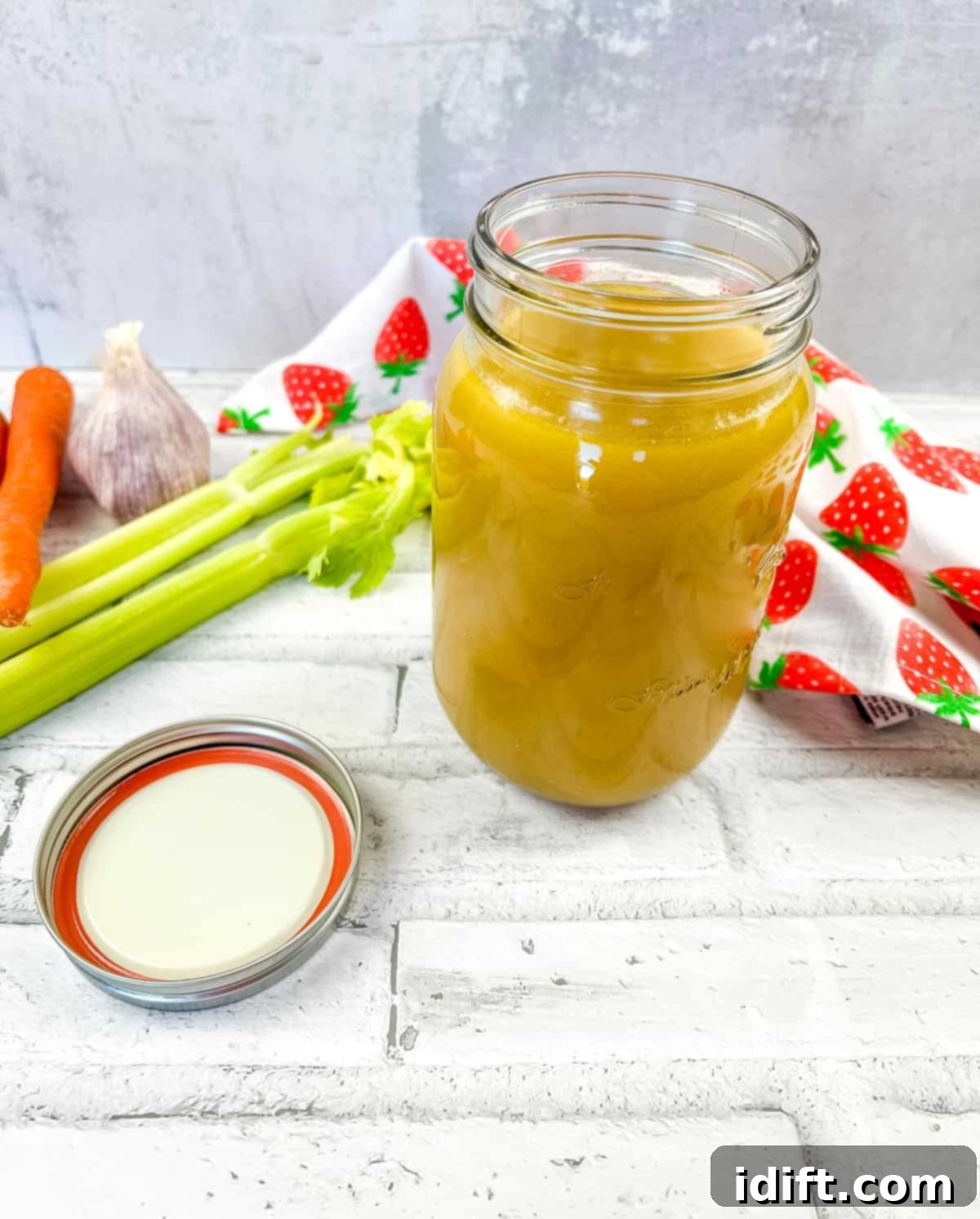
Mastering Homemade Turkey Stock in Your Instant Precision Dutch Oven
Transforming leftover turkey bones into a culinary masterpiece is not only rewarding but incredibly simple with the right tools. If you’ve ever wondered what to do with that turkey carcass after a festive meal, look no further than your Instant Precision Dutch Oven. This guide will walk you through crafting the most exquisite, rich, and flavorful homemade turkey stock – a nutrient-dense liquid gold that’s brimming with collagen and protein. Perfect for enhancing your favorite soups, stews, sauces, and gravies, this Instant Precision Dutch Oven Turkey Stock recipe makes healthy, flavorful cooking effortless.
This post may contain affiliate link(s). As an Amazon Associate, I earn from qualifying purchases. See Disclosure.
Why Homemade Turkey Stock is a Culinary Essential
There’s a significant difference between store-bought broth and a truly exceptional homemade stock. Our Instant Precision Dutch Oven Turkey Stock boasts a depth of flavor and nutritional profile that simply can’t be replicated with pre-packaged alternatives. Crafted from roasted turkey bones and aromatic vegetables, this stock is:
- Incredibly Flavorful: The slow, gentle simmering process in the Dutch oven extracts every ounce of savory essence from the turkey bones and vegetables, resulting in an intensely rich and complex flavor base for countless dishes.
- Rich in Collagen and Protein: Utilizing turkey bones ensures a high concentration of collagen, which breaks down into gelatin during cooking. This not only gives the stock a luxurious mouthfeel but also provides benefits for joint health, skin elasticity, and gut lining. It’s truly a collagen-rich stock.
- Cost-Effective: Instead of discarding leftover turkey bones, you’re turning them into a valuable ingredient, reducing food waste and saving money on store-bought options.
- Customizable and Healthy: You have complete control over the ingredients, allowing you to avoid unwanted additives, excessive sodium, or artificial flavors often found in commercial products. Make it as clean and healthy as you desire.
- Versatile: Beyond being the foundation for hearty soups and stews, this stock can elevate gravies, risottos, braises, and even be enjoyed on its own as a warming, restorative bone broth.
Imagine the convenience of having a freezer full of this liquid gold, ready to transform any weeknight meal into a gourmet experience. This recipe exemplifies “set-it-and-forget-it” cooking – minimal effort for maximum reward!
The Instant Precision Dutch Oven Advantage
While traditional stock-making often involves hours of monitoring a stovetop pot, the Instant Precision Dutch Oven revolutionizes the process. This innovative appliance provides consistent, precise temperature control, ensuring your turkey stock simmers perfectly without scorching or boiling over. Its heavy-duty construction and sealed environment efficiently extract flavors and nutrients, creating a beautifully clear and deeply flavored stock. The “set it and forget it” functionality means you can start your stock and let the Dutch oven do all the hard work, freeing you up to tackle other kitchen tasks or simply relax.
The Instant Precision Dutch Oven is designed for low and slow cooking, making it ideal for extracting the maximum amount of gelatin and flavor from bones. Unlike a regular stockpot where heat can fluctuate, this appliance maintains a steady temperature, which is crucial for a clear, delicious stock. The enamel coating also makes it easy to clean, even after hours of simmering.
Understanding the Difference: Broth vs. Stock
Often used interchangeably, “broth” and “stock” actually refer to distinct culinary liquids with different purposes and characteristics. Knowing the difference helps you choose the right base for your recipes:
- Broth: Typically made from meatier cuts of poultry, beef, or vegetables, simmered for a shorter period (1-2 hours). It’s usually seasoned and can be enjoyed on its own as a light, flavorful beverage or used as a cooking liquid. Broth tends to be lighter in body and flavor.
- Stock: Our turkey stock recipe is a prime example. Stock is made primarily from bones (in this case, a turkey carcass), often roasted first for enhanced flavor, along with aromatic vegetables and herbs. It simmers for a much longer duration (2-6 hours, or even longer for beef/pork stock). The prolonged cooking time breaks down the collagen in the bones, releasing gelatin, which gives stock a richer body and often a jiggly, gelatinous texture when chilled. This makes it a superior base for sauces, gravies, and anything that benefits from a more substantial foundation.
Because this recipe focuses on bones, it yields a true stock – deeply flavored, rich in gelatin, and incredibly nourishing.
Essential Ingredients for Your Homemade Turkey Stock
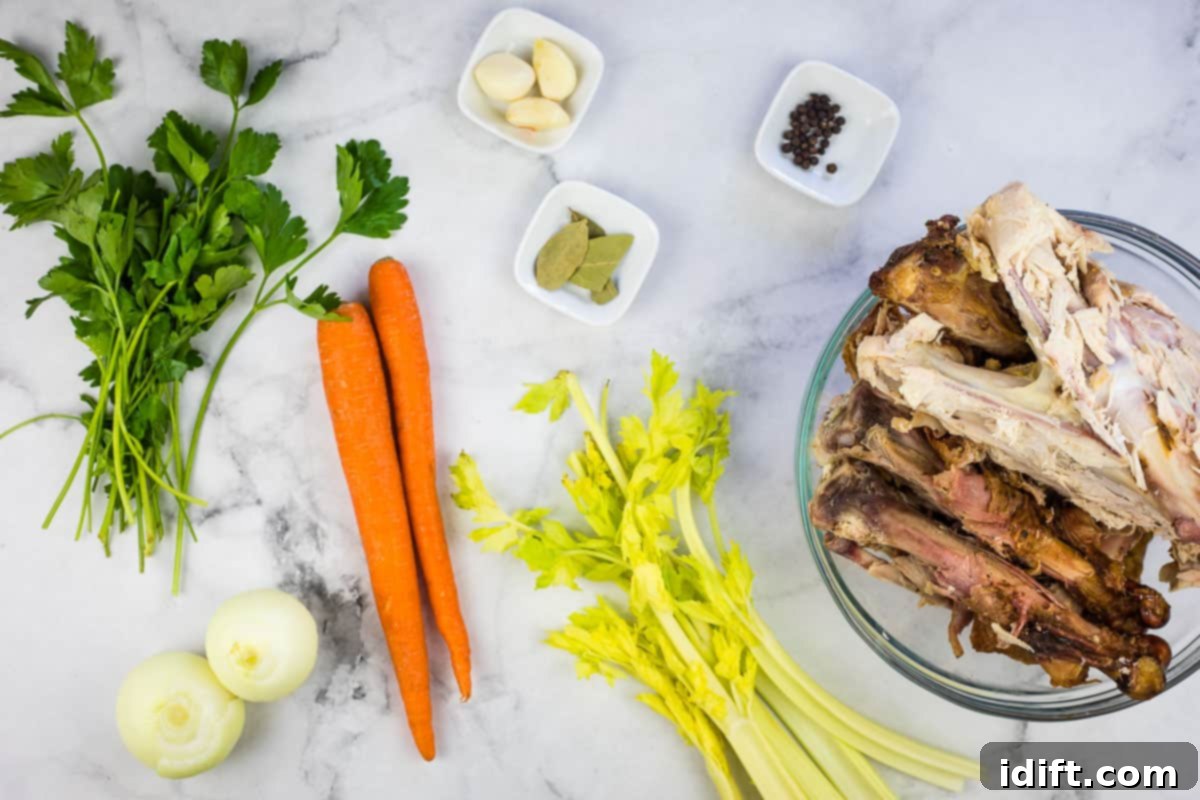
Crafting the perfect Dutch oven turkey stock requires a thoughtful selection of ingredients. Beyond the turkey carcass itself, a combination of fresh vegetables and aromatics forms the foundational flavor profile. Here’s what you’ll need, along with why each component is important:
- Cooking Oil: A tablespoon of vegetable, olive, or avocado oil is used to sear the vegetables, kickstarting the flavor development through the Maillard reaction. This simple step adds a layer of depth that un-seared vegetables just can’t match.
- Carrots (Peeled and Chopped): Carrots contribute natural sweetness and a beautiful golden hue to your stock. Peeling them ensures a cleaner flavor.
- Onion (Yellow, Quartered): Onion is a fundamental aromatic, providing savory depth. Quartering them is sufficient as they will be strained out later.
- Celery (Stalks, Leaves, and All): Celery adds an earthy, slightly peppery note. Don’t discard the leaves; they pack a punch of flavor!
- Garlic (Fresh Cloves, Smashed): A few smashed garlic cloves infuse the stock with a pungent, savory aroma that is essential for a robust flavor. Smashing them helps release their oils and compounds more effectively.
- Parsley (Handful, Stems and All): Fresh parsley, especially the stems, offers a fresh, herbaceous note. It’s part of the classic “mirepoix” flavor base, adding brightness.
- Bay Leaves (Dried): These classic aromatic leaves contribute a subtle, almost floral, herbaceous background note that complements poultry beautifully.
- Black Peppercorns: Whole peppercorns add a mild, earthy warmth without making the stock spicy. Avoid ground pepper, which can make your stock cloudy.
- Turkey Carcass (Picked Clean): This is the star! The bones, especially those from a roasted or smoked turkey, provide the collagen for gelatin and the deep, savory “turkey” flavor. Make sure to remove most of the meat, excess skin, and large chunks of fat to keep your stock clean and less greasy. Small bits of meat and skin are fine and contribute to flavor.
- Hot Water: Using hot water initially helps bring the stock to a simmer faster, saving time and energy.
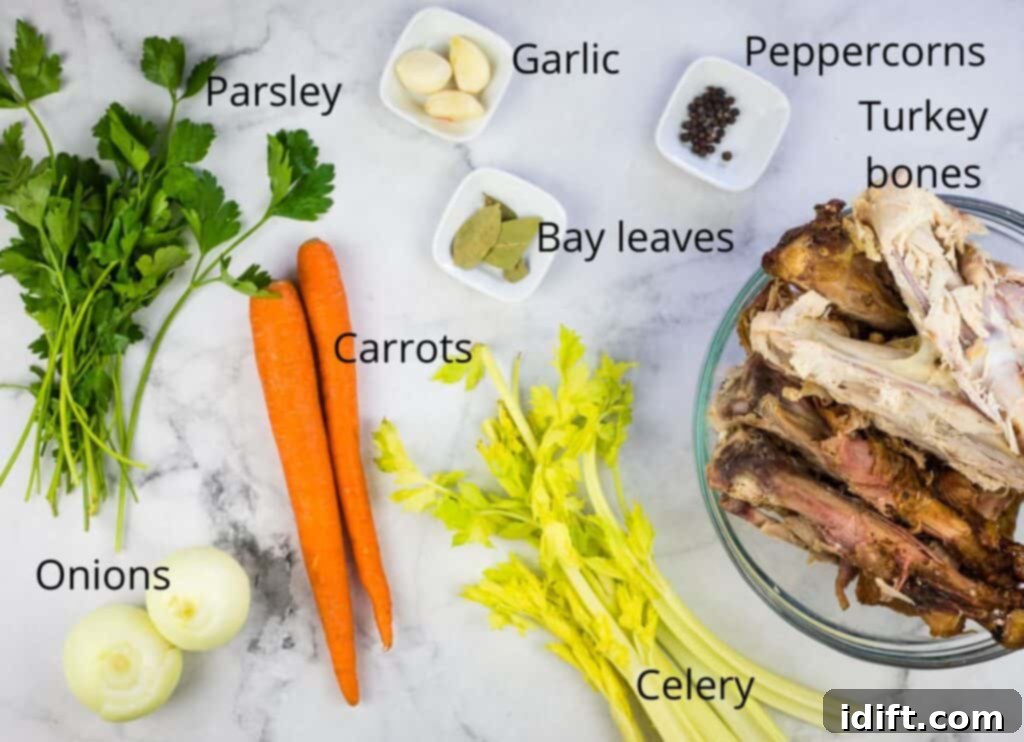
How To Make The Best Turkey Stock In Your Instant Precision Dutch Oven
Creating this rich and flavorful Instant Precision Dutch Oven Turkey Stock is a straightforward process that yields incredibly rewarding results. Follow these simple steps for a perfect batch every time:
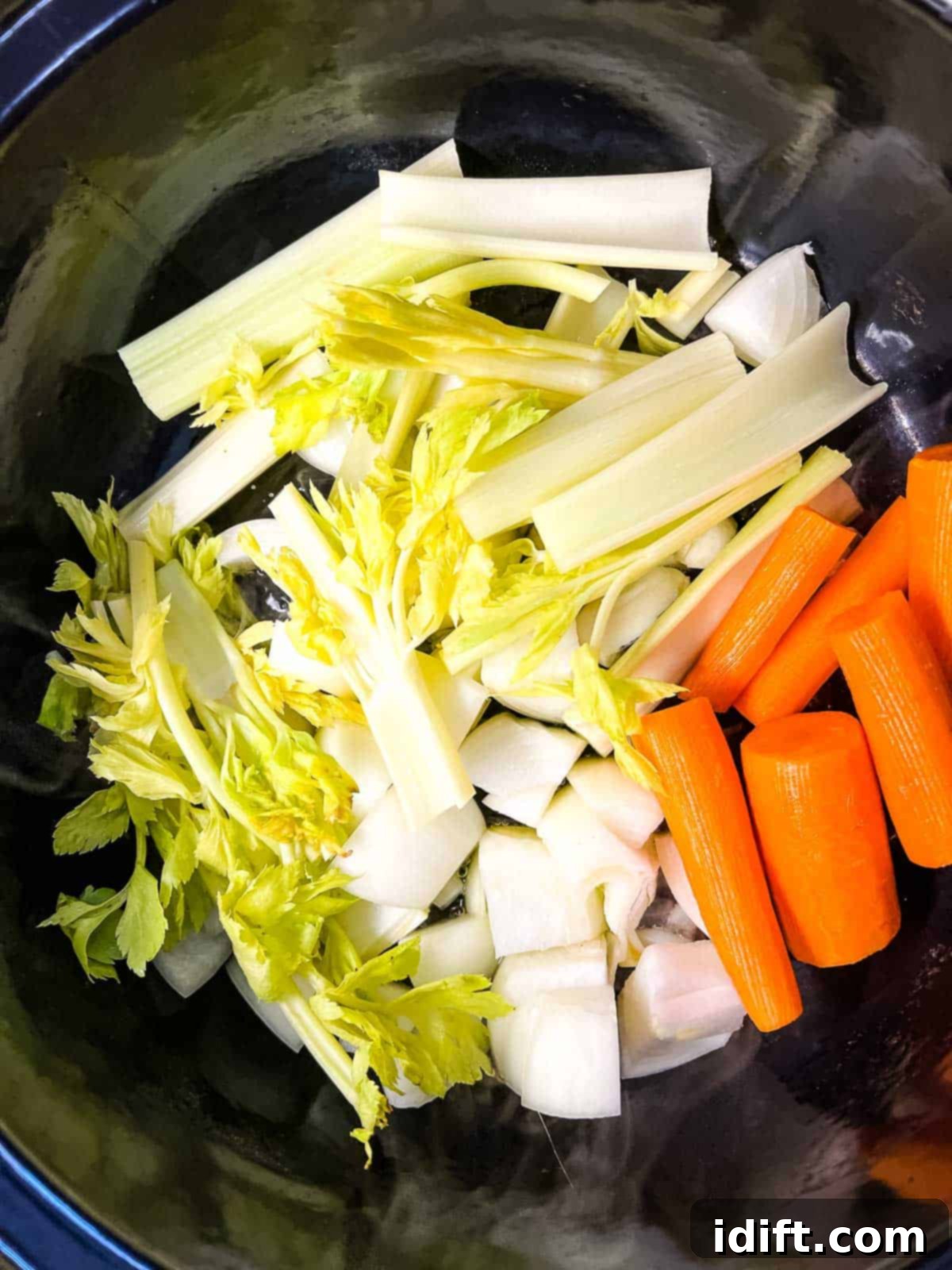
- Prepare the Vegetables: Begin by roughly chopping your carrots, onion, and celery into 1-inch pieces. No need for precision here, as they will be strained out later. For the garlic, simply give the peeled cloves a good smash with the side of your knife; this helps release their aromatic compounds more effectively than finely mincing them.
- Preheat and Sear: Turn on your Instant Precision Dutch Oven and set it to the “Sear” mode at 400°F for 10 minutes. This preheating step is crucial for achieving a good sear on your vegetables. Once hot, add a tablespoon of cooking oil, then toss in the chopped carrots, onion, and celery.
- Sauté for Flavor: Sauté these vegetables for 3-4 minutes, stirring occasionally, until the onion becomes soft and translucent. This searing process helps caramelize the natural sugars in the vegetables, building a foundational layer of savory flavor through the Maillard reaction.
- Add Garlic: Stir in the smashed garlic cloves and cook for just an additional minute. Garlic burns easily, so keep a close eye on it to prevent bitterness.
- Set the Cooking Mode: Turn the Instant Precision Dutch Oven to “Manual Mode” at 400°F and set the cooking time for 2 hours and 30 minutes. This will allow for a long, slow simmer.
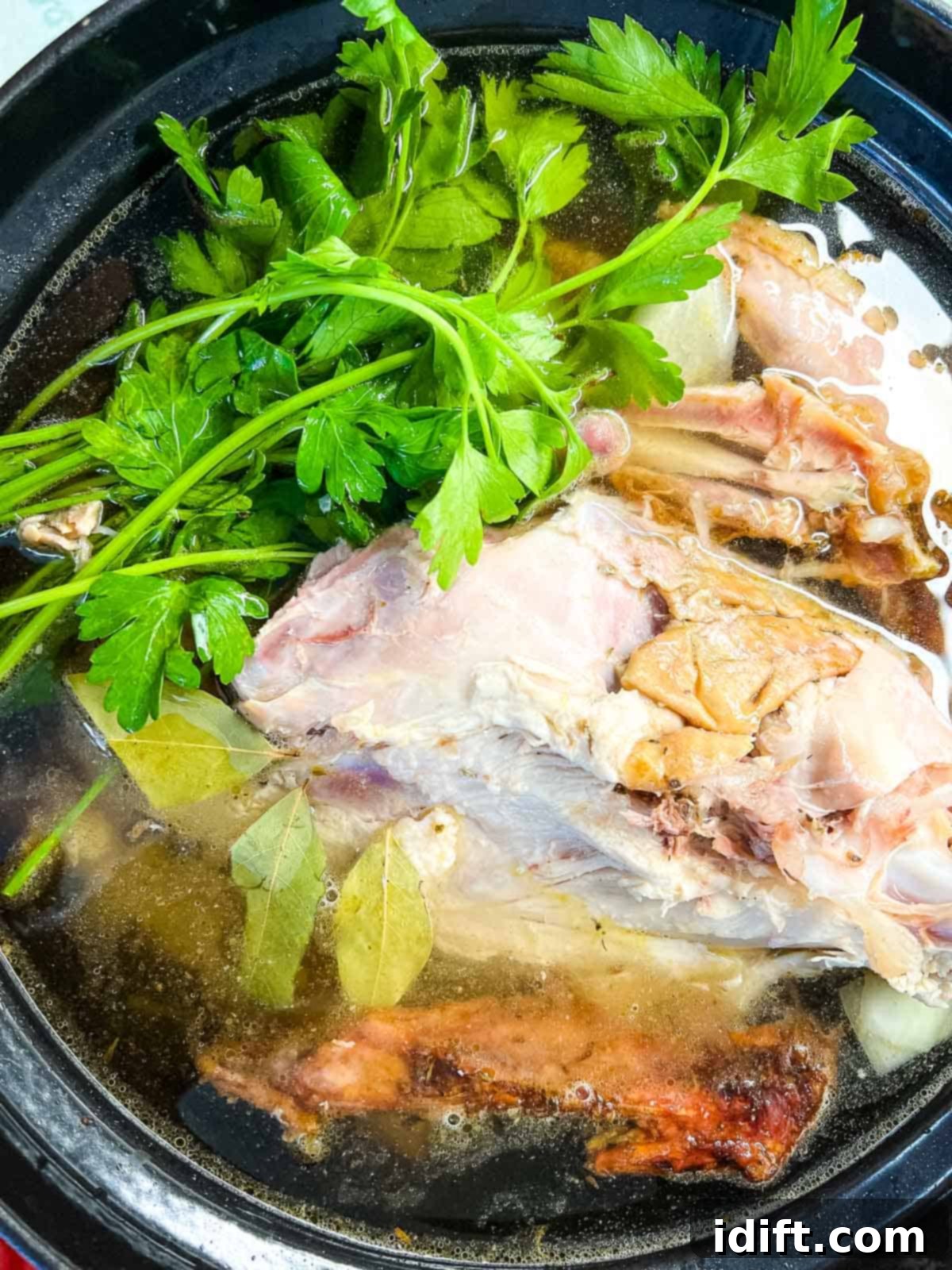
- Add Turkey and Water: Carefully place the cleaned turkey carcass into the Dutch oven. Pour in about 12 cups of hot water, or enough to cover the carcass and vegetables, ensuring the liquid level is approximately 2 inches below the top rim of the Dutch oven. Using hot water helps maintain the temperature and speeds up the simmering process.
- Introduce Aromatics: Add the fresh parsley (stems and all), dried bay leaves, and black peppercorns to the pot. These aromatics will slowly release their flavors, contributing to the stock’s complexity. Securely place the lid on your Dutch oven.
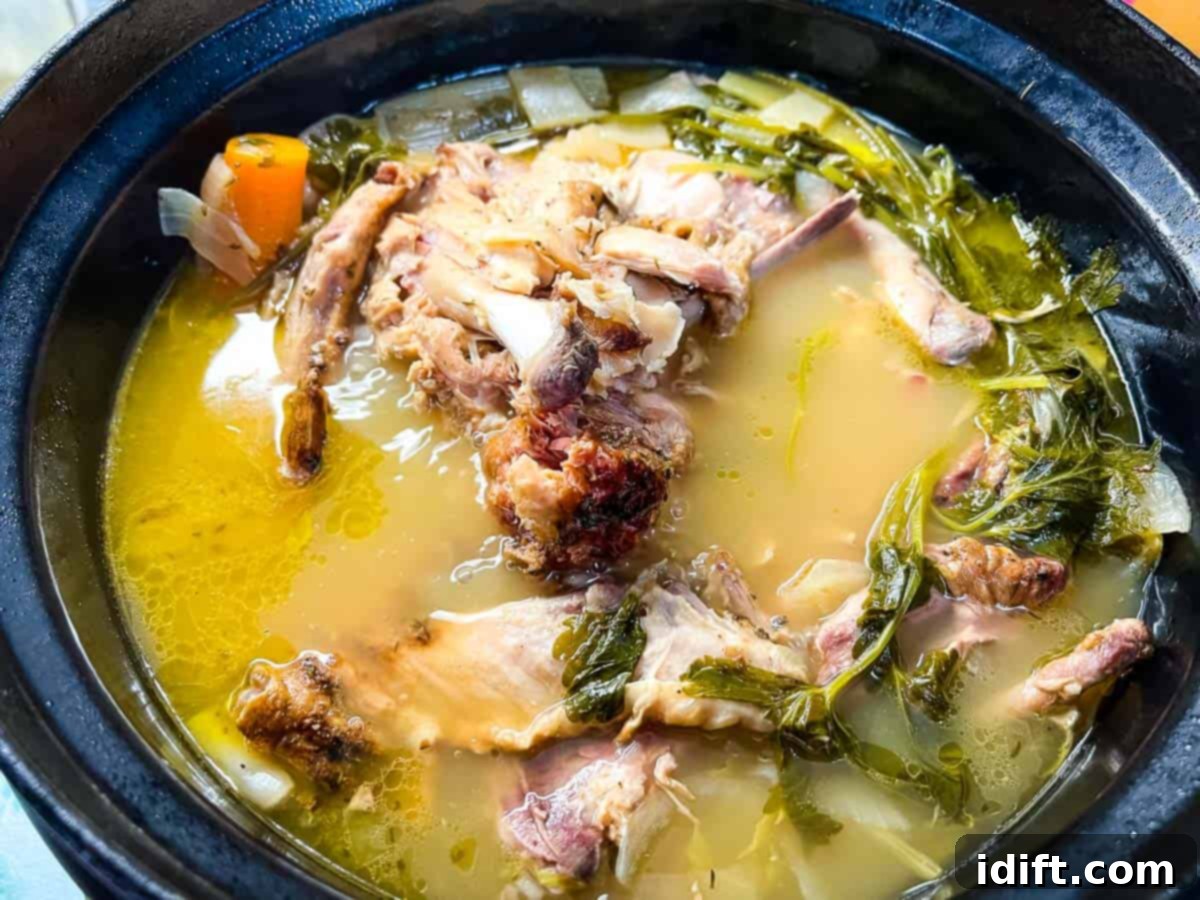
- Simmer and Cool: Allow the stock to simmer for the full 2 hours and 30 minutes. Once the cooking cycle is complete, turn off the Dutch oven and let the stock cool down naturally within the pot. This slow cooling helps prevent the stock from becoming cloudy and allows flavors to meld further.
- Strain, Chill, and Skim: Once cooled enough to safely handle, carefully strain the stock through 3 layers of cheesecloth or a very fine-mesh sieve into a large, clean container. Discard the solids. For best results, chill the strained stock overnight in the refrigerator. This allows any remaining fat to solidify on the surface, making it easy to scrape off. Once skimmed, your rich, gelatinous homemade turkey stock is ready to use or store.
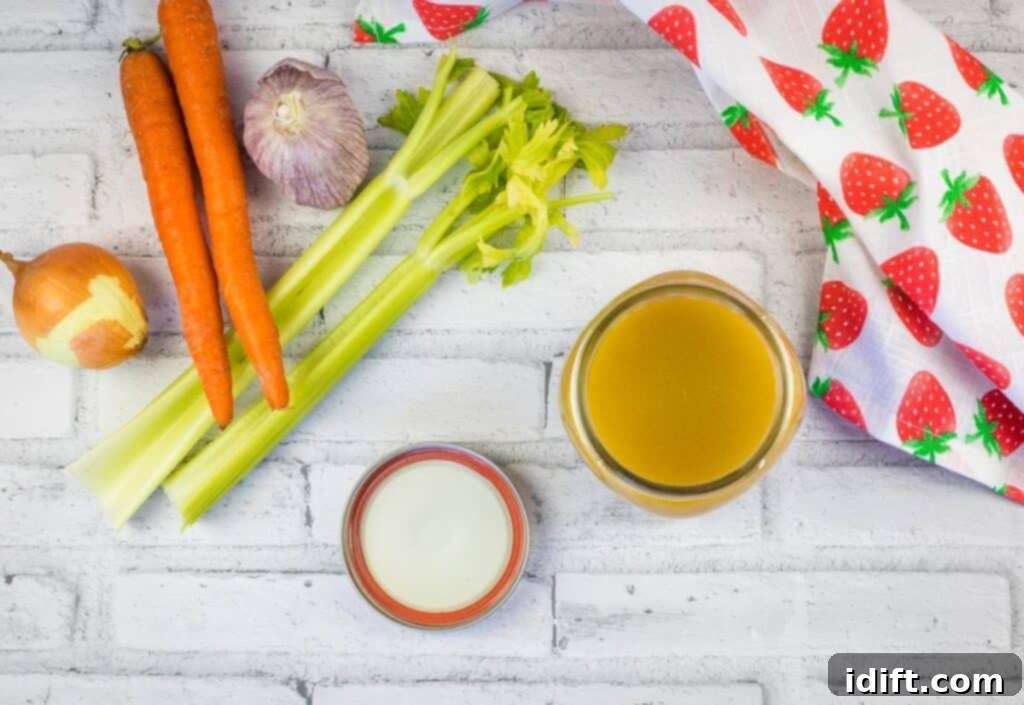
Chef Jenn’s Expert Tips for Perfect Turkey Stock
Making turkey stock is a fantastic way to utilize every part of your bird and enrich your cooking. To ensure your stock turns out perfectly every time, here are some invaluable tips from Chef Jenn:
- Embrace the Celery Hearts and Leaves: Don’t just use the stalks! The celery hearts and leaves are incredibly flavorful and aromatic. I always save these parts specifically for making stock, as they contribute a fresh, earthy depth that enhances the overall taste.
- Mind the Turkey Size: This recipe is ideal for average-sized turkeys (up to about 16 pounds). If you’re working with a much larger bird, consider dividing the carcass and making two separate batches of stock. Overcrowding the Dutch oven can prevent proper circulation and flavor extraction, leading to a less potent stock.
- Control the Fat Content: While some turkey skin is acceptable and contributes flavor, too much can result in an overly oily stock. I generally leave the skin on the wings, as it’s harder to remove and contributes good flavor, but I discard most of the remaining skin and large hunks of fat from the carcass. You can always skim excess fat after chilling.
- Adjust Heat as Needed: Your Instant Precision Dutch Oven is fantastic for maintaining precise heat. However, if you notice your stock isn’t coming to a gentle boil or simmering properly at 400°F, feel free to slightly increase the temperature until you achieve a consistent, gentle simmer. A vigorous boil can emulsify fats and lead to a cloudy stock.
- Top Off with Hot Water: Over several hours of simmering, some water will evaporate. About halfway through the cooking time, check the liquid level and top off the pot with additional hot water if needed. This ensures that the bones remain submerged and continue to release their flavors and nutrients.
- Rapid Cooling is Key for Safety: After cooking, it’s crucial to cool the stock as quickly as possible to prevent bacterial growth. Remove the stock from the hot Dutch oven as soon as it’s safe to handle (after it has cooled somewhat). Strain it immediately, then transfer it to shallow containers and place them in the refrigerator. For larger batches, an ice bath can significantly speed up the cooling process before refrigeration.
- Always Skim the Fat: Once the stock is thoroughly chilled, a layer of solidified fat will form on top. This is desirable! Skim off this fat for a cleaner, healthier stock. You can discard it or save it for other culinary uses, like sautéing vegetables.
Creative Ways to Utilize Your Homemade Turkey Stock
The beauty of a well-made homemade turkey stock lies in its versatility. It’s not just for soups and stews; it’s a foundational ingredient that can elevate a wide array of dishes:
- Hearty Soups and Stews: This is its most obvious application. Use it as the base for classics like minestrone, chicken noodle soup (using turkey stock for a richer flavor), or a comforting lentil stew. It’s particularly amazing in this Turkey Pot Pie Soup, adding incredible depth.
- Rich Gravies and Sauces: Swap out water or thinner broths for turkey stock when making gravies for roasted meats or pan sauces. Its gelatinous body provides a natural thickness and glossy finish, making your gravies truly shine.
- Braising Liquids: Use turkey stock as a braising liquid for meats like short ribs, chicken, or even vegetables. The slow cooking in stock infuses food with immense flavor and keeps it incredibly tender.
- Cooking Grains: Instead of water, use turkey stock to cook rice, quinoa, couscous, or polenta. This simple swap dramatically enhances the flavor of your side dishes, turning them into something special.
- Richer Risottos: A creamy risotto demands a flavorful liquid, and turkey stock delivers beautifully. It adds a savory backdrop that complements mushrooms, asparagus, or other risotto additions.
- Directly as Bone Broth: For a nutrient boost, simply warm a cup of your homemade turkey stock, add a pinch of salt, and sip it like a comforting, savory beverage. It’s an excellent way to enjoy the health benefits of collagen.
Storage Solutions for Your Liquid Gold
Once you’ve gone to the effort of making this incredible Instant Precision Dutch Oven Turkey Stock, proper storage is essential to preserve its freshness and flavor:
- Refrigeration: Freshly made turkey stock will keep beautifully in an airtight container in the refrigerator for 3-4 days. Always ensure it’s completely cooled before refrigerating.
- Freezing for Long-Term Storage: For longer storage, freezing is your best friend. Turkey stock freezes like a dream and can last for several months (up to 6 months) in the freezer without significant loss of quality.
- Portioning is Key: Freeze stock in various portion sizes – ice cube trays for small amounts, 1-cup or 2-cup containers for recipes, or even specialized freezer molds like Souper Cubes for perfectly portioned blocks.
- Airtight Containers: Use freezer-safe containers, jars (leave headspace for expansion), or heavy-duty freezer bags (lay them flat to save space).
- Label and Date: Always label your frozen stock with the date and contents so you know exactly what you have and how old it is.
Step By Step Visual Guide
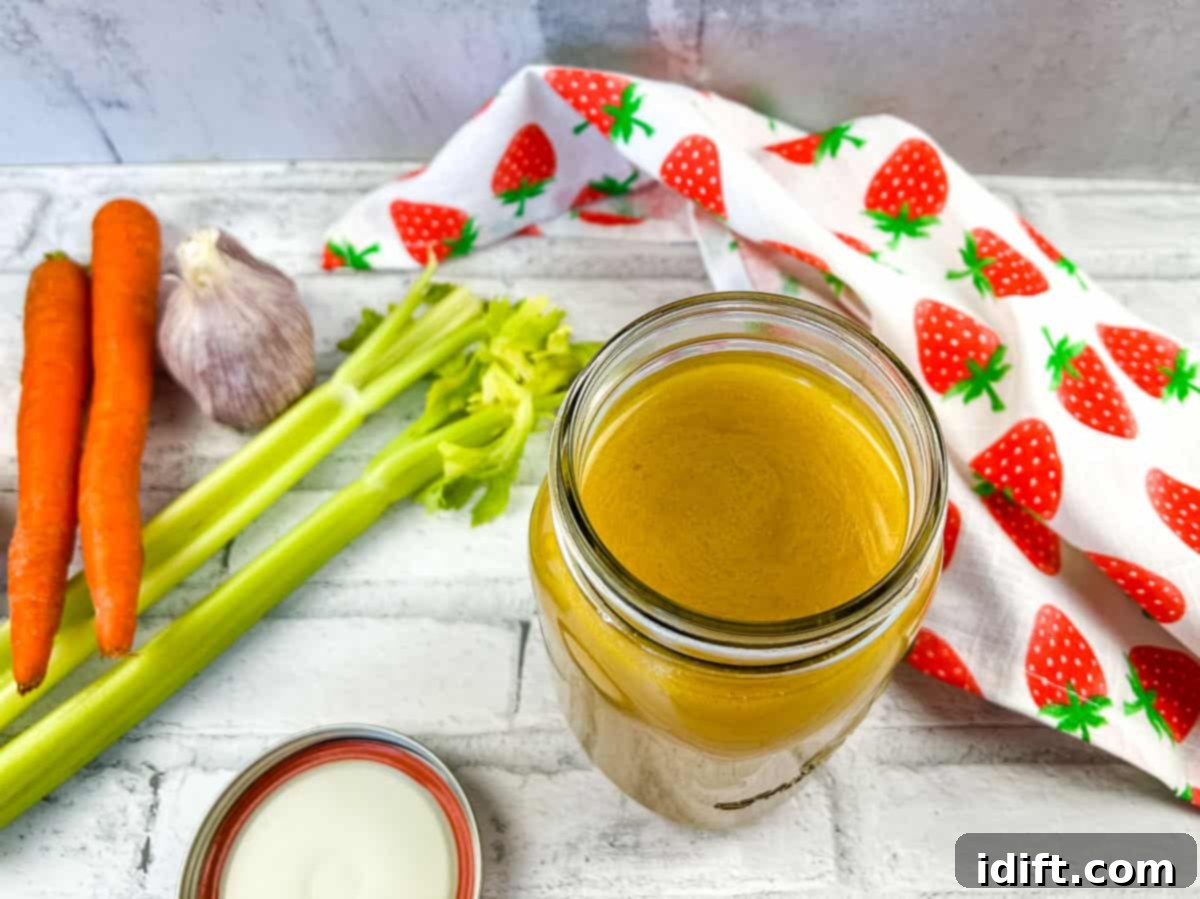
Instant Precision Dutch Oven Turkey Stock Recipe

Print Recipe | Pin Recipe
Instant Precision Dutch Oven Turkey Stock
Made effortlessly in your Instant Precision Dutch Oven, this amazing Turkey Stock is rich and flavorful. Full of protein and collagen, it’s great in all your favorite soups, stews, and gravies!
Course: Soups & Stews
Cuisine: American
Keyword: chicken tinga instant pot, dutch oven carnitas, dutch oven turkey stock, instant precision dutch oven, instant precision dutch oven turkey stock, turkey broth, turkey stock
Prep Time: 20 minutes
Cook Time: 2 hours 30 minutes
Total Time: 2 hours 50 minutes
Servings: 12 cups
Calories: 118 kcal
Author: Chef Jenn
Equipment
- 1 Instant Precision Dutch Oven
Ingredients
- 1 tablespoon cooking oil
- 2 small onions, quartered
- 2 carrots, peeled and chopped into 1-inch pieces
- 3 cloves garlic, smashed
- 12 cups hot water
- 1 turkey carcass, cleaned of meat, most skin, and fat
- 10 sprigs parsley, stems and all, washed
- 3 each bay leaves
- 1 tablespoon black peppercorns
Instructions
- Chop the vegetables into chunks and give the peeled garlic cloves a smash to crush them.
- Meanwhile, preheat the Instant Precision Dutch Oven to Sear – 400F for 10 minutes. When it is hot, add the oil and chopped carrots, onion, and celery.
- Sear the vegetables for 3-4 minutes or until the onion is soft and translucent.
- Add the smashed garlic cloves and cook an additional minute.
- Turn the IP Dutch Oven to Manual Mode – 400F – for 2 hours and 30 minutes.
- Add the turkey carcass and about 12 cups of hot water, or fill the Dutch oven to about 2-inches below the top rim.
- Add the parsley, bay leaves, and peppercorns to the pot and put the lid on the Dutch Oven.
- Simmer for about 2 hours and 30 minutes, then let the stock cool.
- Strain the stock through 3 layers of cheesecloth or a fine-mesh sieve/strainer. Chill overnight, then scrape off the fat from the top and use the stock in all your favorite recipes.
Notes
Chef Jenn’s Tips
Turkey stock is so rich, nutritious, and delicious. Never throw out the turkey carcass. Use it to make this amazing stock, and here are some tips to help your stock turn out perfectly every time.
- For the best flavor, use the celery hearts, leaves, and all. I save the celery hearts and pop them into the stock pot.
- This recipe is perfect with smaller turkeys. If you have a big bird, more than about 16 pounds, consider using half the bones and make a second batch of stock with the remainder.
- Some skin is fine in the broth, but too much will just make your broth oily. I usually leave the skin on the wings but discard the rest.
- Your Instant Pot Dutch Oven will precisely control the heat, but you may have to turn it a bit higher to get the stock to a boil. It’ll simmer away nicely at 400-F.
- Top off the pot with hot water about halfway through the cooking time.
- Cool the cooked stock as quickly as possible. Remove it from the Dutch Oven as soon as it is safe to handle, strain it, and get it in the fridge to cool down.
- Skim the fat off the top of the cooled turkey stock, if desired.
Nutrition
Serving: 1 cup | Calories: 118 kcal | Carbohydrates: 3g | Protein: 13g | Fat: 6g | Saturated Fat: 1g | Polyunsaturated Fat: 1g | Monounsaturated Fat: 2g | Trans Fat: 0.01g | Cholesterol: 87mg | Sodium: 184mg | Potassium: 170mg | Fiber: 1g | Sugar: 1g | Vitamin A: 1821IU | Vitamin C: 3mg | Calcium: 32mg | Iron: 1mg
A Note on Nutritional Information: Nutritional information for this recipe is provided as a courtesy and is calculated based on available online ingredient information. It is only an approximate value. The accuracy of the nutritional information for any recipe on this site cannot be guaranteed.
Frequently Asked Questions About Turkey Stock
Here are answers to some common questions about making and using homemade turkey stock:
- Can I use raw turkey bones instead of roasted?
- Yes, you can. However, roasting the turkey carcass first (even just the bones if you’ve already picked the meat) adds a crucial depth of flavor and color to the stock. It caramelizes the bones and any residual meat, enhancing the savory notes. If using raw, your stock will still be good but may be lighter in flavor and color.
- Is it okay to add salt to the stock while it cooks?
- It’s generally recommended to avoid adding salt to your stock during the initial cooking phase. This is because stock is often reduced and concentrated, and if you add salt early, it can become overly salty once reduced. It’s best to season the stock when you’re using it in a recipe, allowing you to control the final saltiness.
- What if my stock isn’t gelatinous when chilled?
- A gelatinous texture is a sign of high collagen content, which is desirable. If your stock isn’t jiggly, it likely means you didn’t extract enough collagen from the bones. This can happen if the bones weren’t simmered long enough, if there wasn’t enough bone material (especially joints), or if the temperature was too high, breaking down the gelatin. The stock is still flavorful and nutritious, just not as rich. For more gelatin, try adding more joint bones next time or extending the simmer time.
- Can I add other vegetables or herbs to the stock?
- Absolutely! The ingredient list is a classic base, but feel free to experiment. Leeks, parsnips, mushrooms, thyme, and rosemary are all excellent additions. Just avoid cruciferous vegetables like broccoli or cabbage, as they can impart a strong, sometimes bitter flavor to your stock. Always aim for a balanced flavor profile.
- How do I make my stock clearer?
- For a clearer stock, ensure a very gentle simmer (not a rolling boil), avoid stirring frequently, and skim any foam or impurities that rise to the surface early in the cooking process. Using a fine-mesh sieve lined with multiple layers of cheesecloth for straining is also key. Rapid cooling also helps prevent cloudiness.
Want More Delicious and Easy Recipes?
If you loved this easy turkey stock recipe and are looking for more culinary inspiration, explore these other fantastic dishes:
- Perfect Steaks on the Blackstone Griddle
- Flavorful Smoked Lamb Chops
- Creative Leftover Roast Beef Stroganoff
- Unique Smoked Shotgun Shells