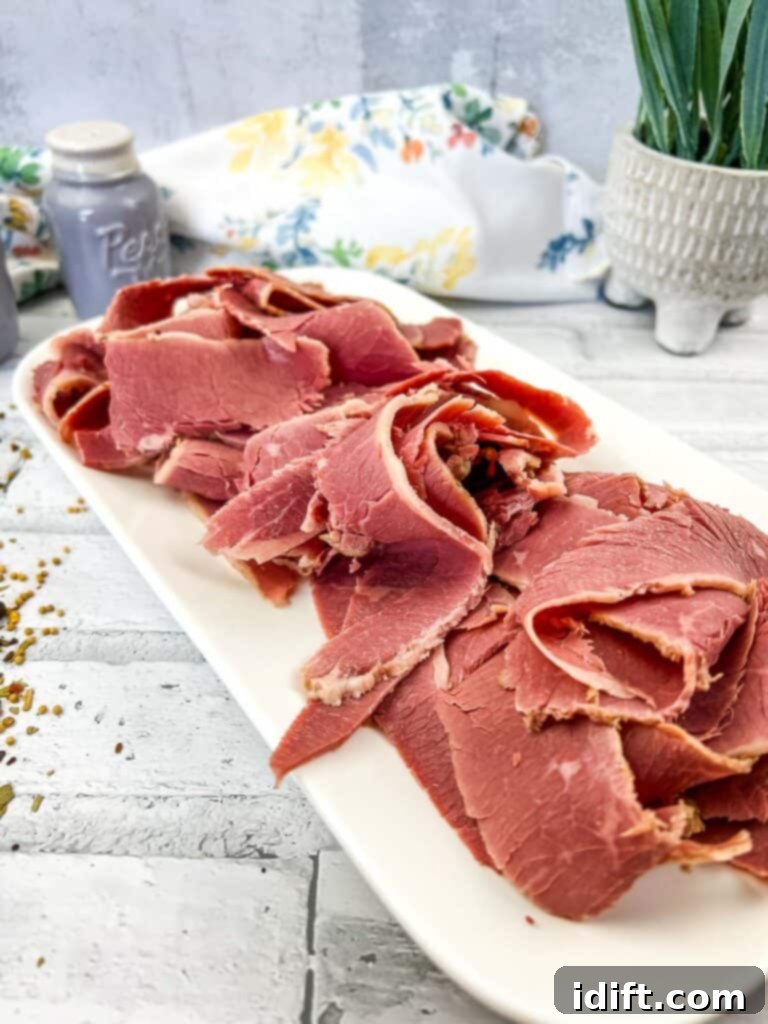
Unlock the secret to truly magnificent flavor with homemade corned beef. Far superior to its store-bought counterparts, this culinary endeavor promises tender, juicy, and perfectly seasoned meat that’s never overly salty. Curing your own corned beef at home allows you to control every ingredient, resulting in a gourmet experience that elevates sandwiches, casseroles, and even a simple forkful to new heights. Prepare to impress your taste buds with the rich, authentic taste of scratch-made perfection.
This post may contain affiliate link(s). As an Amazon Associate, I earn from qualifying purchases. See Disclosure.
Embarking on the journey to make your own corned beef from scratch might seem daunting, but it’s surprisingly straightforward. While it does require a few specialty ingredients and a bit of patience over several days, the process itself is easy, and the reward is immensely satisfying. The homemade version vastly surpasses the flavor and quality of any store-bought alternative, offering a taste experience that is truly unmatched.
Have you ever noticed the escalating prices of commercially prepared corned beef? Often, you pay a premium for a relatively small cut of meat that’s frequently over-salted and excessively brined. By taking the homemade route, you gain complete control over the ingredients. This not only results in a far more delicious product but also allows you to avoid unnecessary chemicals, artificial flavors, and excessive sodium commonly found in processed meats. It’s a healthier, more flavorful choice for your family.
If you have a refrigerator and a large container, you have all the basic equipment needed to cure your own corned beef. The beauty of homemade corned beef lies in its versatility once cured. Whether you prefer to cook it in a slow cooker for melt-in-your-mouth tenderness, use an Instant Pot for speed and efficiency, employ the precision of sous vide, or simply simmer it on the stovetop, nothing compares to the deep, authentic flavor of meat you’ve prepared yourself from start to finish.
Why You’ll Love Crafting Your Own Corned Beef
- Unbeatable Flavor and Texture: Homemade corned beef offers a depth of flavor and a tender, melt-in-your-mouth texture that simply can’t be replicated by mass-produced varieties. You control the brining process, ensuring the meat is perfectly seasoned without being overly salty. The result is a richer, more nuanced taste that will truly delight your palate.
- Significant Cost Savings: Store-bought corned beef can be surprisingly expensive, especially for a high-quality cut. By purchasing a raw brisket and curing it yourself, you’ll find that the cost per pound is substantially lower, making this a budget-friendly way to enjoy a gourmet meal. It’s an investment in flavor that pays off financially.
- Complete Control Over Ingredients: Making corned beef from scratch means you know exactly what goes into your food. You can choose premium beef, fresh pickling spices, and avoid the artificial colors, preservatives, and excessive sodium often found in commercial products. This control is not just about taste but also about making healthier choices for you and your family.
- Impressive and Rewarding: There’s immense satisfaction in preparing a dish from its most basic form. Presenting a platter of homemade corned beef to your guests or family is a point of pride, showcasing your culinary skills and dedication. It’s a rewarding experience that tastes as good as it feels to make.
Essential Ingredients for Perfect Corned Beef
Creating your own corned beef requires a few key ingredients, each playing a vital role in achieving that distinct flavor and texture. Understanding these components is crucial for success.
- Beef Brisket: This is the traditional cut for corned beef, known for its rich flavor and ability to become incredibly tender when slow-cooked. Brisket comes in two main parts: the “flat” (or “first cut”), which is leaner and more uniform, and the “point” (or “second cut”), which is fattier and more marbled. For corned beef, many prefer the flat for its consistent slices, often with a thin layer of fat left on top for moisture. However, the point can also be used for a richer, more tender result. Aim for a brisket that weighs around 4-6 pounds for this recipe.
- Prague Powder #1 (Pink Curing Salt): This ingredient is non-negotiable for safe and authentic corned beef. It’s a specific blend of sodium chloride (table salt) and sodium nitrite, essential for curing meat. Prague Powder #1 inhibits the growth of harmful bacteria, especially Clostridium botulinum, and gives corned beef its characteristic pink color and unique flavor. It is dyed pink to prevent accidental confusion with regular salt. Accuracy is paramount when measuring Prague Powder #1; always use a precise scale. Never confuse it with Prague Powder #2, which contains nitrates and nitrites and is used for dry-cured meats that are not immediately cooked.
- Morton’s Kosher Salt: When curing, the type of salt matters. Kosher salt, particularly Morton’s, is preferred because it’s purer than iodized table salt and doesn’t contain anti-caking agents that can interfere with the curing process or impart an off-flavor. Its larger flakes also dissolve differently, contributing to a clean, less metallic taste in the final product. Stick to kosher salt for the best results.
- Distilled Water: While tap water can be used, distilled water is recommended for its purity. It ensures that no chlorine, minerals, or other impurities from tap water affect the flavor of your brine or the final corned beef. This allows the pickling spices and beef flavor to shine through unobstructed.
- Pickling Spices: This blend of aromatic spices is what gives corned beef its signature tangy and savory profile. Common ingredients in a good pickling spice blend include whole peppercorns (black, white, or mixed), bay leaves, mustard seeds, coriander seeds, allspice berries, cloves, and sometimes ginger, cinnamon, or red pepper flakes. You can buy pre-made blends, but for the freshest and most vibrant flavor, consider making your own with whole, fresh spices. Ensure your spices are not old or stale, as this will significantly impact the taste.
Choosing the Right Cut of Beef For Corned Beef
Corned beef is traditionally and best made from beef brisket. This tough, inexpensive cut comes from the chest of the cow and contains a lot of connective tissue, which breaks down during the long curing and cooking process to become incredibly tender and flavorful. You have a choice between the two main parts of the brisket: the point and the flat.
The brisket flat, or first cut, is leaner and has a more uniform shape. It’s ideal for slicing thinly and creating those classic corned beef sandwiches. When choosing a flat, look for one with a thin, even layer of fat on one side. This fat cap adds moisture and flavor during cooking, but too much can become greasy. The brisket point, or second cut, is significantly fattier and has a more irregular shape. While it can certainly be used for corned beef, its higher fat content often makes it a preferred choice for pastrami, where the fat renders beautifully during smoking. For a classic corned beef, I generally lean towards using the flat for its better slicing quality, ensuring a perfect balance of meat and just enough fat for succulence.
What is Prague Powder #1? A Crucial Curing Agent
Many years ago, I attempted to wet cure corned beef without Prague Powder #1, and the result was, to put it mildly, a culinary disaster. The meat lacked its signature pink color, developed an off-putting grey hue, and failed to achieve the desired cured flavor. This experience underscored a vital lesson: Prague Powder #1 is not an optional ingredient; it is the fundamental secret to successfully curing meat like corned beef.
Prague Powder #1, often referred to as pink curing salt, is a specific mixture designed for short-term cures that require cooking before consumption. It consists of two primary components: sodium chloride (common table salt) and sodium nitrite. The sodium nitrite is the active curing agent. Its roles are multifaceted and absolutely critical:
- Preservation: Most importantly, sodium nitrite acts as a powerful antimicrobial agent. It specifically inhibits the growth of various spoilage bacteria and, critically, prevents the proliferation of Clostridium botulinum, the bacteria responsible for botulism, a severe and often fatal foodborne illness. This makes the curing process safe.
- Color Development: It’s responsible for giving corned beef its vibrant, appetizing pink color. Without it, the meat would cook to an unappetizing grey. The nitrite reacts with myoglobin in the meat to form nitroso myoglobin, which maintains the pink hue even after cooking.
- Flavor Enhancement: Sodium nitrite contributes to the unique, tangy, and savory flavor profile that we associate with cured meats. It helps to preserve the fresh meat flavor and adds a distinct cured taste.
It’s important to note that Prague Powder #1 is dyed pink to distinguish it clearly from regular salt, preventing accidental misuse. Despite its pink color, it is not simply Himalayan pink salt, which is regular salt with trace minerals. Prague Powder #1 must be handled with care and measured accurately. The concentration of sodium nitrite is specific and designed for safety when used in correct proportions with meat and water. Using too much can be harmful, and using too little can compromise the safety and quality of the cure.
Crucially, DO NOT confuse Prague Powder #1 with Prague Powder #2. Prague Powder #2 contains both sodium nitrite and sodium nitrate and is used for long-term dry cures where the meat will not be cooked, such as with certain salamis or hams. Using the wrong type of curing salt can have serious health implications or result in a spoiled product. Always double-check that you are using Prague Powder #1 for corned beef and measure it precisely according to the recipe’s water-to-meat-to-curing salt formula for perfect, safe results.
Corned Beef Vs. Pastrami – What’s the Difference?
Corned beef and pastrami are both beloved deli staples, often sharing the common origin of beef brisket. Their similar beginnings can sometimes lead to confusion, but their distinct preparation methods and flavor profiles set them apart as unique culinary experiences.
Both corned beef and pastrami begin their journey in a very similar fashion: with a long soak in a flavorful brine, or “wet cure.” This brining process is where the meat is “corned” – a term derived from the large “corns” or granules of salt used in the curing mixture, along with essential curing agents like Prague Powder #1 and aromatic pickling spices. The brine penetrates the meat, tenderizing it, preserving it, and imparting a rich, savory taste.
However, after this initial curing stage, their paths diverge dramatically:
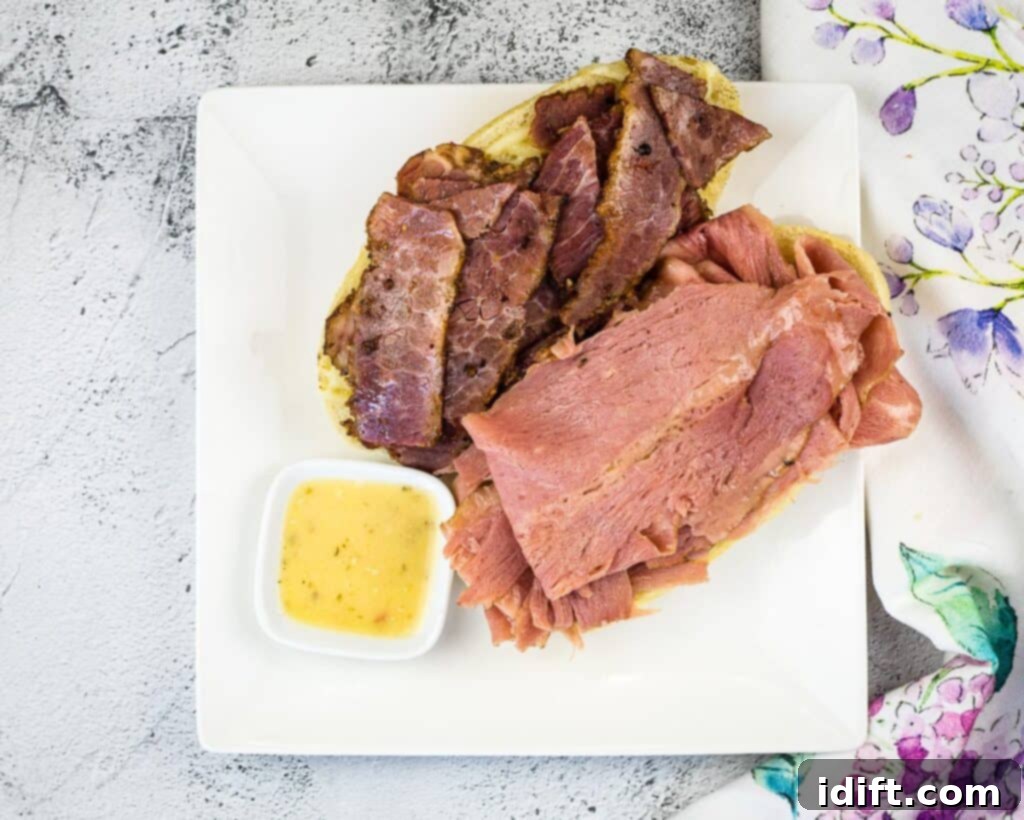
- Corned Beef: After the brining and subsequent desalting process, corned beef is traditionally cooked using a braising method. This means it is simmered in liquid (often water, broth, or even beer) for several hours until it becomes incredibly tender. This low-and-slow cooking breaks down the tough connective tissues in the brisket, resulting in a succulent, flavorful piece of meat with a slightly tangy, spiced profile from the pickling spices. It’s often served hot, sliced thinly, either as a main course with cabbage and potatoes or piled high on rye bread for a classic Reuben sandwich.
- Pastrami: While pastrami also undergoes a brining process, its transformation after the cure is what truly defines it. Following the brine, the brisket (often the fattier point cut) is typically rinsed, patted dry, and then heavily crusted with a robust mixture of ground spices, most notably cracked black pepper and coriander, along with garlic, paprika, and other seasonings. The seasoned meat is then smoked, often for many hours over hardwoods like oak or hickory, until it develops a deep, smoky flavor and a characteristic dark, peppery bark. After smoking, pastrami is usually steamed to achieve its final tender texture. This combination of curing, heavy seasoning, and smoking gives pastrami its distinctive bold, peppery, and intensely smoky taste, making it a star ingredient in sandwiches, particularly on rye with mustard.
In essence, while both start with a cure, corned beef relies on braising for tenderness and flavor, highlighting the brining spices, whereas pastrami adds the additional dimensions of a heavy spice rub and deep smoke to its profile. Both are incredibly delicious in their own right, offering unique textures and tastes. Imagine layering your perfectly cured corned beef or smoky pastrami on a freshly baked challah bun for an unforgettable meal!
How To Make Homemade Corned Beef From Scratch: A 6-Day Journey
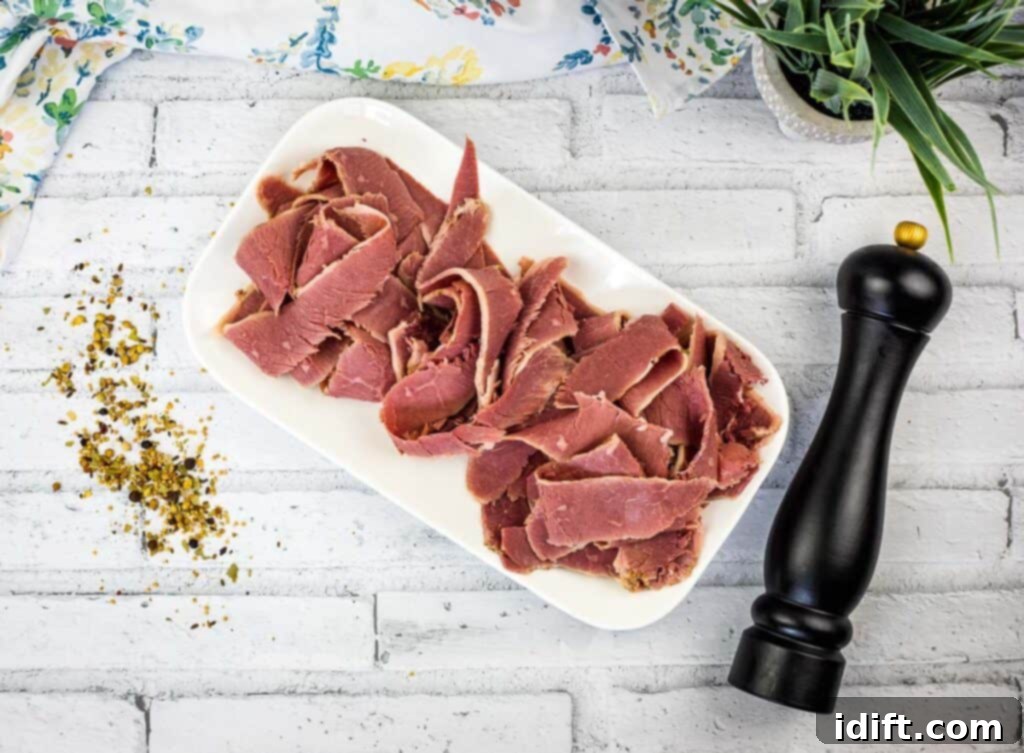
Making your own corned beef is a patient process, primarily involving a 5-day cure followed by a crucial desalting step. This detailed, day-by-day guide is designed for a 4-5 pound slab of brisket, ensuring clarity and success for your homemade masterpiece.
- Day 1: Brisket Preparation and Brine Creation
- Trim the Brisket: Begin by trimming your beef brisket. If you’re using the flat cut, leave about 1/4 to 1/2 inch of the fat cap on one side. This fat is essential for moisture and flavor during the long cooking process. However, avoid leaving too much thick, hard fat, as boiled fat can have an unpleasant texture. Remove any silver skin or excessively tough membranes.
- Prepare the Brine: In a large, non-reactive container (such as a food-grade plastic bin, a large ceramic crock, or a very large glass bowl that fits in your refrigerator), combine the distilled water, accurately measured Prague Powder #1, and kosher salt. Whisk vigorously until all the salt and powder are completely dissolved. Ensure there are no undissolved granules at the bottom.
- Submerge the Brisket: Carefully place the trimmed brisket into the prepared brine. It is crucial that the meat is fully submerged in the liquid. If the brisket floats, you’ll need to weigh it down. You can use a heavy plate, a brine bag filled with water, or a specialized curing weight to keep the meat completely immersed.
- Add Pickling Spices: Scatter your fresh pickling spices directly into the brine around the brisket. Cover the container tightly and refrigerate immediately.
- Day 2: First Flip and Stir
- Remove the container from the fridge. Flip the brisket over to ensure even exposure to the brine on all sides. Give the liquid a good stir to redistribute the spices and ensure the curing agents are evenly distributed. Re-submerge the brisket, weigh it down if necessary, cover, and return to the refrigerator.
- Day 3: Second Flip and Stir
- Repeat the process from Day 2: flip the brisket, stir the brine, ensure full submersion, cover, and return to the fridge. Consistency in this step helps achieve a uniform cure.
- Day 4: Third Flip and Stir
- Again, flip the brisket, stir the brine, and ensure it remains submerged. Cover and refrigerate. This daily routine is vital for preventing spoilage and ensuring the cure penetrates evenly throughout the entire piece of meat.
- Day 5: The Crucial Desalination Process
- Evening of Day 5: This is a critical step for preventing an overly salty final product. Remove the brisket from the brine. Discard the spent brine and rinse the brisket thoroughly under cold running water to remove any surface spices and excess salt.
- First Water Change: Place the rinsed brisket back into the clean container. Fill the container with fresh, cold tap water, ensuring the brisket is completely submerged. Refrigerate.
- Second Water Change (Before Bed or within 8-10 hours): Before you go to bed (or after 8-10 hours), drain this water and replace it with another batch of fresh, cold tap water. This multiple-stage desalting process is essential. DO NOT SKIP THIS STEP! Skipping it will result in an inedibly salty corned beef, as the meat absorbs a significant amount of salt during the curing process. This desalting period allows some of that excess salt to leach out, leaving you with a perfectly seasoned product.
- Day 6: Cook and Enjoy!
- Your corned beef brisket is now fully cured and desalted, ready for cooking. Proceed with your preferred cooking method (braising, slow cooker, Instant Pot, or sous vide). The curing process is complete, but the meat is still raw and requires thorough cooking to be safe and delicious.
Recommended Companion Recipes
How To Cook Your Cured Corned Beef
Once your beef brisket has been successfully cured and desalted, it’s time for the final, equally important step: cooking it. Remember, the curing process makes the meat safe, but it is still raw and requires thorough cooking to become tender, flavorful, and safe to eat. The key to perfectly cooked corned beef is braising – cooking it gently in liquid over an extended period. This method breaks down the tough connective tissues in the brisket, resulting in that signature melt-in-your-mouth tenderness.
Here are several popular and effective methods for cooking your homemade corned beef:
- Slow Cooker Method: This is arguably one of the easiest and most forgiving ways to cook corned beef. Simply place the cured brisket in your slow cooker, add enough liquid (water, beef broth, or even dark beer for extra flavor) to partially submerge the meat, and add a few additional pickling spices or aromatics like bay leaves, garlic, and onions. Cook on low for 6-8 hours or on high for 3-4 hours, until the meat is fork-tender. This method requires minimal supervision and yields consistently delicious results.
- Instant Pot (Pressure Cooker) Method: For those short on time, the Instant Pot is a game-changer. Place the brisket in the Instant Pot with liquid, spices, and aromatics as you would for a slow cooker. Cook on high pressure for about 90 minutes for a 4-5 pound brisket, followed by a natural pressure release. This significantly reduces cooking time while still achieving incredible tenderness. Always consult your Instant Pot’s manual for specific instructions and safety guidelines.
- Stovetop or Dutch Oven Method: This traditional method provides excellent control over the simmering process. Place the cured brisket in a large Dutch oven or a heavy-bottomed pot. Cover it with liquid (water or broth) and add pickling spices, onions, and carrots if desired. Bring to a boil, then reduce the heat to a gentle simmer. Cover tightly and cook for 3-4 hours, or until the meat is very tender when pierced with a fork. You may need to add more liquid periodically to ensure the meat remains submerged.
- Sous Vide Method: For ultimate precision and an incredibly even cook, sous vide is an excellent choice. Season your cured brisket (optionally with more pickling spices) and vacuum-seal it. Cook in a water bath at 145°F (63°C) for 10-12 hours for a sliceable texture, or up to 24-36 hours for a more pull-apart tender result. While sous vide produces exceptional tenderness, you might want to finish it with a quick sear in a hot pan or under the broiler to develop a slight crust. This method ensures the meat is perfectly cooked from edge to edge without drying out.
No matter which method you choose, always ensure the internal temperature of the thickest part of the brisket reaches at least 160°F (71°C) for safety, although it will typically be much higher by the time it’s tender. Once cooked, allow the corned beef to rest for 10-15 minutes before slicing against the grain. This resting period allows the juices to redistribute, ensuring a moist and flavorful slice every time.
Homemade Corned Beef
Equipment
- Large container that can hold the brisket and brine and fit into your fridge
Ingredients
- 5 pounds brisket flat, point, or both
- 1 gallon distilled water
- 1 cup kosher salt
- 2 teaspoons Prague Powder #1
- 1/4 cup pickling spice
Instructions
- In a large, non-reactive container that can comfortably hold the brisket and brine (and fit in your fridge), thoroughly mix the distilled water with the Prague Powder #1 and kosher salt until both are completely dissolved.
- Add the trimmed brisket and pickling spices to the liquid, ensuring the brisket is fully submerged. Use a weight if needed to keep it under the brine. Cover tightly and refrigerate.
- For the next 5 days, once each day, remove the container from the fridge, flip the brisket over, and give the brine a good stir. This ensures an even cure. Re-submerge and cover before returning to the fridge.
- At the end of the 5th day, drain the curing brine and rinse the brisket well under cold running water. Place it back into the clean container and refill with fresh tap water. Refrigerate for 8-10 hours, draining and replacing the water at least once during this period. This crucial desalting step removes excess salt.
- After desalting, your homemade corned beef is ready to be cooked using your preferred method (slow cooker, Instant Pot, stovetop, or sous vide). Enjoy!
Notes
For reference, a 3-ounce serving of typical store-bought corned beef often contains around 827 mg of sodium. Homemade versions, especially after proper desalting, typically have less, allowing for better control over your sodium intake.
Nutrition
A Note on Nutritional Information
Nutritional information for this recipe is provided as a courtesy and is calculated based on available online ingredient information. It is only an approximate value. The accuracy of the nutritional information for any recipe on this site cannot be guaranteed, especially regarding sodium content due to the absorption during the curing process.
Frequently Asked Questions (FAQ) About Homemade Corned Beef
- Is making corned beef at home safe?
- Yes, absolutely, provided you follow the instructions carefully, especially concerning the accurate measurement and use of Prague Powder #1. This curing salt is essential for inhibiting harmful bacteria. Adhering to the specified quantities and maintaining proper refrigeration throughout the curing process ensures a safe and delicious product.
- Can I skip the Prague Powder #1?
- No, Prague Powder #1 is a mandatory ingredient for making corned beef safely. It contains sodium nitrite, which not only gives corned beef its distinctive pink color and flavor but, more importantly, prevents the growth of dangerous bacteria like Clostridium botulinum. Without it, your cured meat would not be safe to consume.
- How long can I store uncured brisket in the brine?
- For this recipe, the recommended curing time is 5 days. While some recipes might suggest slightly longer, it’s best to stick to the recipe’s guidelines for optimal flavor and texture. Do not attempt to significantly shorten the curing time, as the brisket needs sufficient time to properly absorb the cure.
- What if I don’t have distilled water? Can I use tap water?
- While distilled water is recommended for a purer flavor profile, especially if your tap water has a strong mineral or chlorine taste, clean tap water can be used as an alternative. If using tap water, you might consider boiling it first and letting it cool to room temperature to dissipate chlorine, though this is not strictly necessary for safety.
- Can I use different cuts of beef besides brisket?
- Brisket is the traditional and preferred cut for corned beef due to its fat content and connective tissue, which yields the best flavor and tenderness after curing and braising. While other cuts like beef round or silverside can technically be cured, they may result in a tougher or drier product compared to brisket.
- How long does cooked homemade corned beef last?
- Cooked homemade corned beef can be stored in an airtight container in the refrigerator for 3-4 days. For longer storage, it freezes exceptionally well for up to 2-3 months. Slice it before freezing for easier portioning and thawing.
- What are the best serving suggestions for homemade corned beef?
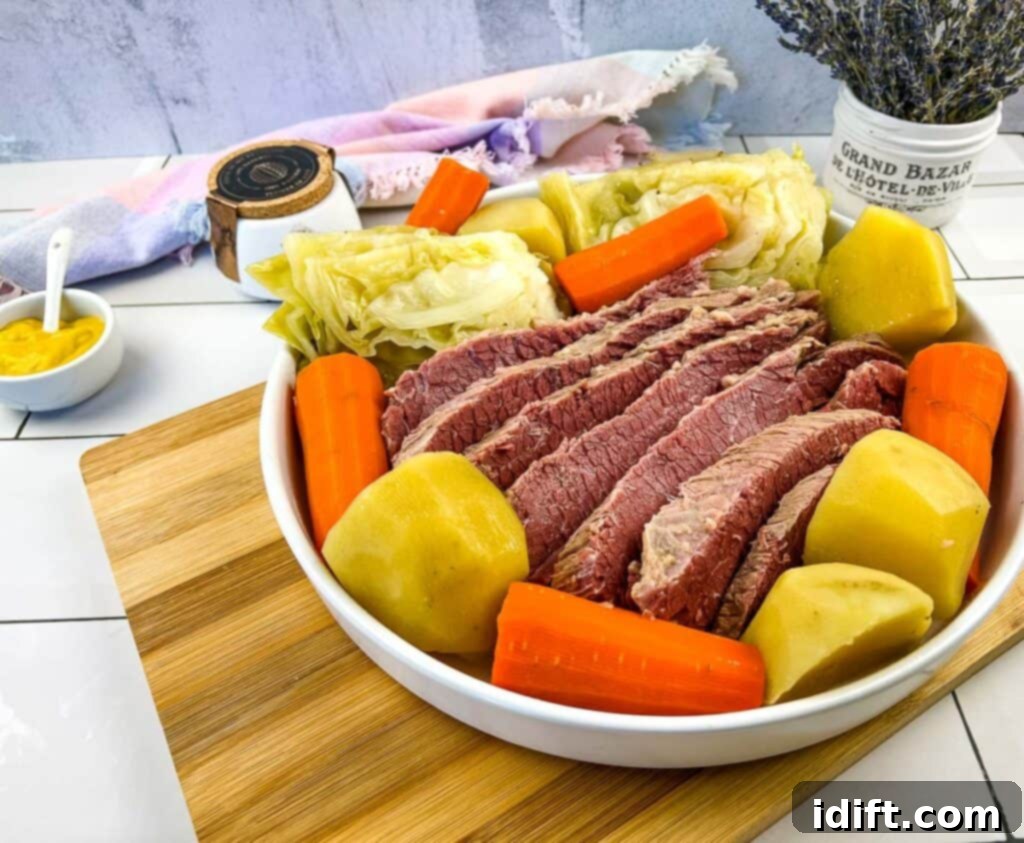
- Homemade corned beef is incredibly versatile! The most classic way to serve it is as part of a traditional Irish dinner with boiled cabbage, potatoes, and carrots. It’s also the star of a Reuben sandwich, piled high on rye bread with sauerkraut, Swiss cheese, and Russian dressing. Leftovers are fantastic in corned beef hash, omelets, or as a flavorful addition to salads.
Explore More Delicious and Easy Recipes!
If you loved making this homemade corned beef, be sure to check out some of our other mouth-watering recipes that are perfect for any home cook looking to elevate their kitchen skills:
- Smoked Cream Cheese: An unexpectedly delicious appetizer that’s simple to make.
- Smoked Tri Tip: Master the art of smoking this flavorful cut of beef for a truly tender experience.
- The Best Traeger Recipes: A curated collection of top recipes designed for your Traeger grill.
- Smoked Asparagus: Add a smoky twist to this classic green vegetable for a perfect side dish.