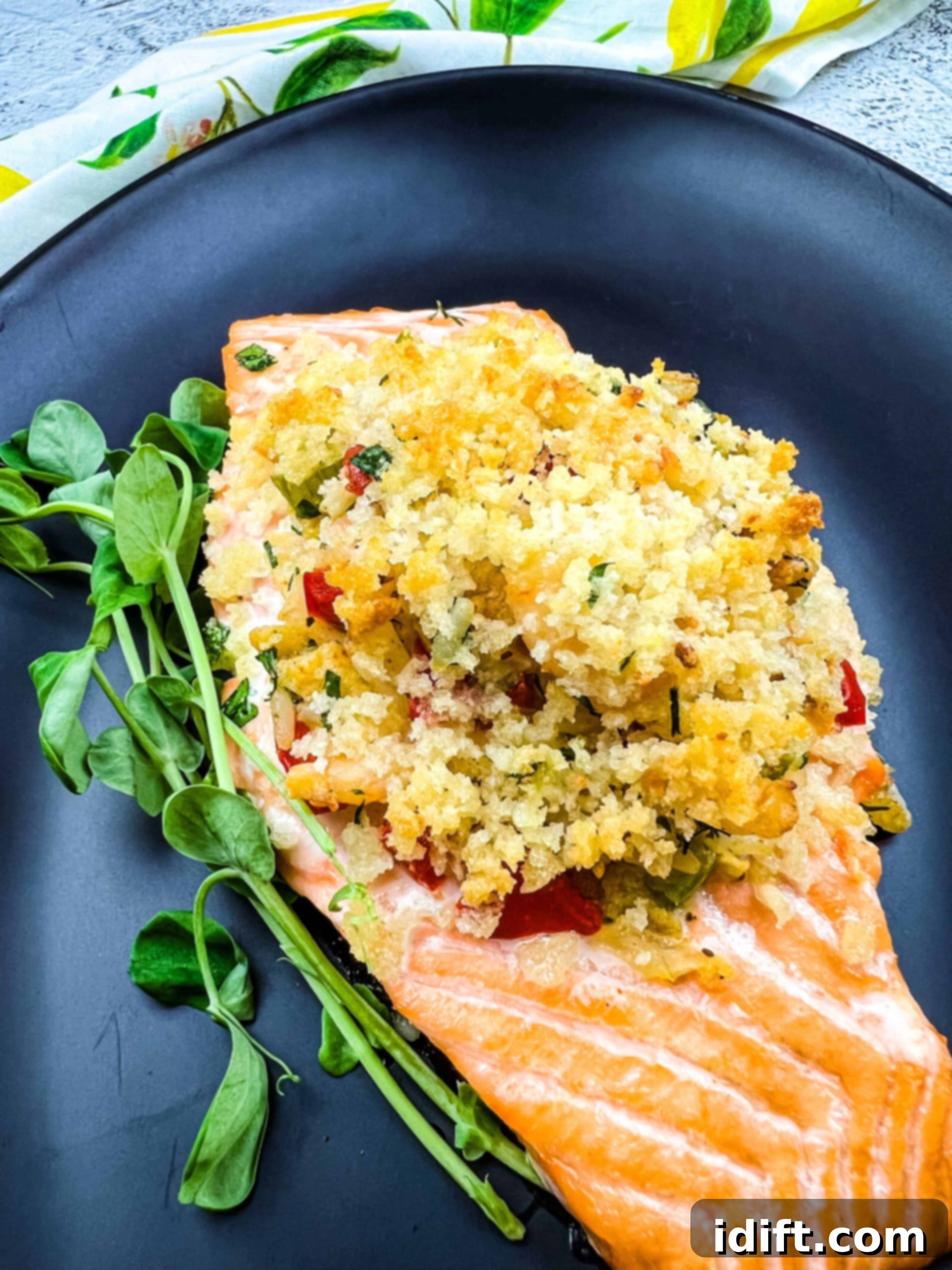
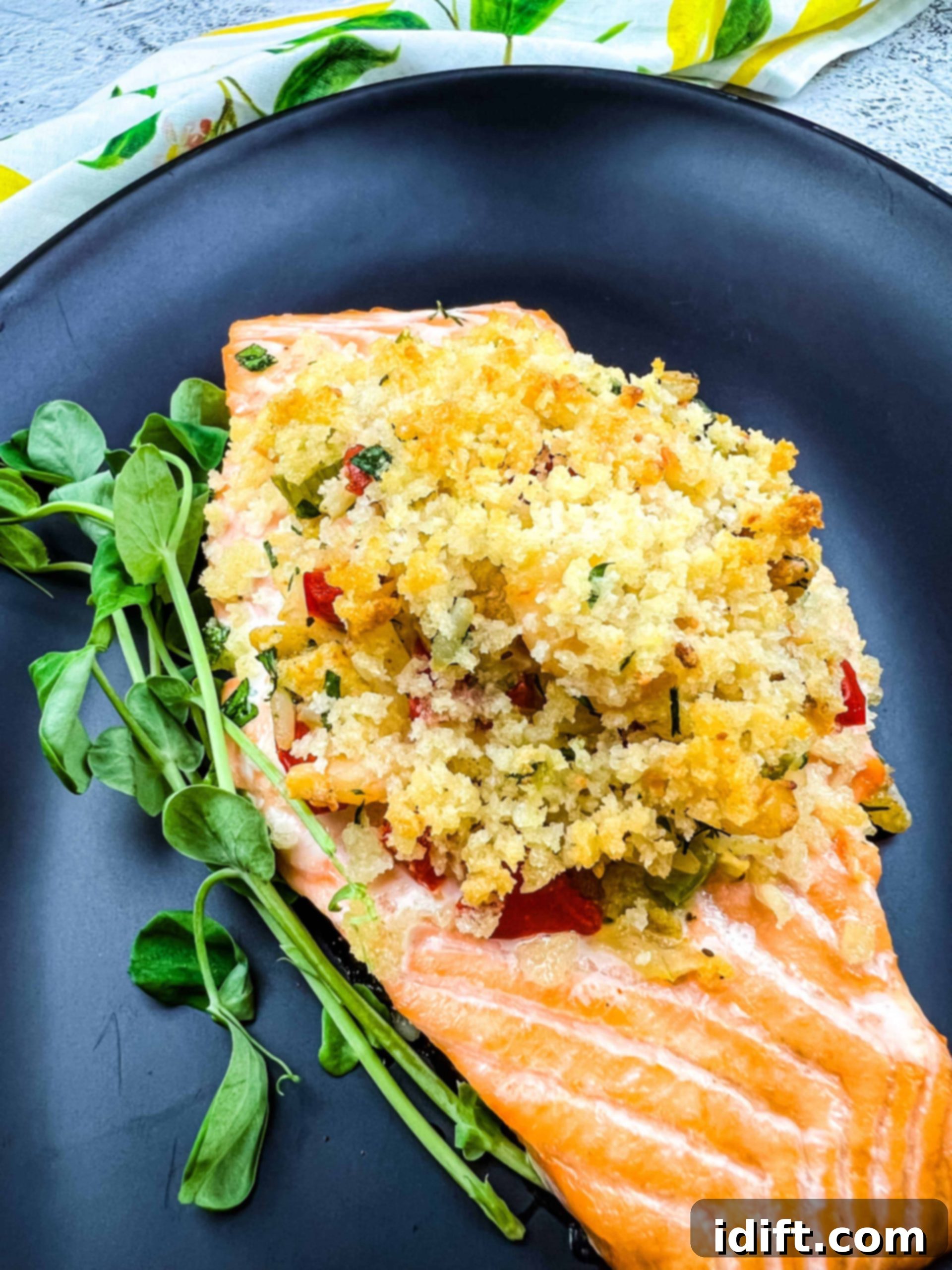
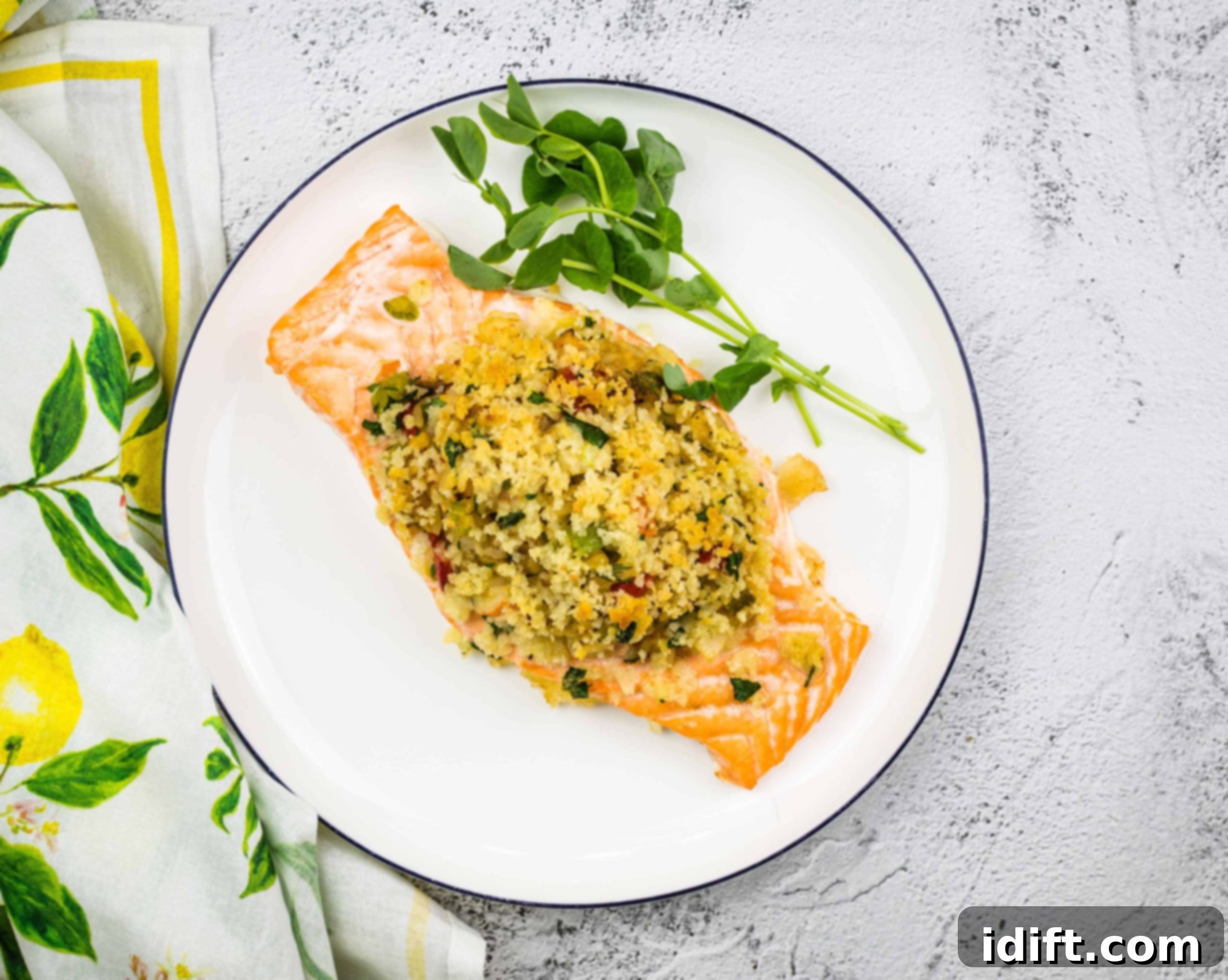
Inspired by the exquisite flavors of Costco’s stuffed salmon, we embarked on a mission to craft the ultimate homemade Seafood Stuffed Salmon. This recipe delivers a moist, sweet, and perfectly flaky salmon fillet generously filled with a savory, herb-infused seafood stuffing. The result is a restaurant-quality meal that’s both incredibly delicious and surprisingly simple to prepare, making it perfect for both weeknight dinners and special occasions. Get ready to impress your taste buds and your guests!
This post may contain affiliate link(s). As an Amazon Associate, I earn from qualifying purchases. See Disclosure.
Salmon holds a special place in my heart among all types of fish. Its delicate flakiness, rich, meaty texture, and the melt-in-your-mouth goodness of a perfectly cooked fillet, especially when it includes that flavorful belly fat, truly make it a culinary delight. However, even the most beloved dishes can fall into a routine. If you find yourself in a salmon rut, preparing the same old baked or grilled fillet, then this extraordinary Seafood Stuffed Salmon recipe is precisely what you need to rekindle your passion for this incredibly healthy and nutritious fish.
This recipe thoughtfully utilizes readily available salmon fillets, eliminating the need to search for exotic cuts. The real magic, however, lies in its indulgent stuffing. Packed with fresh herbs, tender diced vegetables, succulent baby shrimp, and savory imitation crab, this dish transforms a simple salmon fillet into a truly luxurious and deeply satisfying meal. It’s a guaranteed crowd-pleaser that elevates your home cooking to gourmet standards without the gourmet effort.
What You’ll Love About This Easy Seafood Stuffed Salmon
- **Unforgettable Flavor:** Beyond its impressive presentation, the flavor profile of this Seafood Stuffed Salmon is simply divine. The buttery, flaky salmon perfectly complements the rich, savory seafood stuffing, creating a symphony of textures and tastes that will leave everyone asking for more.
- **Effortless Elegance:** This dish looks incredibly impressive, making it ideal for entertaining, yet it’s surprisingly simple to prepare. Much of the preparation can be done in advance, allowing you to enjoy a stress-free cooking experience.
- **Superior to Store-Bought:** Forget overpriced, pre-made options! Crafting this dish at home means you control the quality and freshness of every ingredient, resulting in a significantly tastier and more cost-effective meal than anything you’ll find at a restaurant or grocery store.
- **Customizable Indulgence:** Enjoy the freedom to adjust seasonings and ingredients to your preference. Plus, there’s always enough for generous servings, perhaps even seconds, making it a truly satisfying experience for the whole family.
- **Healthy and Wholesome:** Salmon is packed with Omega-3 fatty acids, essential vitamins, and protein. Combined with fresh vegetables and lean seafood, this meal is not only delicious but also incredibly nutritious.
What You Need To Make Seafood Stuffed Salmon
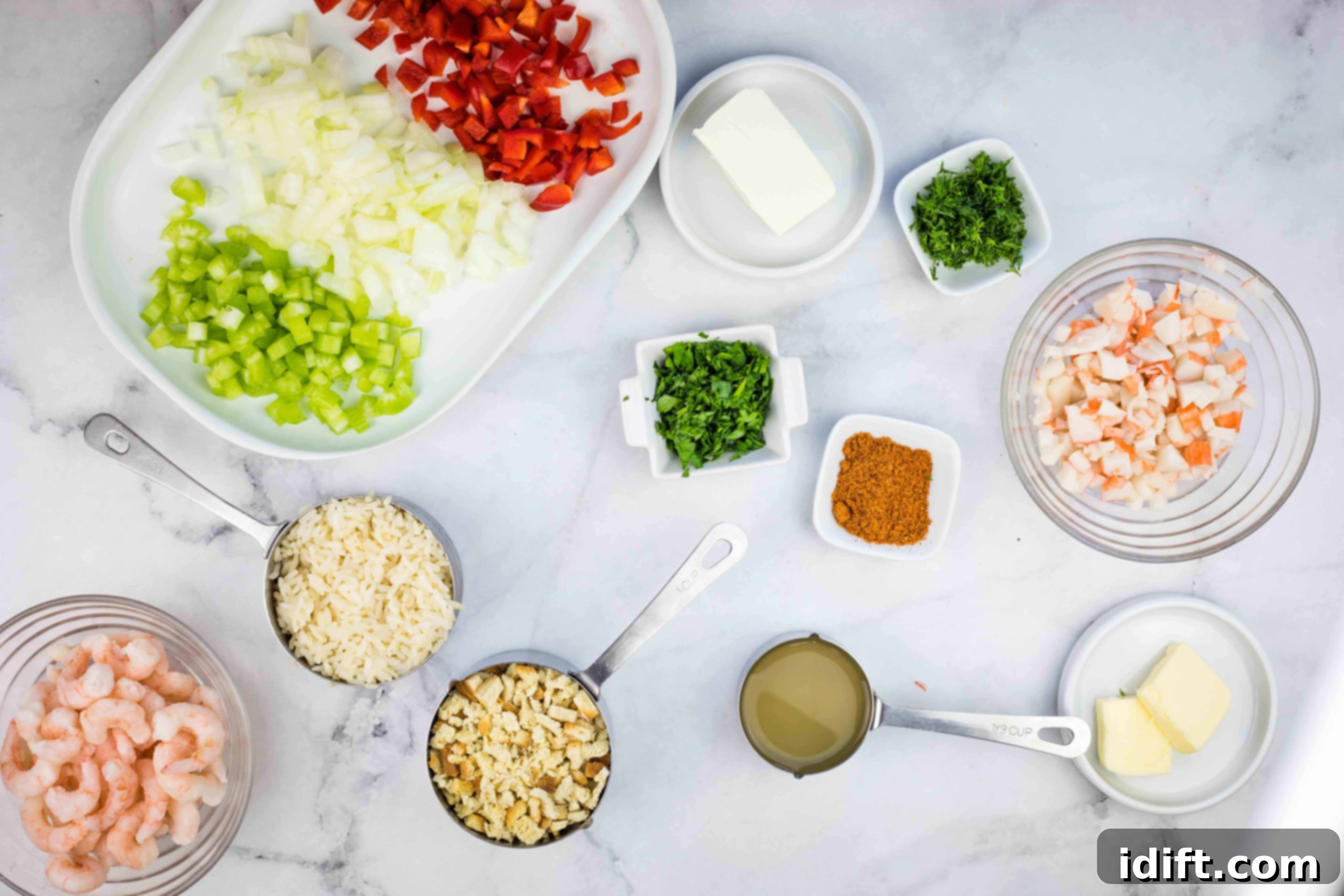
Making this shrimp and crab stuffed salmon recipe is incredibly straightforward once the flavorful stuffing is prepared. The rest is simply a matter of baking it to perfection! Here’s a detailed look at the ingredients you’ll need to create this culinary masterpiece:
- Salmon fillets – The star of the show! Aim for fillets that are at least 1-inch thick to ensure they can be properly stuffed without tearing. Check our detailed notes below on how to select the best salmon for optimal results.
- Cooked rice– This acts as a wonderful binder for the stuffing, adding substance and absorbing all the delicious flavors. Both white or brown rice work perfectly, offering flexibility based on your preference for texture and nutrition.
- Stuffing mix – We recommend a chicken-flavored Stove Top stuffing for its classic savory base, which complements seafood beautifully. This mix adds fantastic texture and seasoned flavor to the stuffing with minimal effort.
- Imitation crab – A budget-friendly way to infuse that sweet, delicate crab flavor and flaky texture into your stuffing. For a more decadent experience, feel free to splurge on real lump crab meat; it will elevate the dish further.
- Baby shrimp – Pre-cooked baby or salad shrimp are ideal for this recipe, as they are already shelled and deveined, saving you prep time. Their small size integrates seamlessly into the stuffing. See our notes below for tips on buying shrimp.
- Celery – Diced small, celery adds a refreshing crunch and a subtle earthy note that balances the richness of the seafood.
- Onion – Finely diced onion provides a foundational aromatic flavor, softening beautifully as it cooks and adding depth to the stuffing.
- Red bell pepper – Diced small, red bell pepper introduces a vibrant pop of color and a sweet, slightly peppery flavor that enhances the overall profile.
- Butter – Essential for sautéing the vegetables and adding richness to the stuffing. Both salted or unsalted butter are fine; adjust added salt accordingly. A small knob on top of the stuffed salmon during baking ensures extra moisture and browning.
- Cream cheese – This is the secret ingredient for an incredibly moist, creamy, and cohesive stuffing. It binds all the ingredients together and adds a wonderful tang.
- Seafood broth or stock – This liquid component helps to moisten the stuffing mix and infuse it with a deeper seafood flavor. If seafood broth is unavailable, chicken broth or stock makes a perfectly acceptable substitute.
- Garlic – Freshly minced garlic is always best for its pungent aroma and robust flavor, which is a perfect match for seafood.
- Old Bay seasoning – A classic American seafood seasoning that brings a unique blend of spices, including celery salt, black pepper, and paprika, providing that unmistakable savory seafood kick.
- Dill – Freshly chopped dill adds a bright, slightly anise-like flavor that pairs exquisitely with salmon and other seafood, enhancing the freshness of the dish.
- Parsley – Fresh, finely chopped parsley contributes a fresh, herbaceous note and a touch of color to the stuffing, rounding out its flavor profile.
How To Buy The Best Salmon for Stuffing
Salmon, like many premium ingredients, has seen price fluctuations. While it generally remains an accessible and healthy choice, knowing how to select the freshest and tastiest fillets can make all the difference for your stuffed salmon. Here are some expert tips to guide you:
- **Timing Your Purchase:** Always aim to buy salmon when it’s on sale. Keep an eye on weekly circulars or ask your local fishmonger for their sales schedule. Fresh salmon can be tightly wrapped and frozen for later use if bought in bulk.
- **Custom Cuts from the Fish Counter:** Head to the fish counter and request them to cut it into approximately 4 to 6 ounce fillets. This size is ideal for stuffing, allowing for a good portion of filling without being overly large or too thin to hold the stuffing.
- **Pin-Bones and Skin:** For stuffed salmon, it’s crucial to ask for pin-bones to be removed. These tiny bones can be a nuisance. Also, opt for skinless salmon, as the skin is not needed for this preparation and can interfere with the stuffing process.
- **Fresh vs. Frozen:** While fresh, never-frozen salmon is often preferred for its superior texture and flavor, high-quality flash-frozen salmon can be an excellent alternative, especially if you live inland. Always check for proper sealing and absence of freezer burn.
- **Know Your Salmon Type:** The specific kind of salmon (King, Sockeye, Coho, Atlantic) is less critical than its freshness, as all varieties are delicious. Each has subtle differences in fat content and color, but any will work wonderfully for stuffing.
- **Sustainable Choices:** Wild-caught salmon is often my first choice for its natural diet and environment, but it can be pricier. If choosing farmed salmon, always ask your fishmonger for responsibly farmed options. They can guide you towards choices that are better for the environment and for your health.
- **The Best Cut for Fillets:** Ask for salmon cut from the head end of the fish. These fillets tend to be more uniform in thickness and lack the tougher, thinner section near the tail, which can be challenging to stuff evenly.
- **Embrace the Belly Fat:** Do not remove the grey line of belly fat at the edge of the fillet! This part is rich in flavor and packed with beneficial Omega-3 fatty acids. It contributes significantly to the salmon’s moisture and overall succulence.
- **Look for Vibrant Appearance and Firm Texture:** Fresh salmon should have a bright, almost translucent flesh with distinct white fat lines. Avoid fish that looks dull, discolored, or has brown spots. The flesh should be firm to the touch and spring back when gently pressed.
How To Buy Shrimp For Shrimp Stuffed Salmon
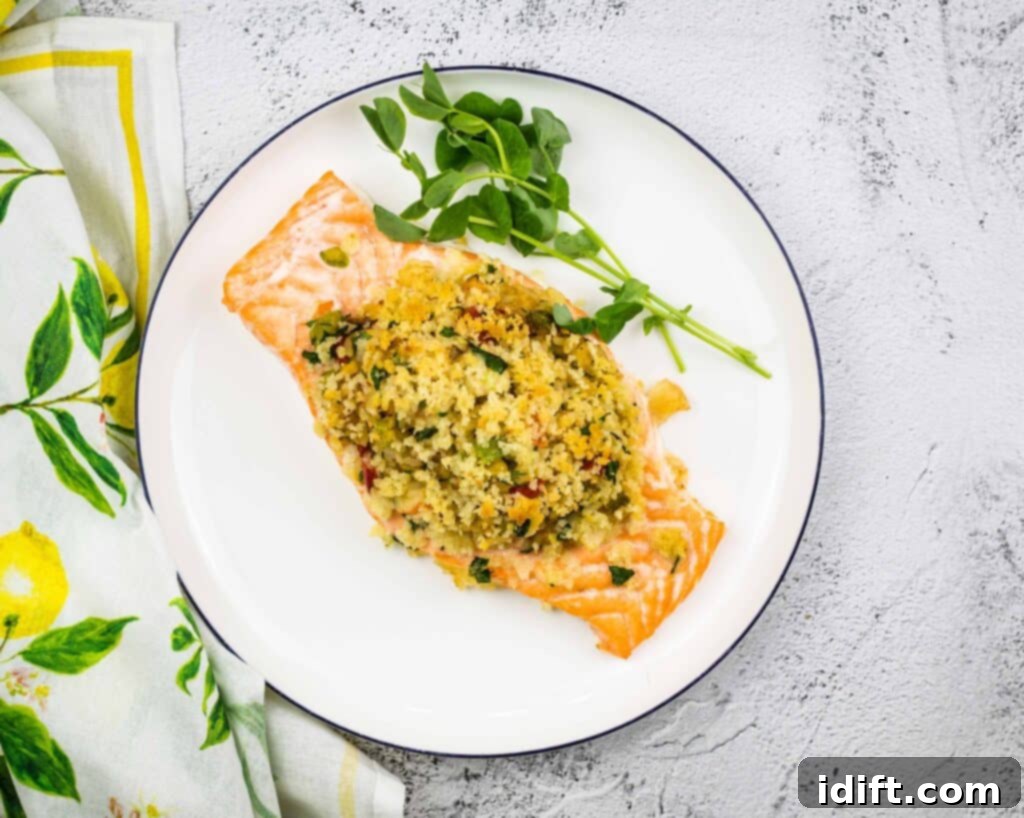
The success of your stuffed salmon hinges on carefully selected ingredients, especially the shrimp for the stuffing. It’s absolutely essential that you avoid using any raw seafood components in your stuffing mixture, as it would be incredibly challenging to ensure the stuffing is thoroughly cooked without severely overcooking and drying out your delicate salmon fillets.
For this specific recipe, we highly recommend using **baby shrimp**, often labeled as “salad shrimp.” These are ideal because they come pre-cooked, already shelled, and deveined, making them incredibly convenient and ready to use straight from the package. Their small size is perfect for integrating smoothly into the stuffing mixture, ensuring an even distribution of flavor and texture.
If you find that baby shrimp or salad shrimp are not available at your local market, don’t worry! You can easily substitute them with small-to-medium sized pre-cooked shrimp. Just make sure they are shelled and deveined. Once you have them, simply give them a quick chop into smallish pieces to match the texture and size of the baby shrimp. This ensures they blend well with the other stuffing ingredients and cook evenly within the salmon.
While shrimp is our primary recommendation, this recipe is also flexible. If you desire a richer, more varied seafood profile, consider adding other pre-cooked, finely chopped seafood such as scallops, or even real crab meat, alongside or in place of the imitation crab. Just remember to always ensure any additions are already cooked before incorporating them into the stuffing to prevent uneven cooking.
How To Make Baked Stuffed Salmon
Crafting this elegant seafood stuffed salmon is a rewarding experience, transforming a simple fillet into a gourmet meal. The process, while delivering impressive results, is actually quite straightforward. You’ll first prepare the rich and flavorful seafood stuffing, then carefully prepare your salmon fillets, and finally bake them to flaky perfection. It’s a dish that looks intricate but is surprisingly accessible for any home cook.
For a full list of ingredients and detailed, step-by-step instructions with precise measurements, please scroll down to the comprehensive recipe card located at the bottom of this page.
My inspiration for this recipe came from the delicious, yet often pricey, stuffed salmon available at Costco. I was determined to create a homemade version that was not only more affordable but also superior in taste and quality. Here’s a simplified overview of how we achieve this fantastic dish!
To make the delicious and creamy seafood stuffing:
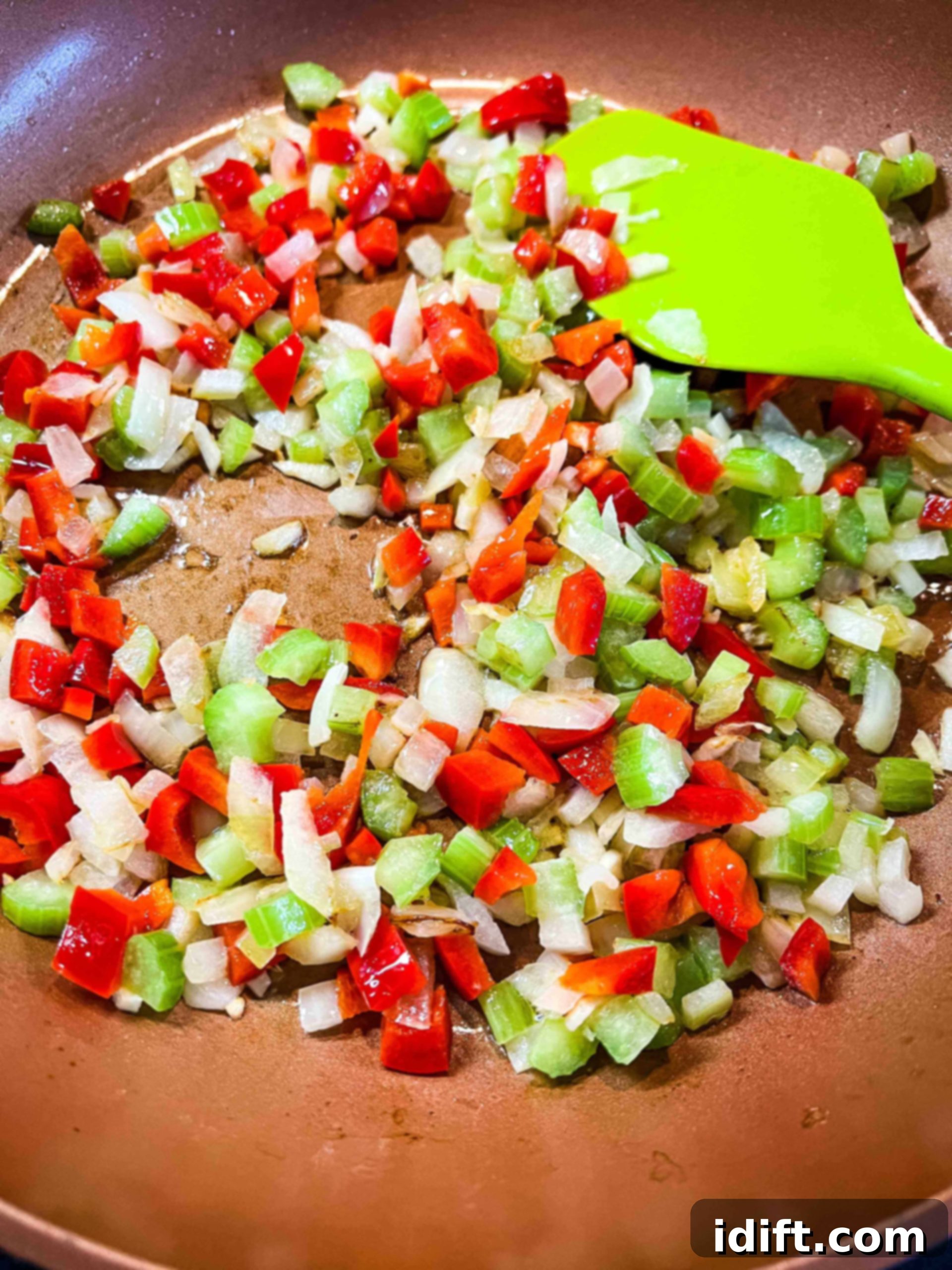
- Sauté Aromatics: Begin by sautéing the finely diced celery, onion, red bell pepper, and minced garlic in a pan with butter until the vegetables become tender and fragrant. This step builds the foundational flavor of your stuffing.
- Incorporate Creaminess: Stir in the cream cheese with the sautéed vegetables until it has completely melted and created a smooth, rich base. This adds an incredible creaminess and binds the stuffing together beautifully.
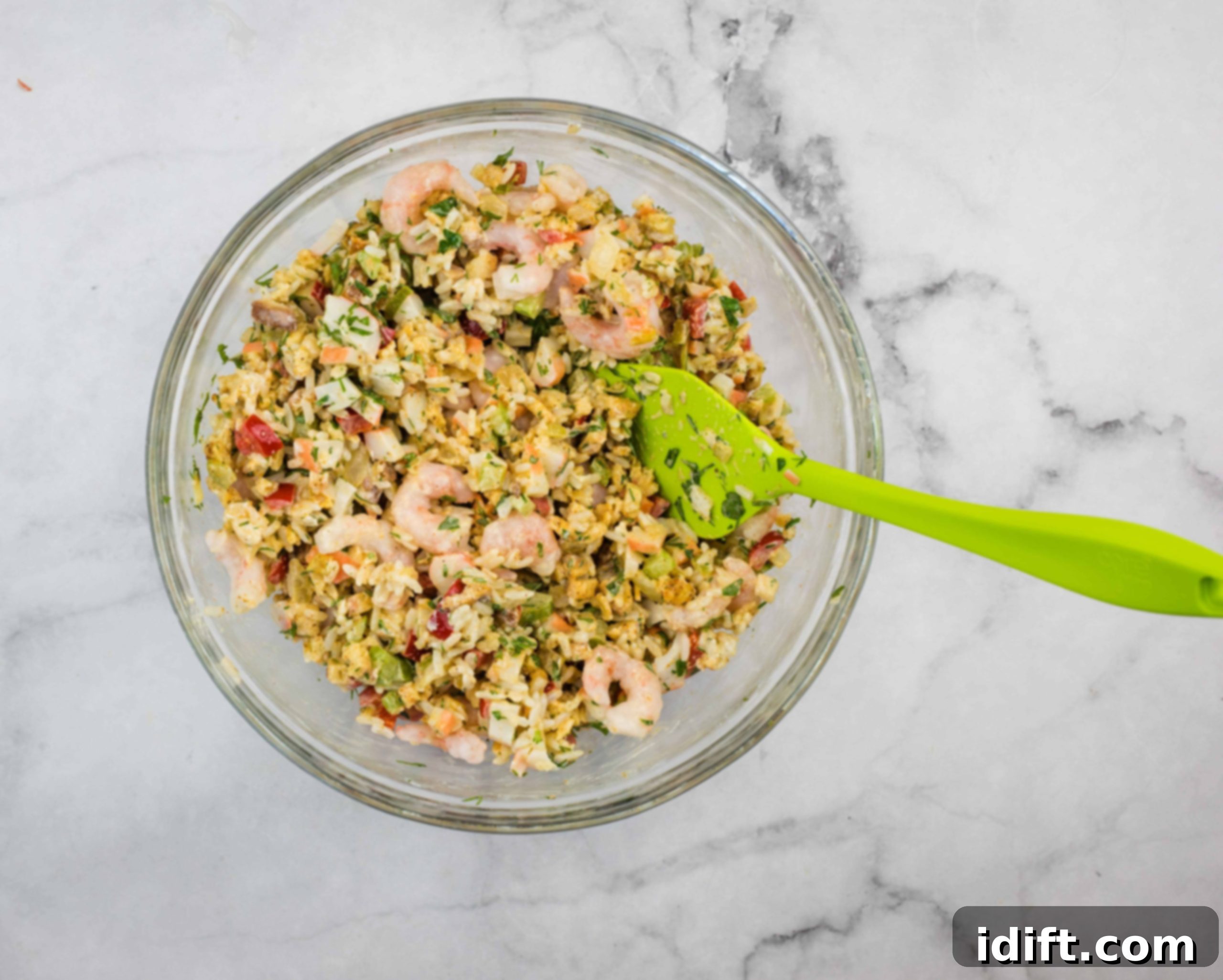
- Combine Ingredients: Transfer the warm sautéed vegetable mixture to a medium-sized mixing bowl. Add in the cooked rice, stuffing mix, imitation crab, pre-cooked baby shrimp, Old Bay seasoning, fresh dill, and chopped parsley. Mix all these components thoroughly until they are well combined.
- Moisten the Stuffing: Gradually add the seafood broth (or chicken stock) to the mixture. Mix gently until the stuffing cubes have just begun to soften. Be careful not to oversaturate; you want a moist, not soggy, stuffing. The vegetables and seafood will release additional liquid during baking, ensuring your stuffing remains soft, flavorful, and perfectly delicious.
For preparing and baking the salmon:
- Prepare Baking Sheet: Line a baking sheet with parchment paper to prevent sticking and for easy cleanup. Preheat your oven to a moderate 325°F (160°C).
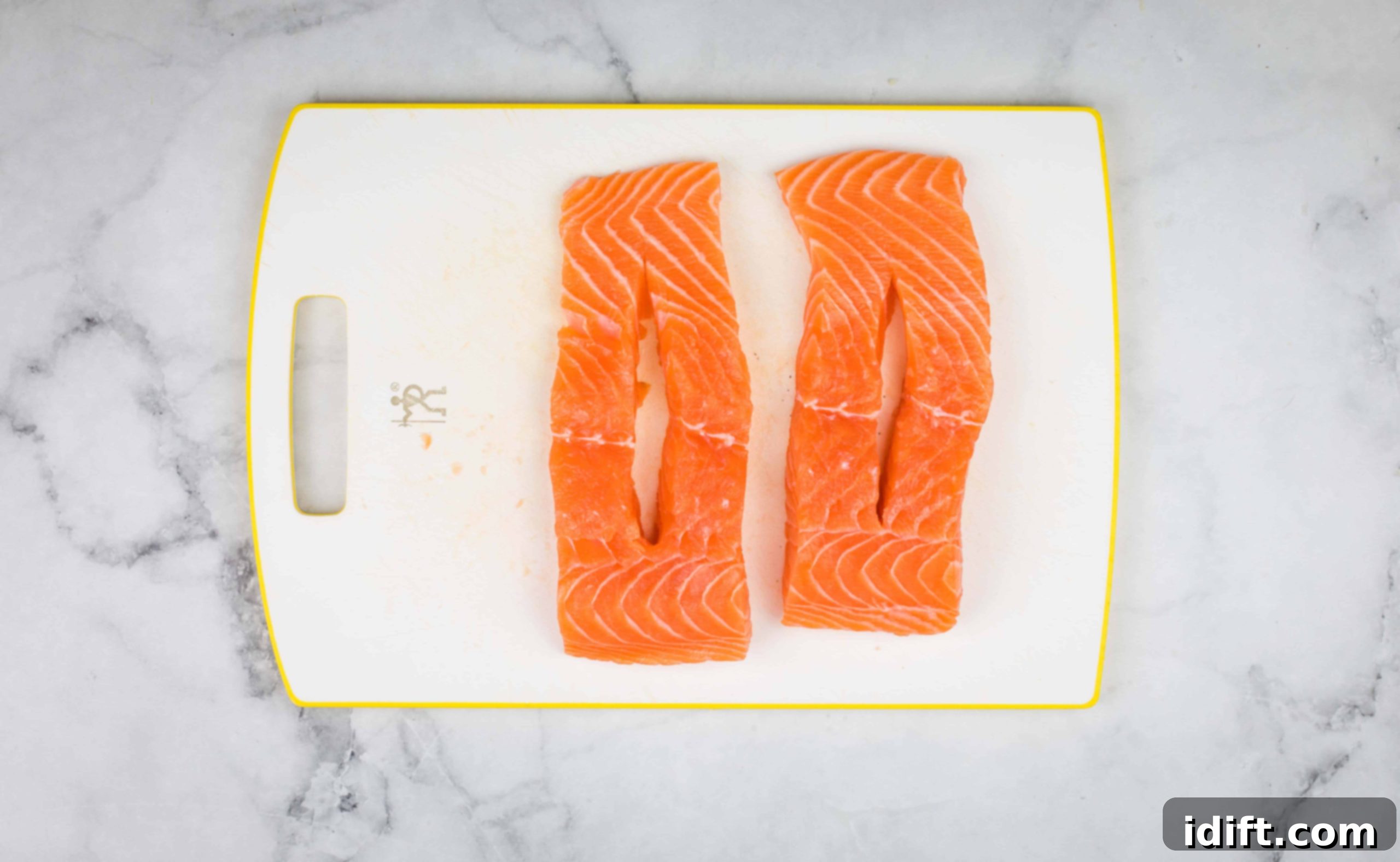
- Create Pockets: Lay each salmon fillet flat on a clean cutting board. Using a sharp knife, make a careful slit lengthwise down the center of each fillet. Ensure you don’t cut all the way through; leave about a 1/2-inch border of uncut salmon at both ends to form a pocket.
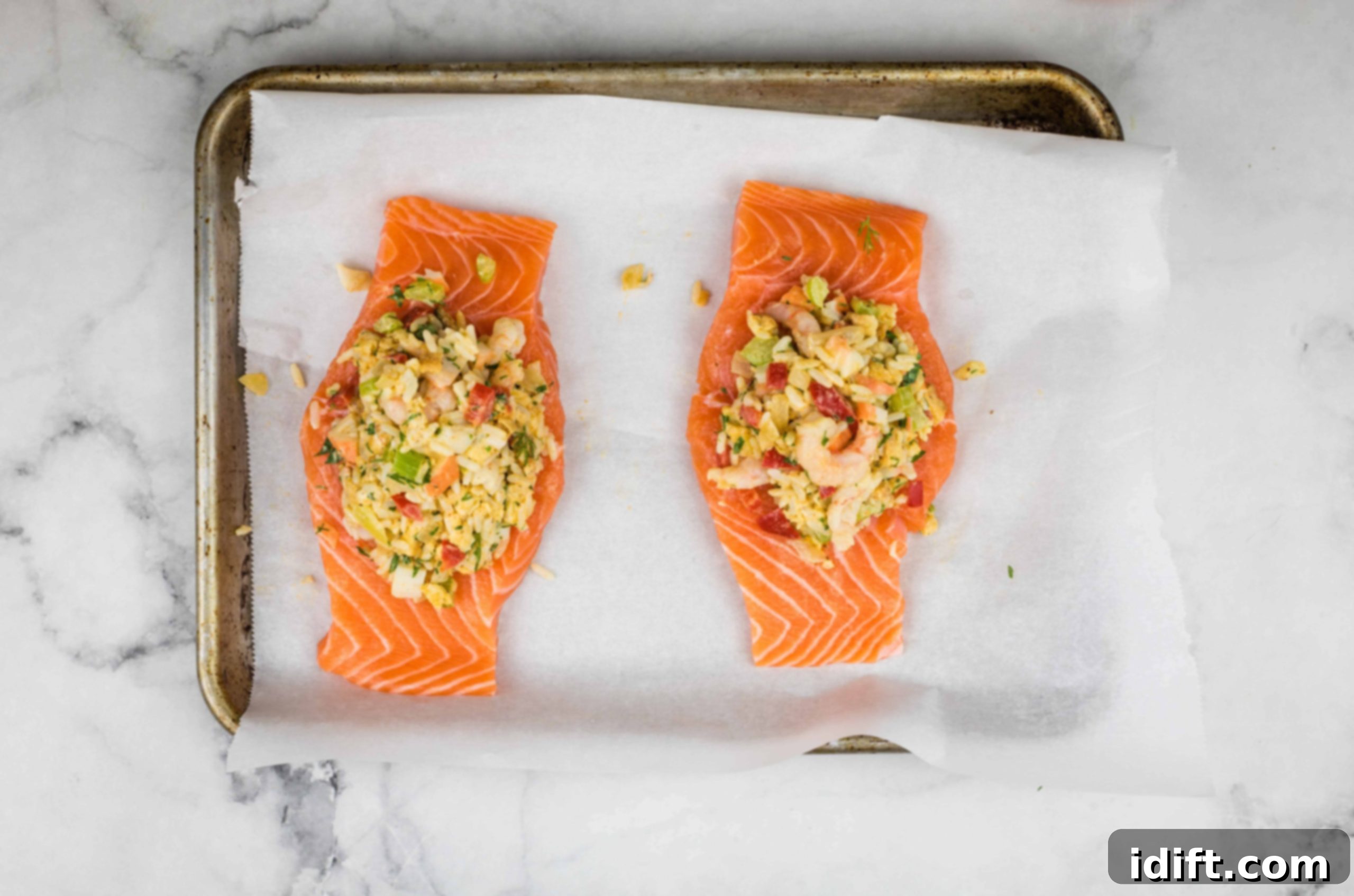
- Arrange and Open: Transfer the prepared salmon fillets to the parchment paper-lined baking sheet. Gently pull the edges of each slit apart a bit, opening it up to create a larger cavity for the stuffing. Repeat this for all remaining fillets.
- Season Salmon: Lightly sprinkle both the inside and outside of the salmon fillets with salt and freshly ground black pepper to season the fish itself.
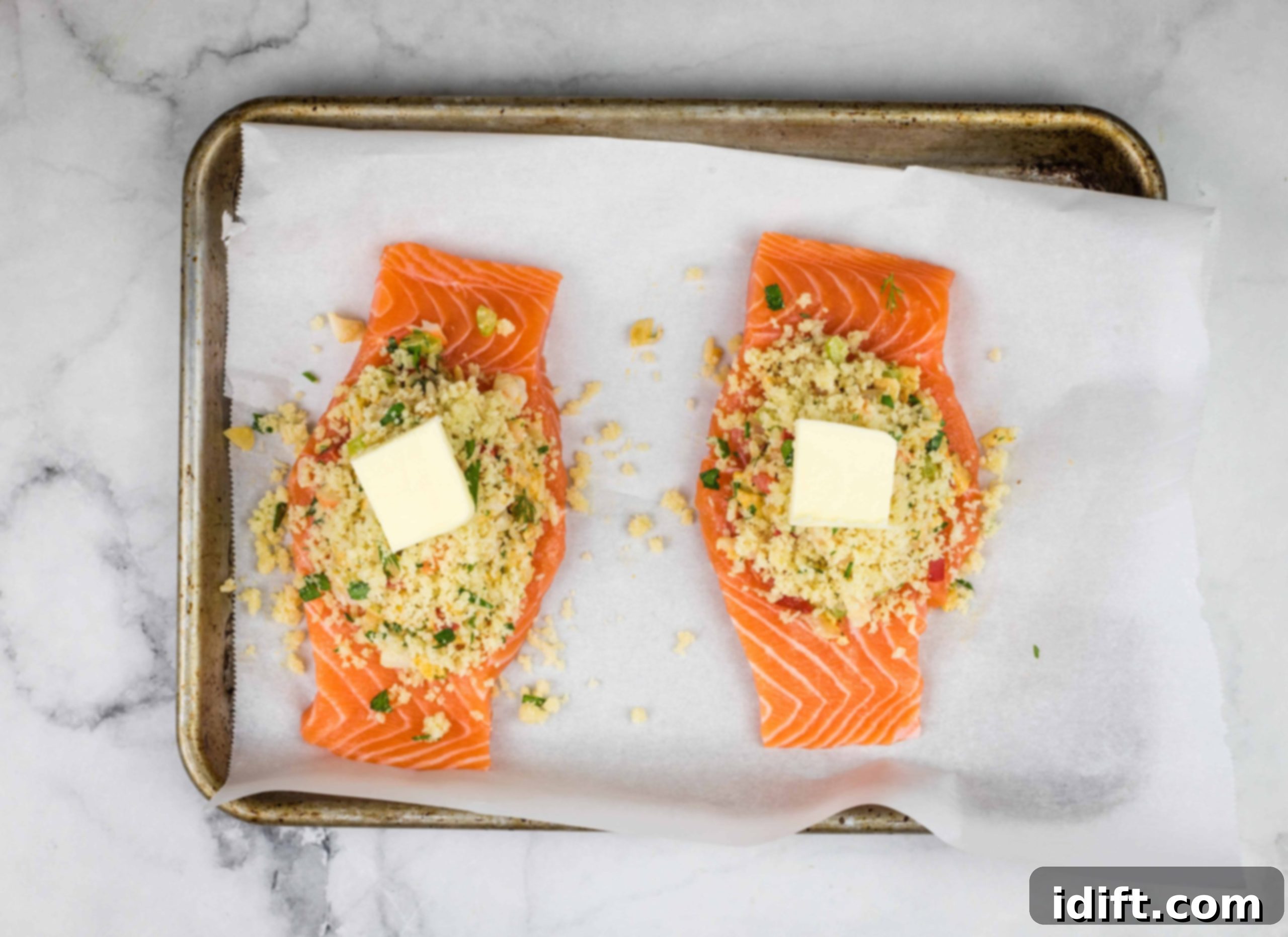
- Stuff and Top: Carefully spoon about 1/4 cup of the prepared seafood stuffing into the center of each salmon fillet’s pocket. Gently press the stuffing down lightly, ensuring it makes contact with the baking sheet. To add extra moisture and flavor, place a small knob of butter (approximately 1/2 tablespoon) directly on top of the stuffing in each fillet.
- Bake to Perfection: Place the baking sheet into the preheated oven and bake for approximately 30 minutes, or until the salmon is cooked through and flakes easily with a fork. For precise doneness, use a digital meat thermometer, aiming for an internal temperature of 125-135°F (52-57°C) for moist, flaky results, or up to 145°F (63°C) for well-done.
Recommended Recipes to Complement Your Stuffed Salmon
Chef Jenn’s Expert Tips for Perfect Stuffed Salmon
Achieving perfectly cooked, moist, and flavorful stuffed salmon is an art, but with these expert tips, you’ll master it in no time:
- **Avoid Overcooked Salmon at All Costs:** There’s nothing more disheartening than an overcooked, dry piece of salmon. While the FDA recommends cooking salmon to 145°F (63°C), I find that for restaurant-quality moisture and flakiness, an internal temperature of 125-130°F (52-54°C) is ideal, provided your salmon has been properly refrigerated. The carryover cooking will bring it up a few degrees. Trust me, your taste buds will thank you.
- **Embrace Low and Slow Heat:** Salmon prefers a gentle, consistent heat. If you’ve ever noticed white, coagulated protein (albumin) seeping out of your salmon, it’s a sign that the heat was too high, and the fish is likely overcooked. Cooking at a lower temperature, like our recommended 325°F (160°C), helps the salmon cook more evenly, minimizes protein loss, and keeps it beautifully moist and tender.
- **Resist the Urge to Overstuff:** While it’s tempting to load up each fillet with as much delicious stuffing as possible, remember that less is often more. Too much stuffing can prevent the salmon from cooking evenly, potentially leading to overcooked fish or undercooked stuffing. A scant 1/4 cup of stuffing per fillet is the perfect amount to ensure balanced cooking and a beautiful presentation.
- **Bring Ingredients to Room Temperature:** For the most even cooking, allow both your stuffing and salmon fillets to come to room temperature for about 15-20 minutes before baking. This small step helps prevent the exterior from cooking too quickly while the interior remains cold, ensuring a uniform doneness throughout.
- **Utilize a Digital Meat Thermometer for Accuracy:** Cooking times can vary significantly based on factors like the initial temperature of the salmon, the thickness of the fillets, and the exact amount of stuffing used. The only way to guarantee perfectly cooked salmon and stuffing is by using a reliable digital meat thermometer. As mentioned, I personally aim for 125-130°F (52-54°C) for the ultimate moist texture, but you can cook it up to the FDA recommended 145°F (63°C) if preferred.
- **Pre-cook your rice and shrimp:** While it seems obvious, ensure your rice is fully cooked and your shrimp is fully cooked before adding them to the stuffing. Since the salmon cooks relatively quickly, the stuffing won’t have enough time to cook raw ingredients thoroughly without overcooking the fish.
What To Serve With This Easy Stuffed Salmon Recipe
This gourmet-worthy seafood stuffed salmon offers a fantastic opportunity to get creative with your side dishes and complete a truly unforgettable meal. Here’s where you can mix and match to perfectly complement the rich flavors of the salmon:
- **A Grand Seafood Feast:** For an ultimate seafood indulgence, consider starting your meal with a warm bowl of this creamy and comforting seafood chowder. The delicate flavors of the chowder will beautifully set the stage for your main course.
- **Light and Fresh Salads:** Salmon pairs wonderfully with crisp, vibrant salads. Our asparagus, fennel, and spinach salad offers a refreshing contrast with its bright flavors and crunchy textures. The earthiness of asparagus is a classic companion to salmon. A simple garden salad with a lemon-herb vinaigrette would also be excellent.
- **Hearty Potato Sides:** For a more substantial pairing, these decadent stacked potatoes au gratin with Gruyere are the perfect match, adding a creamy, cheesy richness that complements the seafood. Alternatively, a simple roasted potato medley or garlic mashed potatoes would also be delightful.
- **Seasonal Roasted Vegetables:** Bring out the natural sweetness of vegetables by roasting them alongside your salmon. Try our maple-roasted acorn squash for a touch of sweetness and warmth, or these savory Brussels sprouts with almonds for a slightly bitter crunch that balances the richness of the dish. Green beans or broccoli florets tossed with lemon and garlic are also excellent choices.
- **Simple Grains:** If you want to keep it lighter, a side of quinoa or couscous would absorb the delicious juices from the salmon and stuffing, offering a wholesome complement.
Is Crab and Shrimp Stuffed Salmon Freezer Friendly?
Unfortunately, due to the delicate nature of salmon and the creamy consistency of the stuffing, this dish is **not ideal for freezing**. Freezing and reheating can significantly alter the texture of both the fish (making it dry) and the stuffing (making it watery or grainy). For the best culinary experience, this seafood stuffed salmon is definitely best enjoyed fresh from the oven.
If you’re cooking for fewer people and find yourself with too much, we recommend cutting the recipe in half to make just 2 servings. However, if you do have any leftovers, they can be stored safely in an airtight container in the refrigerator for 2-3 days. Reheat gently in the oven or microwave, being careful not to overcook. For future convenience, you *can* prepare the stuffing mixture ahead of time and store it in the fridge for a day or two, then stuff and bake the salmon fresh when you’re ready to eat.
Frequently Asked Questions About Seafood Stuffed Salmon
While government guidelines suggest cooking salmon to an internal temperature of 145°F (63°C) for food safety, in my professional opinion, this often results in overcooked, dry fish. For truly moist, flaky, and delicious salmon, I prefer to cook it to about 125-130°F (52-54°C). This allows for perfect flakiness without drying out. Always use a reliable digital meat thermometer inserted into the thickest part of the salmon (avoiding the stuffing) to get an accurate reading.
Absolutely! Despite its gourmet appearance and restaurant-quality taste, this recipe is surprisingly straightforward. The most involved part is preparing the stuffing, and even that is quite simple – essentially just sautéing vegetables and mixing ingredients. What makes it even easier is that you can prepare the entire stuffing mixture ahead of time. Then, on the day you plan to serve, simply stuff your salmon fillets and bake them for approximately 30-40 minutes before you’re ready to enjoy a fantastic meal.
The precise cooking time for your seafood stuffed salmon can vary. It largely depends on a few key factors: the thickness of your salmon fillets, how cold they were when they went into the oven, and the amount of stuffing you’ve used. Generally, when baked at 325°F (160°C), it will take approximately 30 to 40 minutes to cook through. To ensure perfectly cooked fish and avoid overcooking, which can lead to dry salmon, always rely on a digital meat thermometer. Aim for an internal temperature of 125-130°F (52-54°C) for optimal moisture, or up to 145°F (63°C) if you prefer a higher doneness.
Absolutely! While imitation crab is a convenient and cost-effective option, using fresh lump crab meat will undoubtedly elevate the flavor and texture of your stuffing to a luxurious level. If you choose to use fresh crab, make sure it is fully cooked and gently flaked before adding it to the stuffing mixture. This substitution is highly recommended for a truly special occasion meal.
Step By Step Process Visual Guide
To help you visualize each step of creating this delicious seafood stuffed salmon, here’s a gallery illustrating the process from preparing the ingredients to baking the final dish.
Seafood Stuffed Salmon
Equipment
- Baking sheet
- Parchment paper
Ingredients
- 1/2 cup cooked rice
- 1/2 cup stuffing mix chicken flavor
- 1/4 cup butter divided
- 1/2 cup diced celery
- 1/2 cup diced onion
- 1/4 cup diced red bell pepper
- 1 clove garlic minced
- 1 tablespoon cream cheese
- 4 ounces baby shrimp
- 2 ounces imitation crab meat
- 1 teaspoon dill chopped
- 1 teaspoon Old Bay seasoning
- 1 teaspoon parsley chopped
- 2 tablespoons seafood broth or chicken broth/stock
- salt and pepper to taste
- 24 ounces salmon filets 4-6 filets depending on how big you want them
Instructions
To make the stuffing:
- Saute the diced celery, onion, red bell pepper, and garlic in 2 tbsp of butter until the veggies are tender.
- Stir in the cream cheese until it has melted.
- Add the sauted vegetable mixture to a medium-sized bowl and add in the rice, stuffing mix, imitation crab, shrimp, Old Bay, dill, and parsley. Mix well.
- Add the seafood broth (or chicken stock) and mix until the stuffing cubes have just started to soften. Mix well. If your mixture is still hard and really dry, add 1 tbsp of broth at a time until the mixture starts to soften.
To make the salmon
- Line a baking sheet with parchment paper. Preheat the oven to 325-F.
- Lay the salmon on a cutting board and make a slit in the middle of the fillet, lengthwise. Don’t cut all the way through the salmon – leave about 1/2-inch of uncut salmon at each end.
- Put the salmon fillets on the parchment paper-lined baking sheet and pull the salmon apart a bit, opening the slit into a hole. Repeat for the remaining fillets.
- Sprinkle the fillets with salt and pepper.
- Put about 1/4 cup of seafood stuffing into the middle of each fillet, pressing it down lightly to stick and to touch the baking sheet. Top the stuffing with a small knob of butter, about 1/2 tablespoon.
- Bake at 325-F for about 30 minutes or until cooked through.
Notes
Chef Jenn’s Tips
- Overcooked salmon makes me want to cry. It’s so sad to see an expensive and glorious piece of fish overcooked! The FDA says salmon needs to be cooked to 145-F but if you’ve kept it properly refrigerated, 125-F will result in a moister, flaky fillet.
- Low heat is what salmon likes best! Ever cook salmon and see the white stuff come out of it? Those are the proteins that you’ve cooked out of the salmon. Your heat was too high and you possibly also left it in too long and now it is overcooked.
- Don’t overstuff the salmon! Too much stuffing and your salmon will overcook before the stuffing does. A scant 1/4 cup of stuffing per fillet is plenty.
- Let the stuffing and salmon come to room temperature before baking so it’ll bake more evenly.
- You may need to cook your salmon a bit more or a bit less depending on how cold it was when it went into the oven, how thick the fillets, are, and how much stuffing you used. Use a digital meat thermometer to get an accurate temperature. I aim for 125-F but you can cook it up to 145-F.
Nutrition
A Note on Nutritional Information
Nutritional information for this recipe is provided as a courtesy and is calculated based on available online ingredient information. It is only an approximate value. The accuracy of the nutritional information for any recipe on this site cannot be guaranteed.
WANT MORE DELICIOUS AND EASY RECIPES?
- Smoked Cream Cheese – A surprisingly simple yet incredibly addictive appetizer that’s perfect for entertaining.
- The Best Traeger Recipes – Discover a comprehensive collection of top-rated recipes designed for your Traeger grill, covering everything from meats to vegetables.
- Smoked Pulled Pork – Learn how to achieve tender, smoky pulled pork that falls off the bone, perfect for sandwiches or main dishes.
- Cooking Steaks on a Blackstone Griddle – Master the art of searing and cooking steaks to perfection on a flat-top griddle for a fantastic crust and juicy interior.
- Salmon Alfredo – Indulge in a rich, creamy, and utterly delicious pasta dish featuring tender salmon and sun-dried tomatoes. So creamy and delish!