
Experience the vibrant flavors of Sicily with Caponata, a renowned vegetable dish that captures the essence of Mediterranean cuisine. This classic recipe transforms humble eggplant, ripe tomatoes, pungent olives, and briny capers into a rich, complex mixture that is simultaneously sweet, savory, and tangy. Perfectly balanced and incredibly versatile, Caponata is a delightful addition to any meal, whether served as an elegant appetizer, a flavorful side dish, or a light main course. While it truly shines with peak-season summer produce, its robust flavors make it a cherished dish that can be enjoyed year-round, bringing a burst of sunshine to your table no matter the season.

Our rendition of Caponata celebrates the core components that make this dish unforgettable. We focus on the bold, aromatic essence of fresh garlic, the succulent juiciness of perfectly ripe tomatoes, and the tender texture of eggplant, all harmonized with just the right amount of sweetness and acidity. This meticulous balance ensures every spoonful delivers an authentic taste of Sicily, making it a staple for anyone who appreciates truly exceptional vegetable preparations.
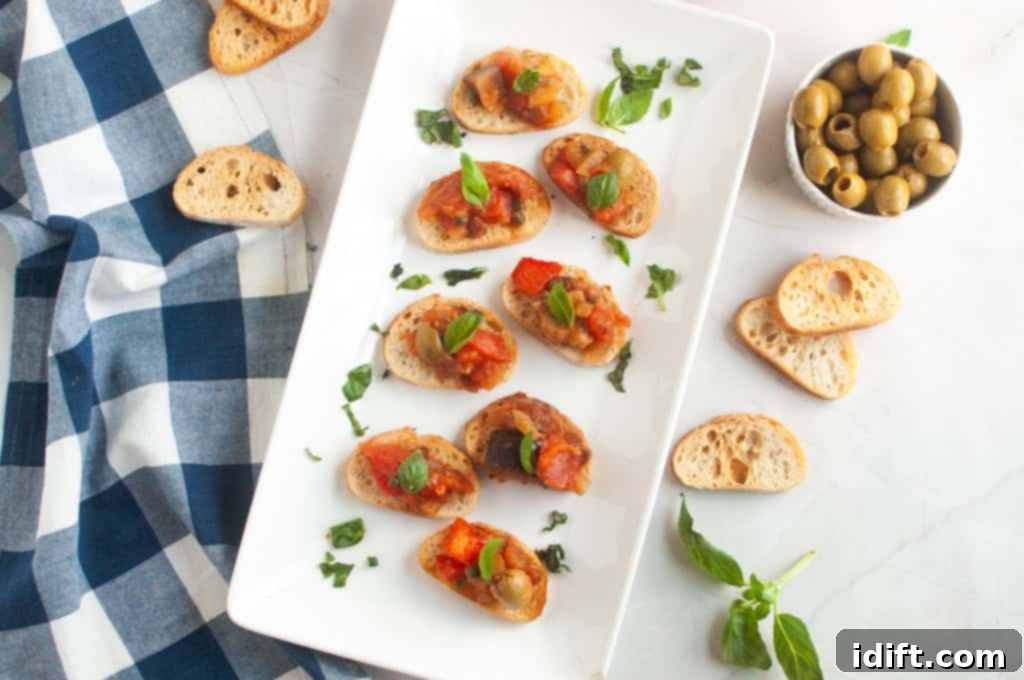
What is Caponata? A Taste of Sicilian Heritage
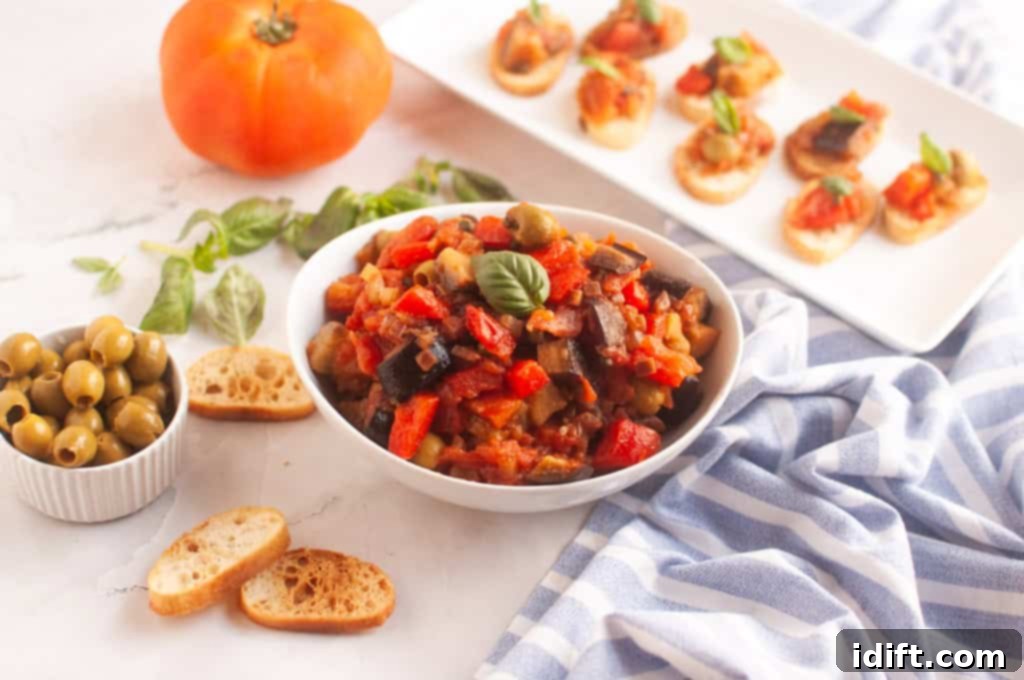
Caponata is more than just a dish; it’s a culinary journey to the heart of Sicily. This traditional vegetable relish or salad boasts a rich history, with roots tracing back centuries. While countless variations exist across the island, the common thread is always a delightful medley of chopped fried eggplant and other vibrant vegetables, all simmered together in a sweet and sour (agrodolce) sauce. The name “Caponata” itself has debated origins, with some theorizing it comes from “capone,” a type of fish often served with the dish, while others link it to the Latin “caupona,” referring to taverns where such preparations were common. Regardless of its etymology, Caponata has become a beloved symbol of Sicilian gastronomy, renowned for its complex flavor profile and incredible versatility.
Its unique agrodolce flavor, achieved through the careful balance of vinegar and sugar, distinguishes Caponata from other vegetable stews. This characteristic sweet and sour profile, combined with the savory depth of eggplant, the freshness of tomatoes, and the briny kick of olives and capers, creates a truly unforgettable taste experience. Often served at room temperature or chilled, Caponata is a refreshing and satisfying dish, perfect for hot summer days but equally comforting when enjoyed any time of year.
Why You’ll Love This Caponata Recipe
There are countless reasons to fall in love with our Summery Caponata. This recipe is designed to be both authentic and accessible, ensuring a rewarding cooking experience for everyone. Here’s why it deserves a spot in your culinary repertoire:
- Authentic Sicilian Flavors: We honor the traditional methods and ingredients to bring you a Caponata that tastes like it came straight from a Sicilian nonna’s kitchen.
- Naturally Vegan and Gluten-Free: Made entirely from fresh vegetables, this dish is a fantastic option for those following plant-based diets or seeking gluten-free meals, without compromising on flavor.
- Incredibly Versatile: From spreading it on crusty bread to serving it alongside grilled meats or stirring it into pasta, Caponata adapts effortlessly to various meal settings.
- Perfect for Meal Prep: Its flavors deepen and meld beautifully overnight, making it an ideal make-ahead dish for entertaining or busy weeknights. Prepare it a day in advance for an even more exquisite taste.
- Showcases Summer Produce: When made with sun-ripened eggplant and juicy tomatoes, this Caponata truly sings, celebrating the bounty of the summer harvest.
- Easy to Follow: Our step-by-step instructions ensure a smooth cooking process, even for novice cooks, guaranteeing a delicious outcome every time.
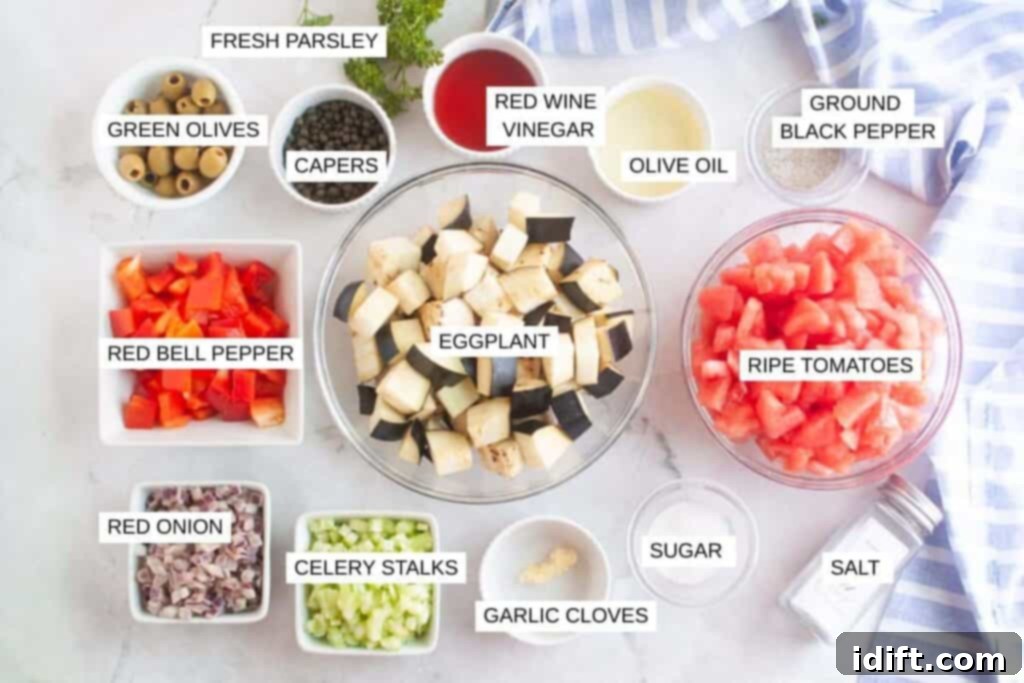
Essential Ingredients for Perfect Caponata
Crafting exceptional Caponata begins with selecting the finest ingredients. Each component plays a crucial role in building the dish’s signature flavor and texture:
- Eggplant: You’ll need about 4 cups of diced eggplant. For convenience and added texture, leave the skins on. Choose firm, shiny eggplants that feel heavy for their size, indicating freshness.
- Salt: Essential for sweating the eggplant. This process draws out excess water and bitterness, resulting in a silkier, less watery final dish. Don’t worry about it making the Caponata too salty; most of the salt is rinsed away.
- Olive Oil: A cornerstone of Mediterranean cooking. Use a good quality extra virgin olive oil for its rich, fruity notes, which greatly enhance the overall flavor. Any kind of olive oil can work, but a higher quality oil will elevate the dish.
- Red Onion: Provides a sweet yet sharp base for the vegetable medley. While red onions offer a beautiful color, you can substitute them with regular yellow cooking onions. Avoid overly sweet varieties like Vidalia, as Caponata already has a touch of sweetness.
- Celery Stalks: Adds a crisp texture and a subtle, refreshing bitterness that complements the other rich flavors. Don’t discard the celery leaves; they are packed with flavor and can be chopped and added to the mix.
- Red Bell Pepper: Contributes natural sweetness and a vibrant color. Yellow or orange bell peppers are also excellent choices and can be used interchangeably, as the specific color won’t drastically alter the taste profile.
- Garlic Cloves: Fresh garlic is an absolute must! Its pungent, aromatic flavor is indispensable for enhancing the depth of all the vegetables. Jarred minced garlic simply doesn’t compare in terms of freshness and intensity.
- Ripe Tomatoes: The backbone of the sauce. Any variety of ripe, flavorful tomatoes will work beautifully. After halving, gently squeeze out the seeds and excess water to prevent a watery sauce and concentrate their natural sweetness.
- Capers: These tiny, pickled flower buds are absolutely essential! Their distinct briny, tangy, and slightly floral notes provide a crucial counterpoint to the sweetness of the other vegetables. If you appreciate olives, you’ll undoubtedly love capers in Caponata.
- Pitted Green Olives: Offer a salty, meaty bite and a wonderful brininess. Coarsely chop them to ensure a good distribution of flavor and texture. Black olives can also be used, and many enjoy the variation both offer.
- Red Wine Vinegar: Provides the vital acidic component of the agrodolce balance, adding a sharp tang that brightens the entire dish.
- Sugar: Balances the acidity from the vinegar and the bitterness of the eggplant, contributing to Caponata’s characteristic sweet-and-sour profile. While traditional, you can adjust or even skip the sugar if you prefer a less sweet version.
- Salt and Freshly Ground Black Pepper: Essential seasonings to taste, allowing you to fine-tune the flavors to your preference.
- Fresh Basil or Parsley: Used as a vibrant garnish, these herbs add a fresh, aromatic finish to the cooked Caponata.
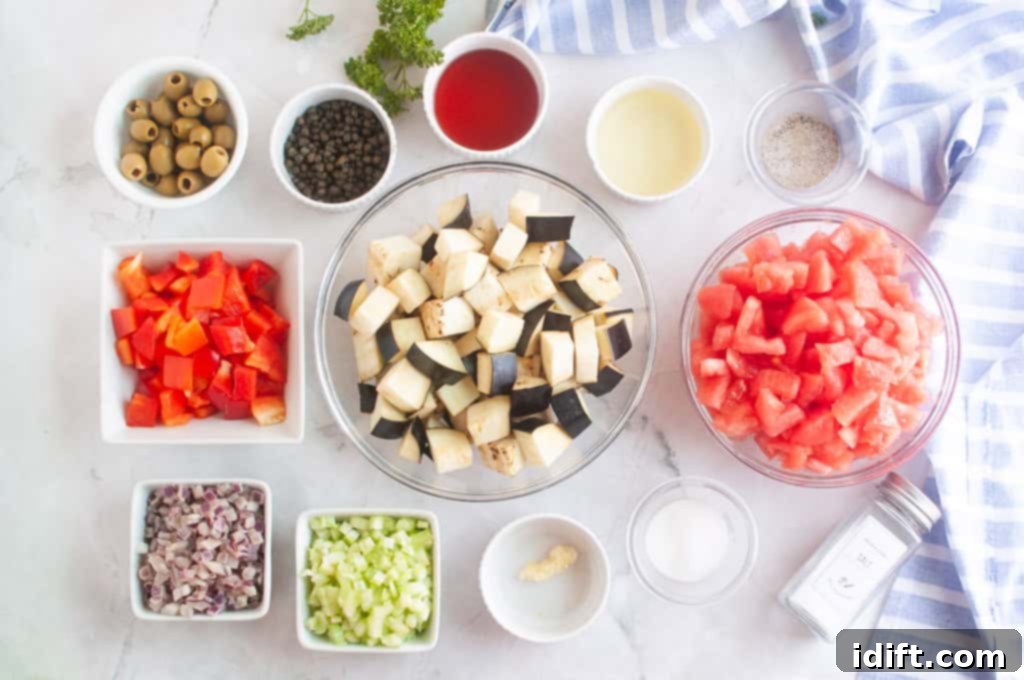
How To Make Authentic Summery Caponata
Follow these steps to create a rich and flavorful Caponata that will transport your taste buds to the sun-drenched shores of Sicily:
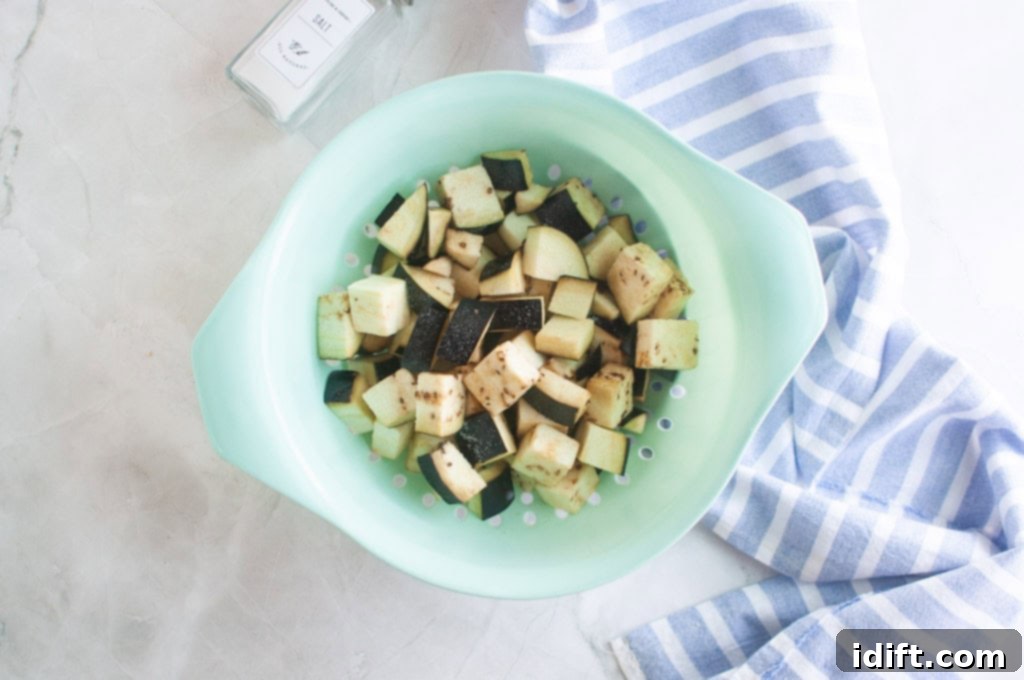
- Prepare the Eggplant: Begin by tossing the diced eggplant generously with salt. Place the salted eggplant in a colander and allow it to rest for at least 30 minutes. This crucial step draws out excess moisture and minimizes any potential bitterness, preventing a soggy final dish. After resting, rinse the eggplant quickly under cold water to remove the salt, then pat it thoroughly dry with paper towels or a clean kitchen towel. Ensuring the eggplant is very dry is key for proper browning.
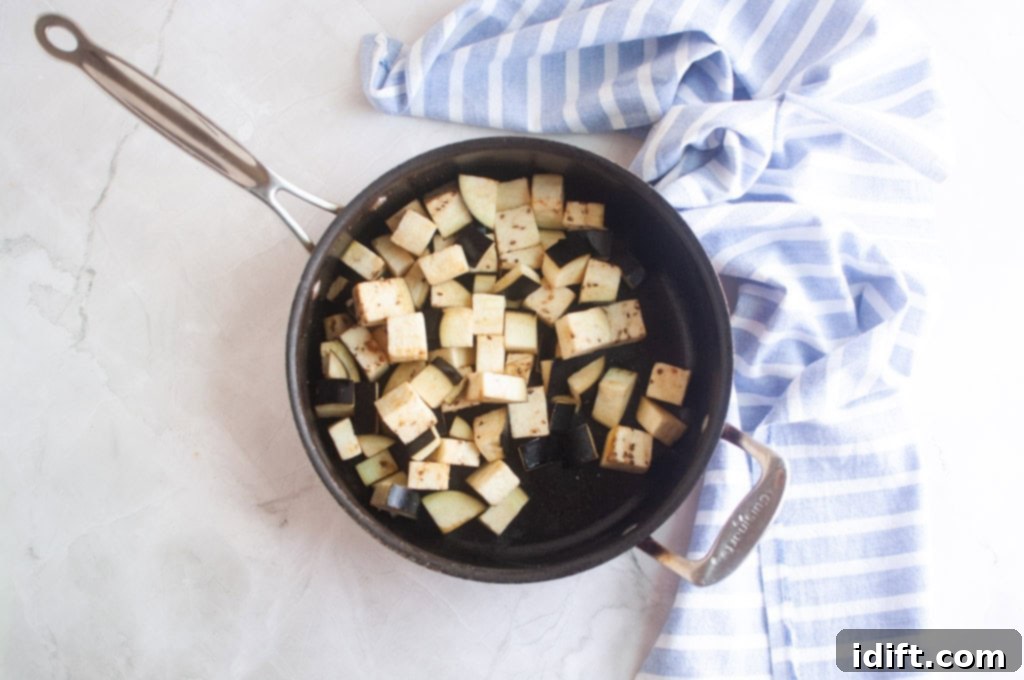
- Sauté the Eggplant: Heat a generous amount of olive oil in a large, sturdy skillet over medium heat. Add the prepared eggplant in batches if necessary to avoid overcrowding, which would steam rather than brown it. Sauté for 8–10 minutes, stirring occasionally, until the eggplant pieces are tender, beautifully golden brown, and slightly caramelized. Once cooked, remove the eggplant from the pan and set it aside.
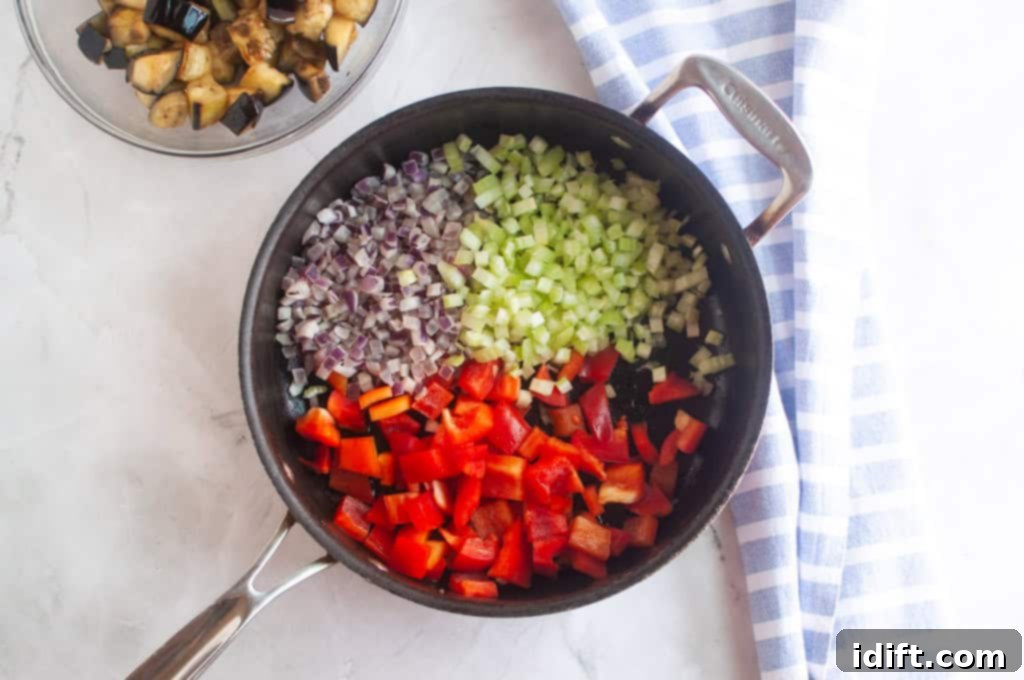
- Sauté Aromatics: In the same skillet, add a little more olive oil if needed. Introduce the diced red onion, celery, and chopped bell pepper. Sauté these vegetables for approximately 5 minutes, or until they have softened and become slightly translucent, releasing their sweet aromas.
- Infuse with Garlic: Stir in the minced fresh garlic and cook for just 1 more minute. Be careful not to burn the garlic, as it can quickly turn bitter. You simply want to cook it until it becomes fragrant, permeating the other vegetables with its robust scent.
- Simmer the Tomatoes: Add the chopped and seeded ripe tomatoes to the skillet. Bring the mixture to a gentle simmer and cook for 8–10 minutes. During this time, the tomatoes will break down, and the sauce will begin to reduce and thicken slightly, concentrating their natural sweetness and acidity.
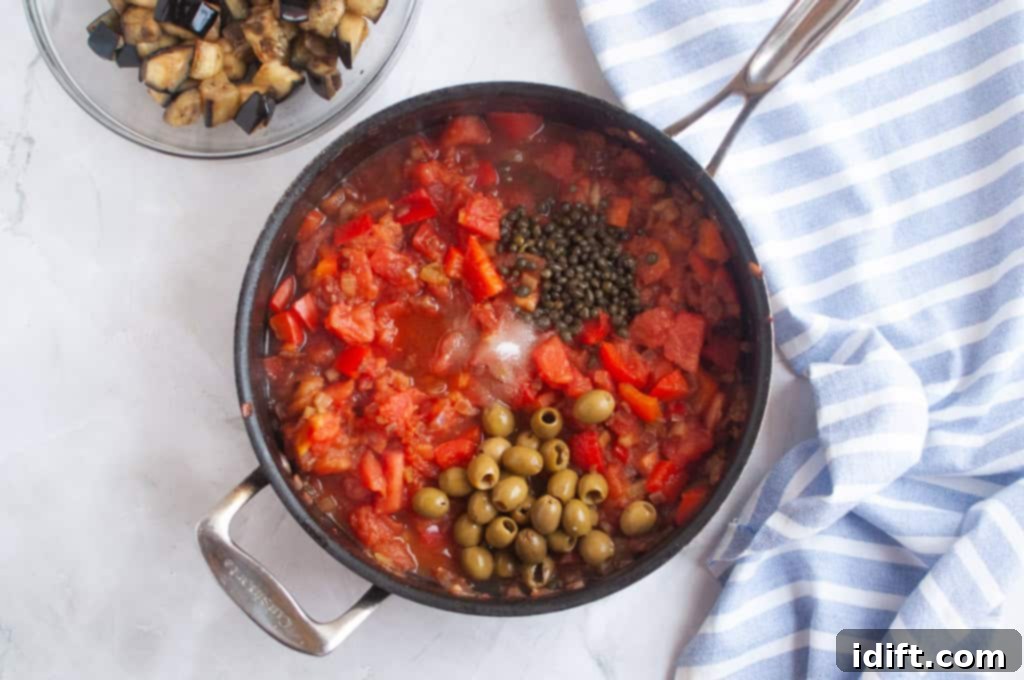
- Combine with Briny Elements: Stir in the drained capers, chopped olives, red wine vinegar, and sugar. Allow this flavorful mixture to simmer together for another 5 minutes, allowing all the new flavors to meld and the agrodolce balance to develop.
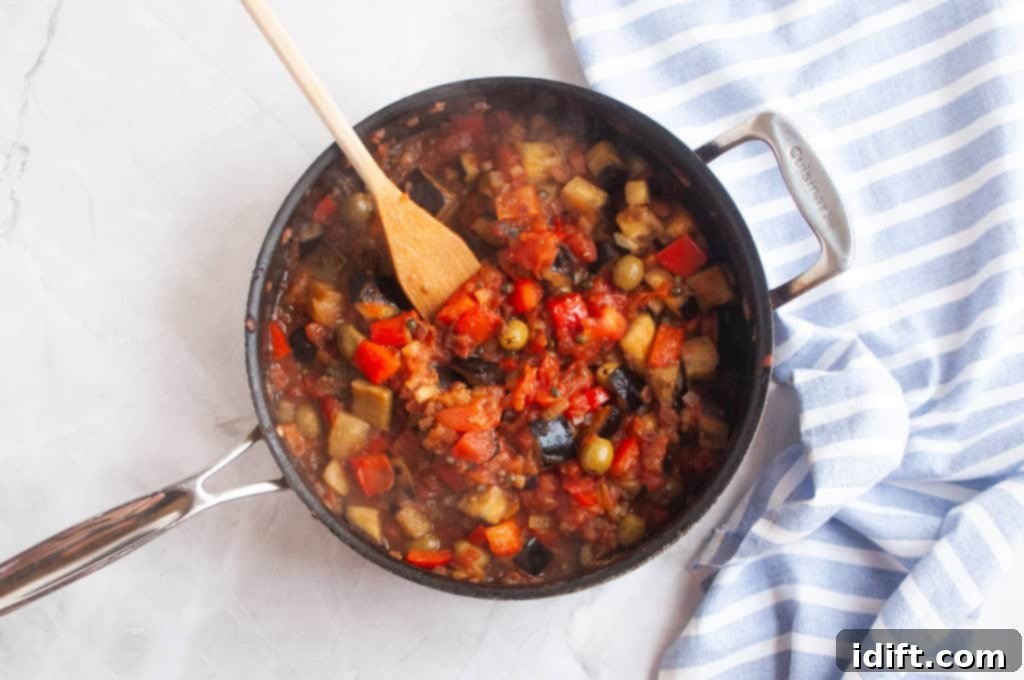
- Reintroduce Eggplant and Finish: Return the previously cooked eggplant to the pan, gently folding it into the simmering vegetable mixture. Continue to cook for an additional 10 minutes, stirring occasionally. This final simmering period allows the eggplant to absorb all the wonderful flavors from the sauce, ensuring a harmonious dish.
- Season to Taste: Taste the Caponata and adjust the seasoning with salt and freshly ground black pepper as needed. The flavors should be a perfect balance of sweet, sour, and savory.
- Cool and Rest: For optimal flavor development, let the dish cool to room temperature before serving. Caponata’s flavors deepen and become even more complex as it rests.
- Serve and Garnish: Serve your delicious Caponata warm, chilled, or at room temperature. Garnish generously with freshly chopped parsley or basil for a burst of fresh color and aroma.
Step-by-Step Visual Guide to Making Caponata
Chef Jenn’s Expert Tips for the Best Caponata
- Always Salt the Eggplant: This step is non-negotiable for superior texture and flavor. Salting helps draw out excess moisture, preventing the eggplant from becoming soggy during cooking and allowing it to caramelize beautifully. It also mellows any bitterness, ensuring a smoother, more palatable result.
- Adjust Simmering Time for Tomatoes: If your tomatoes are exceptionally juicy or have a high water content, don’t hesitate to extend the simmering time. A longer simmer will help reduce the liquid, allowing the sauce to thicken properly and concentrate the rich tomato flavor, which is crucial for a well-balanced Caponata.
- Make It Ahead for Enhanced Flavor: Caponata is one of those magical dishes that tastes even better the next day. As it rests, the individual flavors have time to meld and deepen, creating a more harmonious and complex profile. This makes it an excellent candidate for meal prep or for entertaining guests, as you can prepare it in advance.
- Boost Flavor with Balsamic: For an extra layer of richness and depth, consider adding a splash of high-quality balsamic vinegar along with the red wine vinegar. Balsamic offers a darker, sweeter, and more complex acidity that can elevate the agrodolce profile even further, adding a sophisticated twist.
Delicious Variations to Try
While our recipe offers a classic Caponata, feel free to explore these delightful variations to suit your taste or available ingredients:
- Add Pine Nuts and Raisins: For a more traditional Sicilian touch, especially in certain regions, stir in a handful of toasted pine nuts and golden raisins during the last 5 minutes of simmering. The nuts add a lovely crunch, and the raisins provide bursts of natural sweetness.
- Include Other Vegetables: Feel free to incorporate other seasonal vegetables. Zucchini, yellow squash, or even roasted carrots can be fantastic additions, adding more texture and nutritional value. Just ensure they are diced similarly in size for even cooking.
- Spicy Kick: If you enjoy a little heat, add a pinch of red pepper flakes along with the garlic for a subtle warmth that complements the sweet and sour notes.
- Herb Variations: Experiment with different fresh herbs. While basil and parsley are standard, a touch of fresh mint or oregano can introduce new aromatic dimensions to the dish.
Recommended Pairings
Creative Serving Suggestions for Caponata
Caponata’s versatility is one of its greatest assets. Here are some inspiring ways to enjoy this delicious Sicilian dish:
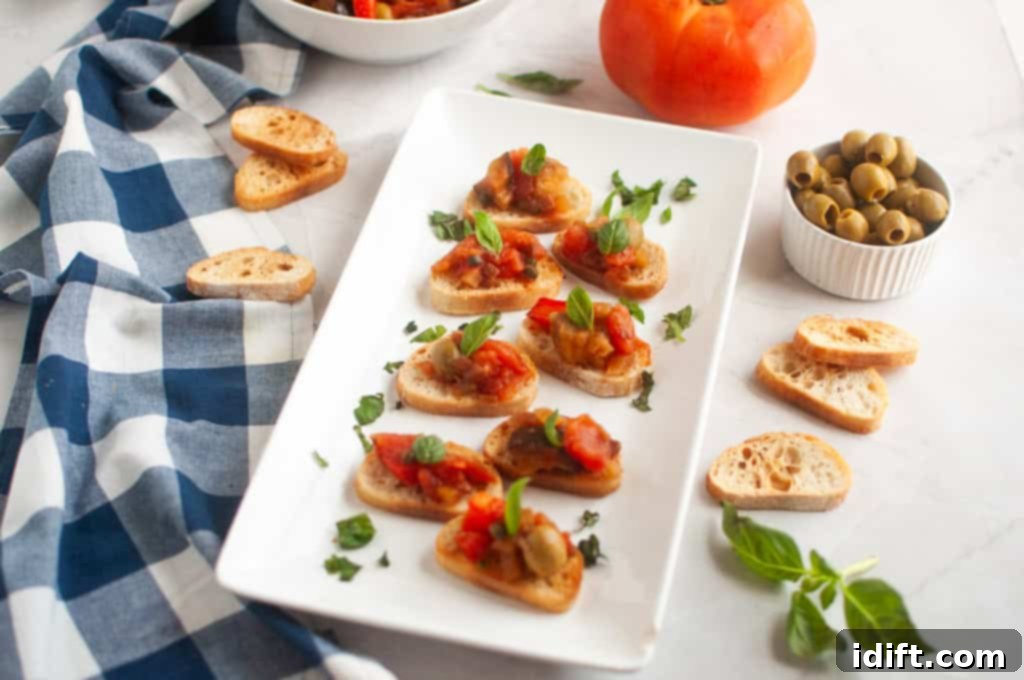
- Classic Bruschetta Topping: Spoon generously over slices of toasted crusty bread or baguette for an irresistible appetizer. The crunchy bread perfectly complements the tender vegetable mixture.
- Accompaniment to Proteins: Serve alongside grilled fish, roasted chicken, or pan-seared pork for a flavorful and light side dish. Its bright flavors cut through the richness of meats.
- Pasta Sauce: Toss warm Caponata with your favorite pasta for a quick and satisfying vegetarian meal. Add a sprinkle of fresh Parmesan or Pecorino Romano if desired.
- Elegant Appetizer Board: Feature Caponata as a star component on an antipasto platter, accompanied by cured meats, cheeses, olives, and breadsticks.
- Picnic or Potluck Star: Its ability to be served at room temperature makes Caponata an ideal candidate for picnics, potlucks, and outdoor gatherings.
- Healthy Bowl Base: Use it as a flavorful base for grain bowls, topped with quinoa, farro, and a protein of your choice.
- Eggs’ Best Friend: Serve a dollop of Caponata alongside scrambled eggs or a frittata for a Mediterranean-inspired breakfast or brunch.
Storage and Make-Ahead Tips
Caponata is an excellent make-ahead dish, as its flavors mature and deepen with time. To store, transfer the cooled Caponata to an airtight container and refrigerate for up to 5 days. You’ll find it tastes even better the day after it’s made, making it perfect for preparing in advance for gatherings or enjoying throughout the week. For longer storage, Caponata can be frozen for up to 1 month. Thaw it overnight in the refrigerator, then bring it to room temperature or gently rewarm before serving to best appreciate its rich flavors.
Frequently Asked Questions About Caponata
Is Caponata served hot or cold?
Caponata is traditionally served at room temperature or chilled. The cooler temperature allows the complex sweet and sour flavors to fully develop and become more pronounced. While it can be enjoyed slightly warm, cooling it down is often preferred for optimal taste and texture.
Can I make Caponata without eggplant?
While eggplant is the defining ingredient of classic Caponata, you can certainly adapt the recipe if you’re not a fan or have allergies. Some variations might use zucchini or bell peppers as the main vegetable, but it won’t be a traditional Caponata without the distinctive texture and flavor of eggplant. Consider it a “Caponata-inspired” vegetable medley instead.
What’s the difference between Caponata and Ratatouille?
Both are delicious vegetable stews, but Caponata is Sicilian and characterized by its distinct agrodolce (sweet and sour) flavor profile, achieved with vinegar and sugar, and typically includes olives and capers. Ratatouille is a French Provençal dish that uses similar vegetables but is flavored with herbs like Herbes de Provence and lacks the sweet and sour element, focusing more on a savory, herbal tomato base.
Summery Caponata Recipe
Summery Caponata is a vibrant Sicilian dish made with sautéed eggplant, tomatoes, onions, and a tangy-sweet mix of capers, olives, and red wine vinegar. Served warm or chilled, this versatile, naturally vegan recipe is perfect as a side, spread, or appetizer for any summer meal. It’s a great way to showcase peak-season produce and Mediterranean flavors in one easy dish.
Recipe Details
- Course: Appetizer, Side Dish
- Cuisine: Italian, Mediterranean
- Keyword: caponata, eggplant recipes, Sicilian appetizer, summer vegetables, vegetarian recipes
- Prep Time: 20 minutes
- Cook Time: 40 minutes
- Total Time: 1 hour
- Servings: 8 servings
- Calories: 117 kcal
- Author: Chef Jenn
Ingredients
- 1 eggplant, diced
- 1 teaspoon salt
- ¼ cup olive oil
- 1 cup red onion, diced
- 2 celery stalks, diced
- 1 red bell pepper, chopped
- 2 garlic cloves, minced
- 4 large ripe tomatoes, peeled, seeded, and chopped
- 2 tablespoons capers, drained
- ⅓ cup pitted green olives, drained and chopped
- 2 tablespoons red wine vinegar
- 2 teaspoons sugar
- Salt and freshly ground black pepper, to taste
- Fresh basil or parsley, for garnish
Instructions
- Toss the diced eggplant with salt and place in a colander. Let it rest for 30 minutes to pull out moisture. Rinse quickly, then pat dry thoroughly with paper towels or a clean kitchen towel.
- Heat olive oil in a large skillet over medium heat. Add eggplant and sauté for 8–10 minutes, until tender and browned. Remove and set aside.
- Add onion, celery, and bell pepper. Sauté for about 5 minutes until softened.
- Stir in the garlic and cook for 1 more minute, just until fragrant.
- Add the chopped tomatoes and simmer for 8–10 minutes until the mixture reduces and thickens slightly.
- Mix in the capers, olives, vinegar, and sugar. Let it simmer for 5 minutes.
- Return the cooked eggplant to the pan. Stir gently and cook for another 10 minutes to let the flavors come together.
- Add salt and pepper to taste.
- Let the dish cool to room temperature.
- Serve warm, chilled, or at room temp. Garnish with chopped parsley or basil.
Notes
Chef Jenn’s Tips:
- Salting the eggplant first improves its texture and prevents sogginess.
- If your tomatoes are extra juicy, extend the simmering time so the sauce thickens.
- The flavor deepens after resting, so it’s even better the next day.
- Add a splash of balsamic for a richer taste.
Nutrition Information
Nutritional information for this recipe is provided as a courtesy and is calculated based on available online ingredient information. It is only an approximate value. The accuracy of the nutritional information for any recipe on this site cannot be guaranteed.
- Serving: 0.5 cup
- Calories: 117 kcal
- Carbohydrates: 11 g
- Protein: 2 g
- Fat: 8 g
- Saturated Fat: 1 g
- Polyunsaturated Fat: 1 g
- Monounsaturated Fat: 6 g
- Sodium: 442 mg
- Potassium: 418 mg
- Fiber: 4 g
- Sugar: 7 g
- Vitamin A: 1267 IU
- Vitamin C: 35 mg
- Calcium: 26 mg
- Iron: 1 mg